When is the Best Time to Visit Bali?

One of the first things you’ll need to decide when planning a trip to Bali is when to visit this beautiful island. Find out which months have the best weather, when the high and low season is, and choose the best month for your trip to Bali. 

So you’re planning a trip to Bali? Good choice! After spending 4 months in Bali last year, I fell in love with this little island and decided to spend most of this year there too.

I’ve experienced different seasons in Bali, so I’ve basked in the Bali sun and got caught in the crazy Bali rain. I’ve seen the island heaving with tourists in high season and experienced it slightly less crowded in low season. So when is the best time to visit Bali?

Most people visit between April and October, simply because this is the dry season. You’ll get beautiful weather and clear skies (mostly, no promises), and if you’re into surfing these months are perfect for catching waves too. However, dry season is also high season, and you’re likely to experience Bali at its busiest between April and October. July and August are particularly busy, but this seems to be the case with almost every destination.

So there are pros and cons to different months in Bali. When you should visit will depend on whereabouts in Bali you’re visiting, the activities you have planned, and your budget for flights and accommodation.


Which Months Have the Best Weather in Bali?

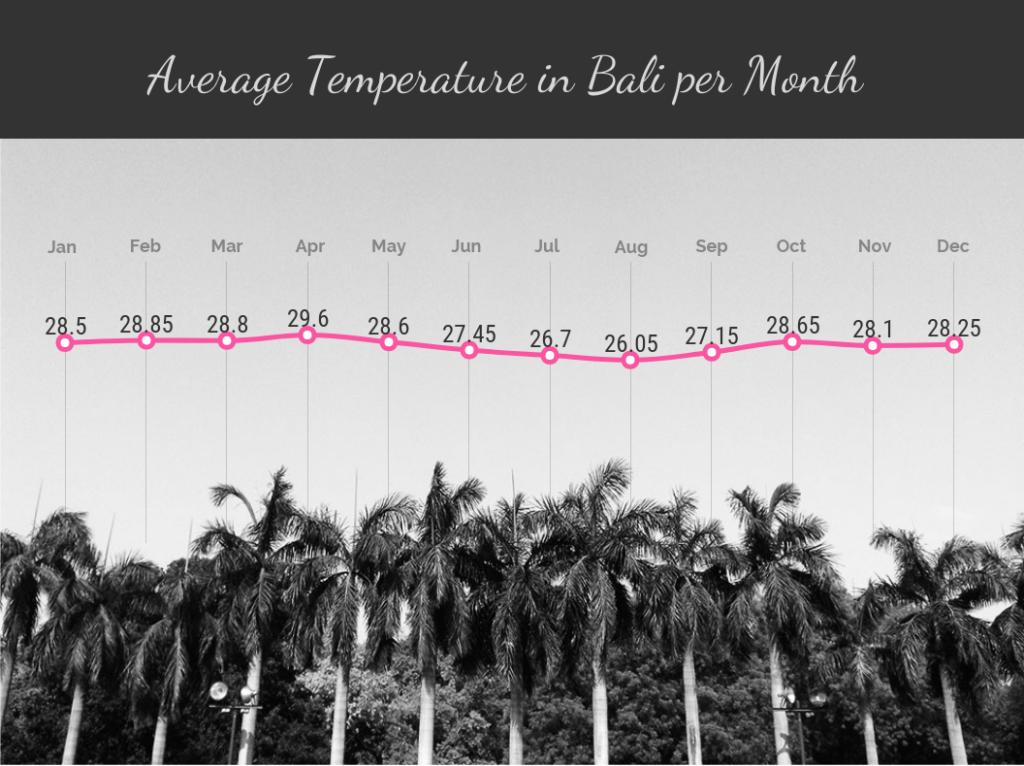
If it’s warm weather you’re looking for, Bali has this year-round. You can expect average temperatures between 26°C and 29°C, but the reality is that average high temperatures regularly reach over 30°C. Coastal areas in Bali, such as Kuta, Canggu, Seminyak and Sanur will generally be a bit warmer (and more humid) than places like Ubud which are further inland and surrounded by mountains.

If you check out the chart below, you’ll see there’s not much difference in average temperatures from month to month.
Watch Out for Rainy Season!

As well as considering the temperature, you’ll also want to think about the Bali seasons. Bali has two main seasons: the dry season and the rainy season. The Bali rainy season is usually between October and April, so for most people, the best time to visit Bali is between April and October.

Even if you’re the sort of person that doesn’t mind the rain, it’s worth noting that Bali rain is pretty intense. It’s often torrential, non-stop rain for days during the wet season. And while it can be exciting to see such heavy rain, especially if like me, you’re from a country where the rain is a little pathetic, it quickly wears thin, and it will ruin your plans to get out and explore, lounge around by the pool or enjoy the beach. Almost all of the tourist attractions and things to do in Bali are outside, so if you’re planning to explore Bali’s sights and natural beauty, the rainy season isn’t the best time to visit.

However, the wet season is the cheapest time to visit Bali, so if you’re travelling on a budget, you may decide to brave the rain. And if you do visit Bali between October and April, check out this list of things to do in Bali in rainy season.
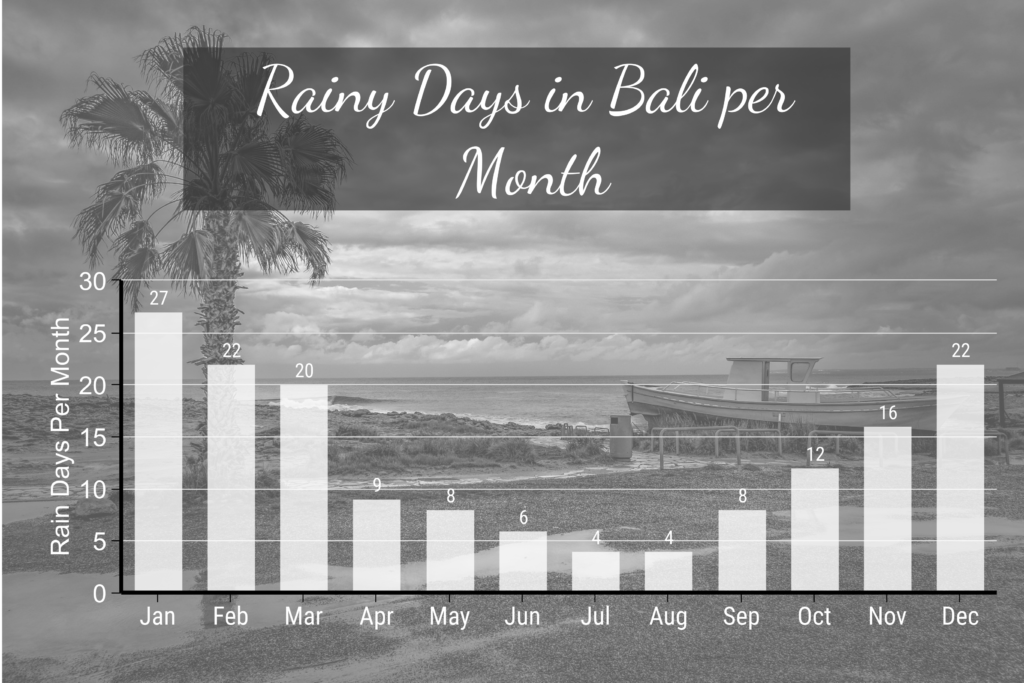
Rainy Days in Bali per Month

A Breakdown of the Months in Bali

If you want to get an idea of what Bali is like in different months, here’s a breakdown of what to expect from each month of the year.

January in Bali

January is Bali’s most rainy month. With an average of 27 days of rain, it rains almost every day, and there are often multiple showers a day. There are quite a few thunderstorms during this month, which usually occur during the afternoon, evening or overnight. The tropical thunder and lightning can be quite impressive to watch, but it’s not ideal if you have day trips planned.
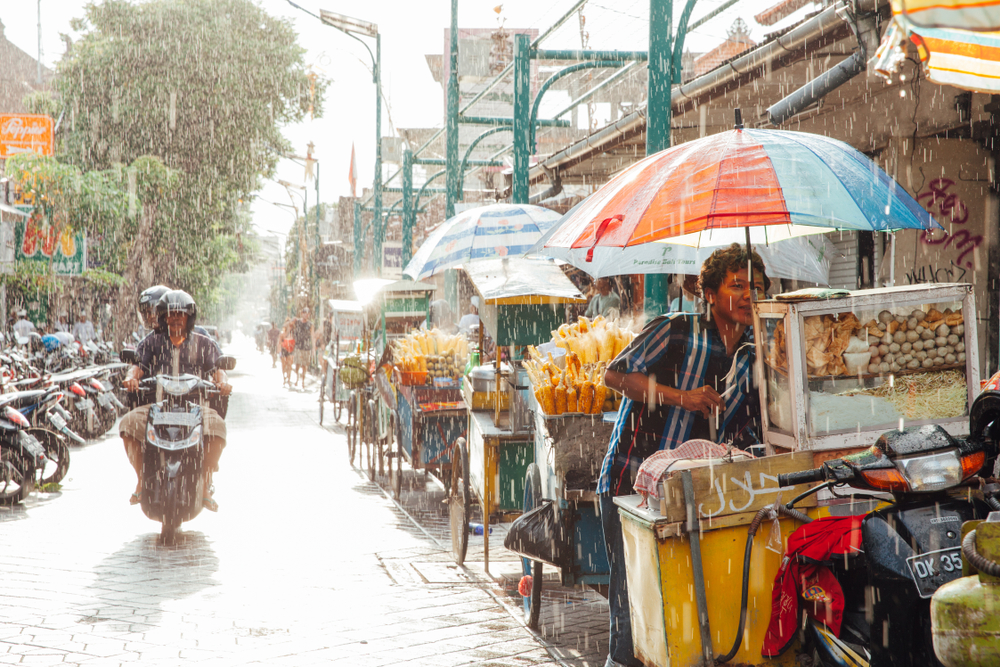
Rainy Season in Bali

February in Bali

February isn’t quite as bad as January in terms of rain and thunderstorms, but it still rains an average of 22 days a month. Even though you’ll have more sunny and dry days than in January, the beaches may not be at their best — storms can wash up a lot of debris and seaweed, so February isn’t the best time to visit if you’re hoping to visit Insta-worthy beaches.  And just like January, February is a particularly hot and humid month.

March in Bali

March is the last month of the Bali rainy season, and while it’s slightly drier than February, you can still expect rain on most days. March is the most humid month in Bali, so you can expect to get hot and sweaty if visiting the island during this month. It’s not too busy in March, but you will find a lot of long-term travellers head to Bali at this point. Many tourists also want to experience Nyepi, the Balinese day of silence. Scroll down to read more about this Nyepi.

April in Bali

April is the start of the dry season, and with an average of only 9 days of rain in the month, you can expect good weather for most of the month. However, during this month, tourism starts to pick up, especially over Easter. It’s still nowhere near as busy as July and August though, so if you’re looking for a mix of good weather and bearable crowds, this could be the best month to visit.

May in Bali

Weather in May is much the same as April, but it can be a little quieter as there’s no Easter rush of tourists. You can get some good deals in May, and with beautiful weather, quieter streets and beaches, this is a great time to plan your visit to Bali.

June in Bali

June is one of the best months to visit Bali. The weather is perfect and not too humid, with a very slim chance of rain. Tourism really starts picking up in June so you can expect more crowds, but still it’s a great time to visit.

July and August in Bali

July and August are Bali’s busiest months, because of school holidays and the perfect weather. Traffic can be crazy, and beaches fill up. You can also expect higher prices as this is the peak time to visit the island. While the weather is great, I’d suggest avoiding these months if you can, and instead plan your visit for one of the dry season’s shoulder months: April, May, June or September.

Bali Handura Gate in August

September in Bali

You can still expect good weather for most of September, but as this is the last month of the dry season, you might experience a few days of rainfall and slightly higher levels of humidity.

Flights to Bali from Australia can be more expensive towards the end of September as there is an Australian school holiday at the end of the month, and into the first two weeks of October.

October in Bali

October is the start of the rainy season in Bali. On average, it rains on around 12 days of the month, and while the rest of the month is generally blue skies and great weather, it can get quite humid. However, it’s worth noting that in recent years, perhaps because of global warming, the rainy season hasn’t kicked in until late October/early November. So if you’re planning a trip in October, you may not experience any rain.

The first two weeks of October are Australian school holidays, so it can be a little busier than September, but it’s still much quieter than peak season, and you can still find some good deals on accommodation and activities. But flights from Australia can be more expensive.

November in Bali

Visiting Bali in November is a good choice if you’re on a budget. The weather isn’t fantastic: it’s a fairly rainy month and high levels of humidity mean you’re going to get pretty sweaty, but you’ll find plenty of affordable accommodation options, and you can get some good flight and tour deals.

December in Bali

In December, Bali starts to enter the height of the wet season. The start of the month can be relatively quiet, but over Christmas and towards New Year tourism can start to pick up as lots of people love to get away for the holidays and celebrate somewhere hot. Indonesian school holidays and year-end work leave also fall in December, so it can be busy with local tourists.

Which Months Are Best for Surfing in Bali?

Bali is the perfect destination for surfers. The island is famous for its surfing spots. Whether you’re a pro surfer or a complete beginner, Bali has the waves for you. But if you want the best possible wave-catching experience, it’s worth planning around the best months for surfing in Bail.

If you’re planning on surfing on the west coast in areas like Kuta, Seminyak, Canggu and Legian, the best time to visit is between April and October. During these months the offshore wind creates the best waves for surfing.

However, the reef breaks in the east coast might appeal more to you if you’re an experienced surfer. And if you’re hoping to surf east coast shores in areas like Sanur, it’s best to visit between November and March. This may be the rainy season, but you’ll still have some clear days, and the swell will make up for it. Plus, there’ll be fewer people about, which is always an added bonus.
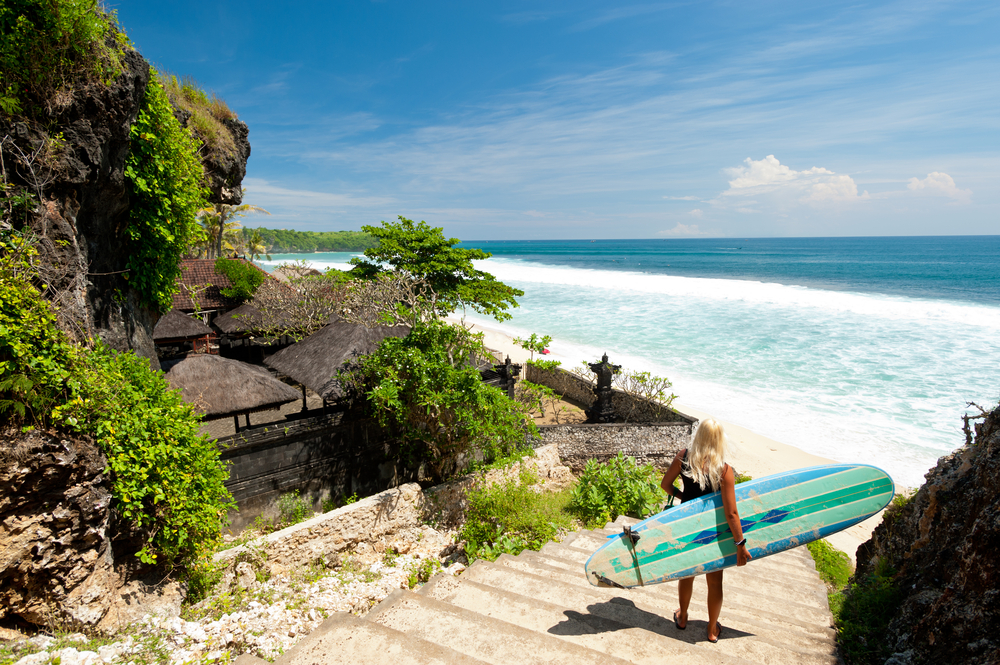
The Best Time to Surf in Bali

When is the Most Affordable Time to Visit Bali?

Bali is a fairly affordable destination all year round. The cost of living is less than most destinations in Europe, North America and Australasia. Like anywhere, there’s both an expensive and affordable side to Bali. And as long as you’re not fine-dining every day, and staying in 5* resorts, Bali is a great destination for backpacking on a budget. 

However, the most affordable time to visit Bali is in low-season, also known as the wet season. Between October and March, you can find accommodation, flights and tours that are attractively priced and perfect for travelling on a budget. February and March in particular are often the best time to find deals, as during these months, tourism is at its lowest.

Events and Ceremonies in Bali

If you’re really hoping to throw yourself into local ceremonies, you’re probably hoping to experience some local events, ceremonies or festivals. The good news is, Bali has hundreds of ceremonies and you’re going to encounter lots of them during your visit. For example, ceremonies are held to mark the ‘birthday’ of temples, and as there are around 20,000 temples in Bali, I’m sure you can imagine these ceremonies are quite frequent.

Here are some of the Balinese events that you might want to experience.

Melasti and Nyepi

Nyepi is Bali’s day of silence and it’s the most important Balinese Hindu celebration. The day marks the New Year in the Caka Calendar and for 24 hours the island is completely silent. Silence is compulsory, so even tourists need to stay in, be silent, and turn off the lights. Yep, you read that right, no lights are allowed during Nyepi.

In fact, there are several rules that everyone on the island must follow during Nyepi:

1: Don’t go out onto the street
2: No fire, light or electricity (this also means there will likely be no internet)
3: No motor vehicles
4: Be silent — no one outside of your room should be able to hear you
5: No travelling — the airport will be closed, and you won’t be allowed to drive anywhere

The only people allowed to break these rules are emergency services.

It’s an incredible day to experience. With no traffic, no talking, or TVs blaring, no music and no lights, the island is at its most peaceful. You’ll see the stars like you’ve never seen them before, thanks to the lack of light pollution. And if you’re a keen photographer, you capture beautiful pictures of the stars, and even of the Milky Way.

Nyepi Stars in Bali

The days leading up to Nyepi also involve a variety of preparations and Melasti ceremonies — purification rituals and ceremonies. Locals create ‘ogoh-ogoh’ which are statues that take the form of mythical beings and demons. These figures represent the bad spirits that are guided to leave the island during Nyepi. They are paraded through the streets the evening before Nyepi.

Galungan and Kuningan

Galungan is a holiday that celebrates the victory of good over evil and it occurs during the 11th week of the 210-day Pawukon calendar (the Balinese have several different calendars). Kuningan

The holiday will consist of a series of ceremonies and for 10 consecutive days, you’ll find traditional decorations over the whole island, and locals will be participating in festivities and ceremonies.  You’ll see penjors lining streets and decorating temples — these are ornate bamboo poles that hold religious offerings. Walking through streets decorated with penjors is quite an experience, and these traditional decorations can make for some beautiful photos.
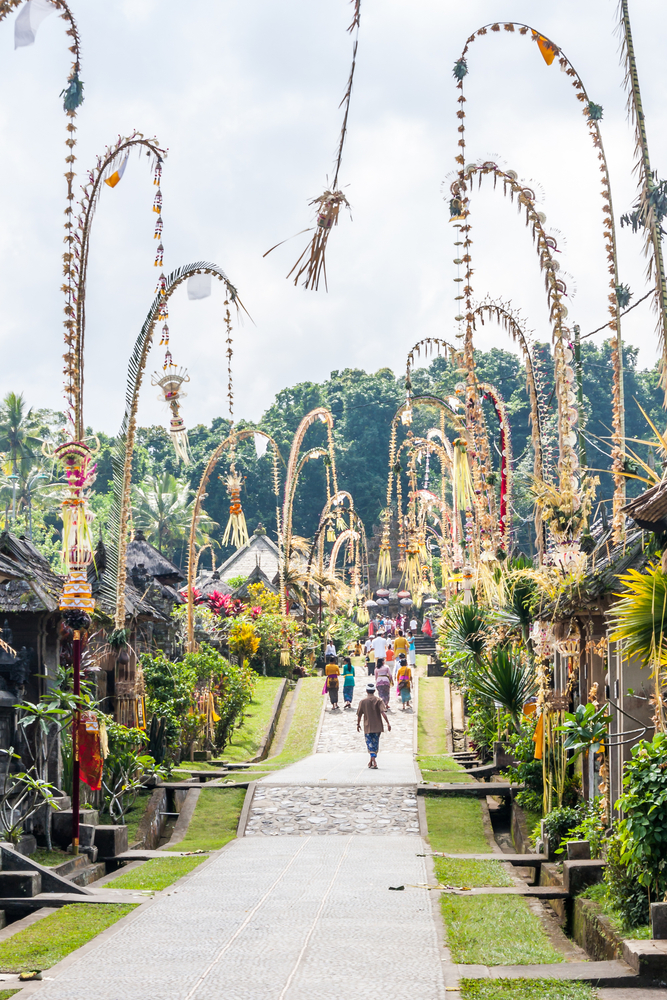
Galungan Bali Penjors

While you’ll still see some decorations like these at other times of the year in Bali, the island is even more beautiful during Galungan. And visiting Bali during this holiday gives you a chance to immerse yourself in Balinese culture.

Bali Arts Festival

The Bali Arts Festival happens every year and usually lasts for a whole month. It celebrates Balinese culture and art with performances, exhibitions and traditional decorations all over the island. This festival usually starts in June and ends in July.

Ubud Writers and Readers Festival

The Ubud Writers and Readers Festival happens every year in October. The festival consists of five days packed with writing workshops, talks from authors and journalists, live performances and artistic events. This is a great event to visit if you love literature and want to learn more about Indonesian culture and how it is represented in literature and the media. This is a reflective event that will leave you feeling inspired to write and read more, and you’ll come away with a deeper understanding of Indonesian history and culture.


8 Tried & Tested Tips for Backpacking on a Budget

So you’re planning a budget backpacking trip?

After spending over 2 years backpacking through 6 continents, with a budget of around $25 a day, I have come up with my top 8 tips that I would give to every budget backpacker before setting off on their journey. Whether this is your first backpacking trip, or you’re an experienced backpacker, these tips can help you decide what to pack, how to manage your money, and where to go.

Top Tips for Backpacking on a Budget

1: Get a Travel Debit Card

How you manage your money will determine how successfully you’re able to backpack on a budget. And one of the best ways to save money while travelling is to get a travel debit card that doesn’t charge international withdrawal fees.

Gone are the days when you had to pay fees on every single transaction and withdrawal abroad. There are now some excellent debit cards designed with travel in mind. I personally use the Revolut card which is expanding massively and is available in lots of countries now, but there are also different US and European cards which offer similar benefits. This card will never charge you a fee to withdraw cash at an ATM, anywhere in the world.

Other similar cards that are perfect for travel include:

-Starling
-Monzo
-Virgin Money Credit Cards
-N26
-Curve
-Amex Platinum (this also comes with free travel insurance and airport lounge access)

2: Research the Best ATMs and Banks to Use

Even if you have a travel debit card that doesn’t charge withdrawal fees, some ATMs will still charge you a fee. So it’s worth researching which ATMs are best to use in your destination.

I think out of 92 countries I’ve travelled to, I have only paid an ATM fee in maybe 5 or 6 countries where it is almost impossible to find a free ATM (off the top of my head I can think of Thailand, Cuba, and I think Myanmar). I often have to go to one or two different ATMs until I find a bank which doesn’t charge. There is almost always at least one bank in every country that won’t charge for withdrawals. Once I know which one it is, I will just use this bank’s ATMs for every transaction. Over 2 years, using a travel debit card and finding free-to-use ATMs has saved me hundreds of dollars, if not more, in card and ATM fees.

3: Download a Currency App

Another way to save money is to download a currency app, such as the XE Currency App or OANDA Currency Converter. These are free apps that you can download to check the current exchange rate offline — you won’t need to data or wifi to do so.

This is always handy when you arrive in a new country and can’t get your head around the currency, or to check you’re not getting hustled at a currency exchanger. You can also use a currency app to check the price of groceries, souvenirs, and meals, and compare prices to the costs of things back home.

Using Different Currencies When Travelling

4: Choose Budget-Friendly Destinations

If you want to travel long term, go where your money will last the longest.

Of course, Paris and Venice are on everyone’s bucket list, but if you want to travel on a budget now, why not hold off on these places – they will always be there and probably won’t change that dramatically.

Visit the cheaper places now, there are many countries in Asia or South America you can visit. This cost per day spending decrease can extend your travel time by over double. If you are set on visiting Europe, you could consider going to the less travelled, cheaper destinations in Eastern Europe.

Backpacking in South East Asia

If I had the option of travelling to Europe for 2 months or Asia for 6 months, I know which one I would pick. 6 months of travel over 2, every time.

Here are three examples of place swaps that I think could give you similar experience but could cost you a fraction of the cost:

Instead of Here →  Visit Here Instead 

Dubrovnik, Croatia → Kotor, Montenegro

Korfu, Greece → Himare, Albania

Serengeti, Kenya → South Luangwa NP, Zambia

Backpacking Around the World

5: Invest in a Decent Backpack

Invest in a decent backpack – It is worth the money.

Get a backpack with the zip at the front rather than the old classic top open style, they are so much more practical and easier to use every day. When I first travelled with my open front backpack, it completely changed my feeling towards travelling with a backpack, and I really enjoyed using it.

Keep your backpack to 10kg, trust me – you will thank me later. It makes such a big difference. You will probably be walking a lot when you don’t want to take an expensive taxi from the bus station, so you want it as light as possible, but that’s not the only benefit.  It is also great because you can take your bag on the bus or plane with you instead of checking it in – which often costs more money, is more susceptible to theft, and takes time. We used to take our bags on the buses, then just ask the drivers to stop as close as we could to our accommodation, and we would just jump off the bus.  If we had bags underneath in the hold, they wouldn’t let us stop to get the bags off, and we had to wait until the final destination, so it’s well worth having a smaller bag.

And to keep your backpack organised, there are plenty of packing cubes for backpacks. 

Travelling on a Train with a Backpack

6: Pack Practical, Good Quality Clothes

Take versatile, good quality clothes.

Don’t take bright colourful dresses that you won’t want to wear every day, as all your photos will be wearing the same outfit. Take a few pairs of shorts, in versatile colours-  black, grey, blue, and take some trusty shirts with the same principle. Make sure these clothes are durable and made to last too. Also definitely avoid synthetic clothes that get super wet and smelly in hotter, humid climates – go natural like organic cotton or hemp. Check out Hempton Apparel for some great travel shirts. 

Practical Travel Clothes for Backpacking

7: Eat Like a Local

This is probably my favourite part of travel. Eat like the locals.  Don’t eat at ‘backpacker’ tourist restaurants and hostels — these places are often overpriced, so they’re definitely not budget-friendly. And the last thing you want is to drain your money on food.

I have watched many backpackers in Bali or Vietnam eating acai bowls, avocado on toast, and pizza every day, drinking espresso martinis every night and spending the same, if not more than they would at home.

Of course, you can occasionally splash out and visit restaurants that offer home comforts and novelty dishes, but my advice would be to eat and drink like a local as often as you can, if your diet allows it.

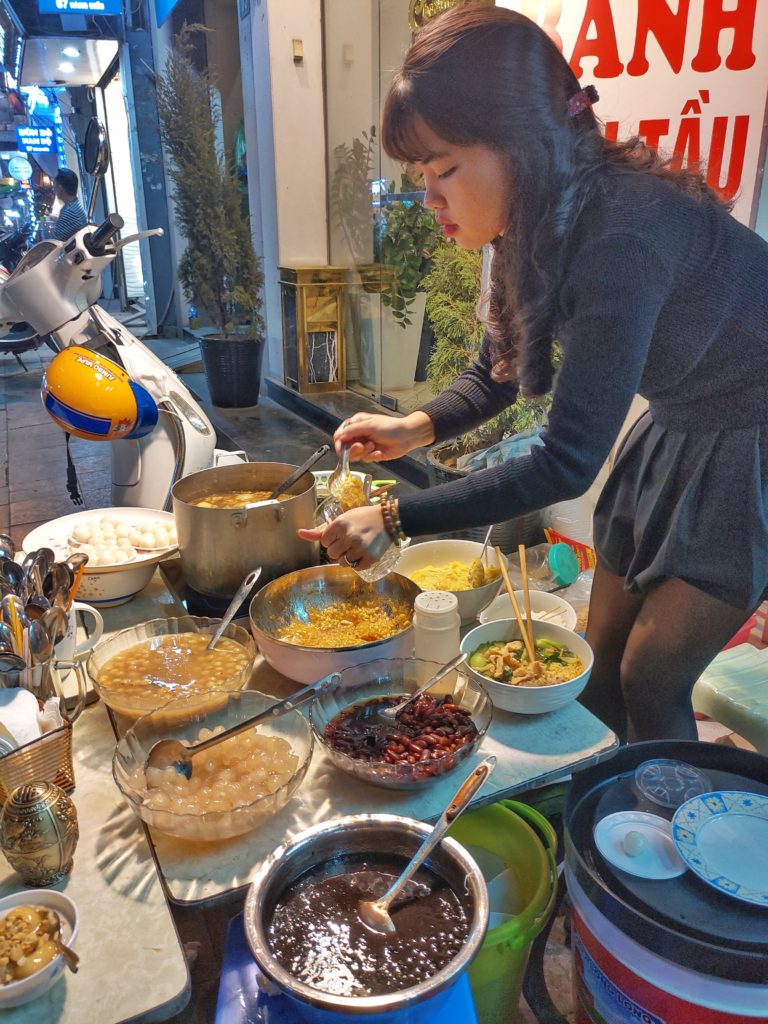
My favourite meals have always been street food. Now I’m not talking about the street food you’ll find at tourist markets, because that’s likely to be overpriced, and you won’t get such an authentic experience. In some destinations, particularly in Asia, you’ll find roadside carts selling local snacks and meals, and some will even have little plastic stools out front which are usually packed with locals. Eating at streetfood stalls like these in places like Bali and Vietnam, a meal can cost as little as $1. Go to the backpacker places and you’re looking $5 or more for a meal.

Vietnamese Street Food Stall

Trying the real local food is also one of the reasons I travel, it’s very rare that I’m disappointed. In fact, my favourite meals are usually the cheapest ones. And eating like a local gives you a chance to meet local people, and enjoy a more authentic travel experience. Plus you’ll be supporting local business.

Eating Like a Local While Backpacking

8: Don’t Risk Losing Your Photos

Download and use Google Photos – this is a game-changer.

I have met several travellers who have lost their phone or camera or had them stolen, and as a result, lost all of their travel photos. I treasure my travel photos because they remind of all the amazing places I’ve been, the memories I’ve made, people I’ve met, and they inspire me to keep travelling. So the thought of losing them is too painful to think about.

Meeting People While Travelling

Google Photos will automatically back up all of your photos on your phone to the cloud every time you connect to wifi. Magic. Even if you lose your phone, you will always have your photos saved to your account, and it’s free of course. You can also purchase an SD card adaptor to transfer photos straight to your phone/laptop. So you can even use Google Photos to store large DSLR files or drone photography.  And you don’t need to worry about finding and packing an external hard drive for your travel photography — that’s weight and space in the backpack saved!

Storing Travel Photography With Google Photos

The Best Travel Hair Accessories in 2024: Tame Your Hair On The Go

When I first started travelling, my hair was so long it reached my belly-button, and I struggled to keep it tamed. I have naturally frizzy, slightly curly hair that gets even frizzier in humid climates.

Any fans of Friends will remember the one with Monika’s crazy hair in Barbados — my hair is pretty similar to that.

So while I’ve tried travelling without any hair tools or accessories, au naturale hair is just not a good look for me.

So after trying lots of different products and hair accessories, and meeting people on the road with even longer hair than mine, I think I’ve figured out the best hair accessories for travel.

1: GHD Air Hairdryer

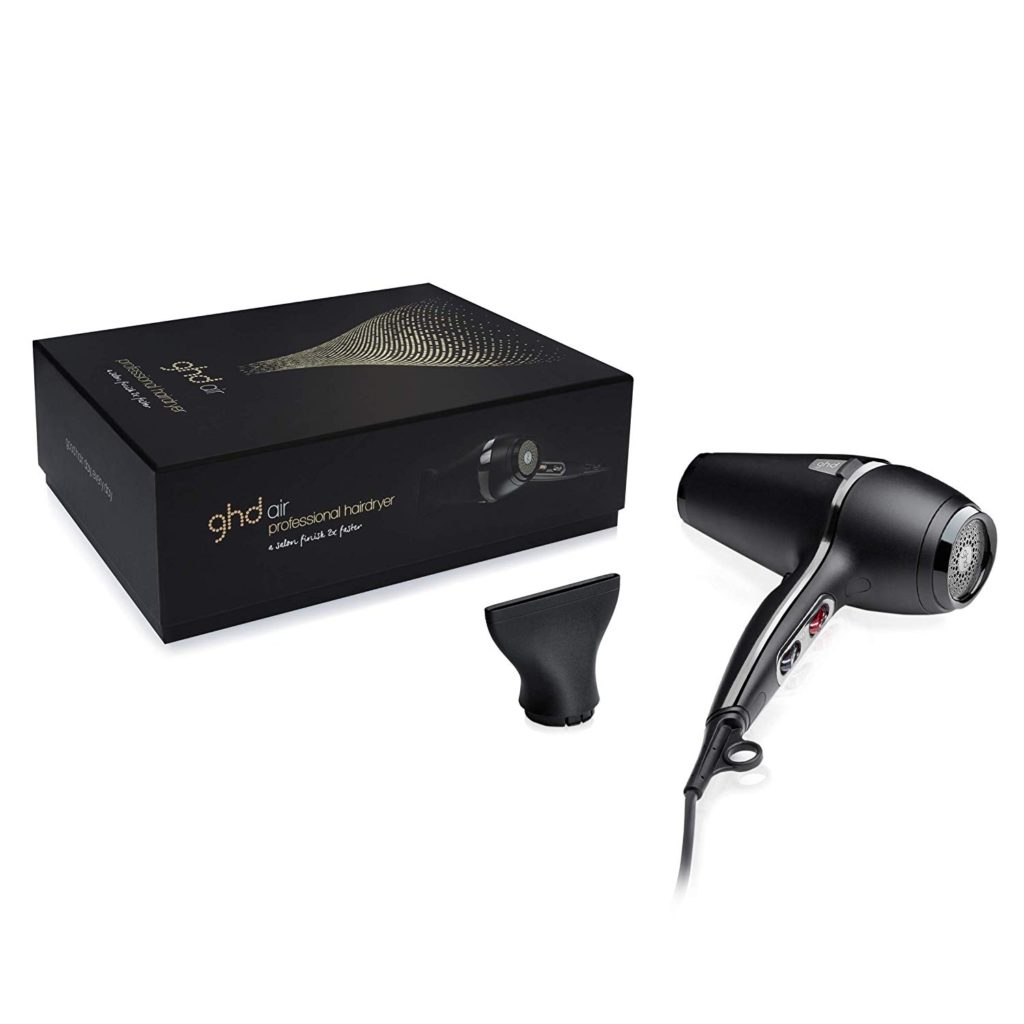
GHD Air Travel Hair Dryer

I’ve tried so many travel hair dryers before, from the GHD Flight, to Babyliss and Remington ones, but was never impressed. Then I came across the GHD Air. I stayed with a friend in London and ended up using her hairdryer — she had a GHD Air and I was instantly impressed.

It dried my hair quickly and left it much less frizzy than normal. I was so impressed that I ordered one for myself the next day, and I’ve taken it on every trip ever since.

While the GHD Air isn’t strictly a travel hairdryer, it is THE best hairdryer I’ve ever used, and it’s lightweight, small frame means I can easily pack it in any backpack or suitcase.

2: GHD Gold Straighteners

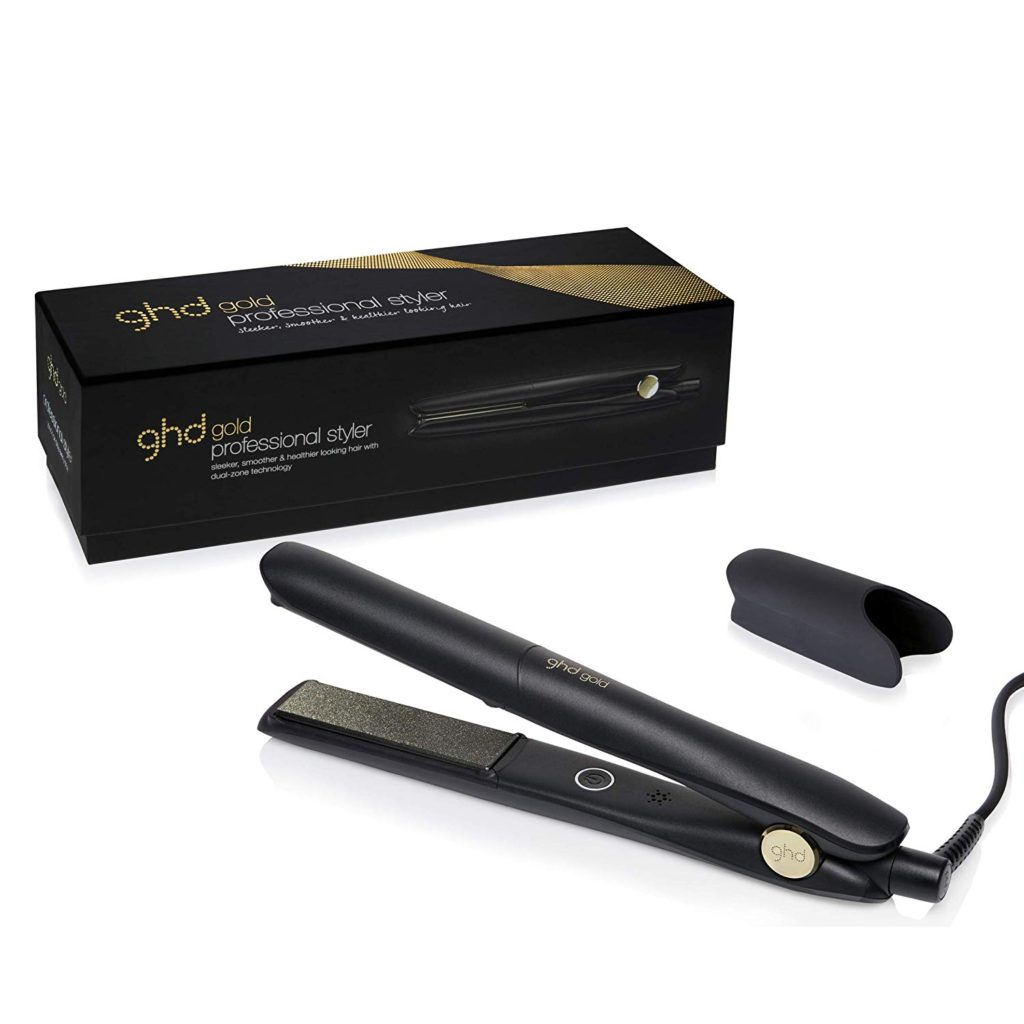
GHD Gold Straighteners for Travel

Once I’d bought my GHD Air, I was sold on GHD as a brand. So I took a look at their straighteners too. I was able to try the GHD Mini Stylers and the latest, top of the range GHD Platinum+, but decided the GHD Gold straighteners were best for travelling.

While the GHD Minis are designed with travelling in mind, they took quite a while to straighten my hair. The GHD Golds were a little larger, but they were still sleek and lightweight.

These straighteners, combined with the Air Hairdryer, make the perfect hair tools for travelling. With these, I can achieve non-frizzy straightened or curled hair in any climate.

3: Tangle Teezer Brush

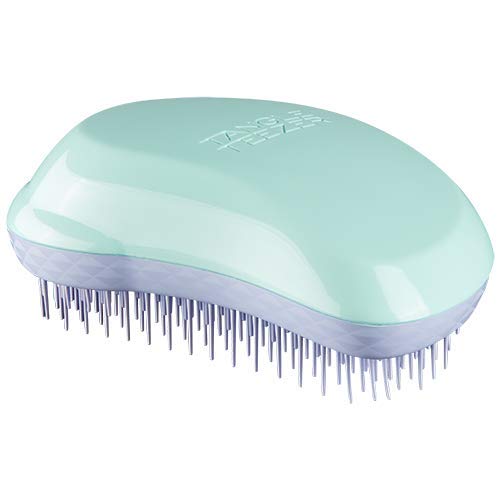
Tangle Teezer Travel Hair Brush

Tangle Teezer brushes somehow manage to detangle hair without pulling at all. I can brush my hair with one of these bad boys without cringing in pain at all. They’re also fairly compact and come in different colours.

My personal favourite is the mint coloured brush, simply because it matches a few of my other travel accessories like my Seafoam Yeti bottle and pastel blue Antler suitcase and rucksack set).

4: Hair Ties and Clips

This one kind of goes without saying, but hair ties and clips deserve a place on this list. Sometimes it’s so much easier to just to throw my hair up into a bun or pony than take the risk of my hair being knotted by wind or waves. From elastic hair ties to scrunchies to bobby pins, you should take a load of these hair accessories with you on any trip. If you’re anything like me, you’ll lose most of your hair ties by the time you’ve got to the airport, so it’s best to pack many, many spares.

5: Headbands

Travel Hair Style With Headband

Headbands are one of the best travel hair accessories you can pack. A headband will keep your hair out of your face and opens up so many different hairstyle opportunities.

You can wear them with your hair down, up in a bun, and they even work with short hair. And they have two secret superpowers: 1) they can cover up greasy roots if you don’t have time to wash your hair, and 2) they’re basically stylish sweatbands, which comes in useful in hot climates. In colder destinations, you can wear thick, woolly headbands that keep you warm.

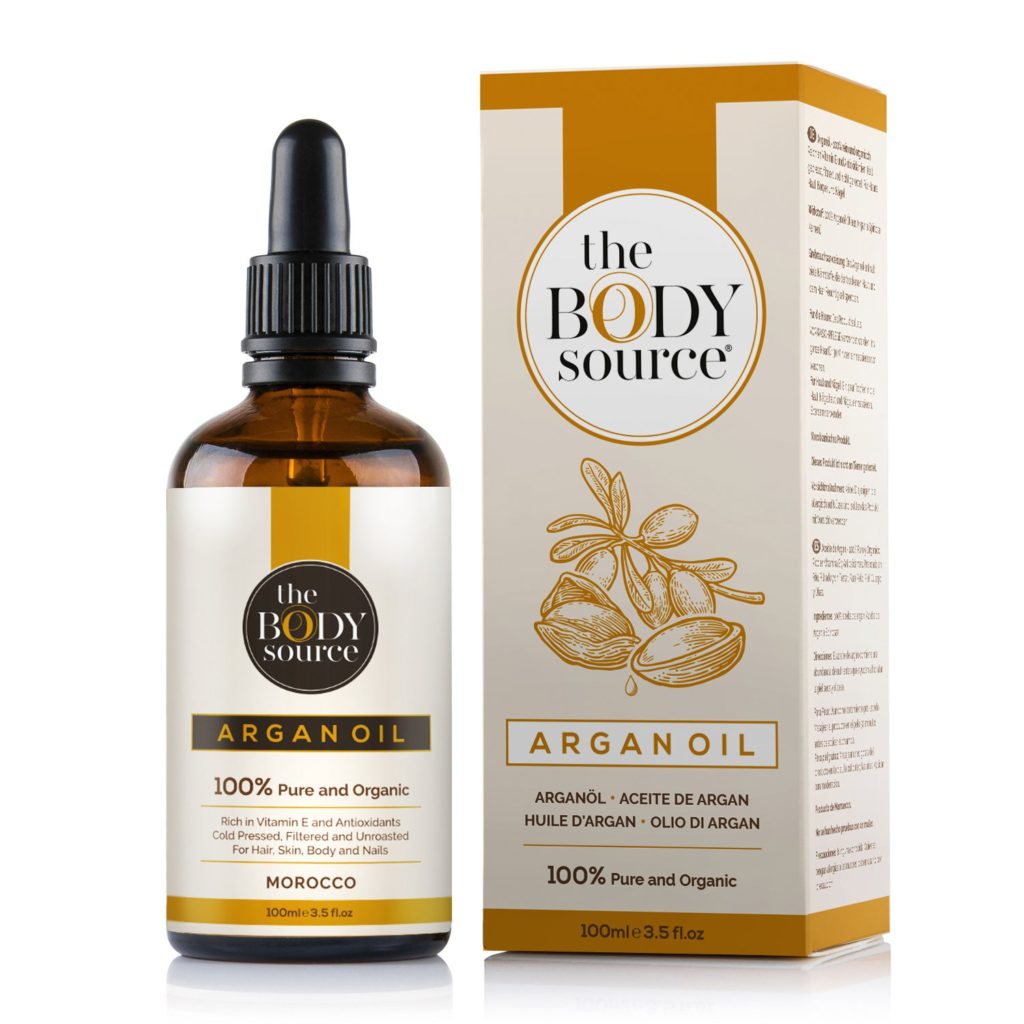
6: Argan Oil

Argan Oil For Traveling

If your hair gets ridiculously frizzy in humid destinations, argan oil is a great way to make sure your hair stays smooth and frizz-free. It also keeps your hair in great health, preventing split ends and encouraging growth. Plus it doubles as a great anti-wrinkle moisturiser.

Argan oil usually comes in bottles that are 150ml or smaller, so if you’re travelling light with only cabin luggage, you won’t have a problem getting it through customs. And even though bottles of this oil are pretty small, a little goes a long way, and a 100ml bottle will last a while.


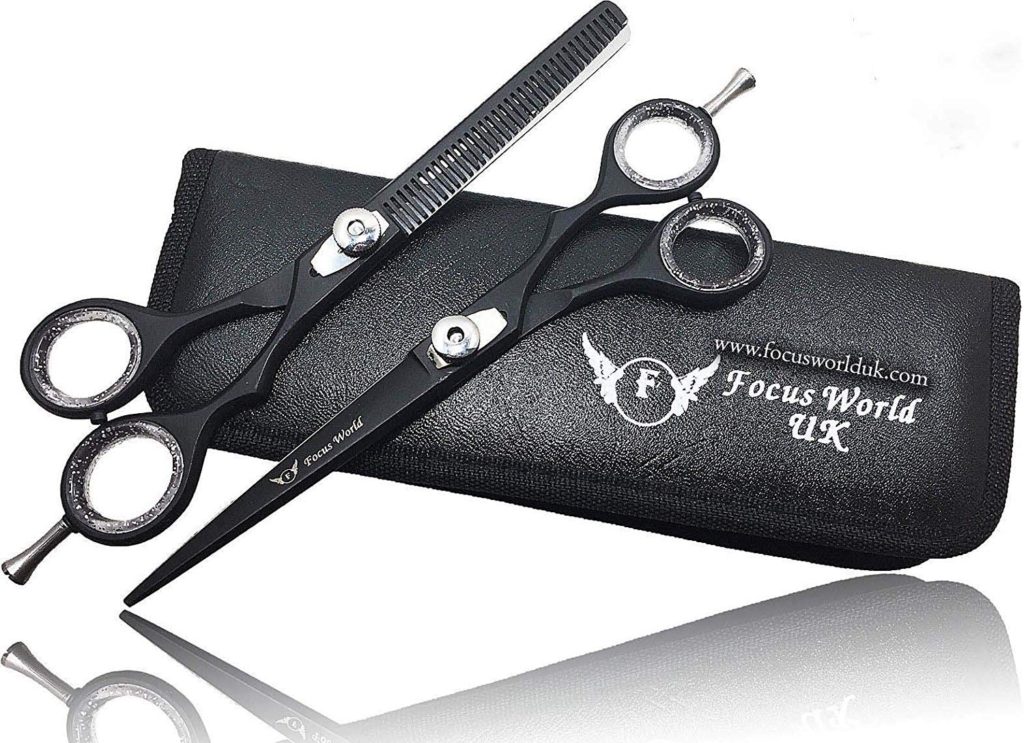
7: Hair scissors

Depending on where you’re travelling and for how long, it can be a good idea to pack your own hair scissors. I’ve been to several destinations where there aren’t really any hairdressing salons around, and rather than letting my hair get out of control, I’ve trimmed my own hair to keep split ends at bay.

I bought a pair of hair scissors online, watched YouTube videos on how to cut my own hair, and now they’re one of my essential travel hair accessories.

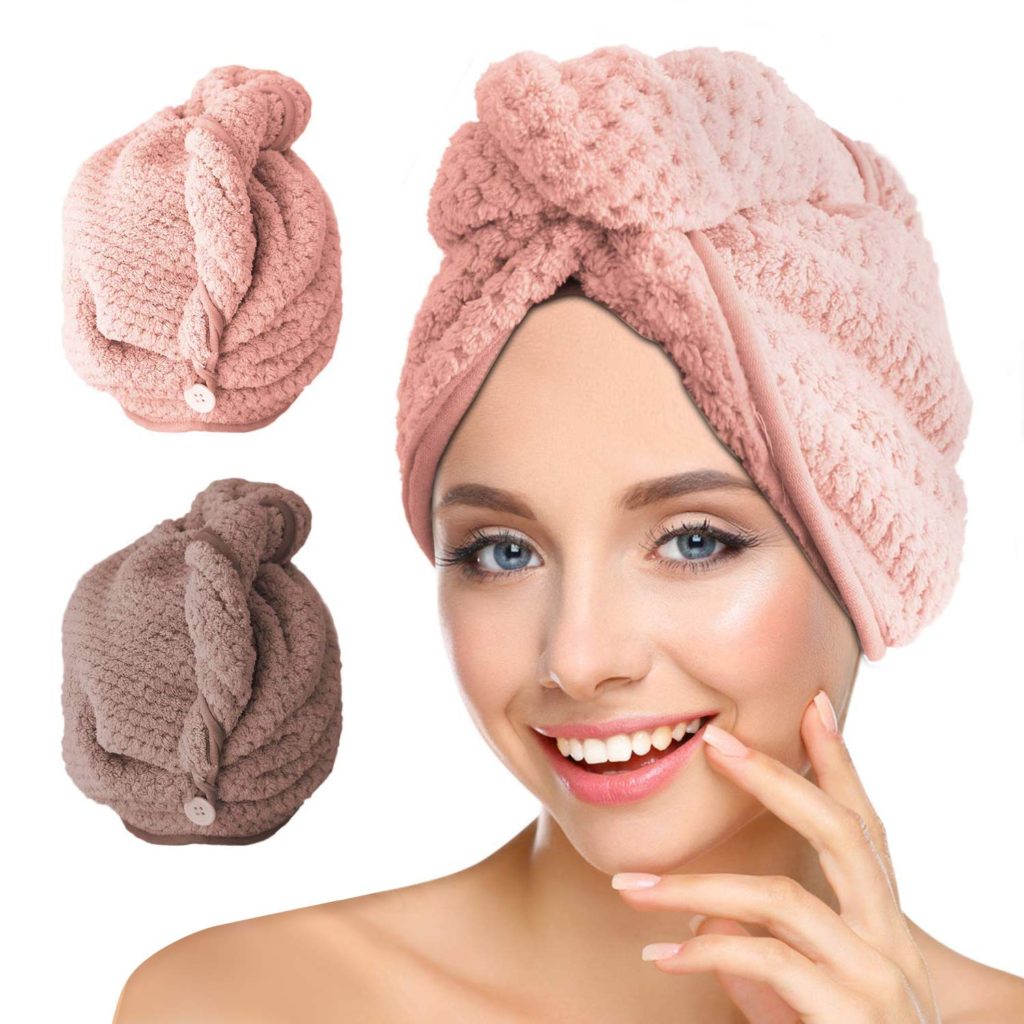
8: Hair Turban Towel

Travel Hair Towel

As soon as I get out of the shower, I want to wrap my hair up in a towel turban. But it’s just not practical to pack both a normal towel and a hair towel if you’re travelling light. So instead of a regular towel, which takes up a fair amount of room., I use a lightweight hair turban towel. They’re fairly small so they tuck easily into your suitcase or backpack, but they can still wrap up long hair.


Watson & Wolfe Wallet Review: The Best Vegan Travel Wallet Yet?

Every travel addict needs a good travel document wallet. There’s nothing worse than having your passport and paperwork loose in your bag – that just leads to awkward scrabbling at security checks, and no one wants that.

So travel document wallets are the perfect way to stay organised and keep all of your important things in one place. And as well as helping you stay organised, they also help you perfect your seasoned-traveler look. But if you’ve ever tried to find a vegan and eco-friendly travel wallet, you’ll know it can be hard to find something that’s both ethical and stylish.

But lately one travel wallet has been catching the eyes of vegans and eco-warriors: the Watson & Wolfe vegan travel document wallet. So naturally, I wanted to try it out for myself.

Watson & Wolfe: A Bit About The Brand

Watson & Wolfe is a boutique vegan leather company based in England. They sell wallets, cardholders, and now a travel document wallet. Every one of their products is both sustainable and ethical – they’re dedicated to creating vegan products that are both environmentally friendly, and people-friendly.

They believe the future is plant-based, so they’re vegan through and through, but still want to provide customers with the luxury of products that look and feel like real leather.

Their products have a sleek and timeless design, and sorry ladies, they’re designed with men in mind. Of course the wallets are more than suitable for us girls too – the classic black design goes with any outfit, handbag or luggage set. But by targeting men, these wallets are filling a gap in the market. Helen, the founder of Watson & Wolfe mentioned the need for a luxury vegan accessory brand for men in her interview with Vilda Magazine:

There are a lot of female vegan accessory brands already, doing a fantastic job of proving that non-leather can compete. However, men are hugely under-represented…We need to offer this level of quality to entice more men to shop sustainably. To remove the stigma that sustainable is less luxurious.”

And sure enough, each Watson & Wolfe product perfectly blends luxury with sustainability in effortlessly classy designs.

Watson & Wolfe Vegan Travel Wallet Review

The Unboxing – Christmas Come Early

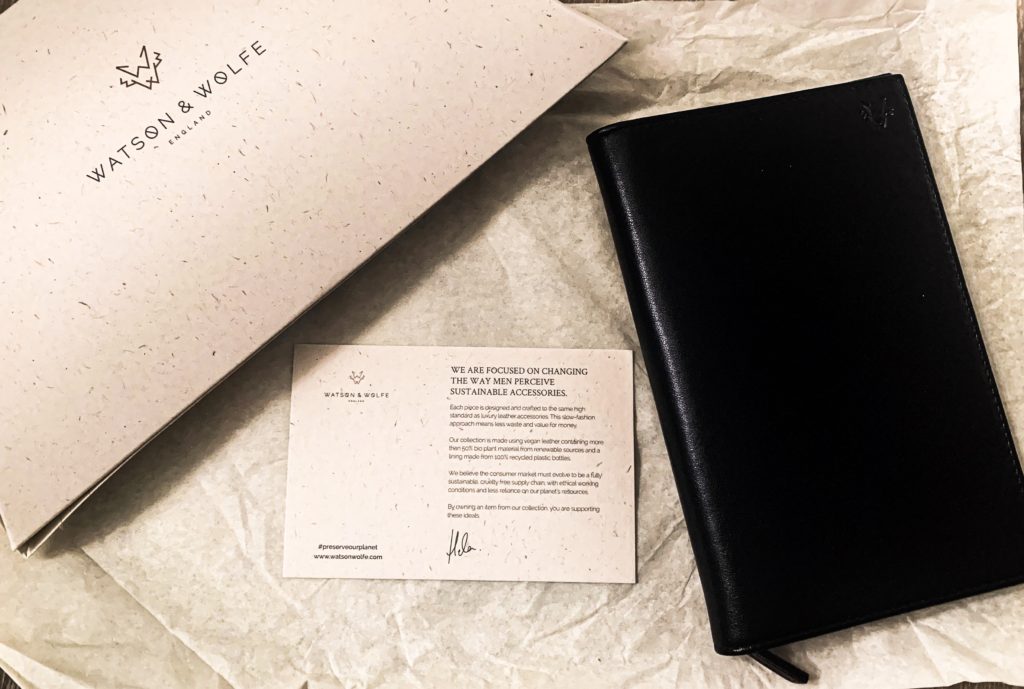
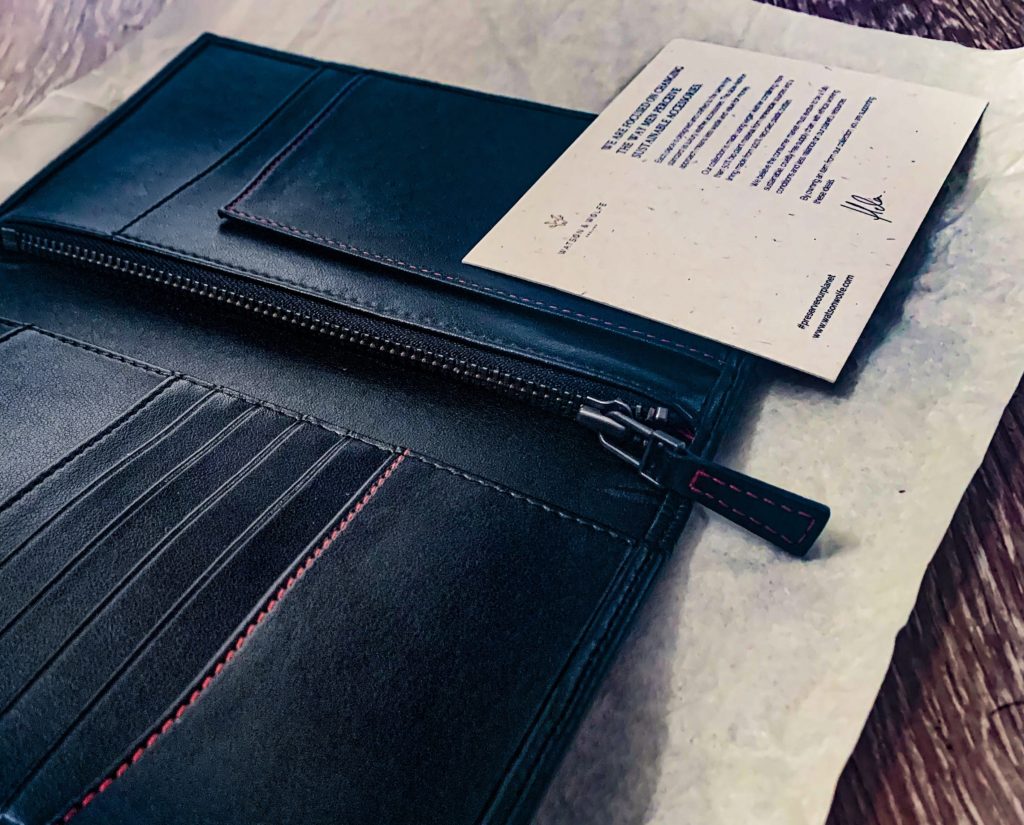
The wallet arrived in an eco-friendly cardboard sleeve, which popped open at the side to reveal layers of ec0-tissue paper. And underneath, the much-anticipated vegan travel wallet.

I’ve got to admit, the way the wallet was packaged and presented made it an exciting unboxing. And one thing’s for sure, this travel wallet would make a great vegan gift idea for any avid traveler – it’s practically already gift-wrapped.

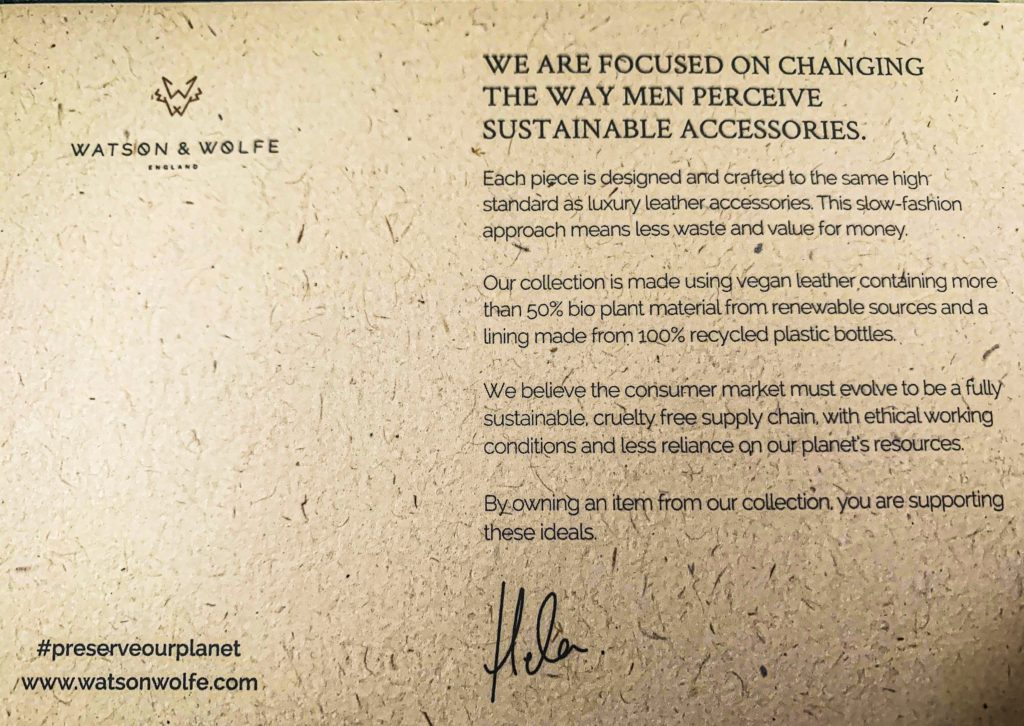
Inside the cardboard sleeve, there’s also a small card from Helen (the founder) with information about Watson & Wolfe’s mission and values. It outlines what the material is made from and what makes their products so sustainable. This is a great inclusion especially if you plan on buying this vegan travel wallet as a gift for someone who’s new to the Watson & Wolfe brand.

First Impressions: Quality At Its Finest

Taking a look at the travel wallet for the first time, I was thoroughly impressed by the quality. At first glance, you’d think it was real leather. The vegan leather became even more impressive when I read about how it was made – from 50% BIO plant material. But the sustainability doesn’t stop there, Watson & Wolfe also make sure the plant material used doesn’t divert from food sources for humans or animals.

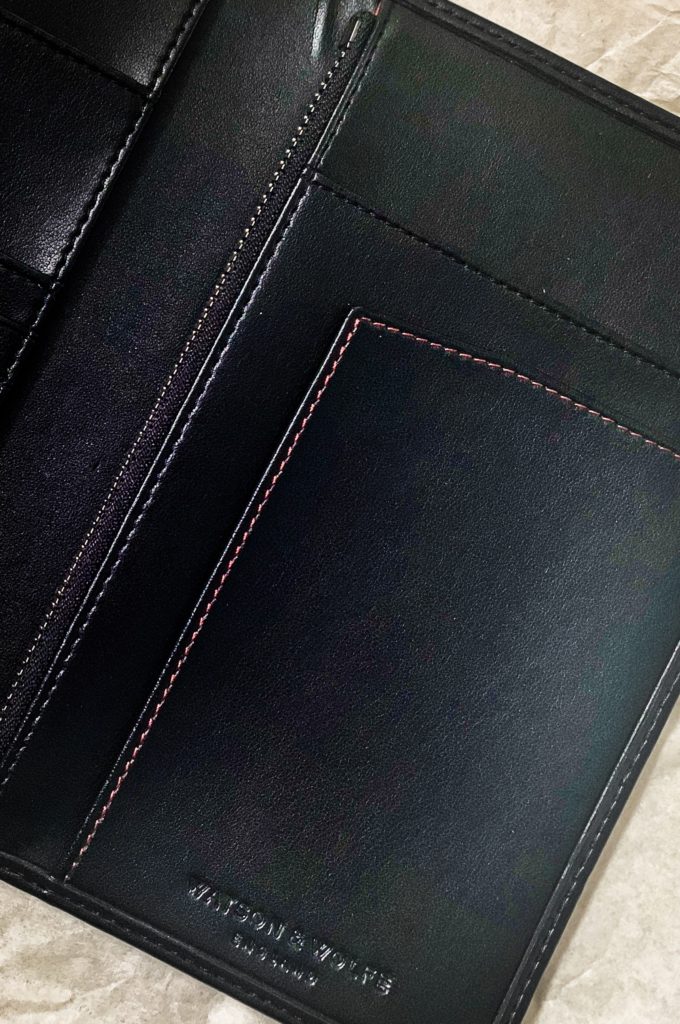
The sleek black design has a smooth finish and the Watson & Wolfe logo embossed into the corner of the front cover is the perfect addition. The little wolf logo adds a bit of detail to the front without interrupting the classic simplicity of the design. When you open the wallet there’s also ‘Watson & Wolfe England’ embossed into the leather of the passport compartment.
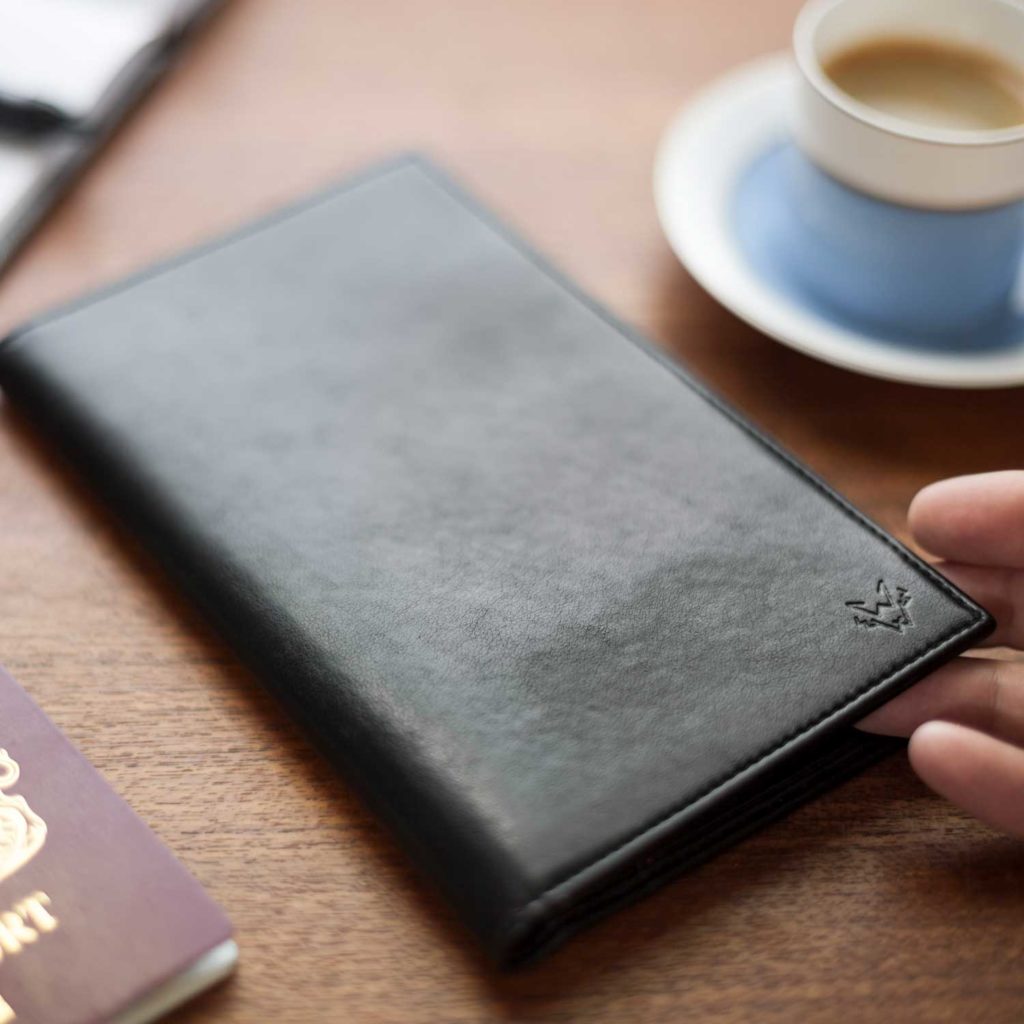
Whilst at the airport I actually had several people ask me what brand the wallet was – the unusual logo sets it apart from other brands, and adds to the wallet’s quality appearance. And if you want to add further detail to the wallet, there’s the option to have it embossed with your initials (up to four initials).

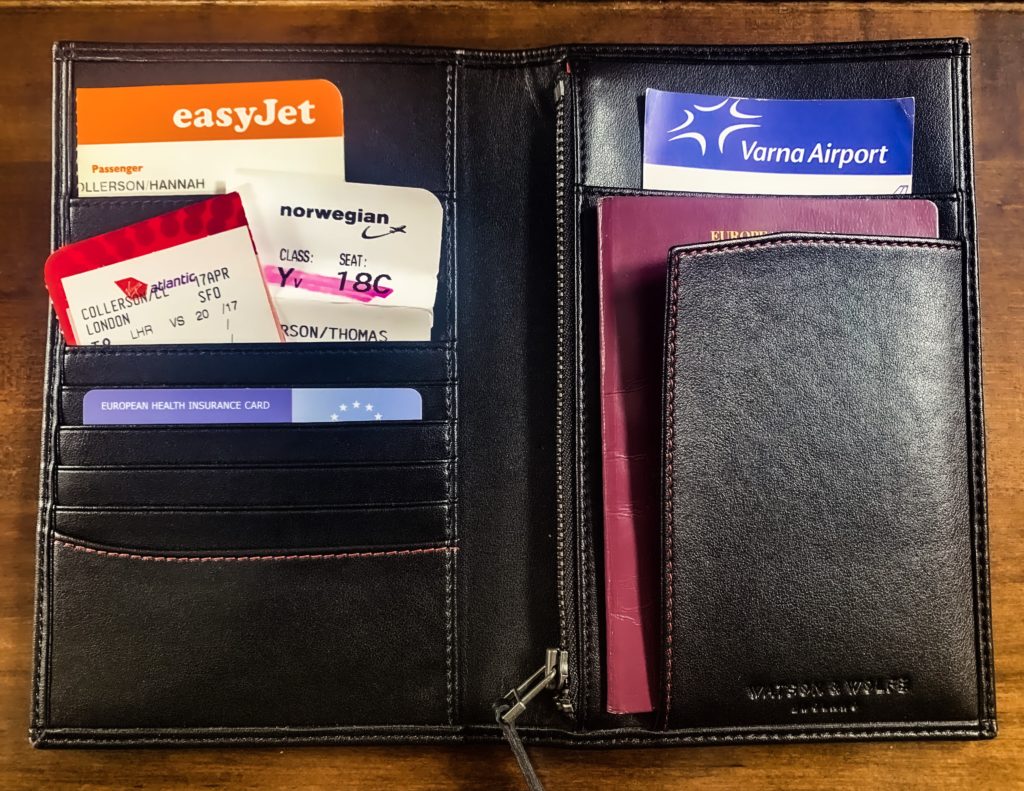
Inside the wallet, the black vegan leather is contrasted with elegant red stitching, creating a luxury feel. And when you open up the zipped compartment, the lining is a vivid red to match the stitching. The lining mimics the material used by luxury leather companies and feels just as high-quality. But rather than using polyester (a material that requires harsh chemicals, petroleum products and a lot of energy to make), Watson & Wolfe have created this lining from 100% recycled plastic bottles.

Practicality: Perfect For Every Occasion

The travel wallet is just the right size to hold your passport, any paperwork (including visas), boarding passes, credit cards and there’s even a zipped compartment for any coins or valuables.

A4 paperwork will need to be folded to fit inside the wallet, which is slightly smaller than a5 size, but this isn’t a problem at all, and the compact size means it can be easily slipped into any sized bag, or perhaps even a large pocket.


There are several different compartments for cards, papers, and whatnot, and there are actually two passport compartments which came in useful when traveling with a friend. So if you’re traveling as a couple, this definitely a great feature which lets you keep your important documents and passports in one wallet. Or if it’s just you, you’ve got a choice when it comes to organising where to put things in the wallet.

I took this wallet on a road trip around Europe and it was perfect for storing car-related documents (insurance papers and registration documents) and toll tickets. It fit perfectly in the door pocket of my driver’s seat, so whenever I came up to a security checkpoint, all I had to do was whip out this handy little folder.

Vegan Travel Gifts: 8 Vegan & Eco Friendly Gift Ideas For Globetrotters

Veganism is on the rise, especially amongst travel addicts and digital nomads. So the chances are, you know at least one vegan traveler. And when Christmas and Birthdays come around you might find yourself frantically worrying about what to buy them.

Because veganism is a lifestyle, rather than just a diet, it can be tricky to find vegan-friendly gifts. Strict vegans only use cruelty free, eco-friendly products and toiletries. But classic travel gift items like bags, notebooks, wallets, and backpacks often contain leather. And when it comes to gifting edibles or smellies (bath and shower products) it can be hard to know what’s actually suitable for vegans.

So to help you perfect your gifts, and to make sure vegan travel addicts have a chance of receiving top-notch presents, here are 8 vegan travel gift ideas.

8 Eco-Friendly Vegan Travel Gifts

1: Watson & Wolfe Travel Document Wallet

Every travel addict needs a good travel wallet, and this is the sleekest vegan travel wallet I’ve come across. It’s made from eco and vegan leather which still has the same look and feel as real leather. 50% of the eco-leather is made from the bio-plant material from corn, so it also doesn’t take away from any food sources. The inside lining is also sustainable and vegan-friendly, made from recycled plastic bottles.

Unlike a lot of other travel wallets out there, this document holder has a thin design that can slip easily into a bag, purse or backpack. And despite its thin design, it can hold passports, cards, money, visas and any other important paperwork.

And if you’re hoping to give your vegan friend a personal gift, you can choose to have their initials embossed into the wallet. If you want to know more, check out my vegan travel wallet review.

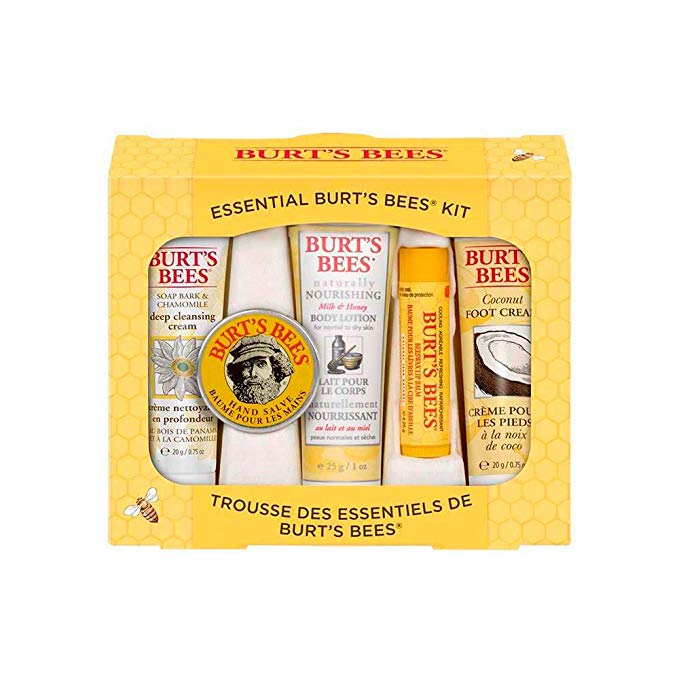
2: Vegan Toiletries


Until you’ve traveled as a vegan, you won’t know the struggle of trying to find vegan-friendly soaps, shampoos and conditioners. Most of these toiletries will have been tested on animals, and some will even contain animal fats.

So a great vegan travel gift is a set of cruelty-free toiletries. This will save your friend from having to search high and low for vegan products in a foreign country.

If you know your vegan friend has a checked luggage allowance, you can buy them full size bottles to take with them on their next adventure. If they’re prone to traveling to light, there are plenty of vegan travel toiletries you could buy them.

3: Bamboo Travel Utensils

Fast-paced travel often equals a lot of quick meals on the go. And it can be tempting to use plastic utensils and straws. But these are so bad for the environment and aren’t even particularly nice to eat or drink with.

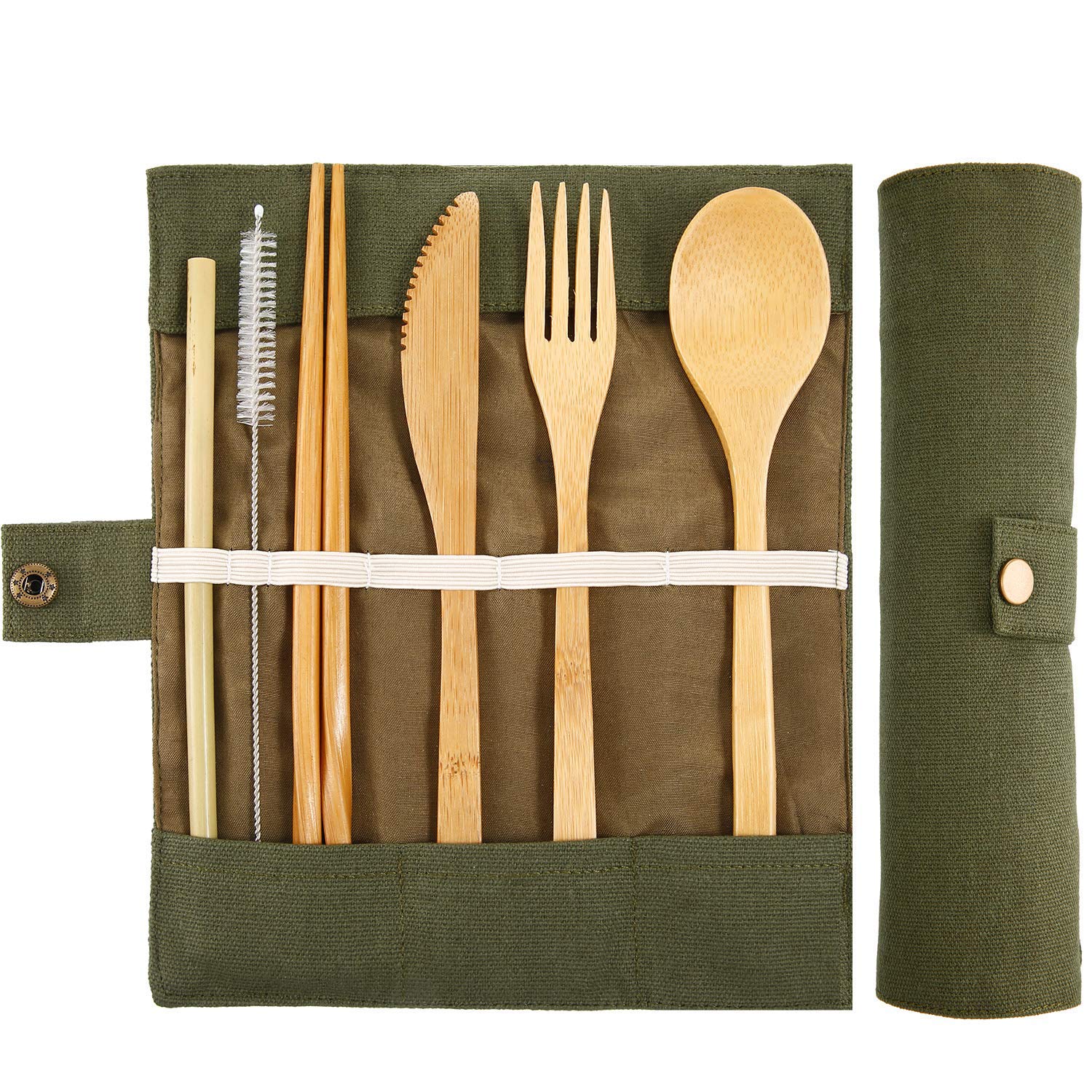
This set of bamboo utensils includes a bamboo straw, chopsticks and a compact carrying case. They can be washed and used multiple times, so they’re great for all meals. Not only are these utensils vegan, but they’re also super durable, so they’ll survive any adventure. They can also be used at home after the trip is over, a 2-in-1 gift option that keeps on giving!

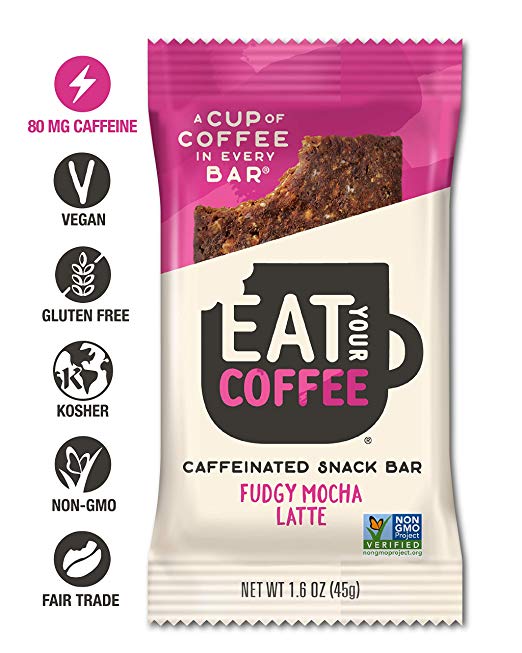
4: Eat Your Coffee Caffeine Bars

Coffee is a must in the morning, especially for travellers who have days jam packed with activities. But for vegans, coffee on the go can be a challenge. You never know if you’ll find a coffee shop with non-dairy options. It can start to feel like it’s easier to just skip the coffee altogether, rather than searching for vegan-friendly cafes first thing in the morning.

These caffeinated snack bars solve that problem. They come in 3 different flavours: fudge mocha latte, peanut butter mocha, and salted caramel. And each bar has the same amount of caffeine as one cup of coffee. It’s like breakfast and your morning coffee in one easy bar. These are the perfect flight snacks, and can be taken in both hand and checked in luggage.

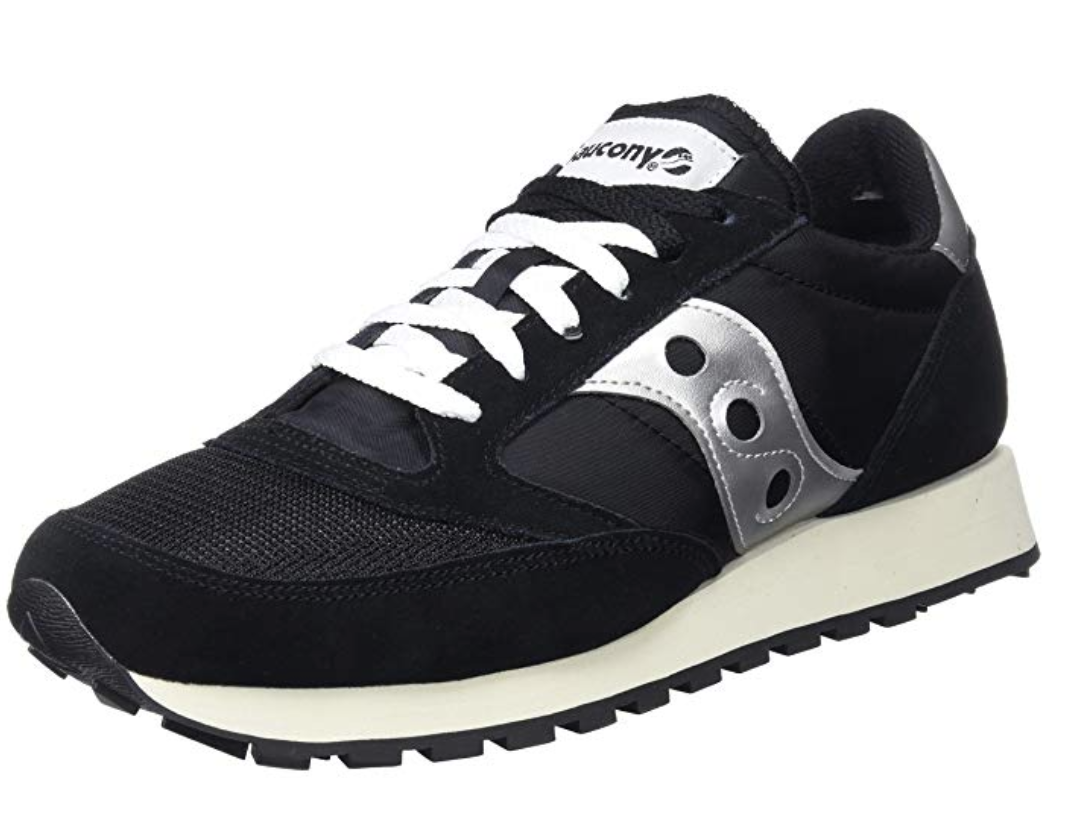
5: Saucony Sneakers

A company that stands for good causes, Saucony is a brand that creates vegan sneakers. A sturdy pair of shoes can come in handy on more than one occasion, in several different travel destinations, too.

Whether you’re planning on hiking mountains or just exploring new towns, having a comfortable pair of shoes is a must.

Saucony has options for men, women, and children, and there are plenty of colours and styles to choose from. They also run their own foundation called Run for Good; it promotes healthy lifestyles to children experiencing childhood obesity. With this vegan travel gift, you can rest assured that you’re supporting a quality brand with excellent values.

6: Elephant Dung Notebook

If there’s one thing every traveler needs, it’s a notebook. When you’re traveling you never know when you’ll need to make a note, plan an itinerary, or note down someone’s number. Sure we all have phones to make notes on, but technology isn’t always as reliable as a trusty pad and pen.

So a notebook or travel journal is a great gift for any keen wanderer. But if you want to go one step further, you should look into eco-friendly notebooks. And it doesn’t get more eco-friendly than this notebook made from elephant dung.

It’s handmade, fair trade and eco friendly, and it’s bound to get a few giggles when you reveal it’s made from elephant poop.

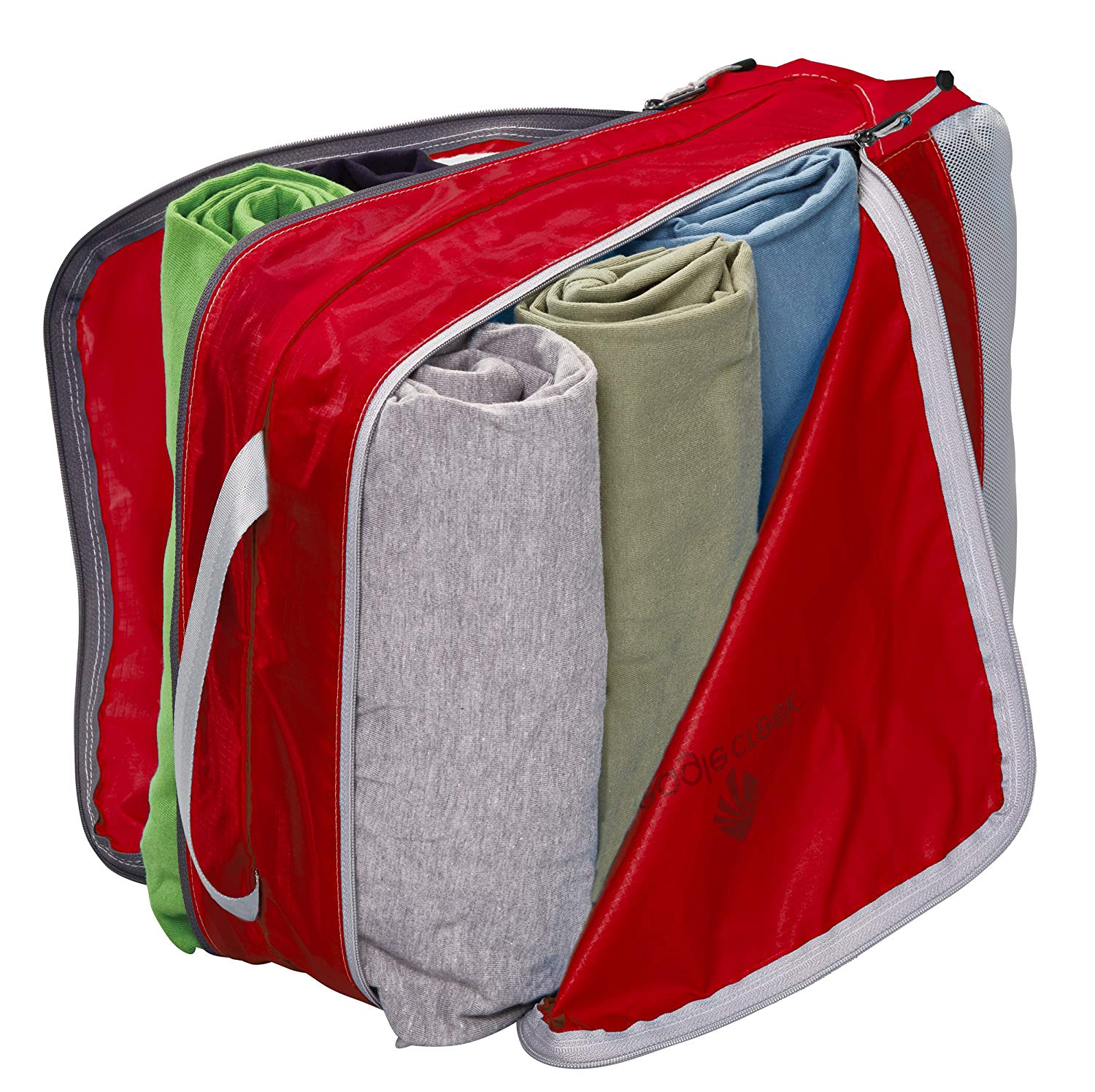
7: Eagle Creek Pack-It Clean Dirty Packing Cube

Separating your clean from your dirty clothes whilst traveling usually involves bringing along a plastic bag. Not only is this hard on the environment, but it can also be inconvenient. Rustling through a plastic bag in a hostel or hotel laundry room isn’t anyone’s idea of fun, and it’s definitely not discreet.

These packing cubes are a eco-friendly alternative to using a plastic bag for dirty washing. The cube is divided in two, with one side for clean clothes and one side for your dirties. And the material is designed in a way that any nasty smells won’t escape or leak into your clean section. Packing cubes are also a great way to organise backpacks or suitcases. 

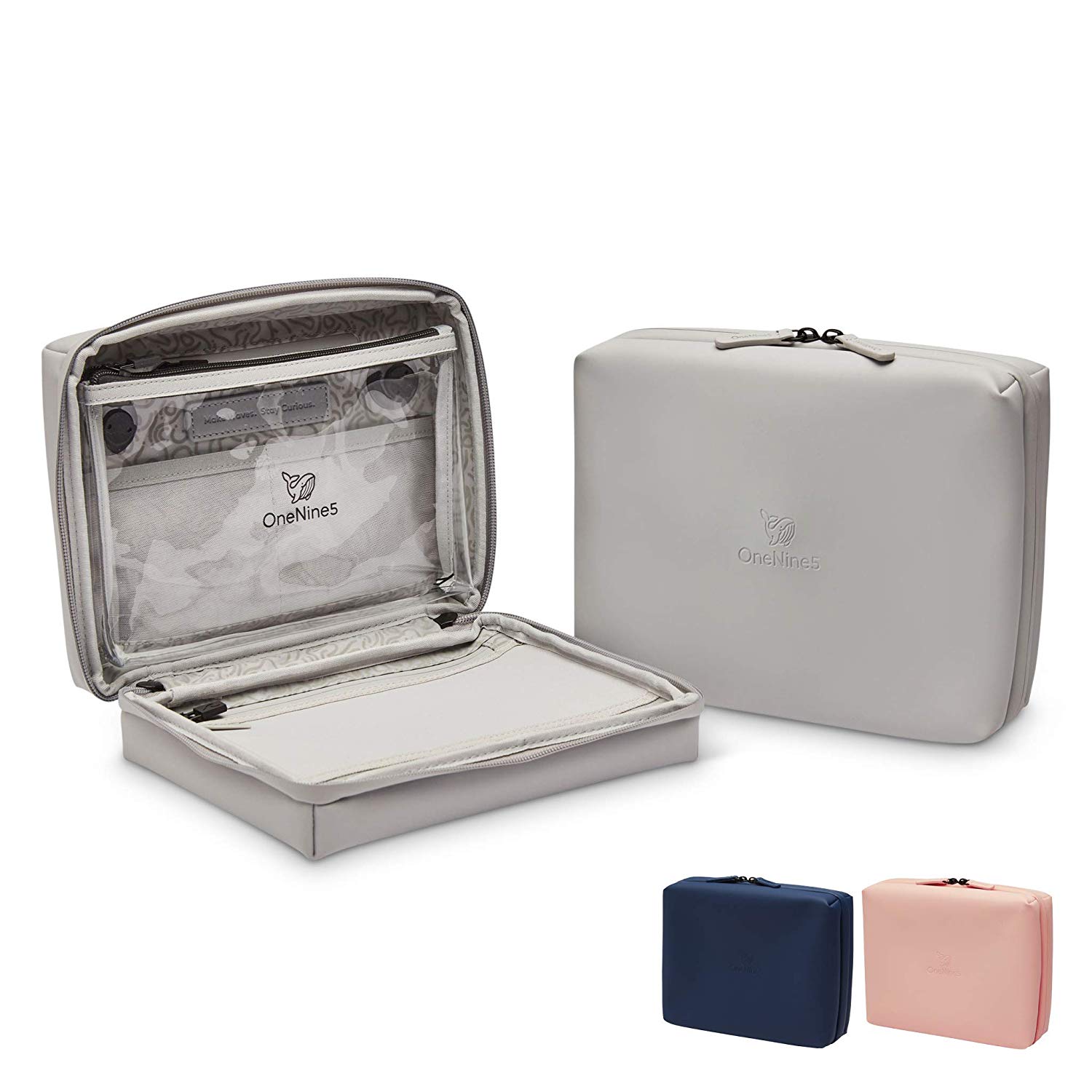
8: OneNine5 Eco-Friendly Travel Wash Bag

This gift is a great idea for eco-conscious vegan travellers. The wash bag can hold a range of their favourite vegan toiletries, and includes a reusable and detachable clear liquid bag. The clear liquid bag is TSA approved so it can be used for airport security.

The lining material is also made from recycled plastic, so this is a gift that contributes to the clean up of oceans and landfills. The lining is also waterproof and wipeable, so it will stay clean and free of any makeup stains.

This is also a gift that can last a lifetime, as OneNine5 will replace the wash bag free of charge if it reaches the end of its lifespan. And when you post it back to them, they’ll recycle the material so it doesn’t add to the growing waste problem.

The 7 Best North Face Backpacks For Travel & Adventure: Ultimate Buyers Guide 

Regardless of what type of travel or day trip you’re into, one thing everyone needs is a reliable rucksack. 

Whilst traveling, be it for a day or a few weeks, your backpack is home to your beloved belongings, so you want it to be strong and protective. It also helps to have different sections, pockets and dividers if you want to keep organised whilst on the go. 

But as well as looking after your belongings, your travel backpack needs to look after you. What I mean by this is, you want a backpack that makes carrying heavy items easier, without hurting your back. A good travel backpack will make your adventures easier. 

North Face is a top brand for outdoor gear, and several of their backpacks have been made with hiking, climbing and mountaineering in mind. So North Face backpacks can handle an adventure. 

But to help you find the best North Face backpack, here’s a buyers guide and a list of the top choices. 

What is The North Face? 

The North Face is a brand that specialises in outdoor clothing and gear for adventurous campers and travellers. 

They sell fleeces, coats, tents, sleeping bags, travel and camping accessories, and of course backpacks. 

North Face gear is designed to help you venture off the grid, and take on more challenging adventures. The name ‘The North Face’ refers to the north face of a mountain, which is the coldest and hardest route to the peak, and their gear has been designed to be suitable for even the hardest of journeys. 

Why choose a North Face Backpack?

The North Face designs backpacks that are suitable for all kinds of adventures. So whatever corner of the world you’re heading to, whatever climate or adventure you’re tackling, a North Face backpack is going to protect your gear. 

North Face backpacks are also comfortable and they make carrying a heavy pack easier on your back. 

The Best North Face Backpacks

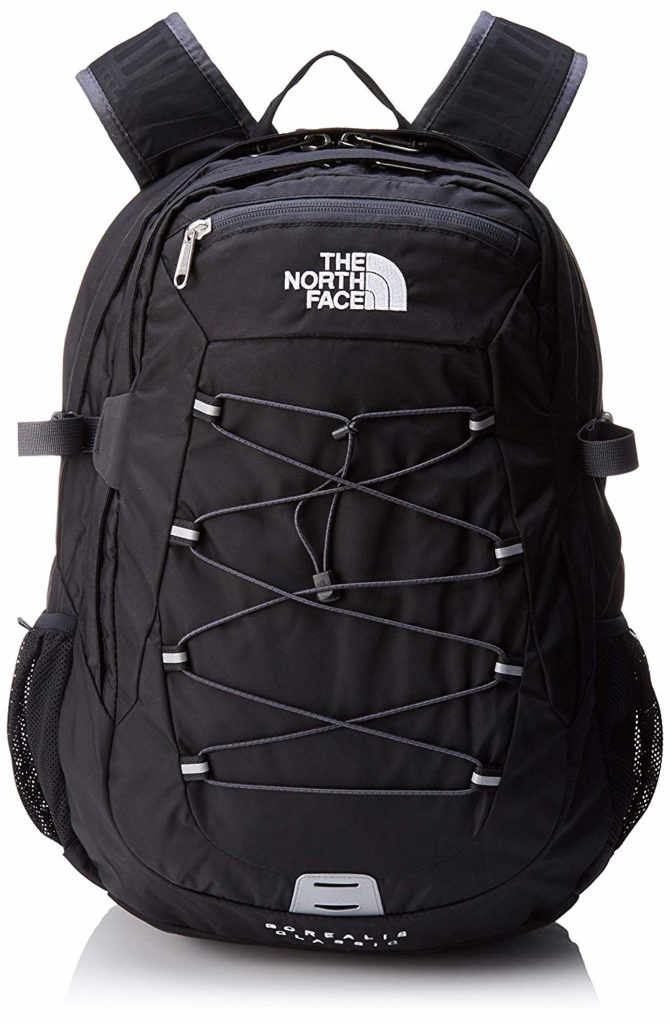
1: North Face Borealis

The Borealis is one of the most popular North Face backpacks, because it’s the classic day bag. It’s fairly small in size, and it’s lightweight too, so it’s great for day trips, or shorter getaways.

It’s also water-resistant, so there’s no need to worry about your belongings being damaged by bad weather or damp ground.

The Borealis’s interior is also designed for those who like to keep organised. It has different compartments, and some padding to keep your belongings from becoming squashed, damaged or bashed.

Pros

  • It comes with a lifetime warranty 
  • It’s a popular backpack model
  • Water resistant so little risk of water damage to your belongings
  • Organised interior with different compartments
  • Mesh compartments on the sides for extra storage, or for a water bottle
  • It’s the perfect size for a day bag
  • It’s a unisex design

Cons

  • It’s too small for anyone wanting a large capacity backpack for bigger trips

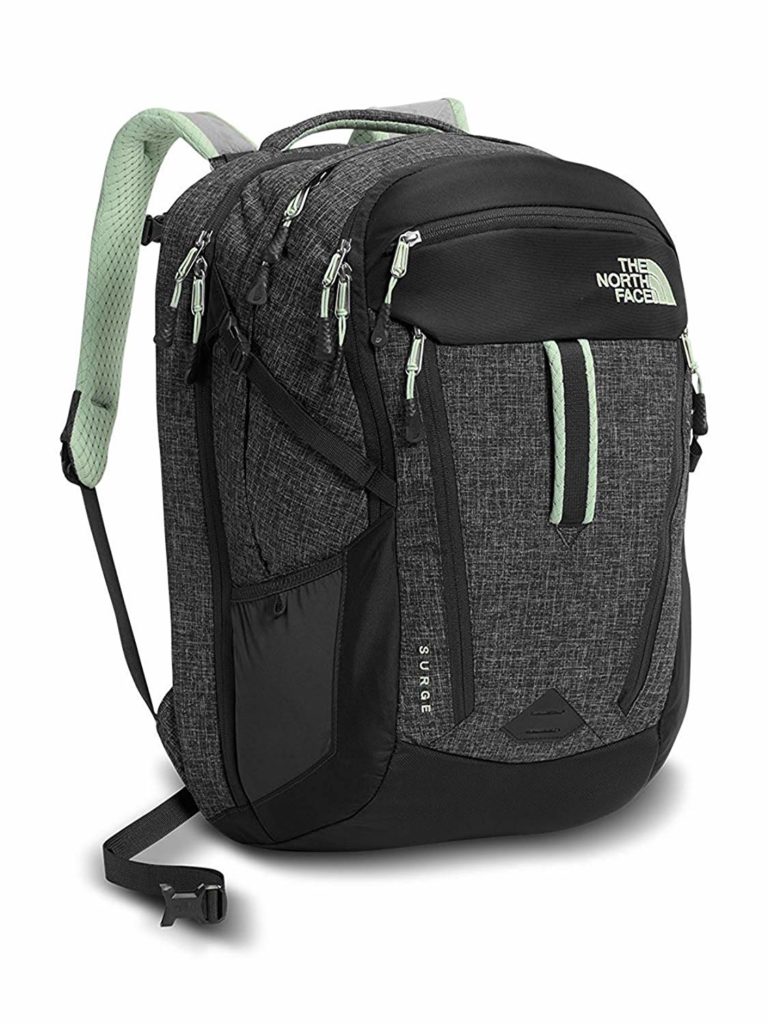
2: North Face Surge

The North Face Surge is an elegant day bag that doubles as a laptop bag. It has a dedicated space for a laptop up to 15″.

The Surge is also one of the most comfortable North Face backpacks to wear on long journeys. It’s padded, and features North Face’s FlexVent suspension system which makes the bag easier on the shoulders and back.

The back panel is breathable, allowing air to pass through and keep your back cool, because no one wants the dreaded sweaty back that often comes with carry a rucksack.

One thing to note with this backpack though is that it’s designed for women. There are several colourful design options, and the bag is designed for a woman’s smaller build.

Pros

  • Very comfortable for a woman as it’s specifically designed for a female body
  • Laptop compartment with soft lining to prevent scratches and bashes
  • FlexVent suspension for comfortable carrying
  • Perfect for those who like to work on the go

Cons

  • It’s not a backpack for men
  • It’s not waterproof, which may cause a problem if you’re using it to carry your laptop a long way
  • It’s not as lightweight as other models

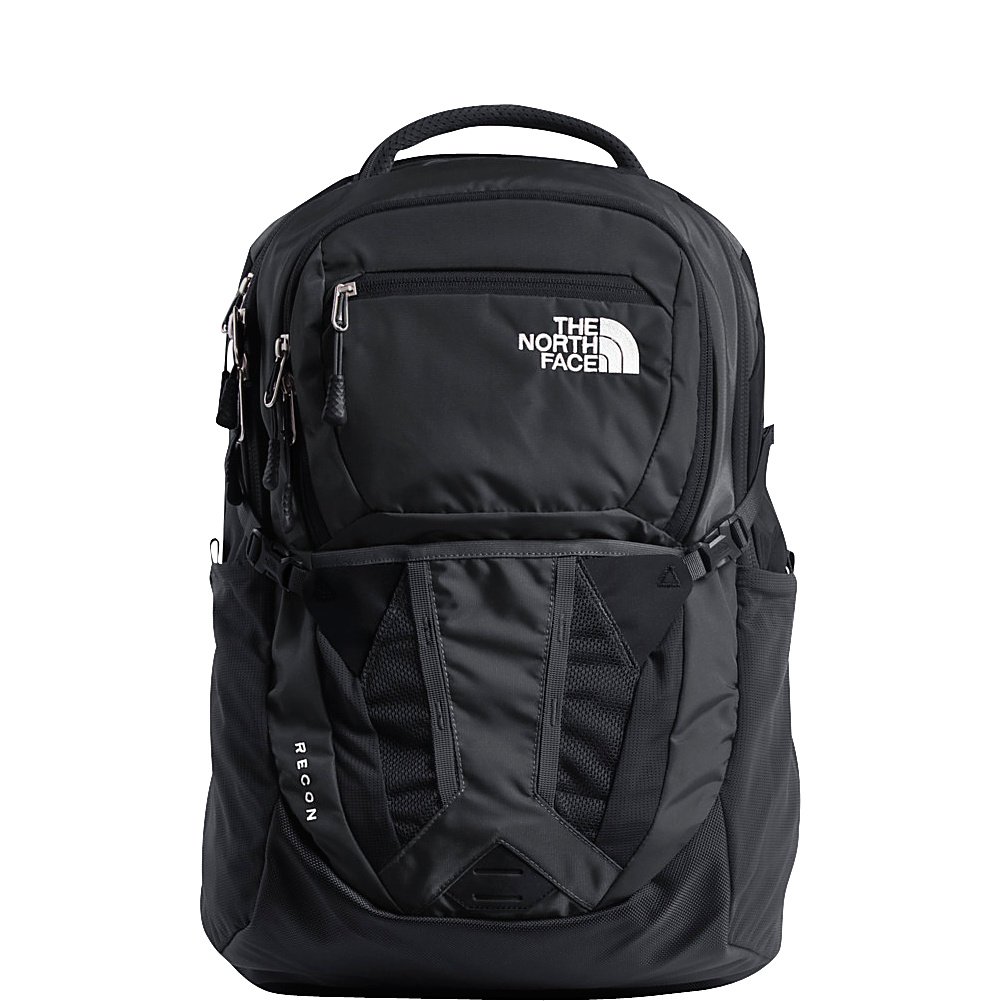
3: North Face Recon

Another women’s North Face backpack, the North Face Recon. This backpack has a classic design, and it’s a popular choice for travel addicts because it’s got a larger capacity than other North Face day bags.

Much like the Surge, this also has a dedicated laptop compartment, which makes it ideal for digital nomads. The laptop compartment is well padded and protected, so there’s no risk of any damage to your laptop.

It also has a FlexVent suspension system and a sternum and waist straps to make it more comfortable to carry.

Pros

  • 31 litre capacity makes it a better option for traveling on short trips
  • Very comfortable for a woman as it was designed for the female form
  • FlexVent suspension system
  • Sternum and waist straps
  • Laptop compartment makes it perfect for digital nomads. It can also be used as a work bag. 
  • Different colours to choose from

Cons

  • Only suitable for women
  • Can’t be stood up on a flat surface, so needs to be carefully placed down if it contains valuables

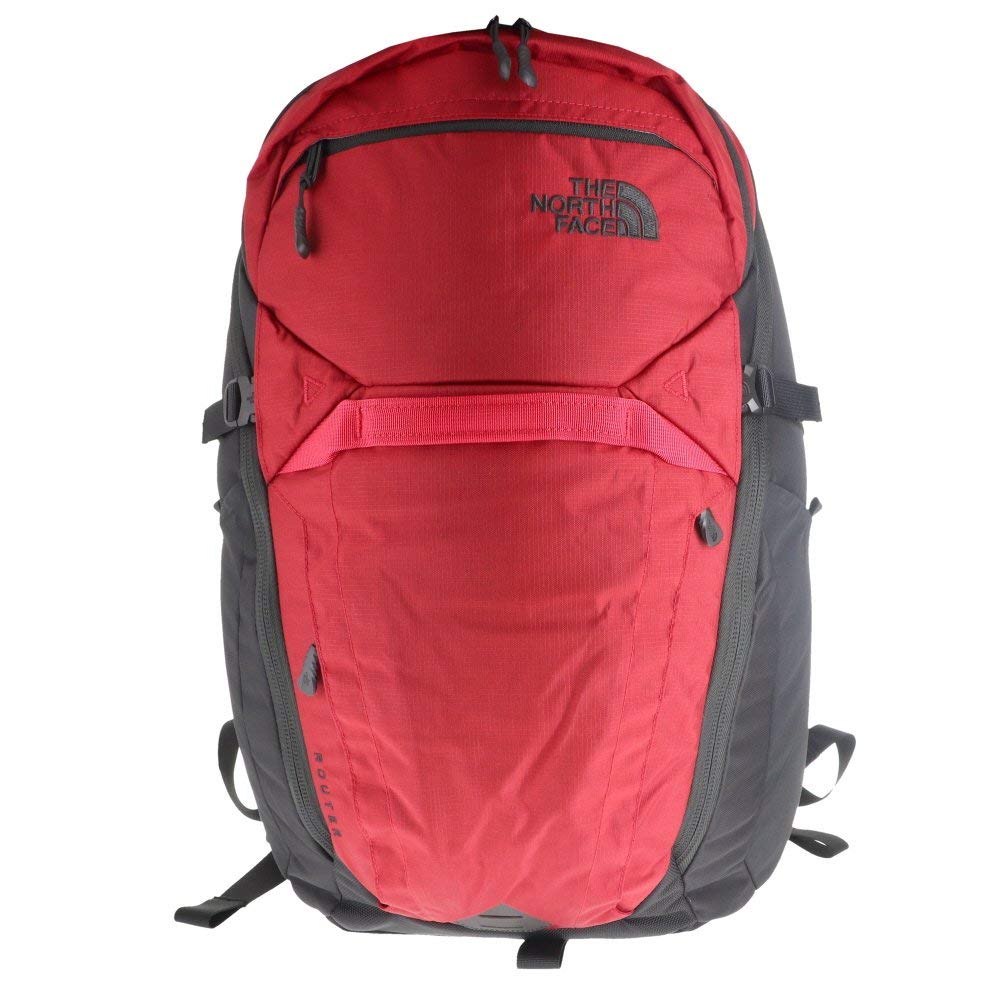
4: North Face Router

The North Face Router is another laptop day bag, but this is one for the gents. It comes in red or black, so there’s a couple of different style options.

The guys out there will be pleased to hear it’s designed to be just as comfortable as the ladies’ Surge and Recon, with the same FlexVent suspension system and padded straps providing ultimate comfort.

This laptop day bag is bigger than the women’s alternatives, being 17″ rather than 15″. So it fits much more than just a laptop.

The larger capacity and durable material make it a perfect backpack for traveling. As long as you don’t mind packing light, this can easily cope with larger and longer adventures.

Pros

  • It’s large capacity means it can fit more than just a laptop
  • Flexvent suspension system and padded straps make it super comfortable 
  • You can choose between red or black 
  • Specifically designed to suit male bodies 

Cons

  • Not a great choice for women

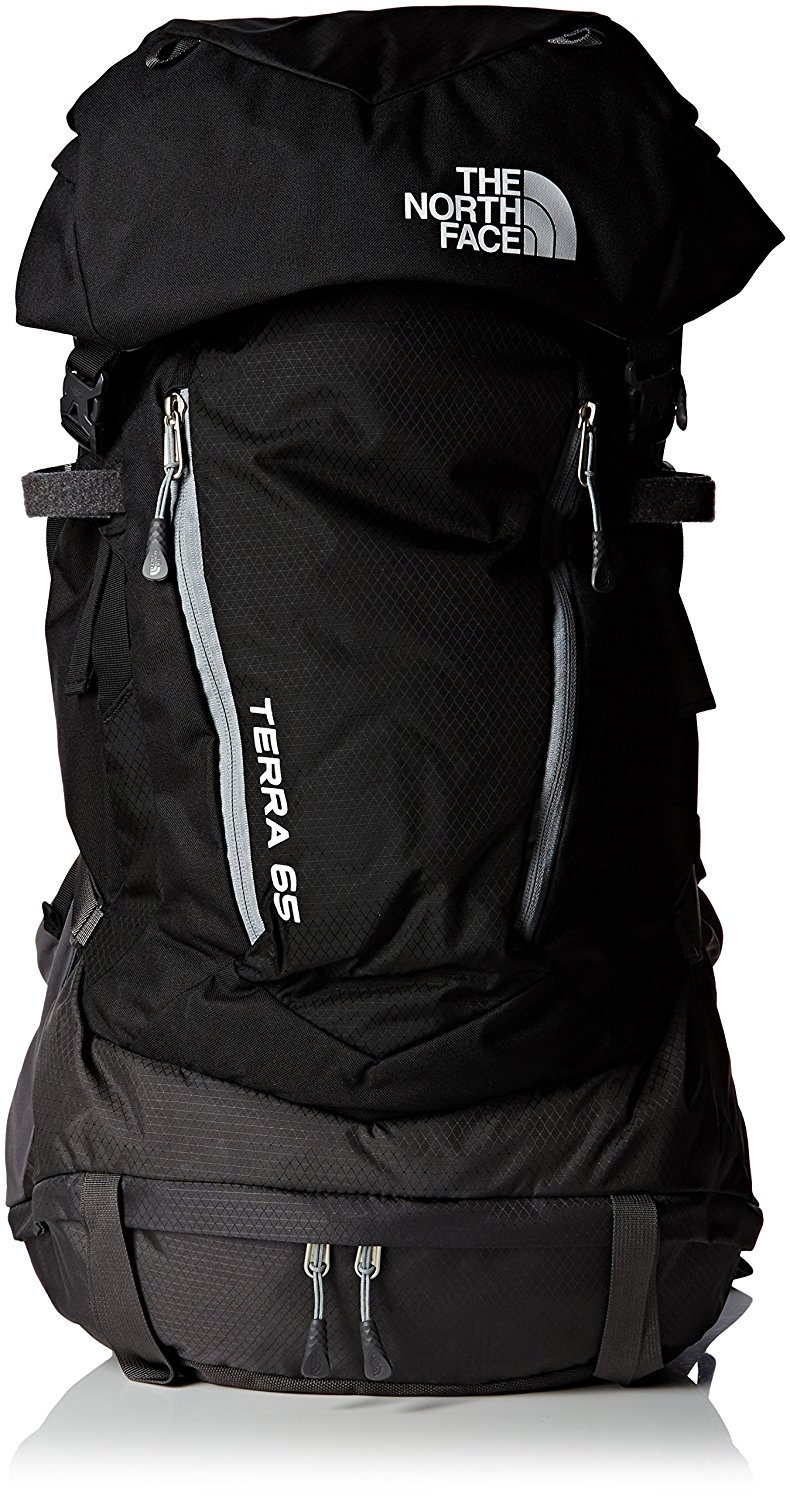
5: North Face Terra

The best North Face backpack for travel

The North Face Terra is a unisex backpack that comes in different sizes, so you can find one that fits you and your belongings perfectly. You can choose a 50, 55 or 65 litre rucksack, so it’s definitely a rucksack designed for travel.

You can also use it with a hydration bladder, and it has a compartment for a laptop too, making it one of the most versatile backpacks.

It’s got a vertical channel that gives the backpack good ventilation and a padded shoulder harness and hip belt for comfort.

It also has a sleeping bag compartment, making it a great bag for outdoors and adventure travel.

Pros 

  • The best North Face backpack for travel 
  • Designed with hiking in mind 
  • Large capacity makes it perfect for backpacking and longer trips
  • Sleeping bag compartment makes it a good adventure bag
  • Laptop compartment useful for digital nomads
  • Can be used with a hydration bladder
  • Super comfortable and ventilated 

Cons

  • Not suitable for cabin baggage or smaller trips  

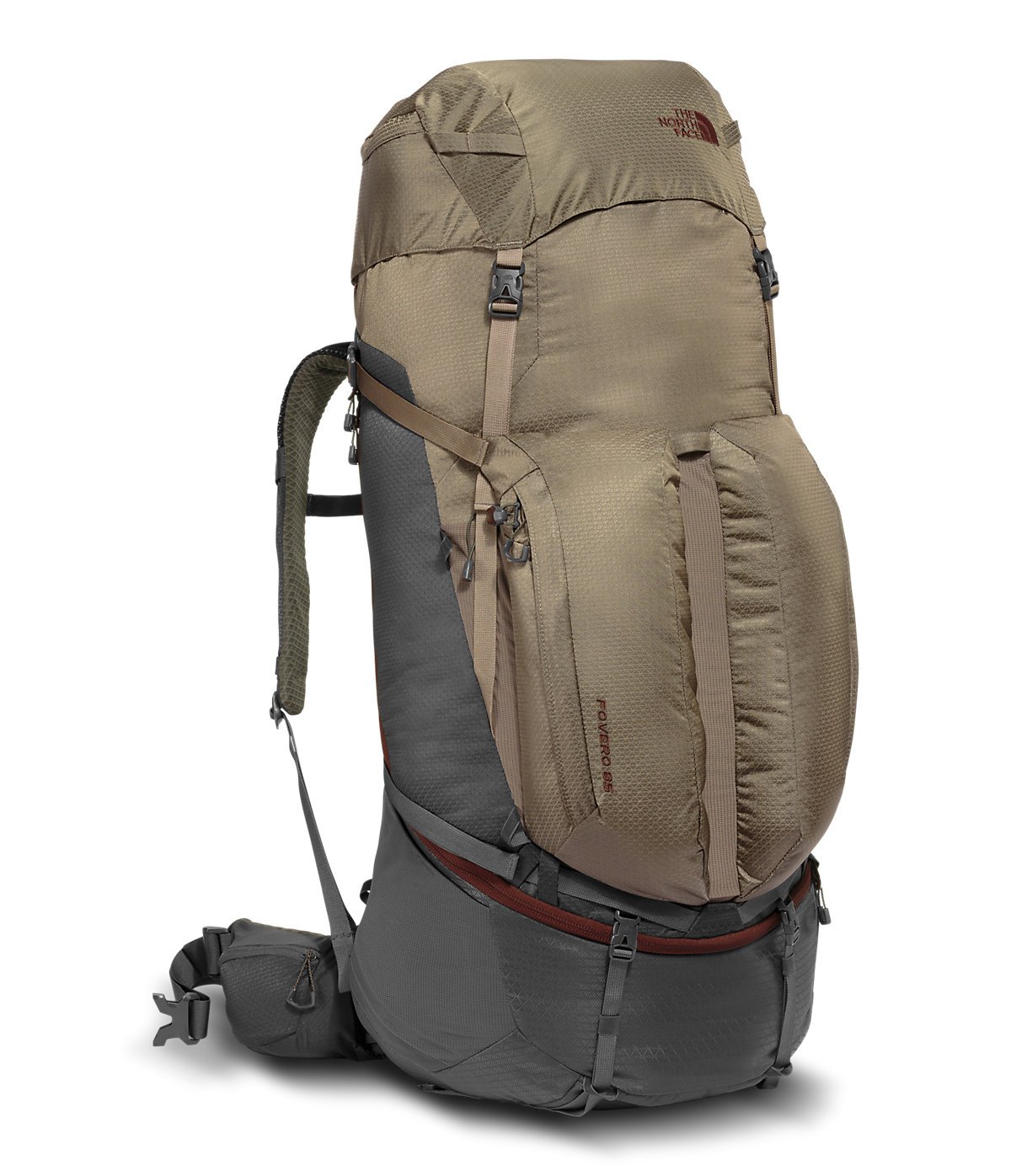
6: North Face Fovero 85

North Face Travel Rucksack

The North Face Fovero 85 is THE backpack for long term, adventurous travellers. It has even more room than the North Face Terra, and it has a separate sleeping bag compartment that can be attached/detached.

The lid also doubles as a day bag, and can be attached and detached from the bag so you don’t have to worry about carrying two bags at once.

The suspension systems makes carrying heavy weight easier, which is especially useful if you plan on hiking with a lot of gear.

It also comes with a waterproof cover that can be easily pulled over the bag, so there’s no need to worry about traveling in bad weather.

Pros

  • Perfect for carrying lots of gear
  • Sleeping bag compartment
  • Detachable day bag
  • Great suspension system  
  • Padded straps for comfort
  • Waterproof cover

Cons

  • It’s massive, which means it’s not suitable for small trips 

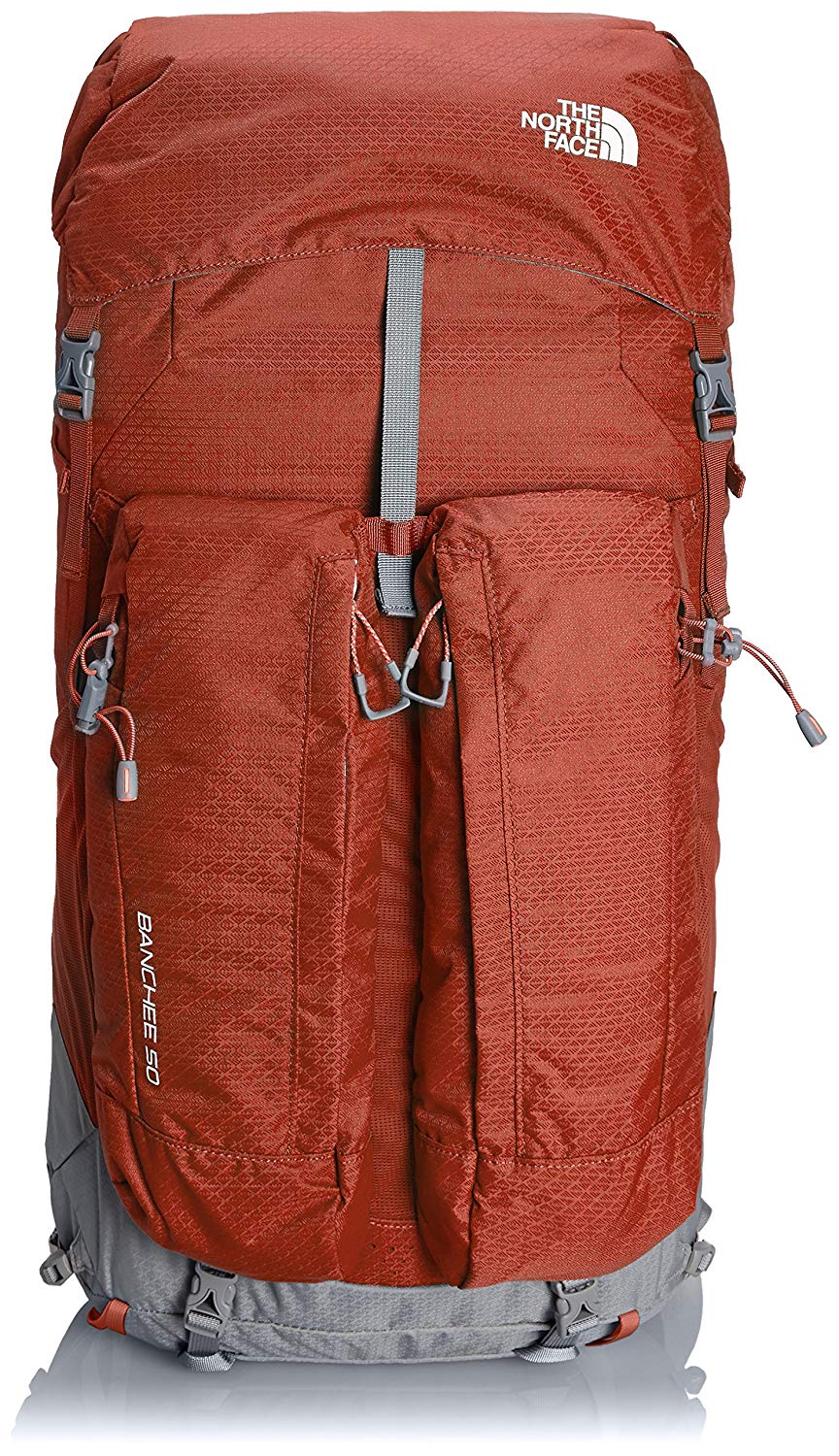
7: North Face Banchee 50

Travel Backpack From The North Face

This is a great backpack for anyone who likes to travel on shorter trips, as well as big adventures. It can hold up to 50 litres worth of kit, but it can be adjusted to become a smaller backpack for smaller trips.

It’s suitable for both men and women, and it’s one of the most comfortable North Face backpacks. The straps have some really cushy padding, and you can use the front straps to spread the weight of your bag.

It also comes in two colours, red and green, so you can choose the style that suits you best.

Pros

  • Great for all kinds of travel – short trips and long adventures
  • Super comfortable to wear, thanks to the cushy padding
  • Suitable for both men and women
  • Size of the bag can be adjusted
  • Two colours to choose from

Cons

  • No laptop compartment 

What to look for in a North Face backpack? 

Different backpacks suit different people, mainly because we all lead different lifestyles. So before rushing out and buying a backpack for your next trip, here are some things to look for and consider 

Capacity: how much can it hold? 

Depending on where you’re traveling and for how long, you might need a smaller or larger backpack. 

You can get some really massive backpacks for bigger trips, some even hold up to 120L. But these will be heavy to carry, even with comfortable straps, and if you’re traveling by plane these will need to be checked in. 

North Face also do a huge range of smaller backpacks, up to 40L, and most of these can be carried comfortably, and can be used as a cabin bag when flying. 

Padding: is it comfortable? 

If you’re traveling with a backpack, you need to be able to carry it for a while without the straps cutting into your shoulders or the weight hurting your back. 

So for your backpack to be comfortable and safe to wear, you need it to have cushy straps that are soft on the shoulders. And a padded back will stop the backpack from feeling lumpy and bumpy to wear.

Protection: how much protection does it offer your belongings?

Some bags will have internal padding that gives your belongings extra protection. So if you’re carrying valuables like cameras or a laptop with you on your travels, you’ll definitely want to make sure your bag keeps them safe from bumps and bashes. 

Another way to make sure your bag offers enough protection is to get a waterproof bag. This way if you’re venturing somewhere with bad weather, or you’re hiking and get caught in the rain, water isn’t going to dampen your possessions or ruin your electricals. 

Ventilation: how good is the air flow? 

If you’re used to wearing a backpack you’ll know the ever-embarrassing problem of back sweat. Some backpacks can make you sweat like crazy. I’m not talking like a little bit of moisture, I’m talking dripping wet t-shirt back sweat.

It’s embarrassing and uncomfortable, but it can be so easily avoided with a good backpack! All you need is good ventilation.

Lots of North Face backpacks will have ventilated backs, allowing air to flow, keeping your back cool and significantly non-sweaty.

Internal features: what’s it like inside? 

Having one big open interior will allow you to fit more in your backpack, but it means your things are probably going to be quite unorganised. You’ll have to just throw everything in, without having any sort of structure.

If you want to organise your backpack a bit more, you might want to look for a backpack with internal features and dividers.

Some North Face backpacks will have laptop compartments, and smaller phone or money pockets. This makes for convenient packing.

Quality: will it go the distance? 

North Face is a top outdoors brand, so they always make quality backpacks. Choosing a North Face backpack means you won’t have to worry about your rucksack breaking under pressure or ripping when carrying a heavy load.

Straps: does it have supportive straps?

Whether you’re heading out for the day, or for a long term travel trip, you need your backpack to be comfortable to wear. Supportive and padded straps make carrying a heavy bag easier. You won’t have to put up with straps cutting into your shoulders.

If you’re traveling long distance with your backpack, and you plan on carrying it around for longer than an hour or two, you might want to consider a rucksack with chest and sternum straps. This helps you spread the weight of your bag, making long walks easier.

Size: will it double as cabin luggage?

If you’re going to be traveling with your bag, you’ll need to think about size. Choosing a massive backpack will allow you to take all the gear you need for several weeks or even several months. But you will have to check it in when you fly.

Choosing a smaller backpack will mean you’ll have less capacity but you can take it on smaller trips, and use it as your cabin bag.

You need to think about what size is right for you, or if you want different backpacks for multiple occasions, why not think about buying two north face backpacks?

Pin It on Pinterest