Booking your dream vacation can be overwhelming, especially when you see the hefty price tag attached to tourist hotspots. Does that mean you have to forgo the best adventures in the world? Of course not! Don’t give up on your travel plans yet – just travel a little smarter.
If there’s one thing I’ve learned from traveling full-time, it’s that often, the most popular and expensive destinations simply aren’t worth it. Hear me out. Would you rather spend a ridiculous amount of money visiting somewhere that’s overrun with tourists, or would you rather take the trip of a lifetime without breaking the bank, and without having to battle your way through crowds of tourists just to get a glimpse of the sights you wanted to see?
There are so many incredible budget alternatives to popular (and expensive) destinations. You just have to know where to find them. That’s why I’ve put together this article.
Here are some of the best budget alternatives to popular destinations.
1. Budapest, Hungary Instead of Vienna, Austria
Budapest is an inexpensive and beautiful alternative destination to Vienna.
Are you dreaming of the rich history and fine food in Vienna? Budapest has both of those things and much more for a fraction of the cost.
You can walk through this glamorous city and weave in and out of bustling crowds while admiring stunning river views and historic architecture. Tours of Castle Hill, including the 13th Century Royal Palace, are free due to its status as a UNESCO World Heritage site. Even better, you can spend around $30 and sail down the Danube or visit thermal spas for an afternoon of blissful relaxation.
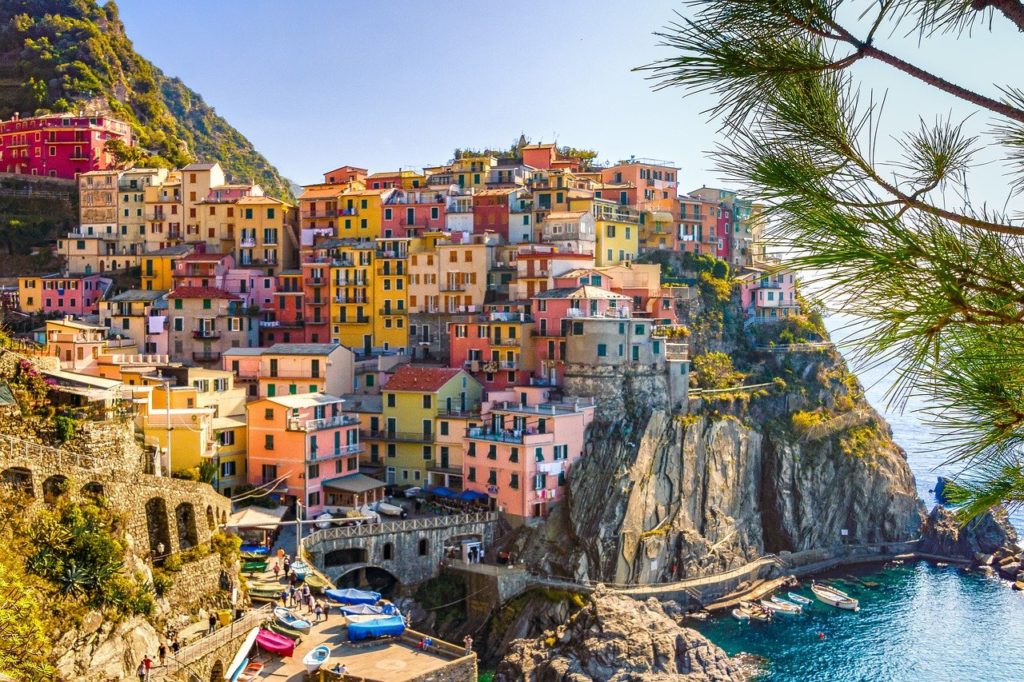
2. Cinque Terre, Italy Instead of the French Riviera
The colorful coastal town of Cinque Terre, Italy offers a beautiful, budget alternative to destinations in the French Riveria.
The French Riviera beckons travelers who want elegance and private beaches, but for lots of us, destinations like Nice, Menton, Cannes and Monaco simply aren’t within budget.
Luckily, a trip to the colorful coastal town of Cinque Terre in Italy offers similar ocean views, beautiful beaches and charming dining opportunities, without the hefty price tags you’ll find in the south of France.
In Cinque Terre, you can don a bathing suit and enjoy the free public beaches (which aren’t too crowded). The culture here is laid back and slow-paced, so you’ll have plenty of time to relax while eating fresh seafood and pesto at local restaurants.
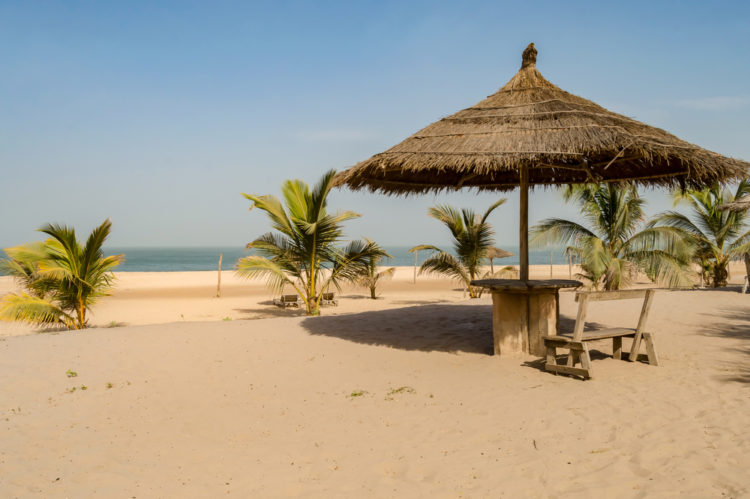
3. Gambia, Africa Instead of the Canary Islands
The Gambia offers sun, sand and sea for budget beach holidays.
Are sandy beaches calling your name? The Canary Islands have been popular for European island getaways for years, and while there are affordable resorts, most islands are overcrowded with tourists and peak season can see prices soar.
So if you’re looking for a destination that’s a bit further off the beaten track, while still offering the sun, sand, and sea that you’ll find in the Canaries, you can still work on your tan in the Gambia, a narrow stretch of pristine coastline in West Africa.
Bijilo Beach is still relatively undiscovered by tourists, allowing you to take in the sandy beaches and bright blue water all on your own. If you want a little more adventure, you’re just a short drive away from diverse wildlife tours and scenic explorations further into the country.
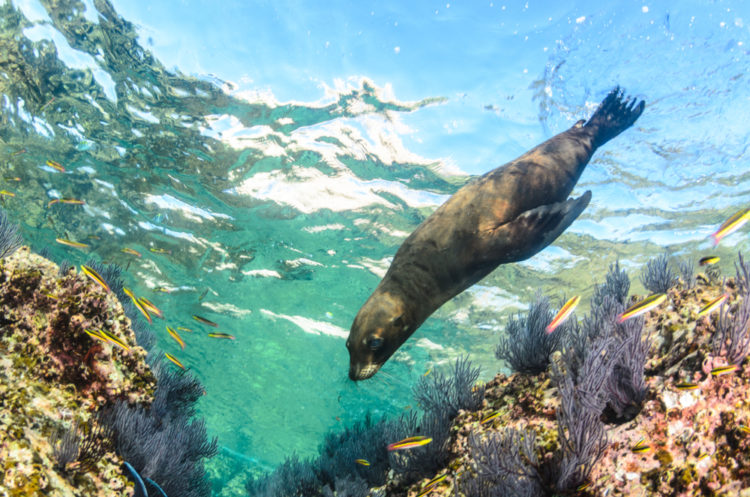
4. La Paz, Mexico Instead of Cabo, Mexico
La Paz, Mexico offers stunning beaches, traditional Mexican cuisine and opportunities to swim with whale sharks and sea lions.
Even though Cabo is considered a hotspot for luxury travel, it can be overrun with tourists and it’s not the best destination for authentic travel experiences — it’s become heavily “Americanized”.
A trip to La Paz, Mexico will be easier on your wallet and you’ll get to experience more traditional Mexican culture and cuisine. You can explore all aspects of local life by dipping in and out of local shops, restaurants, and markets. Plus, there are some beautiful beaches nearby, like Balandra Beach, which offers white sands and crystal clear waters. And if you’re interested in extra excitement, you can book a dive with whale sharks and sea lions to round out your adventure.
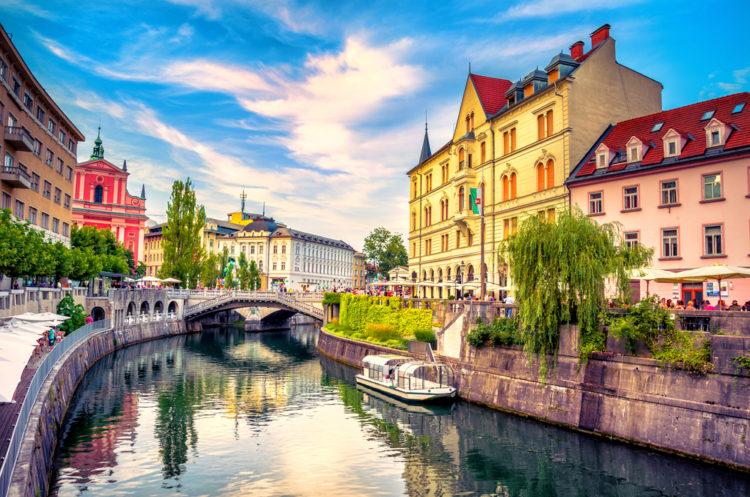
5. Ljubljana, Slovenia Instead of Prague, Czechia
Find quaint riverside walkways and restaurants, historic architecture and art galleries in Ljubljana, Slovenia.
Prague boasts architecture from the Middle Ages and a romantic feel, but it can be pricey and crowded.
Ljubljana, Slovenia is a budget alternative to the popular destination of Prague. You can find nice accommodation for less than $20 a night, with flowing wine and local delicacies costing even less. Better than the price tags are the sights – there are plenty of buildings from the Renaissance era to explore and countless art galleries full of masterpieces.
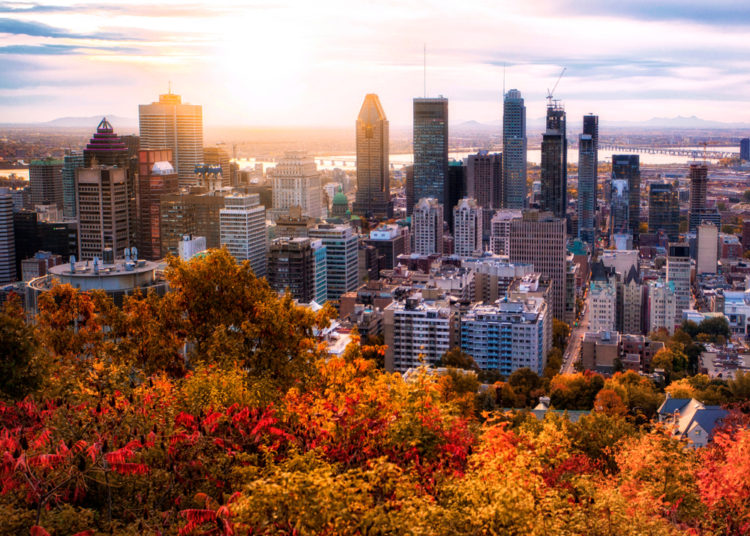
6. Montreal, Quebec Instead of Paris, France
Montreal is a brilliant budget alternative to the popular and expensive destination of Paris. Enjoy an authentic French experience for less in this Canadian city.
Daydreaming of roaming the streets of Paris and learning to order your favorite pastries in French? You’re not alone, but you don’t need to hop continents for an authentic French experience.
Despite being a Canadian city, Montreal is steeped in traditional European culture, and its winding cobblestone streets are the perfect place to indulge your wanderlust. The main streets are lined with all the cafes and patisseries needed to try delicate dishes, no pricey ticket to France required.
7. Perth, Australia Instead of Sydney, Australia
Enjoy great food, adventure and fun in Perth and make the most of everything the southwestern coast of Australia has to offer.
Sydney has the Opera House, but Perth has everything else. If you can stand to miss out on those white sails, you’ll find plenty of food, adventure, and fun lying on the southwestern coast of Australia.
You can enjoy the city skyline at night or spend your days on the beach. Snorkeling at Shoalwater Islands Marine Park is surprisingly affordable, and you’ll have the chance to watch sea lions and penguins, too.
Perth is also a great place to base yourself for trips further afield. From Perth, you could visit Rottnest Island to enjoy stunning sandy beaches, snorkel in crystal clear waters and watch out for wildlife (like dolphins and adorable quokkas). There’s also stargazing at the Pinnacle Desert and vineyard tours that are not to be missed.
8. Potosi, Bolivia Instead of Rio de Janeiro, Brazil
Swap Rio de Janeiro for Potosi, Bolivia for a budget alternative to the popular destination.
Between the nightlife and Christ the Redeemer statue that looms over Rio, most people have added this city to their bucket list. Its popularity has led to a huge increase in price though – so why not enjoy fewer crowds and less price gouging in Potosi, the highest city in the world? You can still dance in the streets, plus you’ll have access to even more natural wonders. Lake Titicaca and the Amazon Rainforest lie just a short trip outside the city.
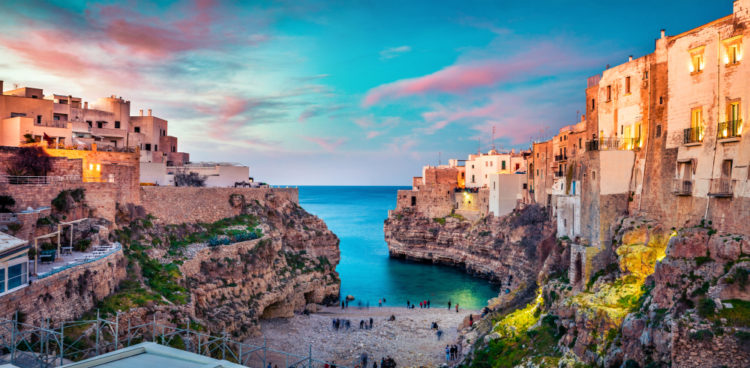
9. Puglia, Italy Instead of Tuscany, Italy
Find sunshine and turquoise waters in Puglia — one of Italy’s more affordable destinations.
If it’s olive groves and local wines you’re interested in, don’t overspend by traveling to Tuscany (which has been highly commercialized in recent years). You can easily eat and drink your way through picturesque Puglia for only dollars a day. It’s located on the southern tip of the boot, meaning you’ll never be short on sunshine or turquoise waters lapping against the white-washed town. Let your hair down and enjoy the warm breeze as you relax in style.
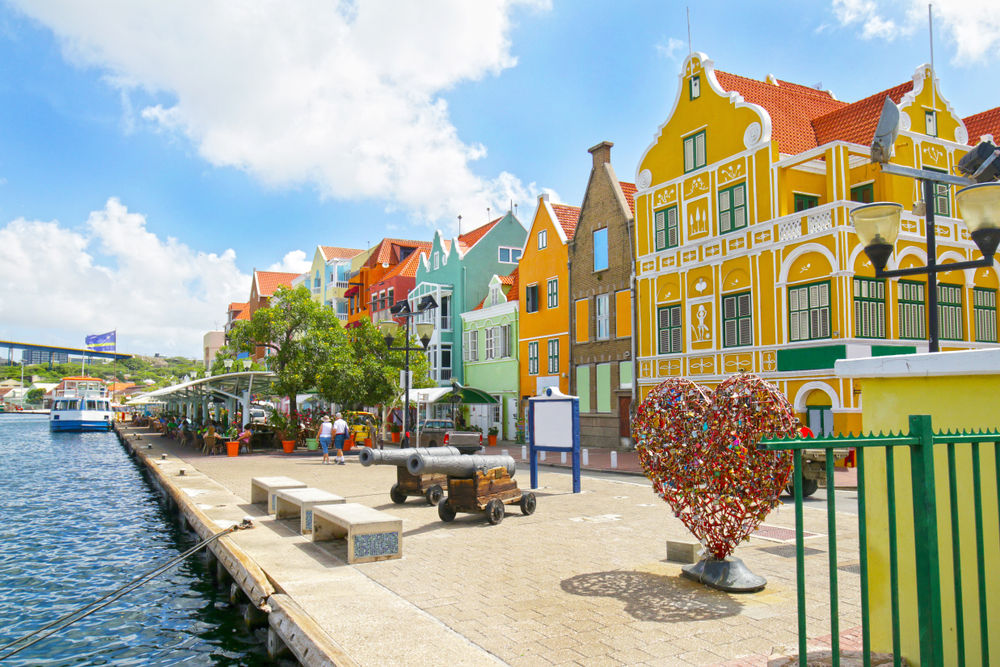
10. Willemstad, Curacao Instead of Aruba
Visit the colorful town of Willemstad, Curacao and make the most diving opportunities.
Who hasn’t imagined traveling through the Caribbean waters? Aruba calls to those who crave only sun and sand, but it will cost you a pretty penny if you plan to stay the night. For a cheaper and quieter alternative, you can explore the area around Willemstad in Curacao. The entire area is a haven for those who love the ocean. You can spend your days exploring any of the 35 coves or visit any of the 60 dive sites to see local aquatic wildlife.
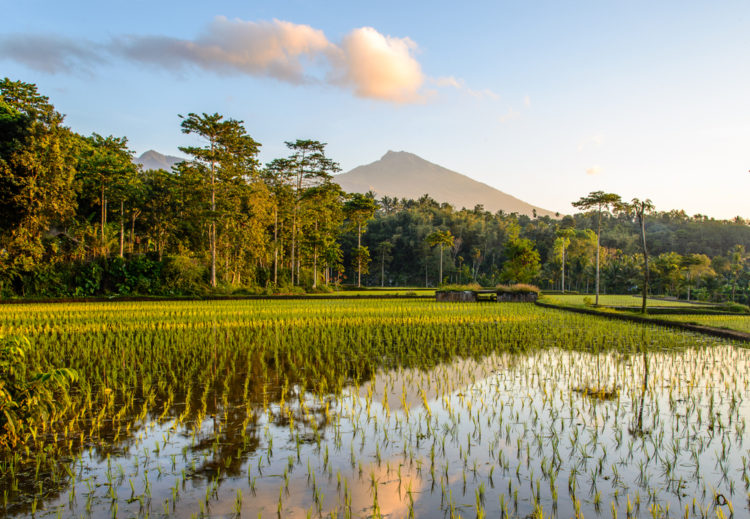
11. Lombok, Indonesia Instead of Bali, Indonesia
Head to Lombok, Indonesia for a quieter and more affordable alternative to Bali.
Bali is a dream destination for so many people and for a while I was lucky enough to live there long-term. But as much as I love the Island of the Gods, even I have to admit that it is becoming a bit overcrowded and prices are rising rapidly.
Neighbouring island Lombok is a brilliant budget-friendly alternative travel destination. Rather than views of Bali’s Mount Batur, you can enjoy picturesque scenes with Mount Rinjani — Lombok’s active volcano — looming in the background. There are also plenty of Bali-esque rice terraces, palm trees and beaches.
But there’s one major difference between Lombok and Bali. Lombok hasn’t yet been fully “discovered” by tourists. Of course people go there, but compared to Bali, this island is far quieter. And as a result, prices are much less. Accommodation can cost less than $10 a night, scooter rental is even less and day trips and food are always affordable.
Lombok isn’t so much a tourist destination — it’s one of the best authentic travel destinations if you’re looking to get off the beaten track.
12. Bansko Instead of the French Alps
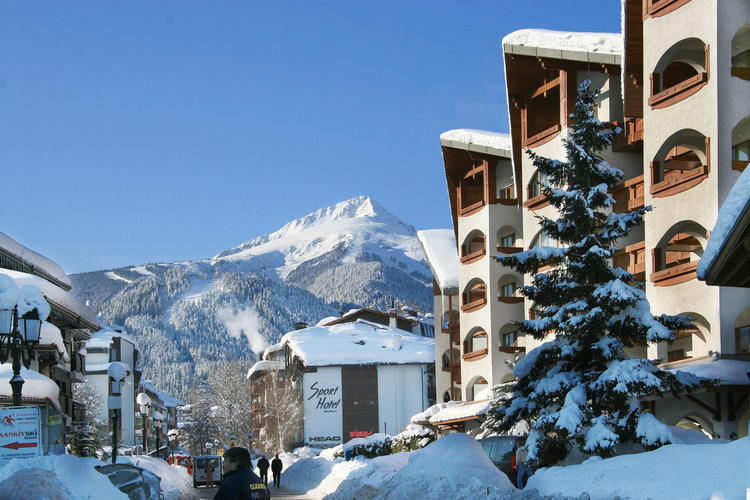
Plan a skiing trip on a budget by visiting Bankso rather than French alpine resorts.
Skiing in Europe is a bucket list travel experience for many people. And when you think of skiing destinations, you no doubt think of Chamonix, Val-d’Isère or other European alpine destinations. But there’s a reason skiing is thought of as a rich person’s sport — these places are expensive! A European skiing trip in the French Alps could cost thousands.
But there’s another, less well-known skiing destination in Europe — one where you can try skiing without breaking the bank.
Bankso is a small town nestled in the mountains of Bulgaria. There are stunning ski resorts, slopes for people of all abilities, luxury spas and great restaurants. And even if you plan a luxury vacation in this destination, it will still cost you a lot less than a trip to the French Alps.
13. Edinburgh Instead of London
Swap England’s capital for Scotland’s capital for a more affordable trip back in time.
If you’re dying to see London’s blend of modern architecture and historic streets, with traditional features like red phone boxes and London cabs, but you’re put off by the extortionate prices of London hotels and experiences, I’d suggest Edinburgh as a budget alternative.
Visiting Scotland’s capital is like stepping back in time. As you walk the cobblestone streets of the Royal Mile, visit Edinburgh Castle and admire views of the city, you’ll feel almost as if you’re in medieval Scotland. And for any Harry Potter fans, there’s plenty to see that relates to the books and the movies. Walking up Victoria Street is like stepping foot in Diagon Alley (there’s even magical shops), Greyfriars Kirkyard is home to gravestones with some familiar names (like Thomas Riddell), and George Heriot’s School is rumored to have inspired Hogwarts.
And there are plenty of other literary attractions too. There might be literary pubs in London and London literary attractions, but Edinburgh has some amazing sights for avid readers. There’s the Writers’ Museum, Scott Monument, Greyfriars Kirkyard, and Abbotsford, the home of Sir Walter Scott.
In Summer, there’s also the infamous Edinburgh Fringe Festival — one of the world’s best comedy festivals.
On top of all these great attractions, Edinburgh is much more affordable than London.
14. Novigrad, Croatia Instead of Dubrovnik
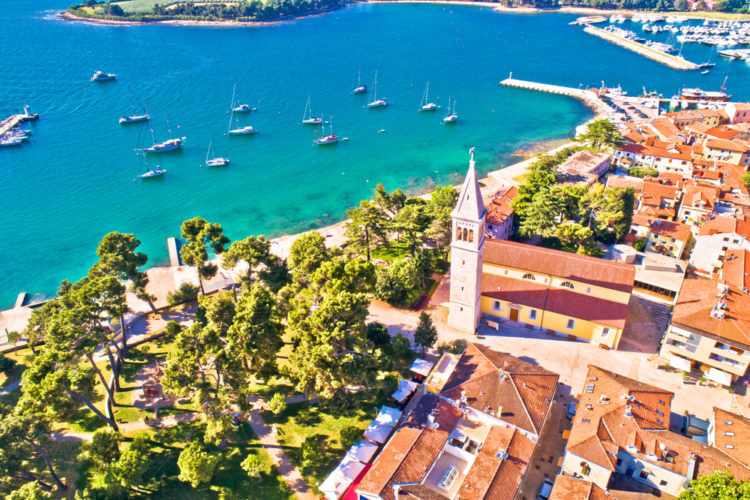
Visit Novigrad, rather than Dubrovnik for an affordable beach destination, complete with great food, water sports and shopping opportunities.
Dubrovnik quickly became one of Europe’s most popular tourist destinations and now it’s overly busy and prices have inflated dramatically.
So rather than heading to the south of Croatia, I’d suggest looking further north. Novigrad is a coastal town located in Istria and it’s one of my favorite Croatian destinations.
It’s so much quieter than Dubrovnik and Split, and accommodation is very affordable. There are luxury options too, but even they aren’t as expensive as their equivalents in more popular cities.
As for the beaches, these are beautiful. The water is so clear and is perfect for swimming, snorkeling, and water sports. There are sunbeds with straw umbrellas for hire on many beaches and water sports kiosks offering just about any water sport you can imagine.
You’ll find some incredible restaurants in Novigrad (this is controversial, but the best pizza I have ever had was in Novigrad). There are restaurants overlooking the water that can be a little pricey, but a few steps inland you’ll find budget-friendly options with food that’s just as good (if not better).
And of course, there are lovely little gift shops dotted throughout the town.
Ready to Get Packing?
Fingers crossed you’ve found a budget alternative to a popular destination that actually excites you. I write these articles to help fellow travelers plan the best trips so hopefully, you’ve found this one helpful!
I’m a bit of a sucker for “underdog” destinations — destinations that are a little more unusual and aren’t teeming with tourists. Not only are they cheaper, they also offer more authentic and traditional experiences than those offered in tourist hotspots.
If you’re looking for a budget alternative to a popular destination that isn’t on this list, feel free to drop me an email. I’d be happy to update this article with more suggestions and I’d love to hear what you think of the suggestions above.
My first ‘digital nomad job’ was a freelancer writer. I applied for jobs on Upwork writing articles, books, product descriptions — just about anything you can imagine. And after several years of pitching clients and landing jobs, I perfected my cover letters. It sounds a little cocky, I know, to say I ‘perfected’ them but for the last two years that I worked through Upwork, every pitch I sent out resulted in me being hired.
So as my talent seems to lie in writing Upwork cover letters, I thought I’d write a post about it, for anyone else who wants to go freelance so that they travel while working. Plus, I no longer use Upwork, I play casino games at https://www.uptown-aces-casino.com/, so I don’t mind sharing my secrets.
How to Write a Winning Upwork Cover Letter (for Writing Jobs)
If you want to succeed as an Upwork freelancer and land the higher-paying jobs, you’ll need to perfect your cover letter. There are thousands of freelancers out there, so whatever jobs you apply for, you can expect a fair amount of competition.
Cover letters are the first impression that potential clients are going to get of you, so you need to 1) sell yourself, and 2) stand out from the rest. Most of the time, clients don’t even bother looking at your profile, which is probably not what you want to hear if you’ve spent ages perfecting your profile (sorry). They skim your cover letter, check out your previous reviews and make a decision.
The only trouble is, if you’re new to the freelancing world, it can be hard to know exactly what clients are looking for and how to impress them. So here’s everything you need to know about writing job-winning cover letters.
Be Friendly and Conversational
Most clients are looking for writers who can write in a conversational style. They want to see that your friendly personality is going to shine through your writing. And the first piece of writing they’re going to see from you is your cover letter.
Don’t make the mistake of making your cover letter too formal. Generally freelance writing jobs are fairly casual, and clients want to skip past the normal formalities of hiring someone. Plus, if you can sell yourself in a conversational cover letter, you’re already proving that you can write in the style they’re looking for.
Check Your Cover Letter for Spelling and Grammar Mistakes
You’re applying for a writing job, so don’t let clients’ first impression of you be that your English writing skills aren’t quite up to scratch. Any proposals with spelling mistakes are probably going to be dismissed instantly.
How to Start Your Upwork Cover Letter
Knowing how to start a cover letter, and how to address the potential client is something that a lot of freelancers struggle with. The trouble with Upwork is that you don’t always have access to clients’ names. So how do you address them in your cover letter?
Every freelance writer has their own approach, but we’d suggest either a simple ‘Hi!’, ‘Hello!’ or if you want to be more formal, try ‘Dear Hiring Client’.
Using ‘Dear Hiring Client’ is a great way to let your potential clients know that you’re a professional, but at the same time, it’s a little distant and impersonal. When applying to any conventional job you’d definitely want to steer clear of starting your application with ‘hello’ but Upwork clients are looking for an informal working relationship. So if a simple ‘hello’ is more natural to your personality and style, then go for it.
Don’t Ramble: Keep Your Cover Letter Short and Sweet
If you’ve got quite a lot of writing experience, it’s easy to fall into the trap of rambling about all the different articles you’ve written. But your cover letter isn’t just for you to ramble on about how great you are (even if you are incredible). It needs to be more specific than that.
By all means mention your experience, but make it relevant. If you’re applying to write articles for a beauty or fashion blog, they probably don’t want to hear about your experience writing technology reviews.
Keep it short and sweet, this way your cover letter should be relevant, and won’t send the hiring client to sleep.
Be Honest: Lying or Exaggerating Your Abilities Will Lead to a Bad Review
More often than not, hiring clients are experts in their field, or at least, they know a lot. So if you don’t have all that much experience or knowledge of their field, be honest about it. If you pretend to be something you’re not just to get the job, they’ll soon realise, and that could result in a bad review.
So there’s no sense in lying in your cover letter. Even if you have no relevant experience, just be honest. As long as you seem keen to learn and get started, clients don’t always mind too much if you’re a little inexperienced.
Answer the Questions Clients Haven’t Asked Yet
Some clients ask specific questions that want you to answer in your proposal, but some clients don’t. And for these jobs, you should go above and beyond and answer the questions you know they’ll want answers to. This way, you’ll be showing that you’re organised, and that you’ve done this before.
So what questions does every hiring client want to know the answer to? Here are the staple questions that I always try and answer in my cover letter:
What relevant experience do I have?
What is my writing style like?
How long will it take me to complete the job?
What is my bid for this job?
Answer these questions, even if the hiring client hasn’t asked them yet. You’ll appear organised and professional. And if you’re applying for a job that involves writing longer pieces, maybe detail how you’d go about the project, how you’d structure it.
Don’t Use a Templated Cover Letter for Every Job
Hiring clients can spot generic cover letters from a mile away. And they hate them. You can tell straight away which cover letters have been copy and pasted, and which have been thought out in detail.
It might be easier to have a cover letter that you use to apply for every writing job, but you’re not going to land all that many jobs.
It’s fine to have a general template that you use, a structure to follow, but spending a couple of minutes making it personal is going to see much better results. Think about it, would you hire someone who hadn’t even made an effort to apply properly?
Attach or Include Links to Articles You’ve Written
If you provide potential clients with links to articles you’ve written, you’ll be making their life a whole lot easier, and they’ll thank you for it. No client wants to take the risk of hiring a writer without knowing what their style of writing is like. It’s just too much of a gamble.
So in your proposal, include a link or two, and you’ll massively increase your chances of being hired, especially if the clients are instantly sold on your writing style. If you don’t have any live articles you can link to, you can always attach Word documents to your proposal.
If you don’t have any writing examples yet, you really need to focus on building your writing portfolio. Start your own blog, even if it’s just a simple WordPress one, and write about something you’re passionate about. At least this way potential clients will be able to see your writing style at its best.
Or if you’d rather not start a blog, spend some time applying for and completing lower paid jobs. You may earn next to nothing, but you’ll have some experience under your belt.
So to Sum Up…
Writing cover letters doesn’t have to be difficult or stressful. You just have to know what hiring clients are looking for, and how to structure your proposal in a way that positions you as the answer to all of their problems.
Follow these tips, and you’ll start to find a cover letter style that works for you. Then the more cover letters you send off, the better you’ll get at writing them, and the more jobs you’ll start to land.
Whether you’re an outdoor enthusiast and regular camper, or lockdown has put a stop to your usual travel plans and you’re now considering local camping trips for the first time, you’re going to need a tent for your next adventure.
And if you’re planning on camping as a family, or with friends, a 4 room tent is going to give you the space you need to enjoy your trip in luxury — or as close to luxury as you can get while camping!
What is a 4 Room Tent?
A 4 room tent isn’t the same as a 4 bedroom tent. These tents usually have a living area and 3 bedrooms, making up 4 rooms in total. With several sleeping pods, your children or friends can have their own bedroom — they’ll have plenty of privacy at nighttime and space to change, relax, and store their things so they don’t clutter up the living area.
What to Look For in a 4 Room, 3 Bedroom Tent
When I started searching for a tent that I could use for family camping trips, and road trips with friends, all I wanted was an article that detailed the best 4 room tents on the market and their pros and cos. But I couldn’t find much guidance. So, I started down a rabbit hole of research and after hours of searching so many different websites for three-bedroom tents, I eventually made a decision (I’ll reveal which tent I bought at the end of the article!).
But in the process of searching for the right tent, I realized that there are so many different features to look out for. So, before we jump into looking at the best 4 room tents, here are some things you should look for when tent-hunting:
Durable Materials
With each adventure your tent is going to endure a lot of wear and tear. Low quality tents might leak in the rain, poles might snap or bend in strong winds, and sharp items on the ground can pierce the groundsheet. And one wrong move when pitching a low quality tent can cause the fabric to rip or stretch.
So when searching a new 4 room tent, look for durable, higher-denier fabrics and strong poles that are built from lightweight steel or fiberglass. You want to be sure that your camping equipment will be able to take whatever the great outdoors throws at it.
Ventilation
4 room tents are large in size, which is always great for hosting friends and family in the great outdoors. But often, when in-climate weather or humidity rolls in, these same tents can become muggy internally. That’s why you should always look for a model with reliable air vents that encourage air circulation.
Waterproof Material
The last thing you want is to have your camping trip ruined by a leaky tent. No one wants to spend their holiday damp and miserable. So when choosing your tent, check the Hydrostatic Head of the flysheet. You’ll see this as a number followed by ‘mm HH’. For example, you might see ‘6000mm HH’ on a tent that will withstand heavy rain, strong winds and even snow.
A sewn in groundsheet can also go a long way toward keeping you dry during a sudden summer storm. Just be careful if you use a footprint groundsheet underneath your tent — make sure the footprint is smaller than your tent, if it pokes out, it can collect rainfall and cause a pool of water beneath your tent. This can damage your tent and make an uncomfortable stay.
Loops and Pockets
Don’t overlook the small details in a 4 person tent. For example, you may not think that you need internal pockets in your tent. But in practice, these can help you and your family stay organized without taking up extra floor space.
Similarly, loops designed to hold lanterns can make your life much easier — you won’t have to worry about constantly holding up a torch to get ready to play at https://raging-bull-casino.org/ or find your way out of the door on midnight toilet runs.
The Best 4 Room Tents for Family Camping
If you’re currently on a hunt for the best 4 room tent for your family’s next camping trip, then you’ve come to the right place. My deep dive into this market has given me an opportunity to learn which models on the market today stand out from the pack. The following collection is just a few of the best models that you should consider investing in:
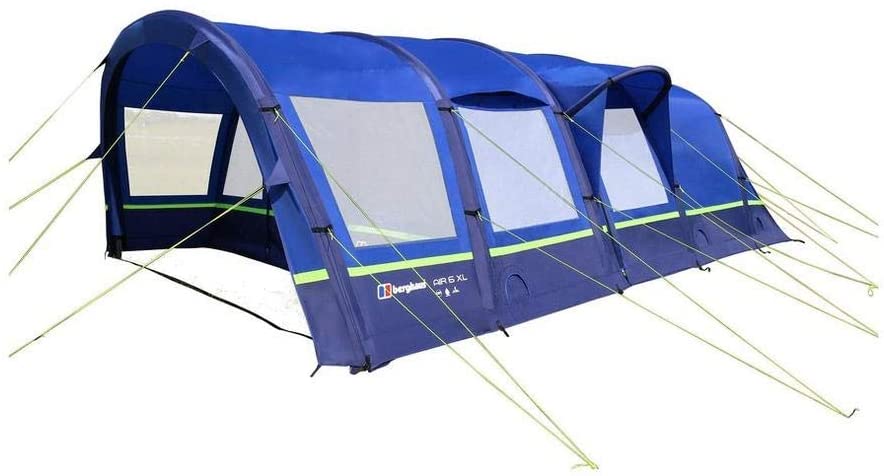
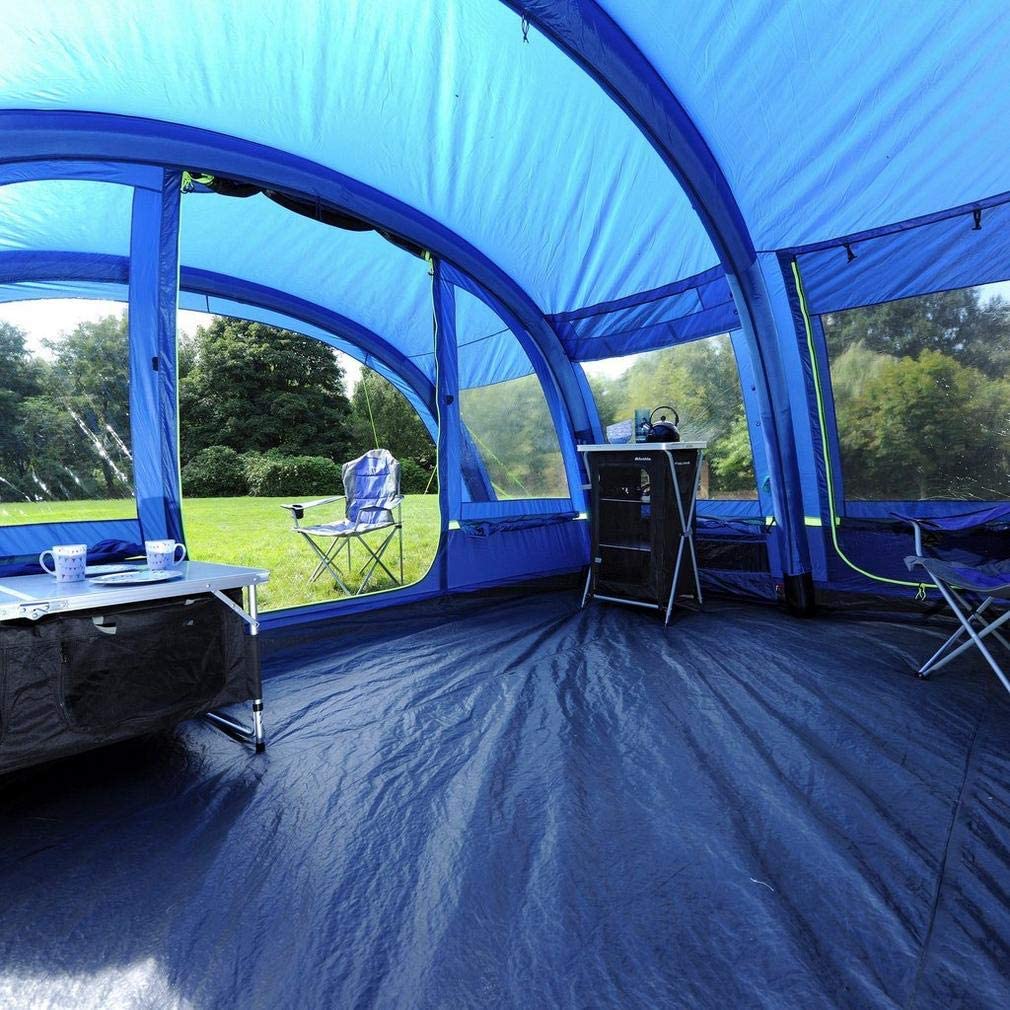
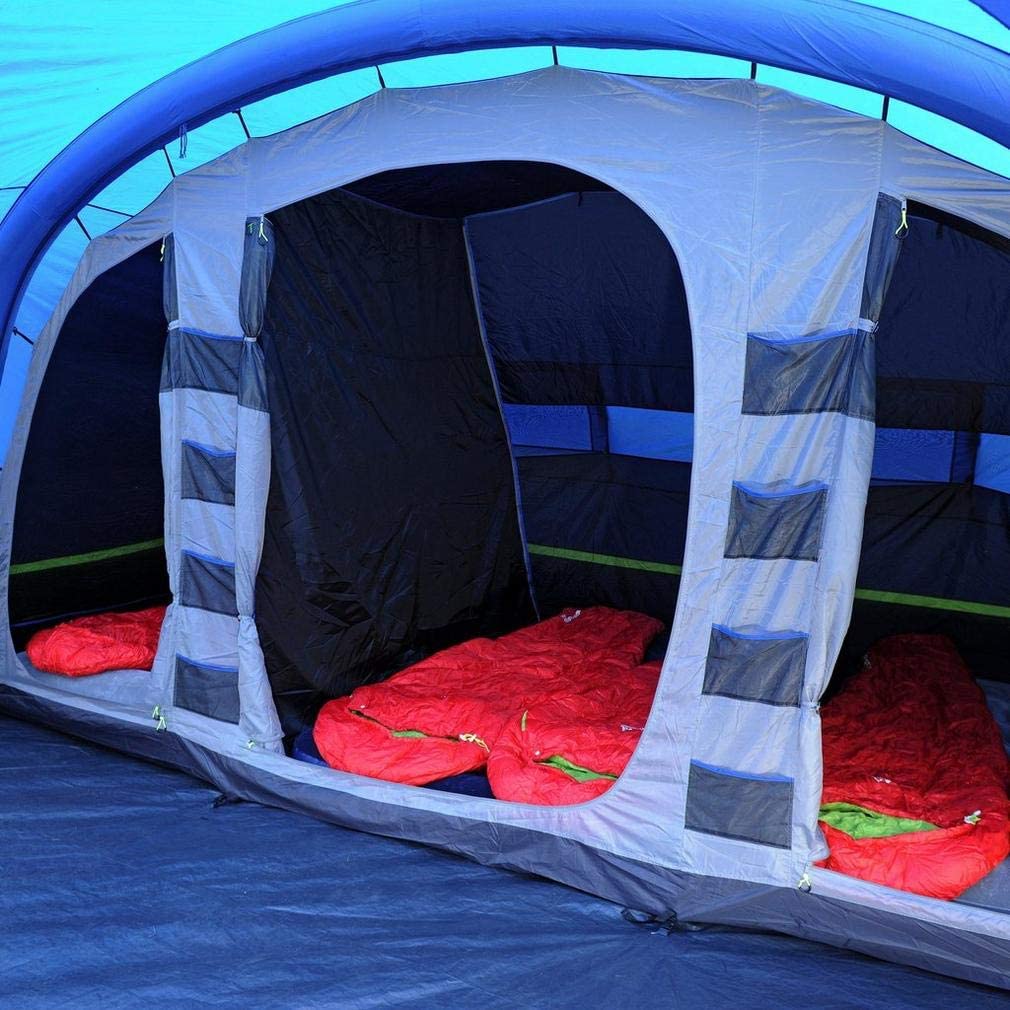
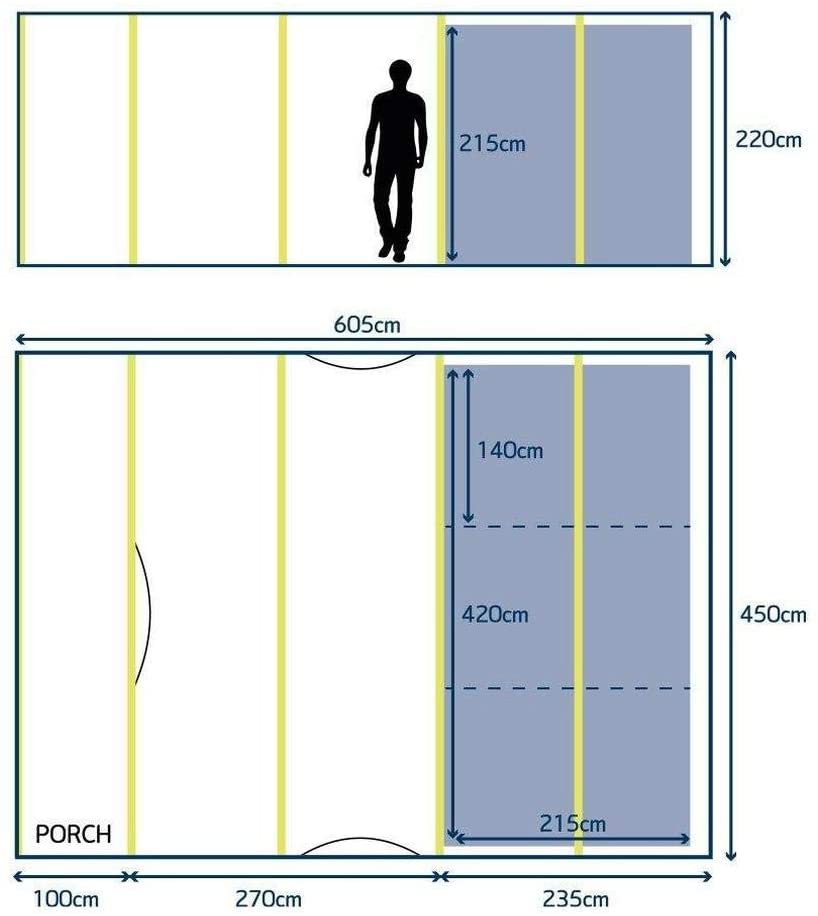
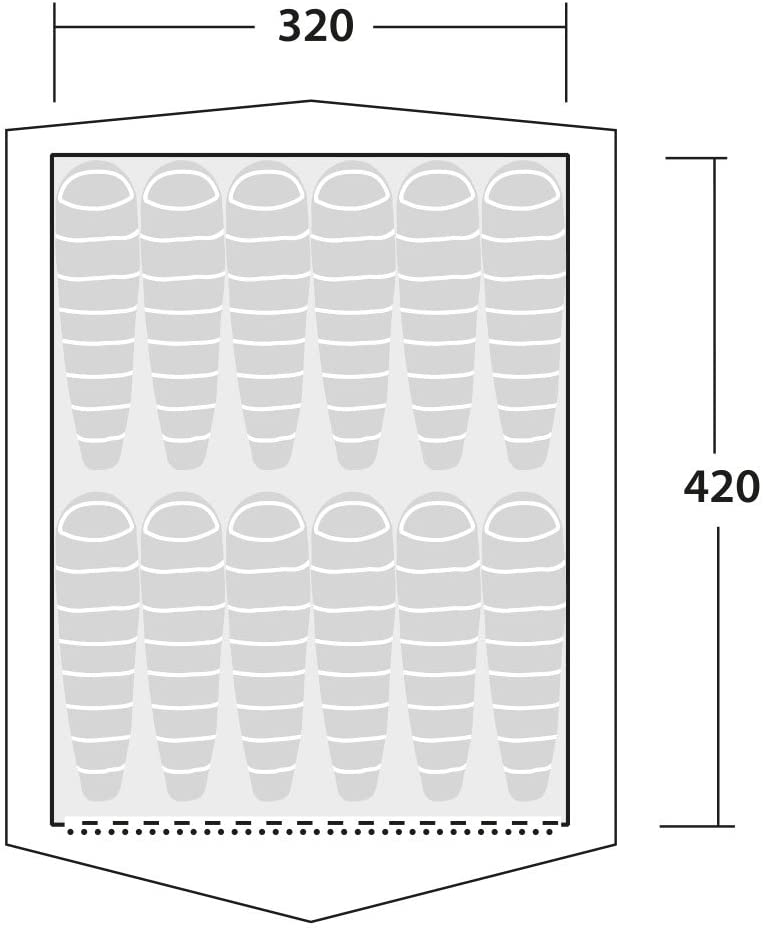
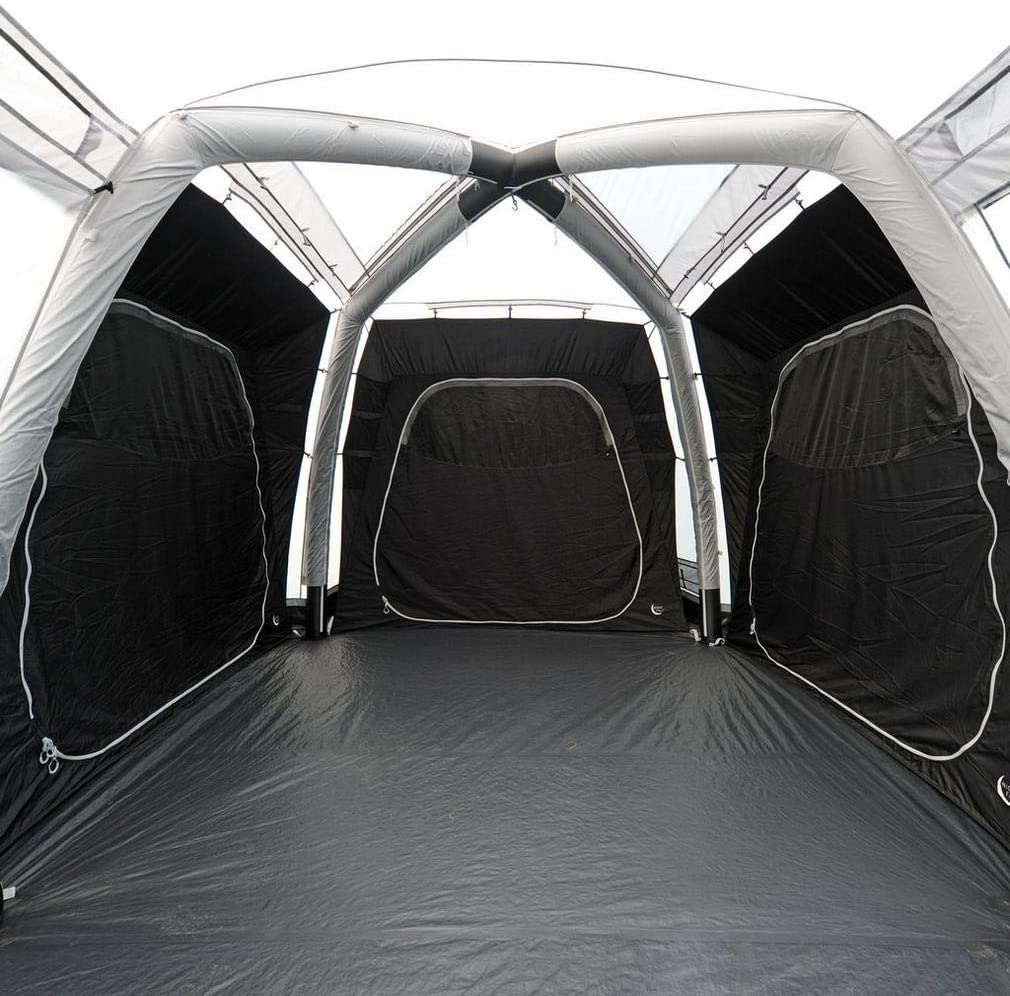
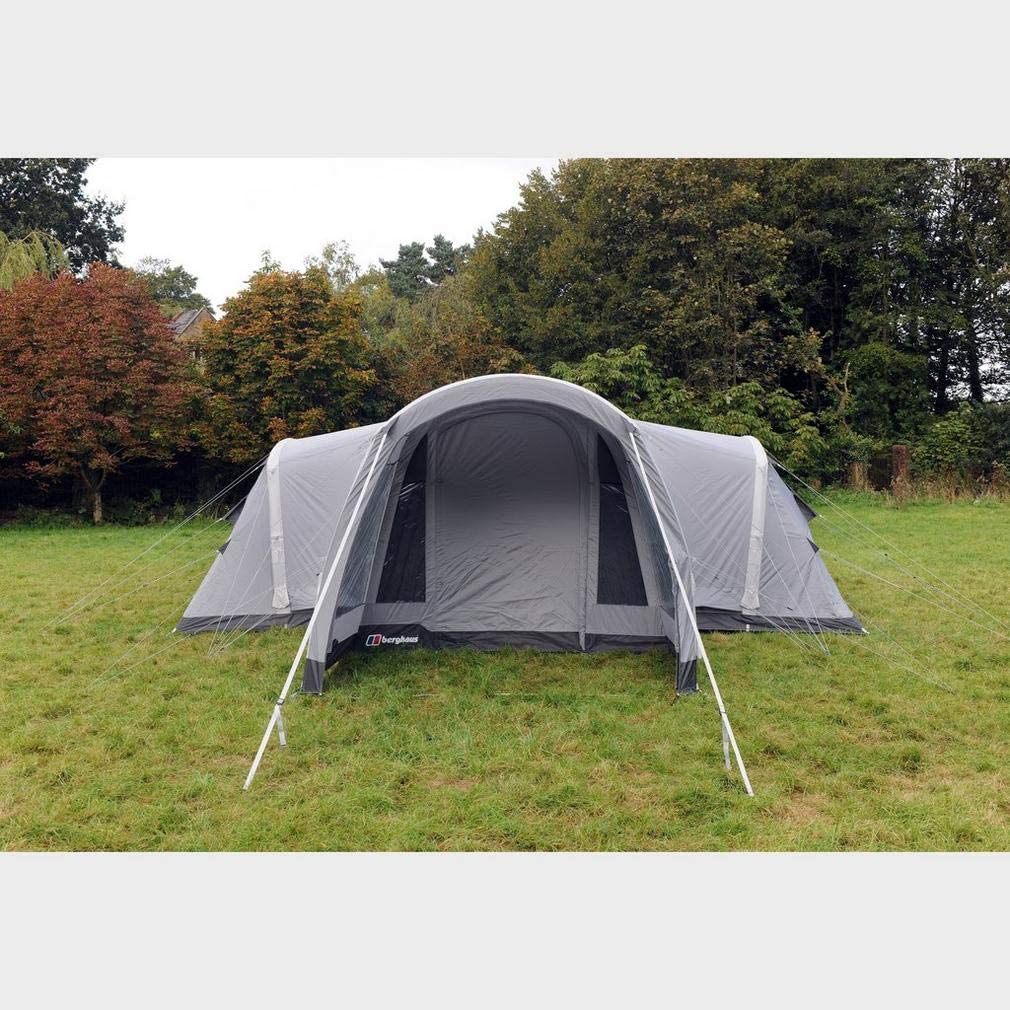
The Berghaus Air 6XL is a real palace of a tent. As the largest of the popular Berghaus Air range, it has a huge living area, three spacious bedrooms and it’s high enough that you can stand up in any area.
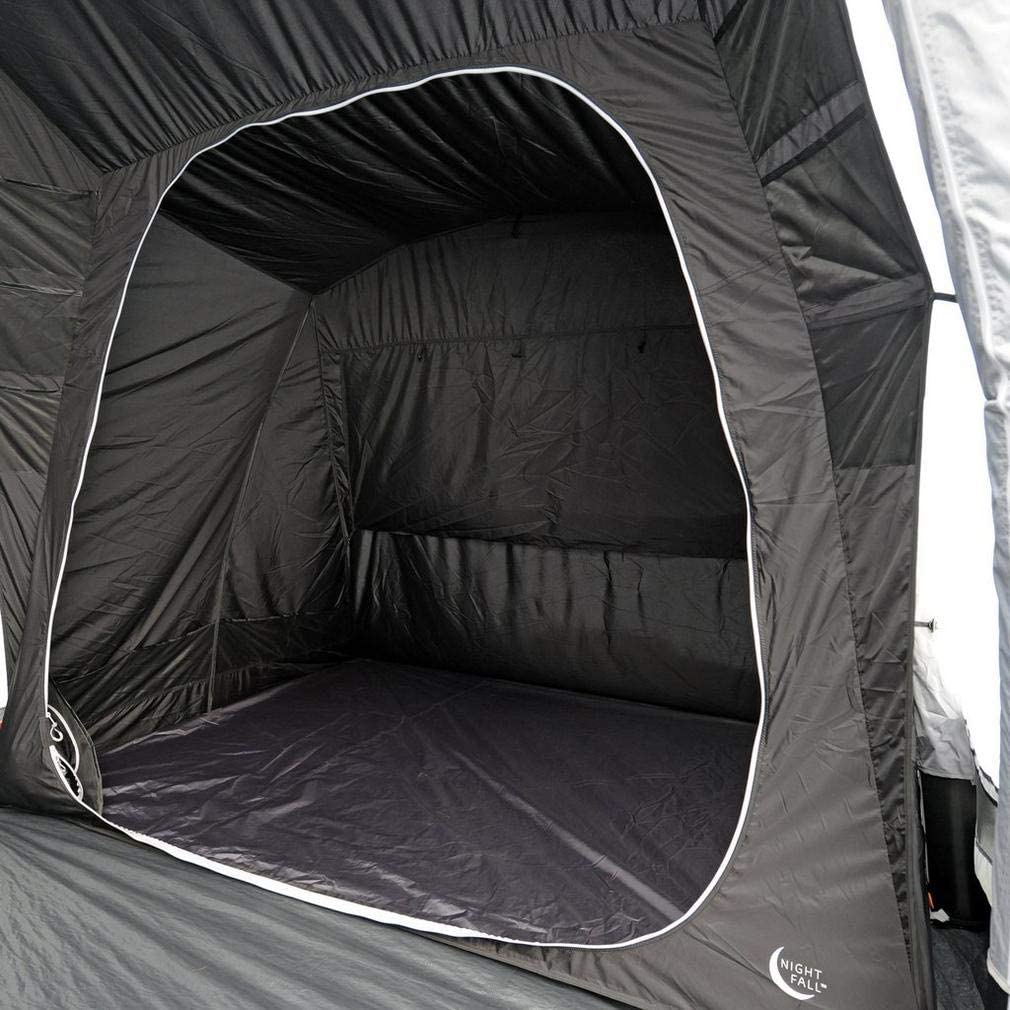
The tent has big windows that let a lot of natural light in during the day, and blinds can be rolled down to offer privacy and darkness at night. The sleeping pods are made from a darkened material so you don’t have to worry about being woken up by sunrise and the sleeping space can also be customised giving you the option of a single 6-person bedroom, a 4- and 2-person bedroom, or 3 x 2 person bedrooms.
And with a sewn-in groundsheet and a 6000mm HH flysheet that extends over the entrance, the tent locks out rain, wind and snow. The breathable polyester interior allows cooling, refreshing breezes in while keeping bugs out and the adjustable peg corners are also extremely useful, especially when it comes to pitching the tent on slightly inclined ground.
The Berghaus Air 6XL is not just one of the best 3 bedroom tents on the market, it’s also one of the best inflatable tents. It’s a quick-pitch tent that you’ll be able to put up in minutes. You’ll even be able to pitch it on your own, so if you’re heading on a solo camping trip or your family and friends aren’t being the most helpful camping companions, you’ll have no trouble putting it up. And with Berghaus being such a well-known, high-quality brand, you won’t have to worry about any issues with the quality or durability of the tent.
Pros
–6000mm HH flysheet –Storage pockets and large organizers in all rooms –Adjustable corner peg loops –Inflatable tent that pitches in minutes –Customisable sleeping space –Standing room through
Cons
–It’s pretty heavy (36.7kg) and large so can be difficult to transport, but the wheeled carry bag makes up for it.
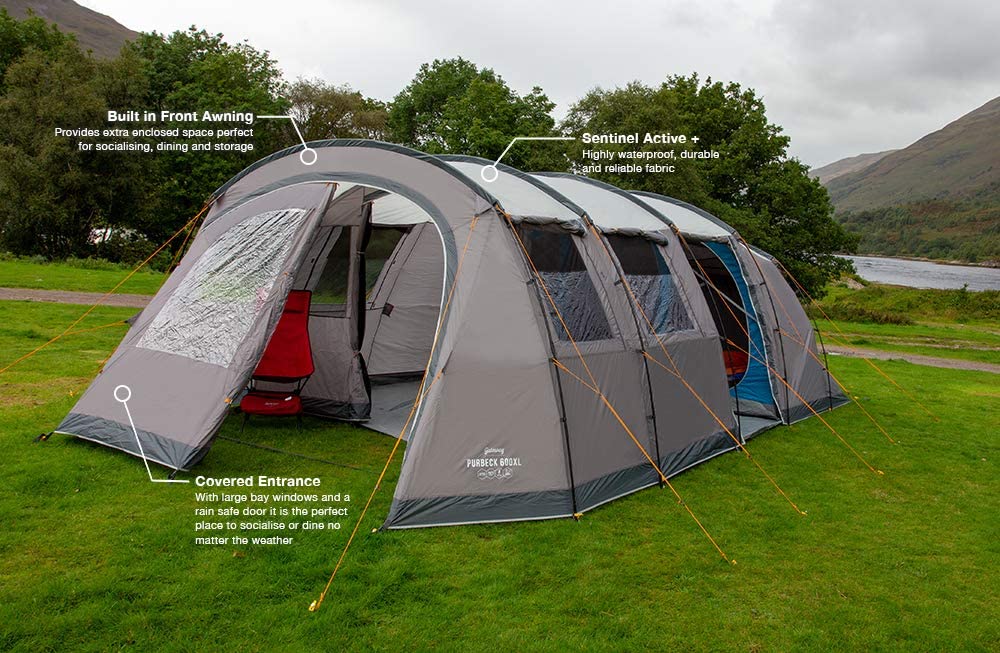
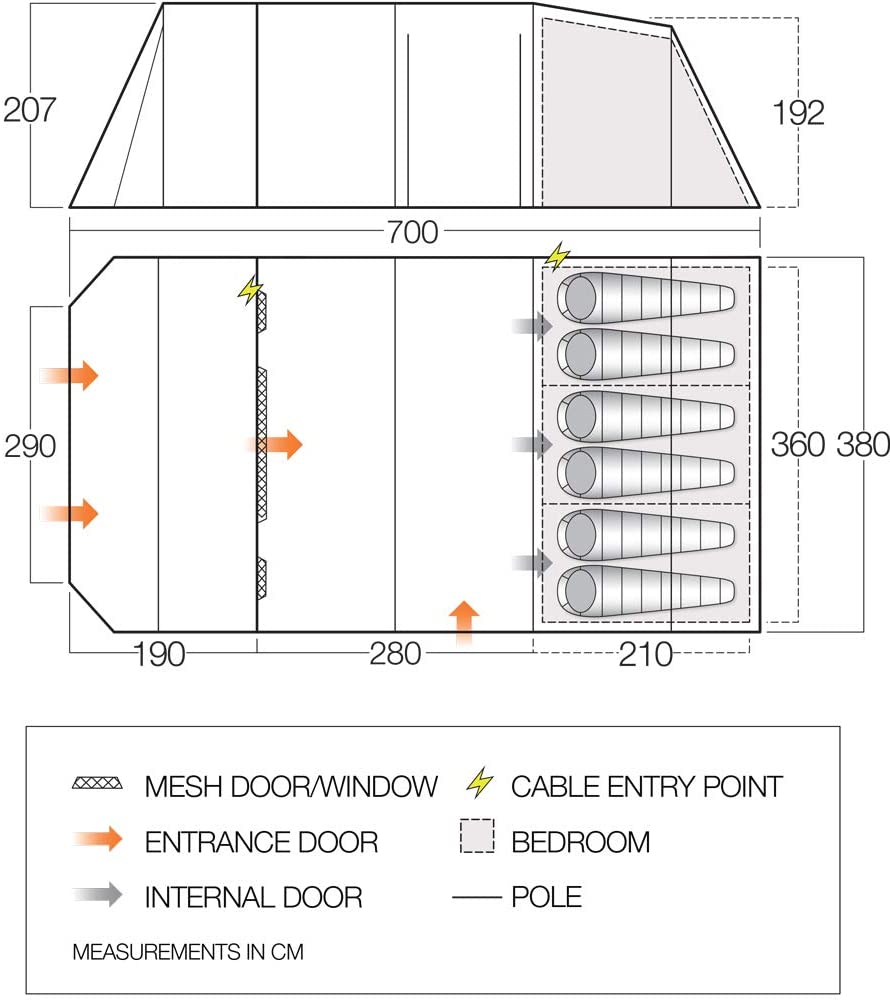
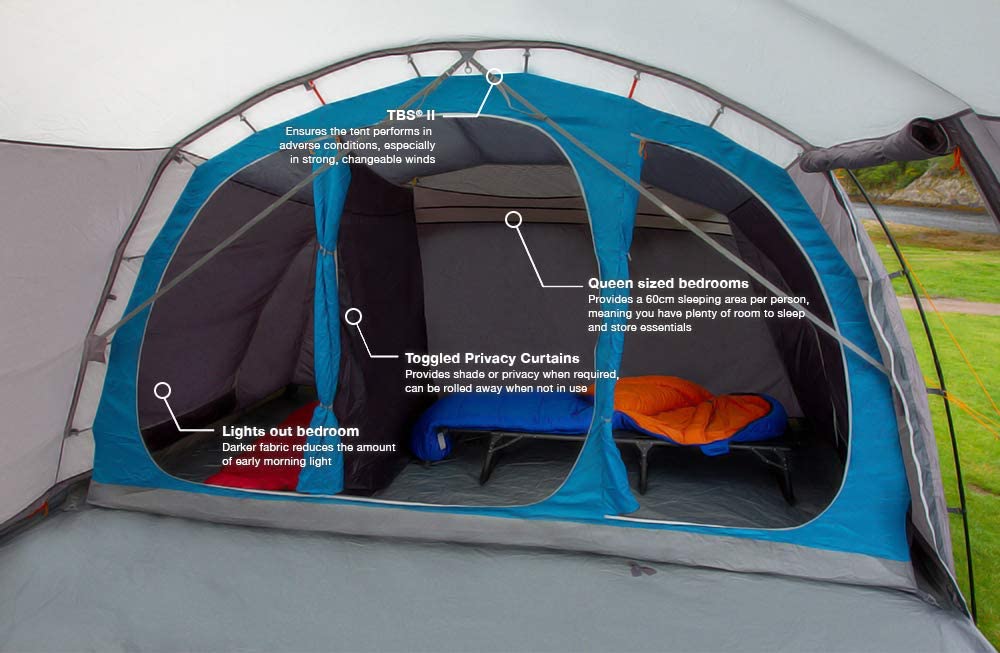
The Vango Purbeck comes packed with a variety of patented technologies that you won’t find in 4 room tents from other brands. For example, this model is made with Sentinel Active fabric, which allows the whole enclosure to remain lightweight and entirely durable. Speaking of durable, this model’s Tension Band System and Powerflex fibreglass poles are built to withstand the elements without complaints – including strong winter storms.
It also has a sewn-in groundsheet to keep the living areas dry, bug-free, and draught-free. And the climate windows control the temperature inside the tent and stop it becoming too hot or cold.
The bedrooms feature ‘lights out’ materials and are queen sized so you can easily fit two in each bedroom and you’ll even have space for a large air bed. There’s also storage pockets and lantern hanging points for convenience.
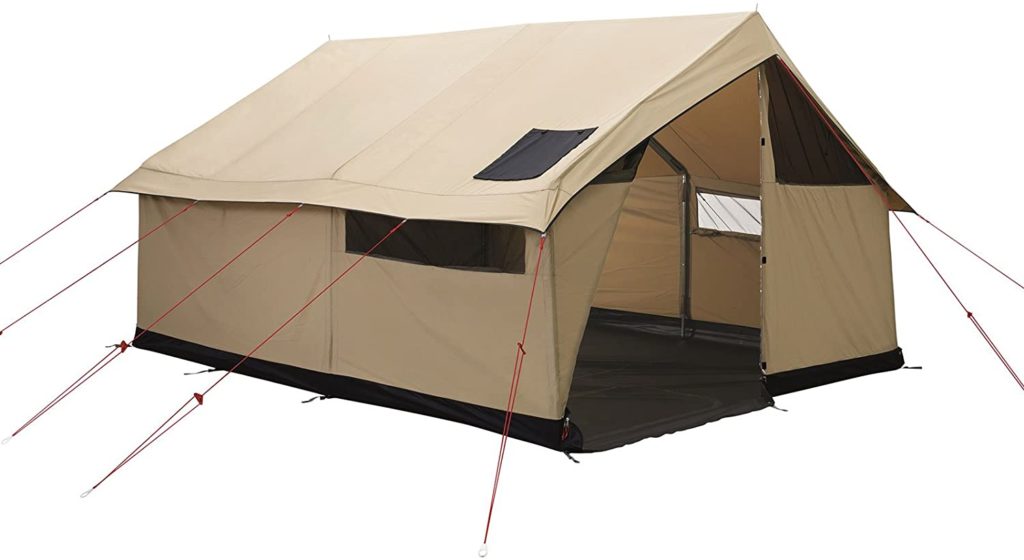
The Robens Prospector is a serious tent for serious campers. It takes its aesthetic stylings from old American prospector tents, and certainly provides space for your entire crew with room for up to 12 people. The HydroTex Polycotton fabric manages to breathe well in the summer while locking in heat in the winter. You and your guests will be fully safe, too, because this particular tent has been tested to withstand up to180 km/h gale force winds.
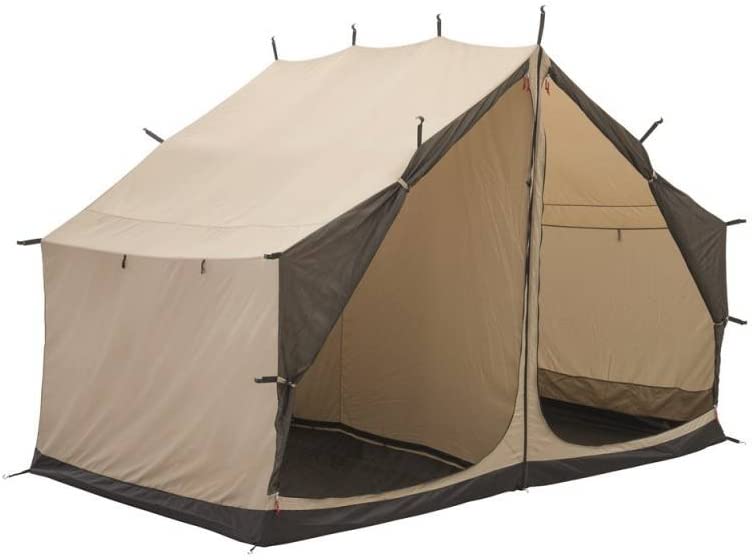
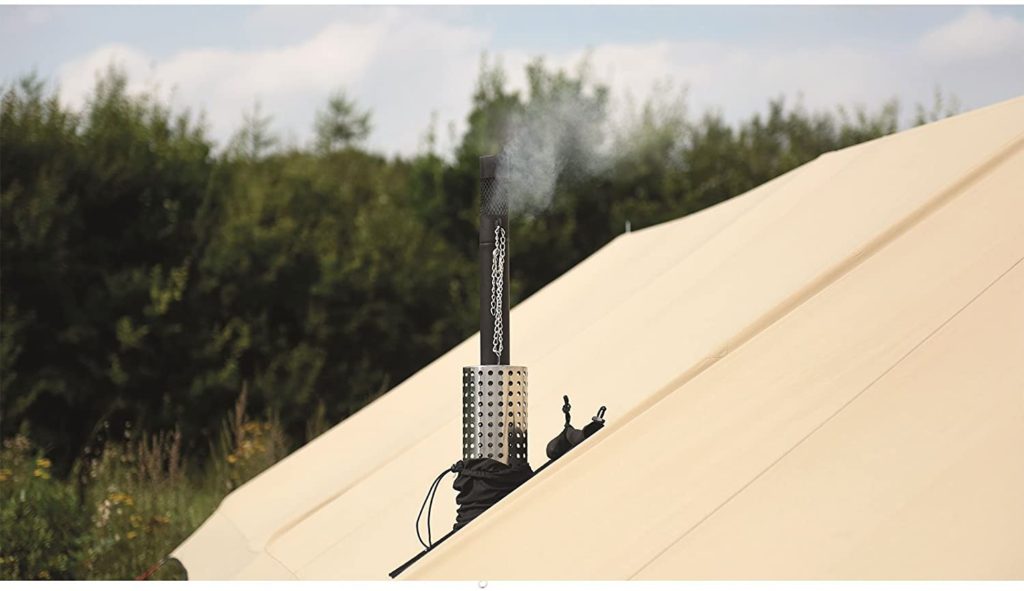
While this isn’t technically a 3 bedroom tent, it can be transformed into one. Robens offer a range of accessories for the Prospector 12, including sleeping pods. The idea is that you buy this high-quality, luxury tent as a blank canvas, and then make it yours with however many bedrooms you need. You can get single bedrooms or double bedrooms. And the accessories don’t stop at bedrooms. You can also get an awning for this tent, and it has a chimney pipe passage so you can use a solid fuel stove, such as the Robens Denali tent stove, inside the tent.
The durability of this tent makes it perfect for summer camping in style, or you can enjoy warmth and luxury in winter, or it even makes a perfect long-standing tent if you’re hoping to AirBnB a tent on your land.
Pros
-Sturdy steel A-frame and ridge pole can withstand up to 180 km/h winds -HydroTex Polycotton fabric is breathable in the summer and insulating in the winter -Reflective guy lines provide maximum visibility in the dark -Easy to pitch -Customisable — add as many bedrooms as you need, add an awning and/or add a solid fuel stove -Perfect for both winter and summer -This has the potential to be a lifelong tent -Could be a permanent tent with potential for AirBnB rental -Lightweight (24.5kg) -Standing height throughout -5000mm HH and Sewn-in groundsheet
I’ve got to hand it to the Berghaus Kepler 6 – this model has really brought the comforts of at-home sleeping to the great outdoors. This is thanks to its Patented Nightfall Darkened Bedroom system, which blocks out even the bright rays of morning so that you can have a lay in. Beyond this, I was pleased to see that this model has been made pram and wheelchair accessible via its main door drop step.
The layout of this tent also means the bedroom aren’t right next to each other. You’ve got a bit of space in between each room so you don’t have to listen to each other tossing and turning or snoring. In tunnel tent designs, the bedrooms can feel quite close together and it’s impossible to move around without disturbing those in the bedrooms next to you, but this 3 bedroom tent offers more privacy and space.
The Kepler 6 is also an inflatable tent so it’s quick to pitch, it has entry points for electric hookups, lantern hanging points, storage pockets and a wheeled carry bag. So Berghaus have gone the extra mile to make sure it’s as convenient as possible.
Pros
-Patented Nightfall Darkened Bedroom system provides ideal sleeping conditions -Reinforced webbing straps provide added stability without tearing -Drop step on main door provides pram and wheelchair access -Spaced out bedrooms -Inflatable tent so it’s quick to pitch and take down -Roomy porch -High and low-level vents for improved airflow -Berghaus is a reliable brand -Comes with wheeled carry bag -Super waterproof — sewn-in groundsheet, taped seams, and 6000 mm HH -Standing height throughout
Cons
-Requires a lot of stakes -Expensive -The living area isn’t as large as some other 4 room tents -Rather heavy (38kg)
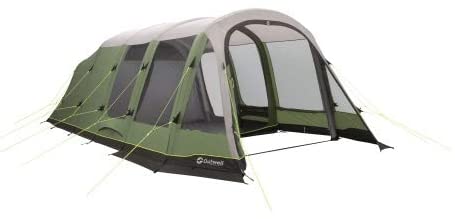
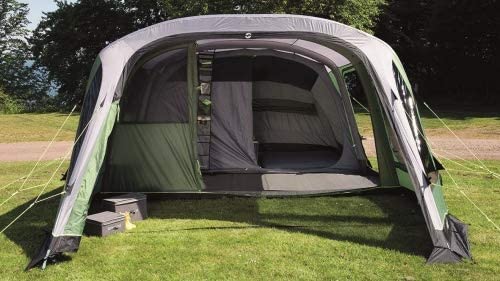
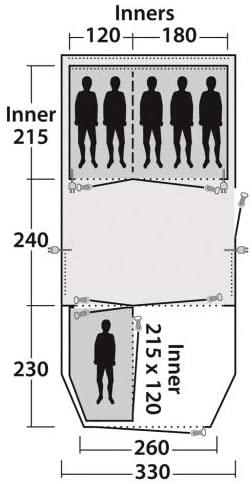
Outwell’s Woodburg 6A is one of the easiest models in this collection to set up. That’s because it makes full use of its pre-shaped air tubes, which inflate efficiently and create several spacious internal zones. One of those zones, the living room, can be fitted with a perfectly sized carpet, which adds a touch of luxury and comfort to your camping trip. This model’s overall weight of just under 25 kg also makes it ideal for transporting to a camping spot off the beaten path.
One thing to note though is that the bedrooms in this tent aren’t all equal sizes. There’s 1 triple room, 1 double room and 1 room that’s only big enough for a single person. You can remove the single person room though if you’d like more living space.
Pros
-Pre-shaped air tubes provide optimal internal space at the floor level -Fitted carpet matches internal footprint perfectly -Lightweight (25kg) -One bedroom can be removed to give extra living space -You can get a fitted carpet -Darkened bedrooms -Easy to pitch
Cons
-100% Polyester dries quickly, but is not always water-tight -One bedroom only fits one person -4000 mm HH isn’t as waterproof as other tents on this list
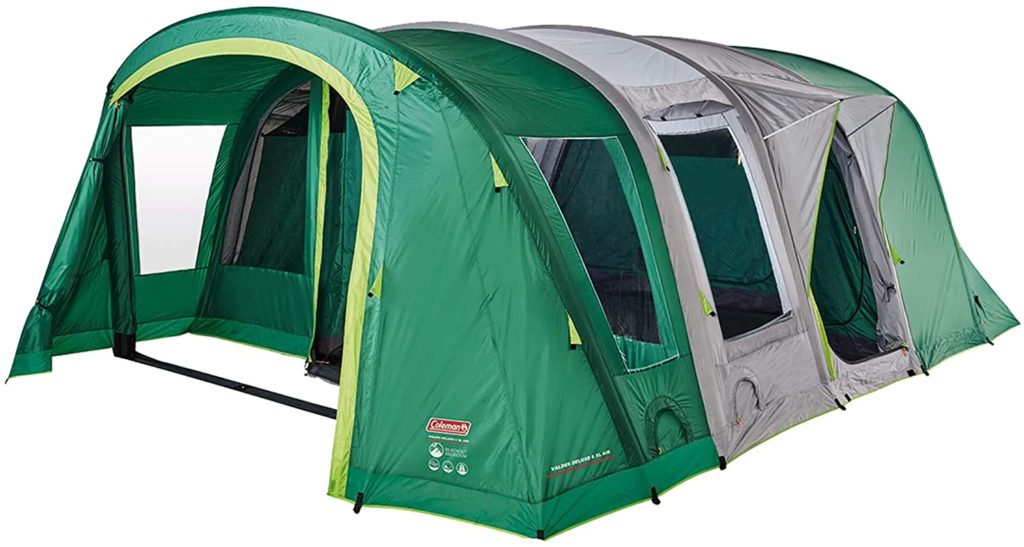
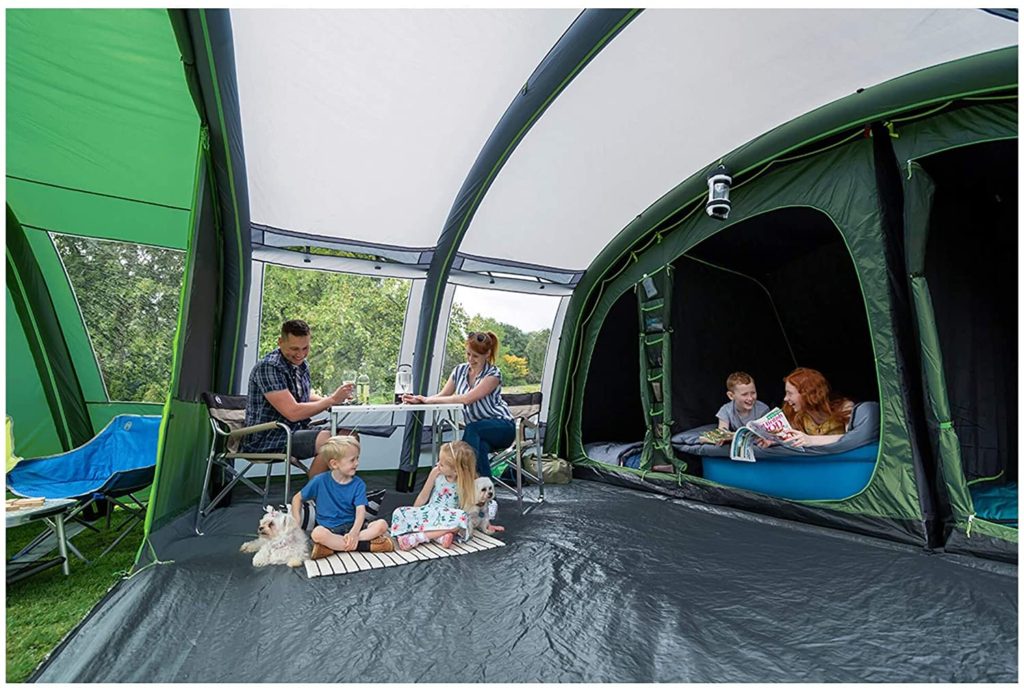
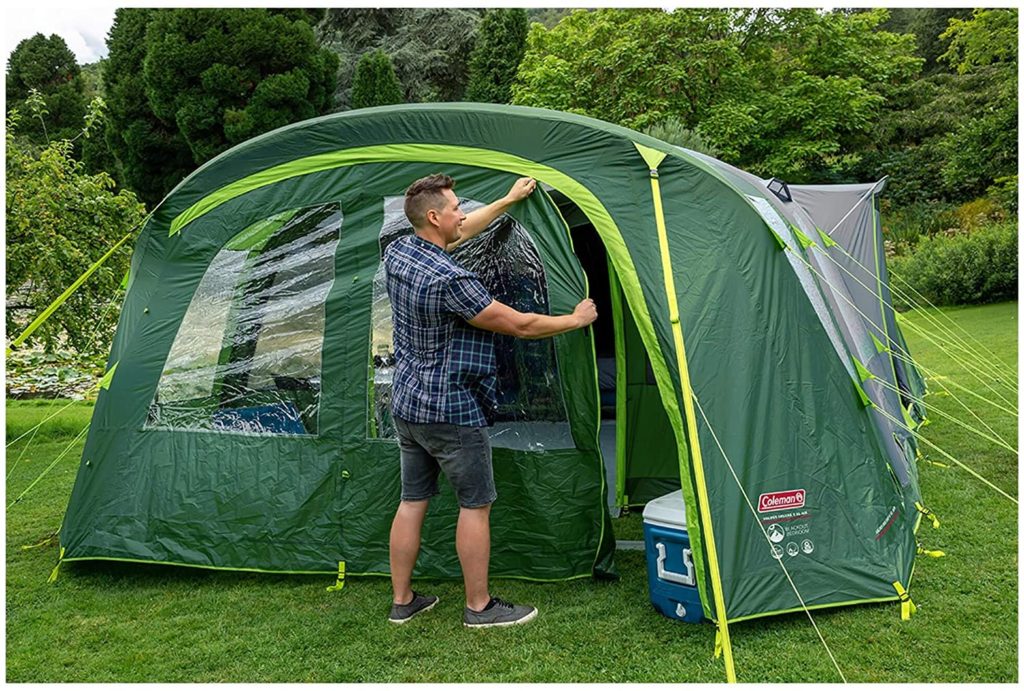
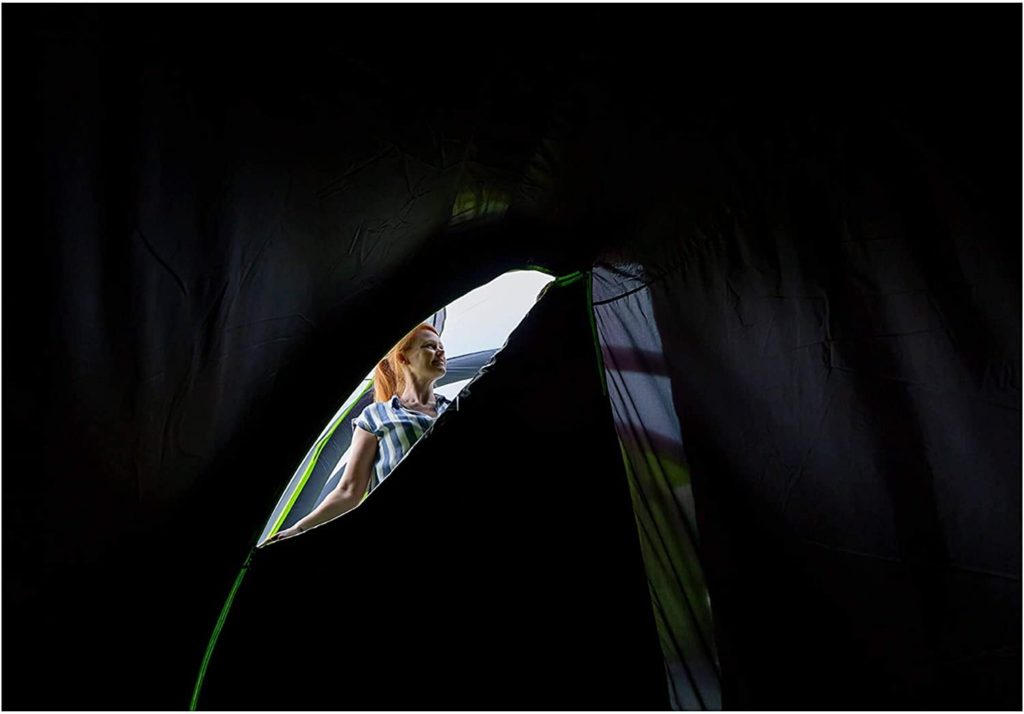
Finally, the Coleman Valdes has really raised the standard for what I expected from a 4 room tent. For starters, this model makes use of an innovative UV guard system that will keep you from getting a sunburn and prevent this tent’s colour from fading. At the same time, this model comes equipped with the BlackOut Bedroom system. This award-winning light dampening system ensures that you and your family can enjoy comfortable sleeping quarters, even as the morning sun rises. The BlackOut Bedroom technology also keeps the bedrooms 5°C cooler during the day and 1°C warmer at night.
The tent has so much space inside with two large living spaces that are perfect for families of any size. This inflatable tent can also be pitched quickly and by one person so there’s no need to worry about spending hours trying to put the tent up.
Pros
-Award-winning BlackOut Bedroom system blocks out 99% of sunlight -Hinged door provides stability without the need for a noisy zipper -UVGuard protection fabrics carry SPF 50 rating -Spacious tent with large bedrooms and living areas -Standing height throughout -Quick to pitch -Sewn-in groundsheet and 4500mm HH materials
Cons
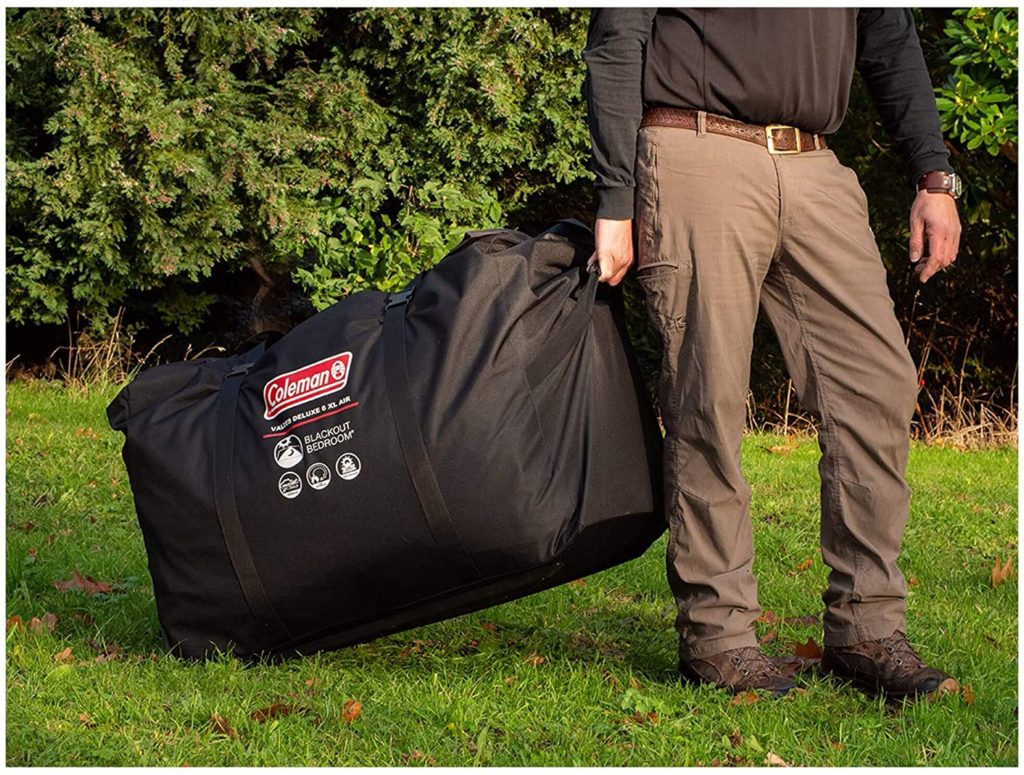
-Takes a while to dry out -Quite heavy (38kg) and large to transport
My Pick: Which 3 Bedroom Tent Did I Buy?
So, as promised, I want to tell you about which of these 4 room tents I ended up choosing. I have to admit, it was a hard decision, and my top choice isn’t the tent I actually bought. I would have loved to have purchased the Robens Prospector, it has so many amazing features and I loved the ability to customise it. Plus, it was one of the best looking 3 bedroom tents I’ve ever seen. However, it’s also the most pricey tent on this list, and I couldn’t quite justify spending so much on a tent.
So in the end, I ended up going with the Coleman Valdes. Simply put, this model offers some great special features that I hadn’t seen anywhere else, including a hinged door and high UV protection. The price wasn’t too high either, so I felt that it was a good investment.
When you think of travelling, you no doubt think of far-off destinations, but you don’t have to take a trip to a foreign country to have a great time.
Sometimes all you need is a good hike in nature or a relaxing stroll along the beach to soothe your adventurous soul. And if your wanderlust has you wanting to explore new destinations, I’ll bet there are some beautiful gems not too far from you that you haven’t explored yet. This is exactly why road trips will never lose their charm.
Imagine hitting the road with your favourite playlist, your friends or family members in the passenger seats, and of course the snacks you’ll need along the way. We’ve all heard the cliche saying that travel is as much about the journey as it is the destination and on a road trip, the journey really is half of the fun.
And when it comes to planning a route and choosing your stops, every country has so much to offer by way of stunning destinations, the UK included. If you’re searching for a road trip to untouched, natural destinations, then believe me, the UK will not disappoint.
Whether you live in the UK or you’re a tourist, England, Northern Ireland, Scotland and Wales all have some stunning destinations that are well worth a visit. So buckle up and let’s go through the top 8 road trip destinations in the UK.
1: Enjoy the Scenery of the Lake District
Home to the finest lakes and picturesque drives in Europe, the Lake District is a famous holiday spot in Cumbria, in the North West of the UK. Filled with tons of outdoor activities, it offers unique and exciting experiences.
There are plenty of hikes to be had, kayaking and SUP opportunities, and countless photo spots. With quaint towns and villages dotted around the Lake District, you can also enjoy some retail therapy in village gift shops, or stop for a traditional pub lunch.
You can hike to Scafell Pike, the third highest peak in the UK or make a stop at Lake Windermere, the largest natural lake of England. You can also visit Dove Cottage of the renowned English poet William Wordsworth or the little market town of Keswick to complete your tour.
And depending on whether you consider yourself an outdoorsy person or you like to travel with all of your home comforts, there are plenty of accommodation options, from campsites to caravan parks, hotels, B&Bs and cottages for hire.
2: Learn From the Castles of Northumberland
If you’re a fan of British history, Northumberland is the perfect UK road trip destination for you. This county will transport you back to medieval times with castles and epic battlegrounds.
You can plan a stop at Bamburgh Castle, a much-loved fortress that has been home to a succession of Kings over the last 1,400 years. Or take a trip to Hogwarts by visiting Alnwick Castle. This castle has been the official residence of the Duke of Northumberland for 700 years but it rose to fame after its appearance in the Harry Potter movies. Other popular spots that are worth including on your road trip are Lindisfarne Castle and Chillingham Castle.
3: Hike Over the Ancient Cheddar Gorge
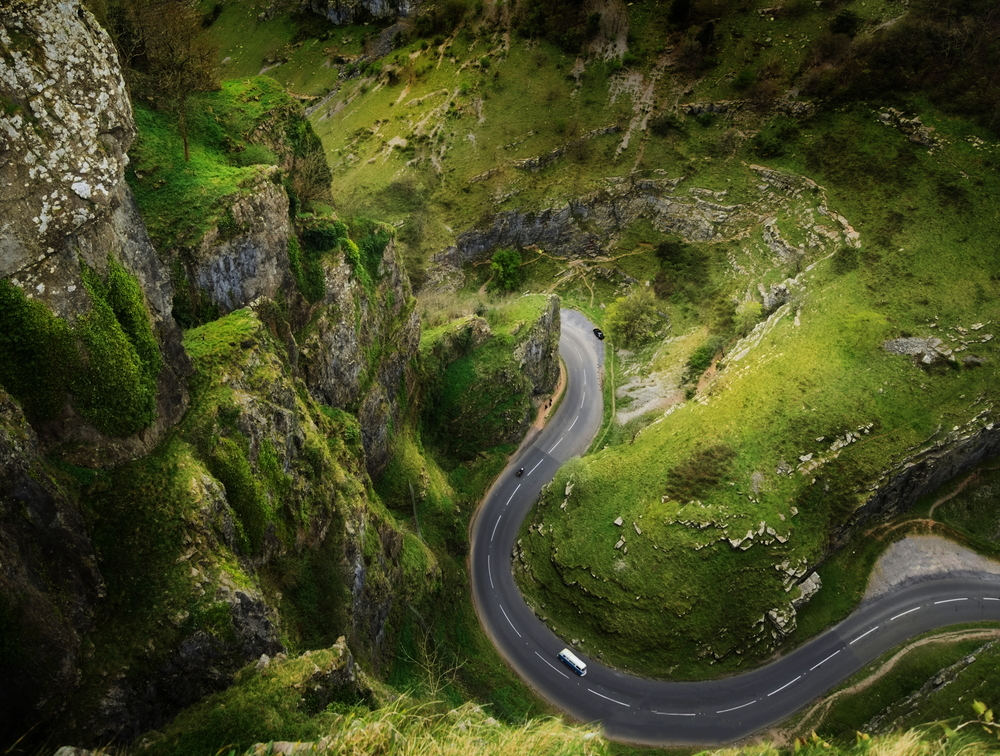
Somerset’s Cheddar Gorge, located 10 miles south-west of Bristol in Mendip Hills, is nothing short of a natural wonder. With towering 450ft high limestone cliffs — the highest inland, limestone cliffs in Britain — prehistoric caves, and roads that wind through some of Britain’s most scenic landscapes, a road trip to Cheddar Gorge is one of the most beautiful and fascinating trips you can take.
The roads are stunning and interesting to drive, and once you arrive there’s plenty to do. There are some incredible walks, caving opportunities for families and thrill-seekers alike, rock climbing sites, even free fall experiences (don’t worry, they’re completely safe). There are also escape rooms, over 30 local, independent shops to explore and a museum of prehistory.
The highlight of this landmark are the Gough caves that are over 500,000 years old. The skeleton of the Cheddar Man, the oldest skeleton to be excavated in the UK, was found in these very caves. For mountaineers, Jacob’s Ladder and the Lookout Tower are the landmarks to explore for the astounding views around the gorge.
4: Enjoy the Natural Beauty of the Cotswolds
Road trips in the UK can help you reconnect with nature and discover places that take you back in time. And one of the most adorable and nature-rich areas in the UK is the Cotswolds. With mountains, lakes, nature parks as well as dainty, medieval villages, the Cotswolds are the ideal destination for nature-lovers and history enthusiasts alike.
Brimming with lush green countryside, small pubs, narrow lanes and unique stone cottages, the Cotswolds is quintessentially English. This area offers everything you could hope for from an English road trip. And as the Cotswolds is an area that spans several counties, there are so many different sights to see within this area. Castle Combe in Wiltshire, Chipping Campden in Gloucestershire and Broadway in Worcestershire are few of the villages that should be on your bucket list.
5: Drive the Black Mountain Pass to the Brecon Beacons
A list of road trip destinations in the UK wouldn’t be complete without mentioning Wales. And one must-see, Welsh destination is the Brecon Beacons National Park. The Brecon Beacons are a mountain range with stunning scenery, waterfalls, caves, castles and beautiful villages. This 500 square miles piece of land includes breathtaking mountain ranges that are part of the UNESCO Global Geopark due to their amazing wildlife and geological formations.
There are plenty of hikes, cycle and mountain biking routes, and other fun outdoor activities including watersports, horse riding, and family-friendly caving adventures. And one daring activity park that’s perfect for both adults and children is Zip World — you can try out the world’s fastest zipline and travel at speeds of over 100mph, bounce on underground trampolines in the slate caverns or make your way through an underground assault course.
Other attractions include Monmouthshire and Brecon Canal that offer magical, fairytale scenery. Craig y nos Country Park is also worth visiting — this area will take you back to Victorian times with its historic heritage and architecture.
And when you visit the Brecon Beacons, you’ll have the chance to drive what is often considered the best road in Wales: Black Mountain Pass. Not only is it scenic, but it’s also super fun to drive with the occasional hairpin bend and roads that cut through the countryside. Just watch out for sheep in the road!
6: Unravel the Mysteries of the Isle of Skye
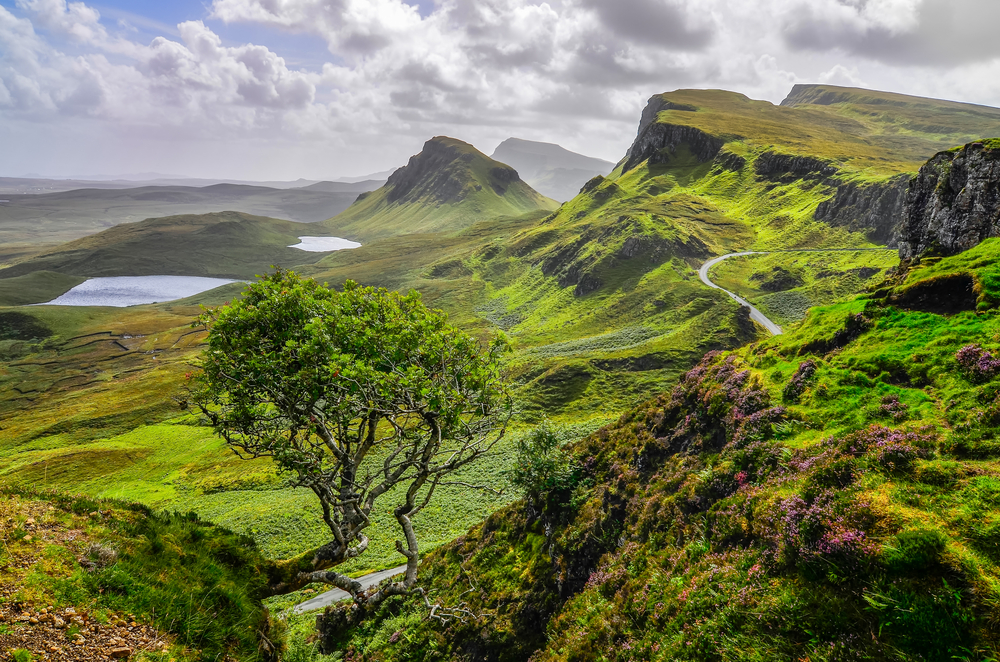
Scotland has some absolutely stunning scenery that looks completely untouched by man. And one place to drive through unspoilt landscapes and reconnect with nature is the Isle of Skye. The mysterious blend of historical sites, quaint little towns and spectacular landscapes will make you fall in love with this region.
The Old Man of Storr is the perfect hiking spot for adventure lovers whereas the mystical Fairy Glen and Fairy Pools will hook you with their mythical charms. And you don’t want to miss the sunset at Neist Point — it’s one of the best sunsets you’ll ever see, and it’s the perfect area to appreciate the beauty and natural magnificence of this island.
7: Travel the Causeway Coast Route and Explore the Giant’s Causeway
The Causeway Coast Route in Northern Ireland is without a doubt one of the best roads to drive in the UK. Starting in Belfast, you can drive your way through picturesque coast roads, past beautiful little villages and unforgettable landscapes, and there are countless attractions to stop and visit along the way.
For example, you could visit the Carrickfergus Castle, Nine Glens of Antrim and Carrick-a-Rede Rope Bridge but one place that is going to take your breath away is the Giant’s Causeway. It is characterized by horizontally lined polygonal basalt columns formed as a result of volcanic eruptions over centuries. However, the legend says that the Irish Giant Fionn Mac Cumhaill made this path to have a fight with its Scottish counterpart over territorial issues. But whatever the story may be, this UNESCO world heritage site is a symbol of pride for Northern Ireland.
There are also plenty of gardens to admire, fairytale-like scenery to discover, adventurous activities to try and even Game of Thrones attractions to explore.
To get to this Northern Ireland route from mainland UK, you can take your car on a ferry, or fly to Belfast and rent a car.
8: Discover the Elegance of the White Cliffs of Dover
If you are coming from London, take a drive from the town of Kent along the English coast to the magnificent White Cliffs of Dover. Overlooking the English Channel and facing France over the Strait of Dover, the cliffs are a popular spot for keen hikers, cyclists and photographers.
And as well as offering beautiful flora and fauna, Dover has seen its share of historical events ranging from the Roman invasion to the evacuation mission from Dunkirk during World War II. Other interesting areas around the cliffs are the South Foreland Lighthouse and Dover Castle.
When touring these destinations it doesn’t matter if you are a foreigner or a local. All that matters are the wonderful experiences you gain from each and every one of these road trips. So pack your raincoat and camera, and enjoy the gifts that the UK has to offer.
With plenty of historical sites to explore, beautiful natural scenes to admire and traditional experiences to enjoy, Kyoto is one of Japan’s must-visit cities. As a cultural hub and a destination that’s surrounded by nature, it’s the perfect place for travelers and tourists hoping to immerse themselves in Japanese history and tradition and escape to nature.
Just imagine walking through towering bamboo forests, setting foot in ancient temples and traditional teahouses, and soaking up the natural beauty of cherry blossoms or autumn leaves. A trip to the former capital of Japan can be a real dream come true.
And you can explore this city in three magical days. So I’ve created this 3-day Kyoto travel itinerary to help you plan the perfect three days in Kyoto.
Whether you’re following Japan’s “Golden Route” and visiting Tokyo, Osaka, and Kyoto, or you’re just visiting Kyoto, this Kyoto travel itinerary can help you plan your trip to perfection. Even if you’re spending longer than three days in this city, this itinerary will give you an idea of some of the best things to do during your stay.
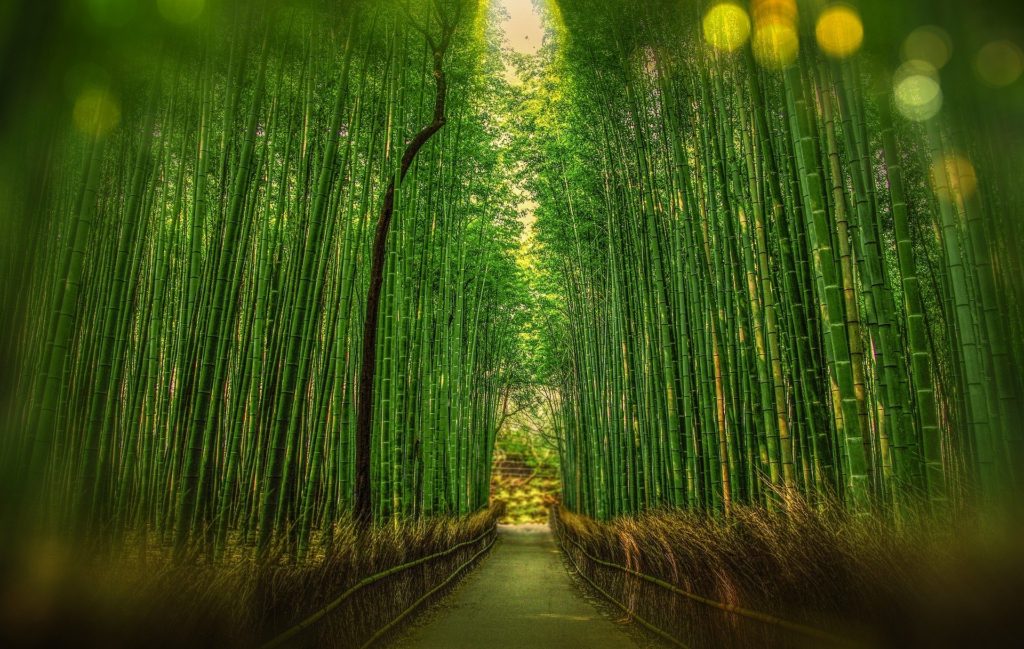
You’ve no doubt seen pictures of this famous forest, and the pathway that winds its way through the towering bamboo stalks. The Arashiyama bamboo forest is one of Kyoto’s most beautiful sights — it’s a retreat into nature, in the middle of the city.
So why not start your first day in Kyoto with a breath of fresh air by taking a relaxing walk through this stunning forest?
The earlier in the morning you can get to the bamboo forest, the quieter it will be. So if you’re hoping to avoid the crowds, take perfect pictures, and enjoy the serenity of the forest, I’d recommend arriving as early as possible — definitely before 9 am, or if you don’t mind rising early, a sunrise trip is definitely worth it.
At sunrise, you’ll see the changing colours of the bamboo forest as the sun starts to filter through the bamboo stalks. But if you arrive after the sun is already in the sky, you’ll experience the beautiful green colour of the bamboo grove.
The Arashiyama bamboo forest is a short walk from the JR Saga-Arashiyama station. After walking for about 15 minutes through the bamboo grove, you will come upon Tenryu-ji temple.
Tenryu-ji Temple
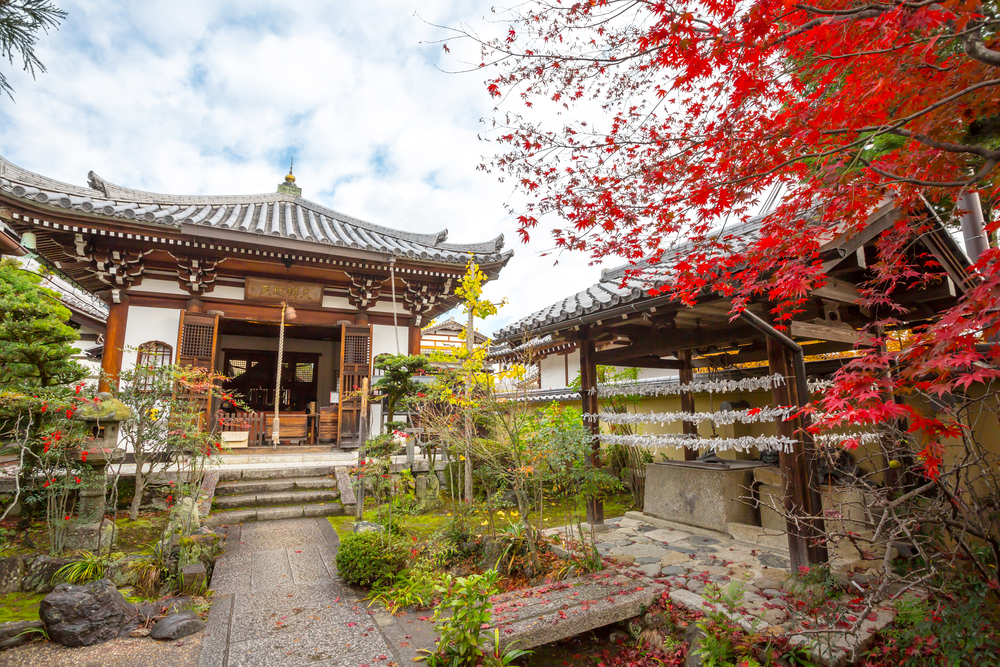
Tenryu-ji temple is a world heritage site and one of the main Zen temples in Kyoto. Although the temple dates back to the 14th century, many of the temple buildings have been destroyed in fires, and compared to other Japanese temples, Tenryu-ji is now fairly minimal.
However, the temple is surrounded by mountains and forest, and the temple gardens alone are well worth a visit. Japan is well known for its careful garden designs, but the Tenryu-ji gardens have a much more natural feel, and they’ve remained the same for many centuries.
After exploring the garden of Tenryu-ji temple, another 15 minutes through the bamboo forest will bring you to the Arashiyama Monkey Park.
Arashiyama Monkey Park
If you’re hoping to encounter some Japanese wildlife on your trip, you’ll want to visit Arashiyama Monkey Park, also known as Iwatayama Monkey Park. Don’t be put off by the term ‘park’, all of the monkeys here are wild, in fact it’s humans that are in a cage at this park.
As you venture into the park you’ll follow a path that leads you up the mountain, and as you approach the summit you’ll officially be in monkey territory. Over 120 Japanese macaque monkeys live in this area, so keep an eye out for these mischievous little beings — if you’re lucky you may even spot some babies. Just make sure you follow the rules which will be written on signs around the park. The monkeys are used to being around humans, so they won’t hurt you as long as you stick to rules like staying at least two metres away and avoiding eye contact.
At the end of your hike through the park, at the top of the mountain, you’ll be greeted by staff and the welcome sight of benches. Here you can stop for a much-needed rest while enjoying one of the best views of Kyoto. You can enter an enclosed, caged area where you can look out over Kyoto and feed monkeys safely from behind the cage.
To enter the park you’ll need to pay an entrance fee of 550 yen. And if you want to feed the monkeys you’ll need to buy food for 100 yen.
Fushimi Inari Shrine
Fushimi Inari shrine is an important shrine in Kyoto, dedicated to ‘Inari’, the Shinto god of rice. The messengers of the god are thought to be foxes, so you’ll spot many fox statues and emblems throughout the shrine grounds. But this shrine is most famous for the thousands of torii gates lining the paths behind the shrine. These red vermilion gates have made these paths one of the most popular photography spots in Kyoto. As the sun shines, paths are illuminated in red and orange, or if you opt for an evening visit, the atmosphere at the Fushimi Inari Shrine at night is quite something, with the illuminated orange gates casting dramatic shadows.
If you choose to follow the paths until the end, you’ll be walking for around 2-3 hours until you reach the top of a mountain. However, most visitors don’t get this far. Most people will simply walk a little through the paths before turning around, and some will walk to the halfway point, where the paths open up into a clearing, halfway up the mountain. Here you can relax on benches overlooking Kyoto. If you find yourself getting a little peckish or thirsty, there are several places to stop for a drink or a meal along the path.
The further along the path you walk, the quieter it will be, and the better photo opportunities you’ll get. However, past the halfway point you’ll start to less of the iconic red gates.
After walking through the Arashiyama forest in the morning and the Fushimi Inari shrine paths in the afternoon, you’re probably going to be pretty tired and ready for a break. So this attraction marks the end of day 1 in Kyoto.
Kyoto Day 2 Itinerary
Ginkaku-ji (The Silver Pavilion)
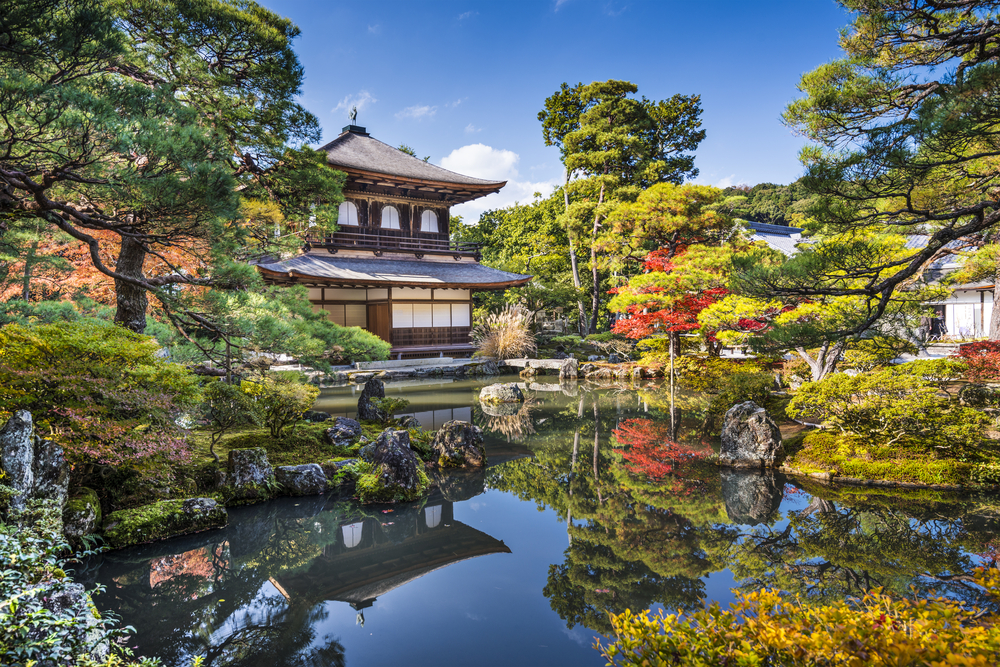
I’d recommend you start your second day in Kyoto with a trip to the Eastern side of the city to see Ginkaku-ji, the 15th century Silver Pavilion, also known as Higashiyama Jisho-ji temple.
This beautiful pavilion was modeled on Kinkaku-ji (The Gold Pavilion) and named the Silver Pailion not because when the temple was first built it was originally covered in a dark finish which reflected silver in the moonlight.
The pavilion is surrounded by a number of other temple buildings and beautiful gardens, including a moss garden and a dry sand garden. The sand garden, also known as ‘The Sea of Silver Sand’, is symbolic of Zen concepts and peacefulness. It leads to a silver cone, designed for moon-gazing and reflection. The moss garden also embodies Zen ways of thinking in its slow growth to beauty. There are a number of ponds and small bridges in this garden. The intricacy of the moss garden perfectly contrasts the simplicity of the sand garden.
Tetsugaku No Michi (The Path of Philosophy)
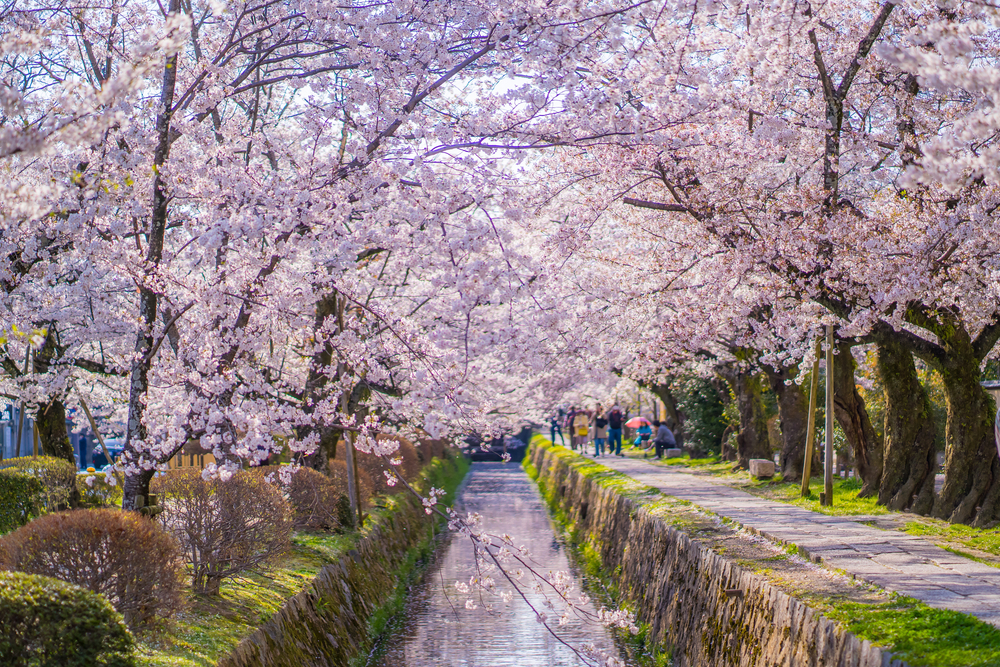
From Ginkaku-ji, you can go for a wander through Tetsugaku No Michi, also known as the Path of Philosophy or the Philosopher’s Walk. This is a 2km long ancient stone path between Ginkaku-ji and Nanzen-ji temple.
The path runs alongside a canal and is lined with cherry trees. In spring, this path makes for a stunning walk and it’s one of the best places in Kyoto to enjoy the famous cherry blossoms.
If you want to walk the entire length of the path, you can also visit Nanzen-ji temple. However, you don’t need to walk the entire 2km to appreciate the beauty of this walkway.
Kinkaku-ji (The Golden Pavilion)
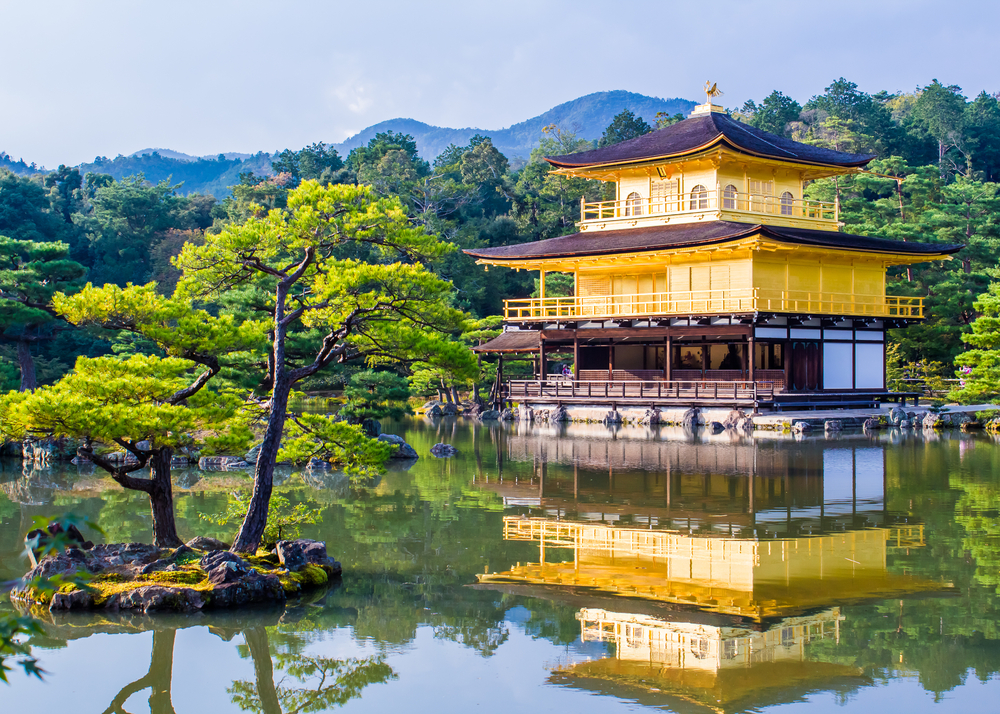
Kinkaku-ji is the sister temple and original inspiration for Ginkaku-ji (The Silver Pavilion). In contrast to Ginkaku-ji, Kinkaku-ji holds true to it’s name and appears gold at any time of day. The top two floors of the temple are covered in gold leaf.
Kinkaku-ji is famously picturesque in all seasons. The temple is set at the edge of a large pond with a colourful forest backdrop and on clear days the temple reflects perfectly in the still waters of the pond. In spring, the cherry blossoms perfectly frame the temple, and in winter, the gold of the temple glistens against the snow.
The entry fee for Kinkaku-ji is 400yen. It only takes a short time to see all the temple grounds have to offer, but the grandeur of the Golden Pavilion makes it an absolute must-see.
After visiting Kinkaku-ji a good transition into the afternoon and evening is a visit to the entertainment and dining district of Gion.
Gion, Kyoto’s Geisha District
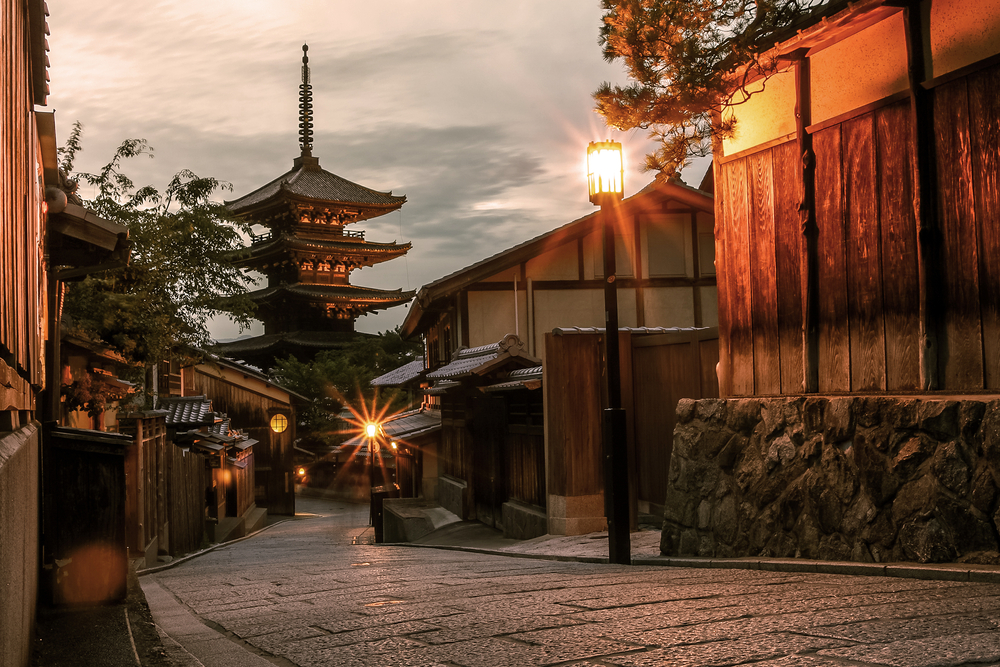
Gion is the perfect place to end your second day in Kyoto. A visit to this district, which is well-known as the Geisha district, can feel like stepping back in time. This is where Geisha culture comes to life — you’ll see Geisha (Japanese women trained in traditional arts) walking between traditional wooden houses, teahouses, shops and restaurants.
In Gion, you can dine in restaurants serving both traditional Japanese cuisine and international food, and attend cultural shows. A cultural show is held every day at the end of Hanami-koji Street to showcase a range of traditional Japanese arts, including tea ceremonies, flower arranging, dancing and comic plays. This is a great way to experience traditional Japanese culture.
Kyoto Day 1 Itinerary
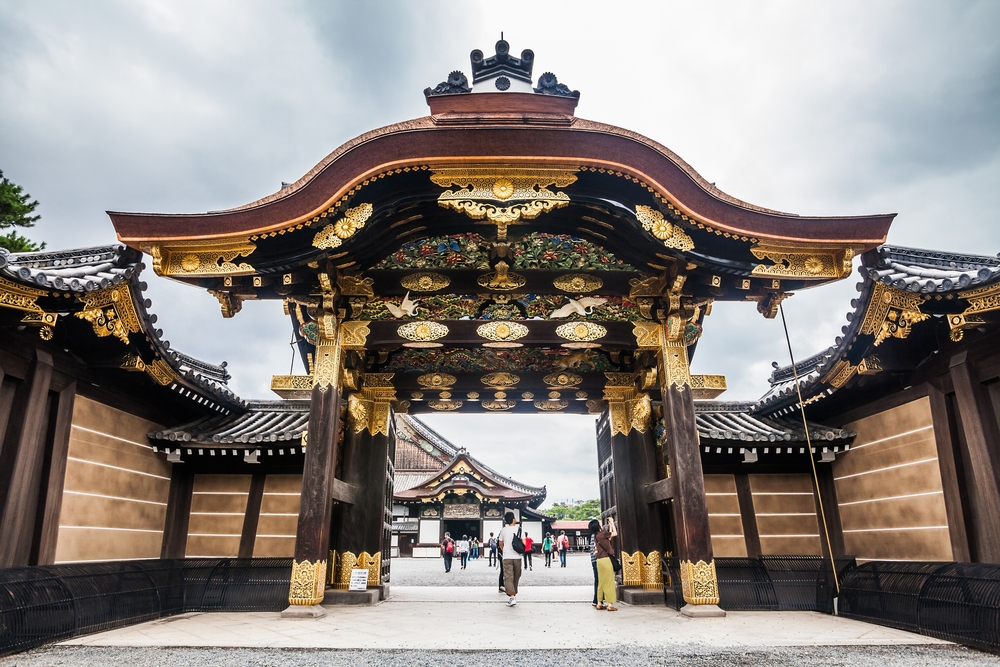
Nijo Castle
During the Edo period, Japan was governed by the Tokugawa shogunate, a military dictatorship founded by the first shogun, Tokugawa Ieyasu, also known as the unifier of Japan. And for many years, Nijo Castle was Tokugawa Ieyasu’s main residence.
The castle was built in 1603 and has remained largely intact since the Edo period. Today it’s one of the best examples of Japanese architecture from this period. The Castle has two rings of fortification, each one built as a line of defence. These two areas are surrounded by Japanese-style gardens and ponds. In the centre of the fortress, you’ll find the most impressive building: Ninomaru Palace. For those interested in Japanese history or architecture, this castle provides a unique insight and understanding.
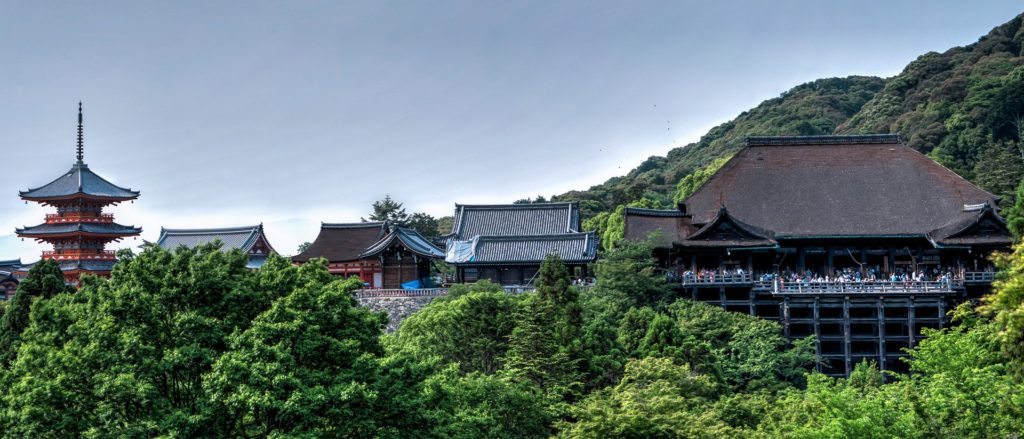
Kiyomizu-dera Temple
Dating back to 778AD, Kiyomizu-dera Temple offers a glimpse into Japan’s ancient history. It was built mostly from Japanese cypress and entirely without nails, and it’s one of the oldest temples to remain in its original form.
The temple is well-known for its wooden stage, which is 13 meters high and protrudes over the mountainside, offering a panoramic view of the beautiful landscape.
Kiyomizu-dera quite literally translates to Pure Water Temple — it was named because it’s located beside the Otowa waterfall, where pure water flows. The water has been re-directed through the temple grounds and it is possible to drink this water from a ladle. To drink the water is said to give good fortune and success. You’ll often see school students gathering to drink the water before sitting exams.
Nijo Castle and Kiyomizu Temple are both keystones of Japanese history and have been preserved exceptionally well. Visiting both of these beautiful sites will give you an insight into Japanese history, architecture, and culture. And you’re sure to get some incredible photos too.
What Did You Think of this Kyoto Travel Itinerary?
I hope you’ve found this guide useful! I created this Kyoto travel itinerary to help you plan an incredible three days in this wonderful Japanese city, packed with temples, castles, shrines, and gardens.
If you follow this itinerary I’d love to know how you found it, or if you’ve already visited Kyoto, what would you do differently?
Planning any family trip can feel like a big task. Deciding what type of holiday you need, where to go, how much you have to spend on your holiday, and how long you want your trip to last can all take a lot of planning and forethought. And then you’ve got to think about what to pack, which can be quite an extensive list when you have children. You’ll need to pack a whole range of items, from clothes, to toys, to the best umbrella stroller, and plenty of sun creams.
And if the environment is at the heart of your family’s values, planning an eco-friendly family trip can feel like an even bigger task.
Let’s face it, many types of family trips involve activities that are a real blow to our environment. There’s no such thing as an eco-friendly flight, so flying to destinations as a family has a huge impact on the environment, as does visiting areas where overcrowding of tourists has a negative impact on the environment or local people.
Visiting places like all-inclusive resorts, amusement and animal parks can also have a negative environmental impact — these places are often responsible for millions of disposable, plastic items like cups and toys entering the environment. Even family trips in the wild can involve bringing items that are potentially harmful to the environment, such as nappies, plastic toys, and litter to natural and protected areas.
But don’t panic, eco-friendly family travel is possible!
There are many different types of holidays that will allow you to spend quality time with your children while minimising your carbon footprint, protecting the environment and enjoying the beauty of nature. Here are some ideas and top tips for planning an eco-friendly family trip that your whole family will love.
Top 7 Eco-Friendly Travel Ideas for Families
1: Swap Your Vacation for a Staycation
Okay so this isn’t exactly a travel idea, but this is a great way to spend quality time with your loved ones like you would on a vacation, only you’ll be doing so without harming the planet. Rather than jetting off to a far-off destination, or packing up the car and hitting the road, why not do your bit for the planet by staying home instead?
You can make your staycation feel like a vacation by becoming a tourist in your hometown and exploring local sights. You can also plan fun activities for your family to complete together at home. For example, you could have a family bake-off, you could set up tents in the garden and camp under the stars, or you could have quiz or movie evenings.
2: Pick a Carbon Offset Adventure
If the idea of a staycation doesn’t tickle your fancy, and you want to book a trip through a travel agency, try and choose a carbon offset adventure. It’s not possible to travel without being responsible for at least some carbon emissions, but some travel companies will offer itineraries with minimal impact on the environment, and any carbon emissions are offset.
Carbon offsetting schemes fund and initiate environmentally friendly projects to ‘cancel out’ any emissions created through travel. For example, travel companies who provide carbon offset adventures may plant trees, invest in reforestation or renewable energy projects to cancel out the emissions of your trip.
3: Consider Environmental Volunteering
Environmental volunteering can be the perfect way to plan an eco-friendly family trip. There are thousands of volunteer programs that are suitable for little ones as well as adults. Volunteer vacations can involve cleaning up beaches, supporting conservation efforts, caring for animals in sanctuaries or rescue facilities, or supporting local community organisations. You can volunteer in a local area, or you could volunteer abroad and explore a new destination at the same time.
You could give your children a say in which type of volunteering scheme you look for, this way they’re more likely to engage in the experience and enjoy this type of vacation. If children have a say in how they do their bit for the environment, they’re more likely to research different aspects of environmental sustainability and discover causes that they’re passionate about.
4: Set Off on a Cyclo-Tourism Adventure
If you’re looking for an adventurous family trip, bike touring may the perfect option. There are cyclo-tourism routes you can follow that are suitable for children of all ages. Children who can confidently ride bikes can do so alongside you, and if you’ll be bringing toddlers along for the ride they can always ride in bike trailers. This might make the trip more tiring for you, but little ones will love the thrill of riding in their very own carriage.
This type of holiday is ideal if you want to connect with nature and explore new destinations without burning fossil fuels or spending too much money. Plus, you’ll encourage your children to be active during their time off school, and you’ll improve your fitness as a family.
All you need is your bikes, maybe a bike trailer, and camping equipment and you can complete multi-day cycle routes. Just make sure you choose cycle routes that are appropriate for the age and fitness of your family. If you’re not used to cycling, it’s best to tackle beginner routes first. You can always work up to the more advanced routes over the course of several family vacations. Also, remember to check the available emergency hotels along the path — this can help you feel more relaxed and comfortable about trying out a bike touring holiday.
5: Set Sail on Your Family Trip
If you feel like taking to the open seas with your family, a sailing holiday is an eco-friendly alternative to a cruise. Set sail on a boat powered by the wind and enjoy a maritime adventure that has a minimal impact on the environment.
If you don’t know how to sail there are plenty of companies who offer family sailing holidays, complete with boat hire and crew to guide you safely through the water.
While cruising the sea you can snorkel, swim and enjoy the open air and sea breeze. At the same time, you can teach your children about the importance of proper waste management and the prevention of water pollution.
6: Enjoy a Family-Friendly Farm Stay
A family-friendly farm stay gives your family a chance to switch off your digital devices and immerse yourself in nature. Children can meet farm animals, pick fruits and vegetables, learn about how farms operate and discover the importance of sustainable farming. Plus this is an affordable type of family trip and one that will support local farmers.
7: Travel By Train With an InterRail Pass
When you think of interrailing, you probably think of young people on their gap year. But this idea is also suitable for families with children of all ages. Travelling by train is more eco-friendly than travelling by car or plane and passes can be affordable for families on a budget. Interrail passes for children under 12 years old are also significantly cheaper than adult passes, so you may want to embark on a rail adventure before your children become too old for discounted tickets.
This type of family trip gives you the ability to explore multiple European countries or multiple areas within one country, and you can admire the views as you travel from one place to another.
Hopefully this article has given you some ideas for eco-friendly family trips. If you end up trying out any of these ideas, or if you have any other sustainable family travel ideas, we’d love to hear from you. Don’t be shy! Get in touch and tell us how your trip went, or share your travel ideas.
This website uses cookies to improve your experience. We'll assume you're ok with this, but you can opt-out if you wish. Cookie settingsACCEPT
Privacy & Cookies Policy
Privacy Overview
This website uses cookies to improve your experience while you navigate through the website. Out of these cookies, the cookies that are categorized as necessary are stored on your browser as they are essential for the working of basic functionalities of the website. We also use third-party cookies that help us analyze and understand how you use this website. These cookies will be stored in your browser only with your consent. You also have the option to opt-out of these cookies. But opting out of some of these cookies may have an effect on your browsing experience.
Necessary cookies are absolutely essential for the website to function properly. This category only includes cookies that ensures basic functionalities and security features of the website. These cookies do not store any personal information.
Any cookies that may not be particularly necessary for the website to function and is used specifically to collect user personal data via analytics, ads, other embedded contents are termed as non-necessary cookies. It is mandatory to procure user consent prior to running these cookies on your website.