by Hannah Collerson
For most budget travellers, hostels are a huge part of the travel lifestyle. Even those who prefer luxury travel experiences will likely experience hostel life at least once on their travels.
Hostels are the best accommodation option if you want to travel without breaking the bank. But there are a few things you should be prepared for if you’re heading to a hostel for the first time. If you’re completely new to hostels, you might find some of these a tad shocking – but that’s not to say you won’t thoroughly enjoy staying in a hostel nonetheless!
-
You might have to make your own bed
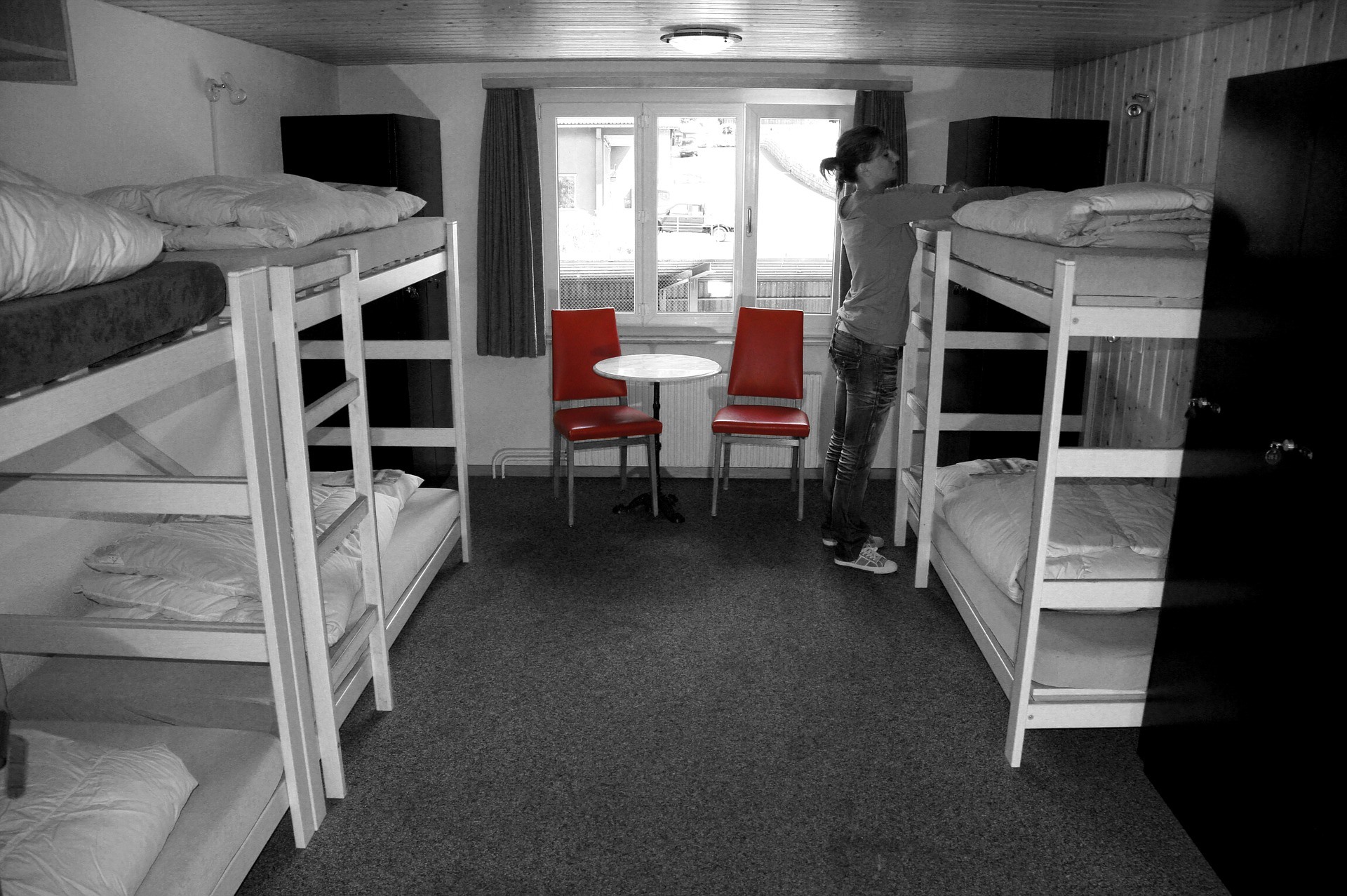
If you’re used to plush hotels, this might come as a bit of a shock. Usually, when you check into a hostel, you’ll be told what dorm you’re in, and then you’ll be handed a bundle of linen – with which you make your own bed!
-
You might get bed bugs
Most people are really shocked to hear that hostel beds are often riddled with bed bugs, but if it’s of any consolation, you’re just as likely to find them in hotel rooms too.
Whether or not you get bed bugs depends largely on where you’re traveling to. In some places, they’re part of the hostel experience, but in other places they might be unheard of. Even if you do end up sleeping in a bed with these critters though, they’re not actually that bad. You’ll wake up with a few bites, and you might spend the day itching and scratching, but other than that, they’re not actually too bad!
-
People will have sex in your dorm room
This is one thing that you really do need to prepared for, especially if you’re someone who’s uncomfortable even saying the word… Half the people you’re sharing a dorm with will be too drunk to care about going anywhere private, and the other half will be ‘free spirits’ who are so at one with their bodies and natural urges that they won’t hesitate to get down to business in front of anyone and everyone. They might try and be discreet, but you’re still going to hear everything.

-
People will have sex in the bathroom
It’s not just dorm rooms that people have sex in either. Those that are a little more bothered about disturbing those in their dorm room might take it somewhere a little more private…like the public bathroom. So think twice before going for a wee in the middle of the night.
-
There’s no alone time, or privacy, in a hostel
If you’re a fairly private person, or you value your alone time, you’ll need to prepare for 24/7 socialising. From the moment you wake up, to the moment you go to sleep, you’ll be surrounded by chatty and excited travellers.
Even the most introverted of travellers often enjoys the social atmosphere at least a little though. Hostels are the perfect place to make new friends from all over the world.

-
You’ll only get one, very flat pillow
If you’re looking for luxury, generally, you’re not going to find it in a hostel. When you make your own bed, you won’t have much to work with. On one hand, this makes it super easy to make the bed, but on the other hand, you’re going to have to put up with the flattest pillow you’ve ever seen. If you like a bit more volume to your pillows, try stuffing some of your clothes under the hostel pillow – it works a treat.
-
Lots of hostels won’t have air con
Most hostel goers are familiar with the nightmare of hostels without air con. If you end up in one of these hostels, it’s fair to say you’re in for a fairly hellish night (or nights if you’re there for a while!).
You’ll be laying in your bed bug riddled bed, sweating buckets, and struggling to breathe in the thick and humid air. Meanwhile, your room mates will probably be making the matter worse by having rampant sex, adding more heat and sweaty smells to the room. Moral of the story? Book hostels with air con if you can! And if you can’t, getting insanely drunk might be the way to get through it.
-
Hostels showers can be pretty grim
There’s a reason people take flip flops to wear in the shower. Hostel showers can often be as luxurious as standing in a puddle of toilet water. Hundreds of people use hostel showers each week, so you’re looking at germs from hundreds of travellers, and quite frankly, you don’t know where they’ve been. It’s also not unheard of for those that stumble back drunk to vomit in the shower, so prepare yourself for that.

-
You’re going to meet some creepy people
Ask any hostel goer, and they’ll have some story about a creepy guy or girl that they spent days trying to avoid. Every hostel has its fair share of creepy visitors – maybe they’ll stare intently at you over breakfast, or tell slightly psychopathic stories. Either way, it’s probably going to freak you out.
-
You’re going to meet some lovely people
As well as creepy people though, you’re going to meet some lovely people – people that you’ll be convinced are now your best friends, or the love of your life. But just prepare yourself for the fact that most people in hostels move on after a few days, and you might never see them again.
-
Don’t expect decent Wi-Fi
If Wi-Fi is a vital part of your daily existence, you might need to wean yourself off of it for a while whilst staying in hostels. It’s rare to find a hostel with decent Wi-Fi, especially if you’re in a remote corner of some distant country.
And when you do find a hostel with Wi-Fi, you’ll probably find that it only works in public areas – like reception. And you can bet money on the fact that people will be huddled around the Wi-Fi hot spot like penguins.
So to sum up…
So now you know some of the shocking normalities of hostel life. On the surface, I’ll admit, it sounds pretty grim. But you’d be surprised at how enjoyable life in hostels can be, despite all this. You sort of learn to accept a lesser quality of life, and sometimes that means you enjoy yourself ten times more. Bed bugs become laughable, flat pillows become the norm, and really dire situations become a good story to tell later down the line.
by Hannah Collerson
Traveling as a couple can be quite a different experience to traveling solo or with friends. It has a completely different vibe. It can be an incredible experience, and one that helps you grow as a couple. However, there are some things you should know about traveling as a couple.
There will be times when you’ll want to do separate things
Remember, both you and your partner are different people, with different interests. So the chances that there are going to be points where you both want to do different things, and that’s okay!
If you’re traveling long term, you’ll need to learn to be together, but apart. What I mean by that, is that yes you’ll be traveling together, but it’s okay for you to split up sometimes. That way you can both see everything you want to see, and mingle with people you want to mingle with. You might not be together during the day, but it’s coming back to each other after your individual adventures that counts. Then you can tell each other about your days, and doing so might even bring you closer.
You’ll further discover your independence within the relationship
One thing that couples often struggle with, is finding their independence within the relationship. It’s easy to start to view yourself as a girlfriend or boyfriend, and forget to focus on your individual identity.
When you go traveling with your partner, you’ll rediscover your individuality. You’ll experience things both together and as individuals, and in doing so you might even find that you fall in love with each other all over again.
You’re probably going to argue
Traveling can be stressful, especially if it’s your first time traveling together. And naturally, you’re going to have arguments. Maybe you’ll be tired or jet lagged, and you won’t be able to help getting irritable and snappy. And that’s something you’ll need to be prepared for as a couple.
Even if you argue, you’ll need to find a resolution when traveling together, and you’ll need to make up afterwards and go back to being there for each other. Just don’t view arguments as the be all and end all of your relationship.
Your travels probably won’t be as party or drinking-orientated
When you travel as a couple, the vibe of your travels will be slightly different to that of solo travel trips, or travel trips with friends. When you travel alone or with friends, your trip has a tendency to focus around drinking and socialising. But when you travel with your significant other, you might not be as enthusiastic on the drinking front. You might find that you replace the partying travel lifestyle with cultural and adventure experiences.
Your relationship might be put to the test
Traveling the world with your partner will put the pair of you in situations you’ve never come across before. There’ll be more people around, new temptations, and new opportunities – all of which can challenge your relationship.
That’s not to say that you can’t get through these challenges though. In fact, if you manage to face any struggles and challenges together, you’ll come out of it stronger than ever.
You’ll go through ‘honeymoon stages’
Traveling together is exciting, there’s no denying that. And it can feel like the most romantic thing in the world. You’ll be living the dream! So whilst you might have arguments along the way, you’ll go through periods that feel like honeymoon stages – you’ll feel more in love than ever before. The trick is to carry that love on when your travels come to an end.
To sum up…
Traveling as a couple will put new strains on your relationship, but it will also bring you closer together than you’ve been. Make sure you deal with everything your travels throw at you as a couple, but also remember to fulfil your individual needs, and (excuse the cliché) ‘find yourself’ along the way.
by Hannah Collerson
There are so many amazing moments and memories that come with a traveling lifestyle, but one of the not-so-amazing parts of traveling is jet lag. It gets even the best of us, and sometimes it lasts for days. It’s not even just the tiredness that affects us, in fact, it can even cause indigestion, tummy troubles, loss of appetite (which is a real shame when you’re in a new place with new food), and lack of concentration. And the worst part is there seems to be no getting around it! But, there are some things you can do (or not do) to get over it as quickly as possible. Here are 25 do’s and don’ts to help you defeat the dreaded jet lag.
The Do’s
-
Do set your watch to your destination’s time before you take off
Before you’ve even taken off, start getting used to the new time zone. Set your watch, and/or the time on your digital devices to the time zone of your destination. The sooner you start getting used to it, the sooner you’ll get over the jet lag that comes with it. This will also help you plan when to sleep or not sleep on the plane.
-
Do eat healthy foods
Both on the plane, and afterwards, when you’re feeling the effects of jet lag, eating healthy foods can help you overcome symptoms of jet lag. Stay away from heavy, carbohydrate-rich foods, especially on the plane, as these are just going to send you to sleep. Protein rich foods, and fruits and vegetables are always a good idea. They’ll give you the energy you need to stay awake.
-
Do get some sleep at the right time
If you want to make the most of the days you have at your destination, or if you want to get back on your feet as quickly as possible after coming home, you’ll need to make sure you’re getting some sleep at the right time. It might be a little difficult, and you might find yourself waking up during the night, but do your best to get as much natural sleep, at the right time, as possible.
This also applies whilst you’re on the plane. If you’re flying during your destination’s night time, try and get some shut eye, even if you’re not all that tired.
-
Do pack a sleep mask
This is essential if you want to get some good sleep on the plane. If your flight is during your destination’s night time, it’s important to try and get some rest in then. The only trouble is, the lights are often on, or the light is shining in from the outside, or someone next to you is using a particularly bright laptop. Any small detail like this, and you’ll find it near impossible to get any sleep at all. So pack a sleep mask, and you’ll be able to shut out all of the distractions, and create complete darkness – exactly what you need to get a good rest.
-
Do pack headphones
You’ll also want to block out noise, as well as light. Noise can be just as distracting, if not more. Whether it’s a screaming child, the dinging seatbelt sign, or the tipsy chattering of a hen party, any noise is going to keep you up when you should be sleeping.
-
Do get enough water
If you don’t drink enough water whilst you’re struggling with jet lag, this dreaded tiredness will start to resemble an awful hangover. The last thing you want when your body clock is already messed up, is the added symptoms of dehydration.
-
Do get out in the sun (and wear sun screen)
By getting out in the sun, your body will soak up all the goodness and vitamin D that comes with each ray of sunshine. Plus, the more natural light you expose yourself to, the less likely you are to start feeling like it’s time for a nap. The natural light will reduce your body’s melatonin levels, melatonin being what makes you feel tired of an evening.However, if you’re going to get out in the sun, make sure you wear sun screen. The last thing you want when you’re already feeling jet lagged is
-
Do keep busy
Keep yourself busy and you won’t have time to worry about feeling jet lagged. On the day you arrive in your destination, and the days afterwards, pack your days full of fun activities. If you’ve only got a limited number of days at your destination, you don’t want to waste them nursing the symptoms of jet lag, so keep busy and don’t let jet lag ruin any of your precious holiday days.
-
Do keep active
Sometimes getting active is the last thing you want to do when you’re feeling jet lagged. But a bit of exercise is one of the best things for getting over the awful timezone tiredness. As well as taking your mind off your adjusting body clock, the more active you are, the quicker your body will adjust to the new timezone.
-
Do use caffeine strategically to keep yourself awake
Sometimes, jet lag hits you hard, and you might need a little help keeping yourself awake. Most of us are fans of coffee or at least tea, and these caffeinated drinks can be a God-send when you can barely keep your eyes open.
Obviously don’t go overboard, as caffeine isn’t great for you. But a few coffees throughout the day can be the perfect solution to staying awake until it’s time for bed. Another bonus to using caffeine strategically is the ‘caffeine crash’. Normally, this is the bane of every coffee drinker’s life, but you might actually welcome it when you’re jet lagged. By the time it reaches bedtime, your caffeine crash will have kicked in, and you might just sleep like a baby, despite your adjusting body clock.
The Don’ts
-
Don’t drink alcohol when you’re feeling jet lagged
Jet lag has a tendency to feel a bit like a hangover, so you really don’t want to add an actual hangover on top of it. Plus, alcohol dehydrates you, and if you want to get over your jet lag as quickly as possible, you need to stay hydrated.
-
Don’t drink the night before traveling!
The no drinking rule also applies to the night before you travel. If you want to be tactical about getting over jet lag, you’ll need to start helping your body adjust on the plane. But if you’re hungover and dehydrated when you fly, your body is going to be focused on recovering from the previous wild night. And trust me, it’s going to take a lot longer to recover from a hangover AND jet lag, than just jet lag.
-
Don’t forget to eat
To get over tiredness, jet lag in particular, you want your body to be at its strongest. And to be at its strongest your body needs fuel – food. Otherwise, you’ll be running on empty, and your body is going to struggle to adjust.
-
Don’t eat junk food
Whilst making sure you eat enough is important, that’s not to say that you should scoff down anything and everything that takes your fancy. Try and steer clear of junk food, as tempting as it can be, and instead have a healthy alternative.
Junk food doesn’t do your body any favours. You’ll actually feel more tired and unwell after eating it, and your body won’t have the nutrients it needs to effectively battle the symptoms of jet lag.
-
Don’t just stay indoors
If you stay indoors when you’re feeling jet lagged you’ll end up giving in to your tiredness. It’s difficult to stay active and busy when you’re indoors. In fact, it’s much more tempting just to slob out on the sofa, and maybe have a nap. So rather than staying indoors, get out and about! That way you’ll recover from jet lag much quicker.
-
Don’t arrive at night (where possible)
If you can choose what time you fly, try and avoid arriving at night. Arriving during the night can make jet lag much worse. The first thing you feel when you get somewhere new is excitement, and the last thing you want to do is sleep. So if you arrive at night, the chances are you’re probably not going to get a great night’s sleep.
-
Don’t take sleeping pills
Sleeping pills can actually make you feel more jet lagged in the following days after you land. Your body needs to adjust naturally, and sleeping pills can cause confusion in your body’s adjustment. So if you can get to sleep without them, it’s often best not to take them.
-
Don’t drink too much coffee
Whilst coffee can be used strategically with jet lag, it’s important not to overdo it. Drinking too much coffee can interfere with your body’s adjustment. It can make it difficult to get to sleep, or if you have a caffeine crash in the day time, you might just end up falling asleep before it’s even dark.
-
Don’t have a nap on arrival
If you arrive during the day and have a nap, you’ll find it much more difficult to get to sleep at the right time later on. If you want to get over jet lag as quickly as possible, you’ll need to get used to the new timezone as soon after arrival as you can. The best way to do this is to get a good night’s sleep at the right time. So if you nap, and then can’t sleep at night, you might just drag your jet lag out for another day.
-
Don’t think about it too much!
You know when you get a cut, or a graze, and you know how it hurts more when you think about it? It’s exactly the same with jet lag. The more you think about it, the more you’ll feel the effects. So do your best not to think about it! Don’t count the amount of hours you’ve been awake for, or think about what time it is back home. Just tell yourself that you’re already used to this new timezone. It’ the age old remedy of ‘mind over matter’.
So to sum up…
There are a whole load of things you can do to get over jet lag as quickly as possible, or at least make the symptoms a little more bearable. From thinking a little more carefully about your diet, to getting active, and avoiding having a nap, you can easily overcome the dreaded jet lag without it affecting your travels too much. You’ve read the 20 tips, so now it’s up to you to take action and defeat this timezone tiredness!
by Hannah Collerson
Getting paid to travel the world – it’s everybody’s dream, right? But most people will dismiss the idea as just that, a dream, and so for most people it becomes a dream that’s never brought to life. But if these people realised just how easy it is to make money on the go, they’d never have dismissed the idea. In fact, they’d probably be traveling the world, and making a killing at the same time.
When I first realised how easy it was to make money whilst traveling, I did three things: I booked a few flights and Airbnb lodgings, I wrote this article, and then I wrote a book to help others figure it out too (hopefully a little quicker than I did).
So here’s a guide to what I consider to be one of the most interesting and effective ways to make money whilst traveling – online freelancing. It’s one of my favourite ways to top up the bank account, and it’s so easy! No matter who you are or where you’re from, the chances are, there’s something you’re good at. And more often than not, there’ll be someone out there who’s looking for someone with your talents.
If you’re after more money-making ideas though, you’ll want my eBook, 15 Ways To Make Money Whilst Traveling. The eBook is much more in-depth – it’ll walk you through each idea, so no background knowledge is required! You can get it here from Amazon, or if you subscribe to Travel Lifestyle Magazine, a FREE copy will be sent straight to your inbox! But anyway, on with the article, and everything you need to know about supporting a traveling lifestyle with a freelance salary.
Online Freelance Writing Work
This is my forte, and this is how I started building an income that allowed me to travel. So for any non-believers out there, I’m living proof that there’s money to be made as a freelance writer.
If you’re good at writing, there are millions of freelance writing jobs, and all you have to do to get them is send a proposal written in fairly good English. You don’t even need any qualifications or writing experience! Honestly, just send out a few proposals to jobs that interest you – it can even be as simple as: ‘Dear Hiring Client, I may be new to freelancing but I’m definitely not new to writing, and I’d love to write this article for you!’ Maybe throw in a little more about yourself and why you’re interested in the job, but basically, as long as you can write in proper English, you’ll find jobs that pay.
Getting started as a freelance writer
First off, you’re going to need to choose a freelance platform. The two main options are Upwork and Freelancer. Set up your profile on one or both of these sites, add a picture and a bit about yourself, and as easy as that, you’re ready to start applying to jobs.
Most people that start out freelance writing go through a stage of down-heartedness. They haven’t got any jobs yet, or they haven’t found any well paying jobs. And in all honesty, at the start, this might be the case. But that’s only because you haven’t sussed it yet.
Sussing the freelance system
If you want to get the stage where you can travel full time on your freelance salary, you’re going to need to stick with it. Over time, you’ll realise which proposals work, and which will get instantly dismissed. Once you’ve figured that out, and formed a basic proposal template that lands you jobs 90% of the time, you’ll have your pick of clients.
So how do you get to this stage? How do you suss the system? Basically, it comes down to trial and error. But the results will be worth it. You need to send at least 10 proposals a day when you first start out, 20 if you can manage it. The more proposals you send, the more likely it is that one of them will get results. And try and vary your proposal from time to time, test out a few different templates, and ALWAYS personalise proposals to the job. Then, you should start to notice a pattern in what proposals get a response. Once you reach that stage, you’ll start applying to each job with confidence, and what’s more, you’ll have more and more clients wanting to hire you. Then it’s up to you to choose which clients you take on.
To start with, you might need to take on a few jobs that don’t pay so well, just to boost your job success score. Think of like eBay, most people wouldn’t go to a seller with no feedback, just as the high paying clients aren’t likely to hire freelancers with no feedback or experience. So take on a few starter jobs at first, and you’ll work your way up to the well-paying clients. Starting out with the smaller, less well-paid jobs will also boost your confidence as a writer – you’ll get used to the way things work and what clients are looking for.
How much can you earn as a freelance writer?
This is the question that’s no doubt been running through your mind since the beginning of this article, so how much can you earn as a freelance writer? The simple answer is, it varies. But the more effort you put in to sussing the freelance system, and building your reputation and job success score, the more you’ll be able to charge per hour, or per article.
In all honesty, when you start out, your first jobs might only pay $10 or so per article, but once you’ve got a few jobs under your belt, you’ll be eligible for better paying ones. It’s not uncommon for experienced and top rated freelancers to set their rates at up to $75 an hour. So that’s a rate you can work towards.
How practical is it to travel on a freelance salary?
Freelancing can be a lot more lucrative than a lot of regular jobs, which makes it perfect for those who want to do more and see more than the average person. If you really apply yourself to it, you’ll be earning big bucks in no time, which is exactly what you need to support a traveling lifestyle.
But as for the logistics of being a freelancer whilst traveling, how does it work? Basically, all you need is a laptop and some Wi-Fi. So as long as you can find a hostel, an Airbnb, or hotel with decent Wi-Fi, you’ll always be able to make money on the go. What’s more, if you manage to find a beach bar with Wi-Fi, you can even work with an ocean view to admire and a cocktail to slurp (hey, as long as your articles are still coherent, your clients are never going to know if you’ve had a cocktail or two on the job).
Another great part about being a traveling freelance writer is that some of the jobs you take on might even be travel writing jobs. You’ll be getting paid to travel and write about all of your adventures!
Other types of freelance work
Okay, so writing isn’t everyone’s forte, and some people downright hate it. But there are always other types of freelance work for those with different talents – some are even more lucrative than freelance writing.
If you speak more than one language, there’s a high demand for translators at the moment. In fact, there will always be work for those who can translate. Whether you’re translating speech or writing, you’ll be able to charge a fair amount for your time, because those that are bilingual or multilingual are often few and far between in the western world.
Web design is another lucrative branch of freelance work. Web design and development jobs can even be some of the most high paying freelance jobs out there, because there aren’t too many people that are familiar with web coding. If you know anything about software development, that’s even more well paying.
Other high paying freelance jobs include legal contract drafting, accountancy, voice acting, and graphic design. Even freelance photography is an option! And you’ll be seeing plenty of photo-worthy sights on your travels. These might be things that require a bit of background knowledge and experience, but it just goes to show that there are endless freelance opportunities out there. And all of them go hand in hand with the traveling lifestyle.
by Hannah Collerson
We’ve had the vote for Brexit, and the election of Trump, and now the French election is the new center of attention in European politics. It may not be as widely covered as the politics of 2016, but it’s had a lot of international interest as the looming results seem to get less and less predictable.
When is the French election?
The election will begin on April 23rd, and by May 7th France will have elected its new President.
Who are the candidates for the French election?
The elections are usually a fight for presidency between the conservative Les Republicans and the left-wing Socialist party.
Currently, the leading candidates fighting for office include Emmanuel Macron, Marine Le Pen, Francois Fillon, Benoit Hamon, and Jean-Luc Melenchon.
Marine Le Pen
Le Pen has drawn a lot of attention to the French election as one of the more popular candidates, and potentially France’s first female president. There’s also the fact that she’s on the far right of the political spectrum, as the leader of the Front National party. Her policies and personality have so far acted in accordance with the increasingly right wing and nationalist politics that we’ve seen across the world over the last year.
She’s openly and strongly against the European Union, as it seems the majority of the UK were when they voted for Brexit. And like Trump, her policies revolve around immigration – which seems to be the go-to at the moment, when looking for solutions to social discontent.
The way the polls are going, it’s likely that Le Pen could make it into the second stage of the election (more on that later in this article).
Francois Fillon
Fillon is another right wing candidate, only this time from the Les Republicains party, so slightly less extreme than Le Pen. Interestingly, he’s also a former president of France, so a familiar face in French politics.
He started out as the favourite presidential candidate, but was soon overtaken by Le Pen. He’s still a fairly popular candidate though, and has the potential to make it to stage 2 of the election.
Like every western politician at the moment, his policies have a strong focus on terrorism, with mention of Islam. He aims to increase security and defense with €100bn that will come from reducing unemployment benefits. He also aims to sack 500,000 people who work for the government.
Fillon is much like Le Pen in his belief that the European Union is useless, but is more focused on reform than ‘Frexit’ or whatever else we might term France’s version of Brexit. He also aims to maintain good relations with the UK and interestingly, with Putin.
Emmanuel Macron
Macron is a character who, like Donald Trump was, is mistrusted by many due to him having less political experience than the other candidates.
Rather than being affiliated with a political party, Macron has his own political movement, ‘En Marche!’ which has been especially popular with the French youth.
He’s a political figure that is recognized by many as a sincere personality, who doesn’t align with either the left or right of the political spectrum. He has instead been labelled a centrist.
His focus is more on the problems at home, with policies to reform education and more positive when it comes to foreign policy. Macron isn’t a believer of Brexit, and nor is he concerned with France following suit.
Despite his lack of a deeply routed political profile, he’s a pretty popular candidate, the second most popular in fact at the moment.
Jean-Luc Melenchon
Despite an increase in right wing attitudes, there are still some lefties out there, and Jean-Luc Melenchon is one of them.
His policies are based on the people of France and their quality of life, hoping to increase minimum wage and set a retirement age of 60 he’s focusing more on the smaller social details than on blaming foreigners for social discontent.
It’s unlikely that he’ll reach the second stage of the election, as he’s one of the least popular candidates.
Benoit Hamon
Another lefty, but more central than Jean-Luc Melenchon.
Unlike the right wing candidates, he’s all for Europe and believes in a universal wage. Albeit it’s an unlikely goal, but at least his heart is in the right place. However, that’s clearly not what the people of France are looking right now, as he is currently one of the least popular candidates.
Who’s the most likely to win at the moment?
The 2017 French election is looking like one of the most unpredictable elections that France has had in decades, so it’s hard to predict the outcome.
France could have its first female president, Marine Le Pen, but there’s no solid prediction on whether Marine Le Pen could take it all the way home.
The latest polls display Marine Le Pen ahead of her other four competitors. However, it’s no landslide – there’s still a tight battle between the leading candidates. In 2002, Marie Le Pen managed to get through the second round, but she lost to Jacques Chirac.
So, how does the election work?
For most elections, the system is conducted in 2 stages. The first stage, kor round, will take place on April 23rd. It consists of any candidate who meets the requirements. The requirements include enough funding for their campaign and the written support of five hundred elected representatives. In the second round, the competition lies between the top two leading candidates. The next president will be whoever gets the majority of votes in the second round.
Unlike countries such as the United States, the French election is decided by the people rather than representatives or elected officials. In fact, France is a representative democracy – so the popular vote will decide the next president. So any French citizen age 18 or older will be able to vote for their candidate.
In the first round, if a candidate ends up with the absolute majority, he or she will immediately be elected as the next president. This has actually never happened in French history, but in 1995 – candidate Charles de Gualle came close with 44%.
The elections are always held on Sundays, and the campaigns usually finish at Friday midnight. Voting stations open at 8am and close at 6pm. In a way, it’s a fairly simple system – and it’s worked for years. The only exception to this system can be referred to as the Alternative Vote or Instant-Runoff Voting. So, instead of voting for one single candidate – the citizens of France can rank the candidates in order of preference. If a candidate receives more than half of these votes, then he or she is declared the winner.
However, the Alternative Vote only occurs when neither candidate secures the majority vote in the second round. In the Instant-Runoff Voting (or Alternative), if none of the candidates receive 50% of the popular vote, then the worst-performing or least popular candidate will be eliminated. Therefore, supporters will have to switch to their second candidate choice.
So to sum up…
As mentioned before, Marine Le Pen seems to be stacking up approval ratings from France. Then there’s the runner-up to consider. Perhaps Emmanuel Macron or Benoit Hamon will face Le Pen in the second round.
Presently, it doesn’t look like Republican candidate Francois Fillon will receive many votes from the French. A corruption scandal involving his wife and children. Apparently, they earned 1 million euros for jobs they were never doing. For now, there hasn’t been any chargers but presidential candidate Fillon doesn’t look under the formal investigation.
But, who’s to deny a surprising outcome? Sometimes, an allegation or evidence of a past affair isn’t enough to throw away candidates’ campaigns. I mean, look at U.S. President Donald Trump. Throughout his campaign, he suffered claims from over a dozen women for rape or sexual assault. The comeback? Although, he didn’t win the popular vote – he still managed to defeat his political opponent and become president.
So, thankfully the French election isn’t that complicated. It’s a simple voting system that’s as democratic as you could hope for, unlike the American electoral college system. And what’s more, it’s worked for years.