14 Budget Alternatives to Popular (and Expensive) Destinations

Booking your dream vacation can be overwhelming, especially when you see the hefty price tag attached to tourist hotspots. Does that mean you have to forgo the best adventures in the world? Of course not! Don’t give up on your travel plans yet – just travel a little smarter.

If there’s one thing I’ve learned from traveling full-time, it’s that often, the most popular and expensive destinations simply aren’t worth it. Hear me out. Would you rather spend a ridiculous amount of money visiting somewhere that’s overrun with tourists, or would you rather take the trip of a lifetime without breaking the bank, and without having to battle your way through crowds of tourists just to get a glimpse of the sights you wanted to see?

There are so many incredible budget alternatives to popular (and expensive) destinations. You just have to know where to find them. That’s why I’ve put together this article.

Here are some of the best budget alternatives to popular destinations.

1. Budapest, Hungary Instead of Vienna, Austria
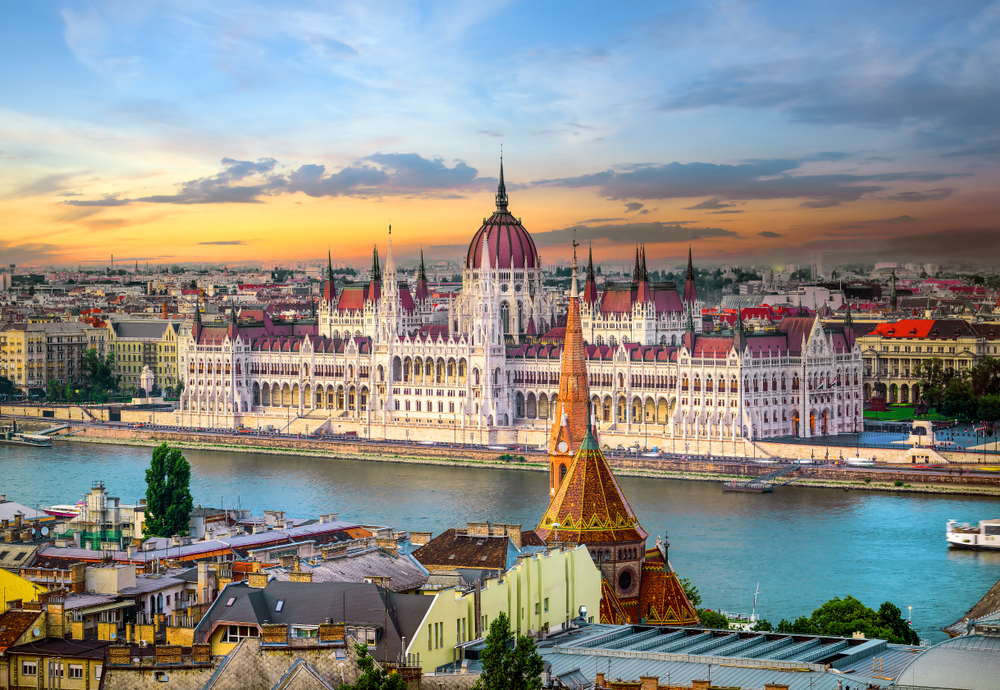
Budapest is an inexpensive and beautiful alternative destination to Vienna.

Are you dreaming of the rich history and fine food in Vienna? Budapest has both of those things and much more for a fraction of the cost.

You can walk through this glamorous city and weave in and out of bustling crowds while admiring stunning river views and historic architecture. Tours of Castle Hill, including the 13th Century Royal Palace, are free due to its status as a UNESCO World Heritage site. Even better, you can spend around $30 and sail down the Danube or visit thermal spas for an afternoon of blissful relaxation.

2. Cinque Terre, Italy Instead of the French Riviera
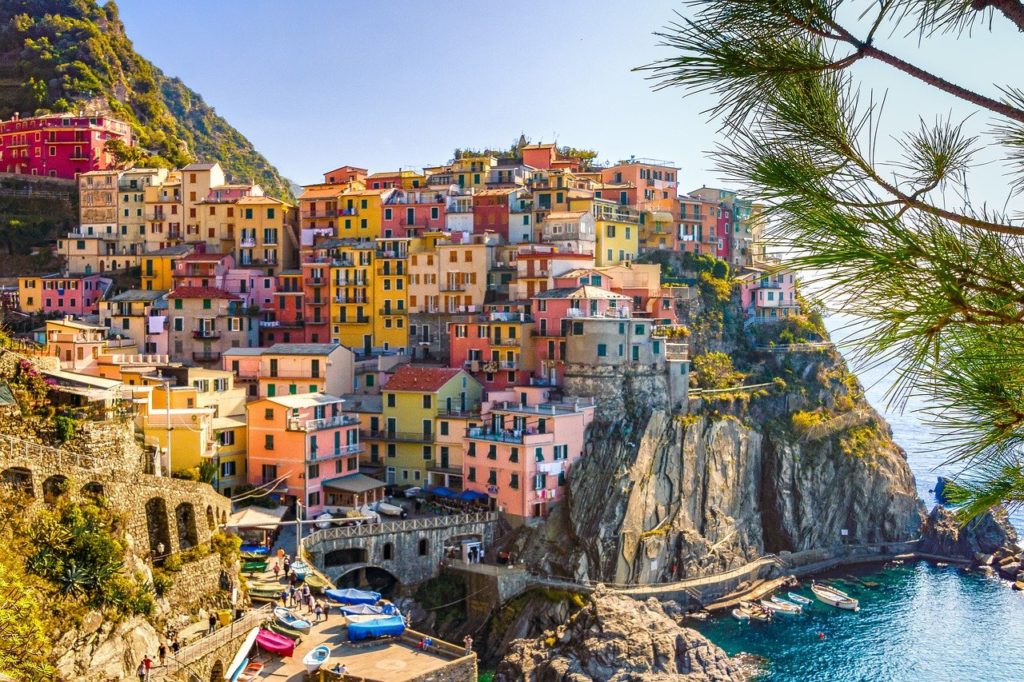
The colorful coastal town of Cinque Terre, Italy offers a beautiful, budget alternative to destinations in the French Riveria.

The French Riviera beckons travelers who want elegance and private beaches, but for lots of us, destinations like Nice, Menton, Cannes and Monaco simply aren’t within budget.

Luckily, a trip to the colorful coastal town of Cinque Terre in Italy offers similar ocean views, beautiful beaches and charming dining opportunities, without the hefty price tags you’ll find in the south of France.

In Cinque Terre, you can don a bathing suit and enjoy the free public beaches (which aren’t too crowded). The culture here is laid back and slow-paced, so you’ll have plenty of time to relax while eating fresh seafood and pesto at local restaurants.

3. Gambia, Africa Instead of the Canary Islands
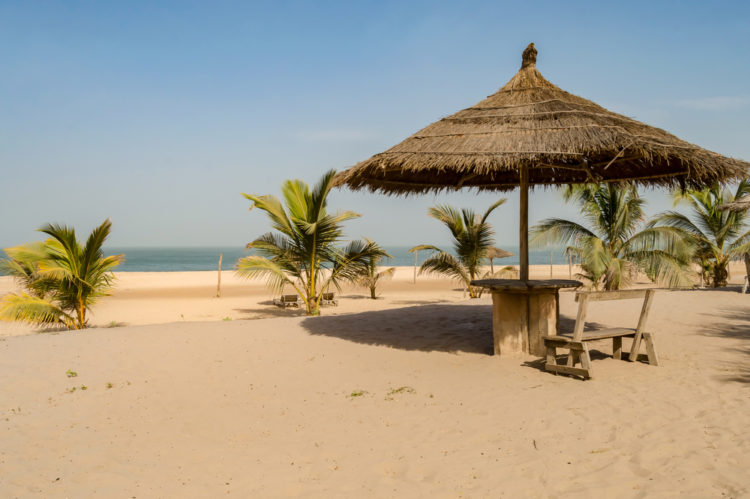
The Gambia offers sun, sand and sea for budget beach holidays.

Are sandy beaches calling your name? The Canary Islands have been popular for European island getaways for years, and while there are affordable resorts, most islands are overcrowded with tourists and peak season can see prices soar.

So if you’re looking for a destination that’s a bit further off the beaten track, while still offering the sun, sand, and sea that you’ll find in the Canaries, you can still work on your tan in the Gambia, a narrow stretch of pristine coastline in West Africa.

Bijilo Beach is still relatively undiscovered by tourists, allowing you to take in the sandy beaches and bright blue water all on your own. If you want a little more adventure, you’re just a short drive away from diverse wildlife tours and scenic explorations further into the country.

4. La Paz, Mexico Instead of Cabo, Mexico
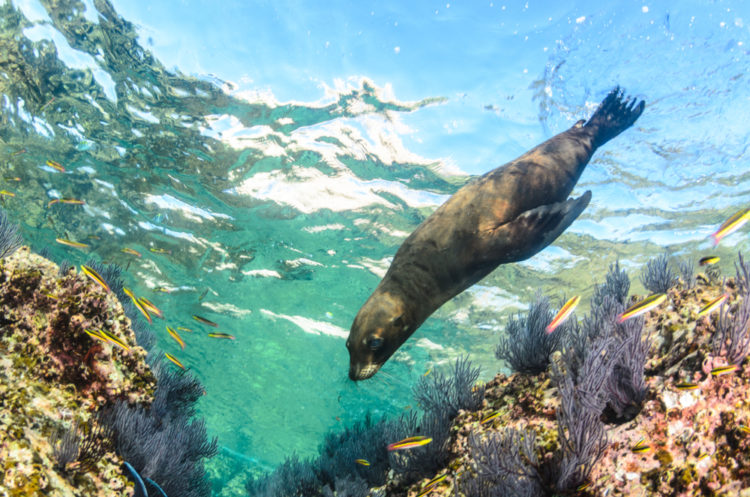
La Paz, Mexico offers stunning beaches, traditional Mexican cuisine and opportunities to swim with whale sharks and sea lions.

Even though Cabo is considered a hotspot for luxury travel, it can be overrun with tourists and it’s not the best destination for authentic travel experiences — it’s become heavily “Americanized”.

A trip to La Paz, Mexico will be easier on your wallet and you’ll get to experience more traditional Mexican culture and cuisine. You can explore all aspects of local life by dipping in and out of local shops, restaurants, and markets. Plus, there are some beautiful beaches nearby, like Balandra Beach, which offers white sands and crystal clear waters. And if you’re interested in extra excitement, you can book a dive with whale sharks and sea lions to round out your adventure.

5. Ljubljana, Slovenia Instead of Prague, Czechia
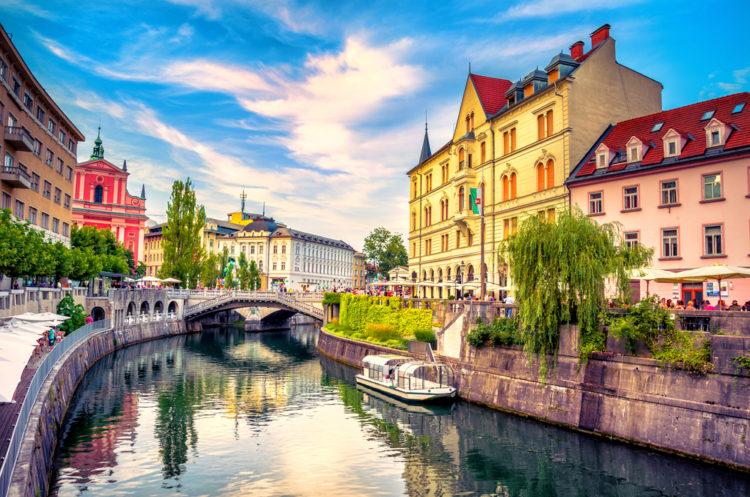
Find quaint riverside walkways and restaurants, historic architecture and art galleries in Ljubljana, Slovenia.

Prague boasts architecture from the Middle Ages and a romantic feel, but it can be pricey and crowded.

Ljubljana, Slovenia is a budget alternative to the popular destination of Prague. You can find nice accommodation for less than $20 a night, with flowing wine and local delicacies costing even less. Better than the price tags are the sights – there are plenty of buildings from the Renaissance era to explore and countless art galleries full of masterpieces.

6. Montreal, Quebec Instead of Paris, France
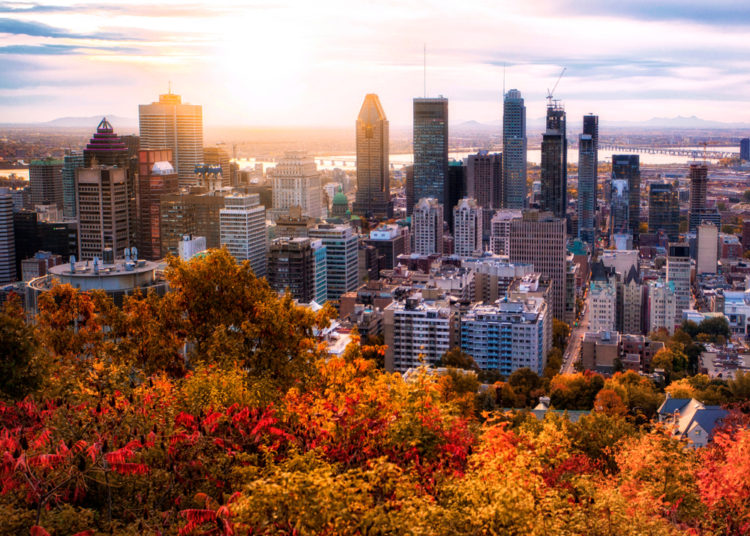
Montreal is a brilliant budget alternative to the popular and expensive destination of Paris. Enjoy an authentic French experience for less in this Canadian city.

Daydreaming of roaming the streets of Paris and learning to order your favorite pastries in French? You’re not alone, but you don’t need to hop continents for an authentic French experience.

Despite being a Canadian city, Montreal is steeped in traditional European culture, and its winding cobblestone streets are the perfect place to indulge your wanderlust. The main streets are lined with all the cafes and patisseries needed to try delicate dishes, no pricey ticket to France required.

7. Perth, Australia Instead of Sydney, Australia
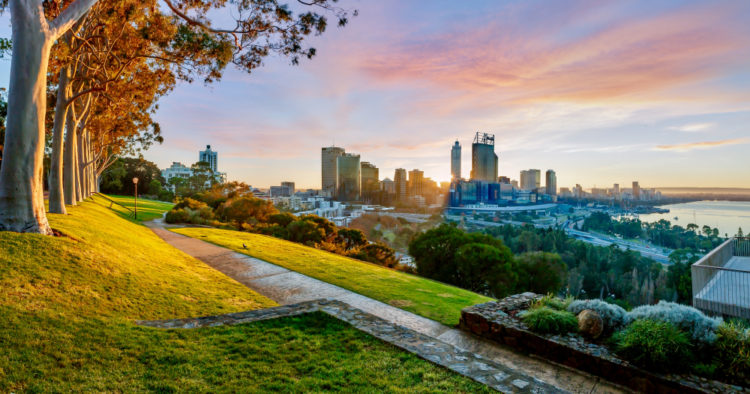
Enjoy great food, adventure and fun in Perth and make the most of everything the southwestern coast of Australia has to offer.

Sydney has the Opera House, but Perth has everything else. If you can stand to miss out on those white sails, you’ll find plenty of food, adventure, and fun lying on the southwestern coast of Australia.

You can enjoy the city skyline at night or spend your days on the beach. Snorkeling at Shoalwater Islands Marine Park is surprisingly affordable, and you’ll have the chance to watch sea lions and penguins, too.  

Perth is also a great place to base yourself for trips further afield. From Perth, you could visit Rottnest Island to enjoy stunning sandy beaches, snorkel in crystal clear waters and watch out for wildlife (like dolphins and adorable quokkas). There’s also stargazing at the Pinnacle Desert and vineyard tours that are not to be missed.

8. Potosi, Bolivia Instead of Rio de Janeiro, Brazil
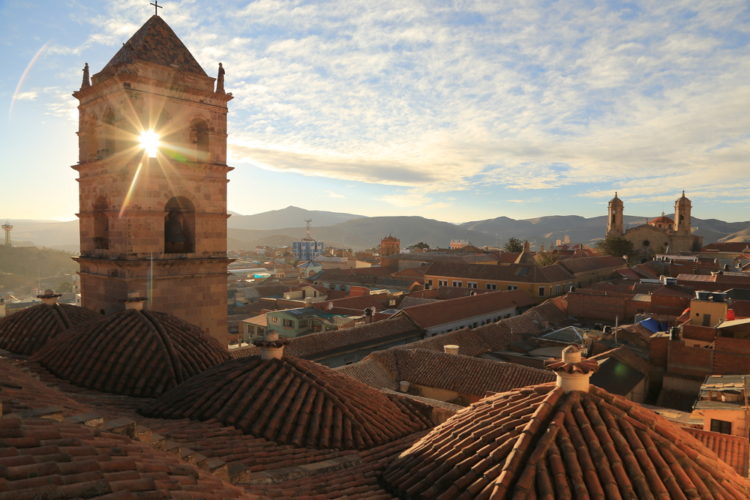
Swap Rio de Janeiro for Potosi, Bolivia for a budget alternative to the popular destination.

Between the nightlife and Christ the Redeemer statue that looms over Rio, most people have added this city to their bucket list. Its popularity has led to a huge increase in price though – so why not enjoy fewer crowds and less price gouging in Potosi, the highest city in the world? You can still dance in the streets, plus you’ll have access to even more natural wonders. Lake Titicaca and the Amazon Rainforest lie just a short trip outside the city.

9. Puglia, Italy Instead of Tuscany, Italy
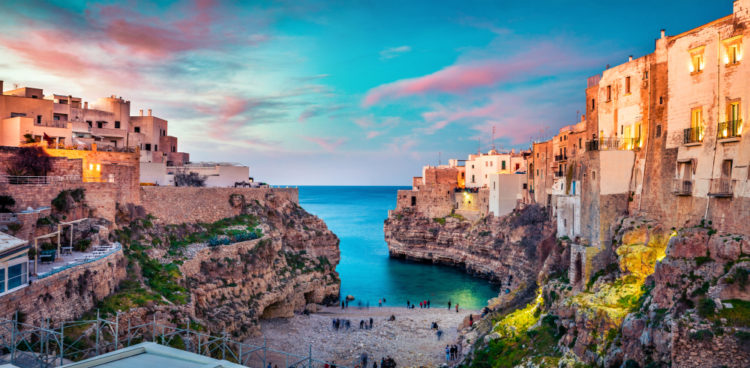
Find sunshine and turquoise waters in Puglia — one of Italy’s more affordable destinations.

If it’s olive groves and local wines you’re interested in, don’t overspend by traveling to Tuscany (which has been highly commercialized in recent years). You can easily eat and drink your way through picturesque Puglia for only dollars a day. It’s located on the southern tip of the boot, meaning you’ll never be short on sunshine or turquoise waters lapping against the white-washed town. Let your hair down and enjoy the warm breeze as you relax in style.

10. Willemstad, Curacao Instead of Aruba
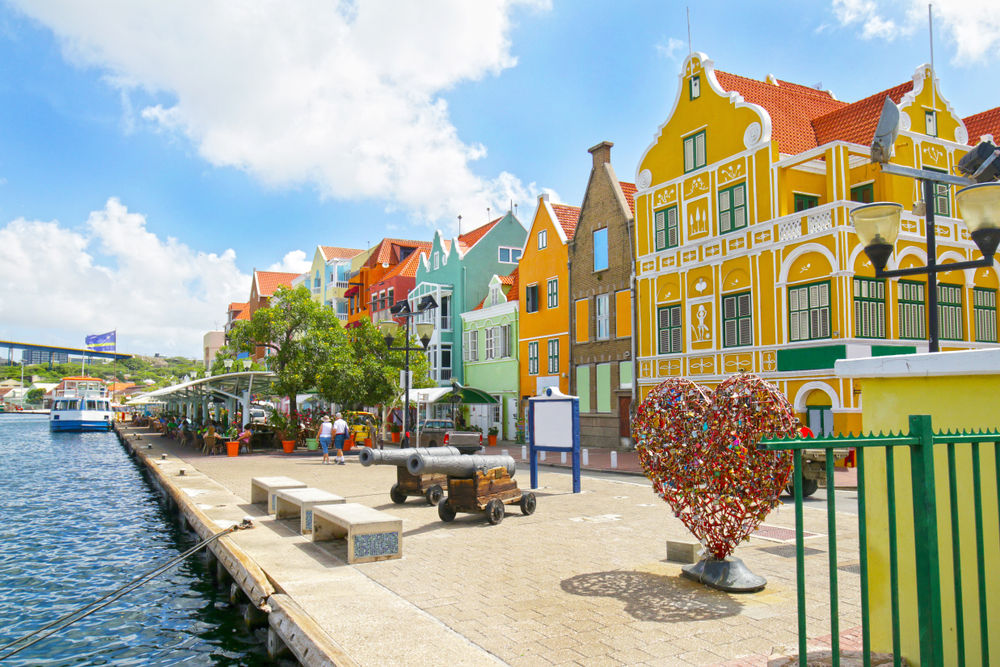
Visit the colorful town of Willemstad, Curacao and make the most diving opportunities.

Who hasn’t imagined traveling through the Caribbean waters? Aruba calls to those who crave only sun and sand, but it will cost you a pretty penny if you plan to stay the night. For a cheaper and quieter alternative, you can explore the area around Willemstad in Curacao. The entire area is a haven for those who love the ocean. You can spend your days exploring any of the 35 coves or visit any of the 60 dive sites to see local aquatic wildlife. 

11. Lombok, Indonesia Instead of Bali, Indonesia
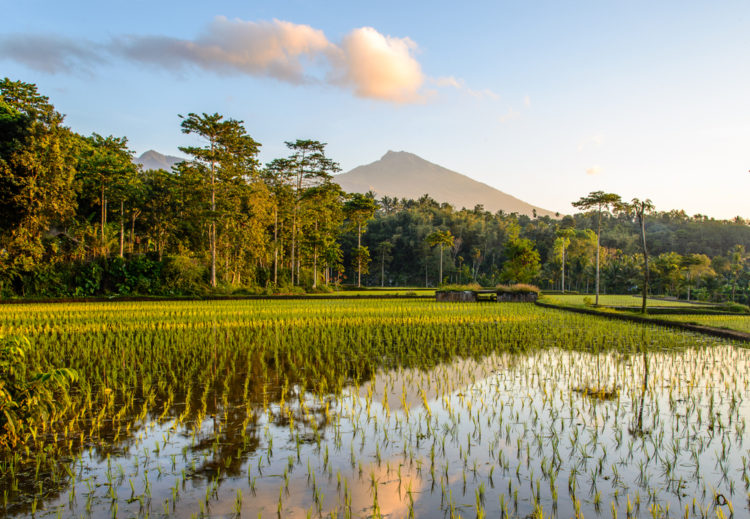
Head to Lombok, Indonesia for a quieter and more affordable alternative to Bali.

Bali is a dream destination for so many people and for a while I was lucky enough to live there long-term. But as much as I love the Island of the Gods, even I have to admit that it is becoming a bit overcrowded and prices are rising rapidly.

Neighbouring island Lombok is a brilliant budget-friendly alternative travel destination. Rather than views of Bali’s Mount Batur, you can enjoy picturesque scenes with Mount Rinjani — Lombok’s active volcano — looming in the background. There are also plenty of Bali-esque rice terraces, palm trees and beaches.

But there’s one major difference between Lombok and Bali. Lombok hasn’t yet been fully “discovered” by tourists. Of course people go there, but compared to Bali, this island is far quieter. And as a result, prices are much less. Accommodation can cost less than $10 a night, scooter rental is even less and day trips and food are always affordable.

Lombok isn’t so much a tourist destination — it’s one of the best authentic travel destinations if you’re looking to get off the beaten track.

12. Bansko Instead of the French Alps
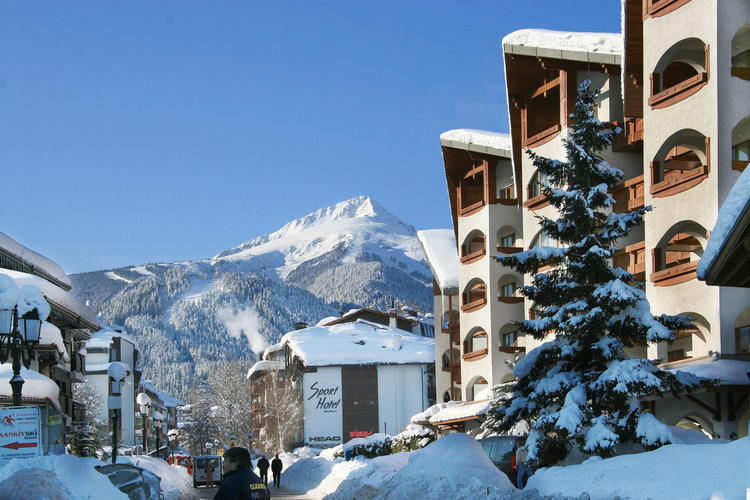
Plan a skiing trip on a budget by visiting Bankso rather than French alpine resorts.

Skiing in Europe is a bucket list travel experience for many people. And when you think of skiing destinations, you no doubt think of Chamonix, Val-d’Isère or other European alpine destinations. But there’s a reason skiing is thought of as a rich person’s sport — these places are expensive! A European skiing trip in the French Alps could cost thousands.

But there’s another, less well-known skiing destination in Europe — one where you can try skiing without breaking the bank.

Bankso is a small town nestled in the mountains of Bulgaria. There are stunning ski resorts, slopes for people of all abilities, luxury spas and great restaurants. And even if you plan a luxury vacation in this destination, it will still cost you a lot less than a trip to the French Alps.

13. Edinburgh Instead of London
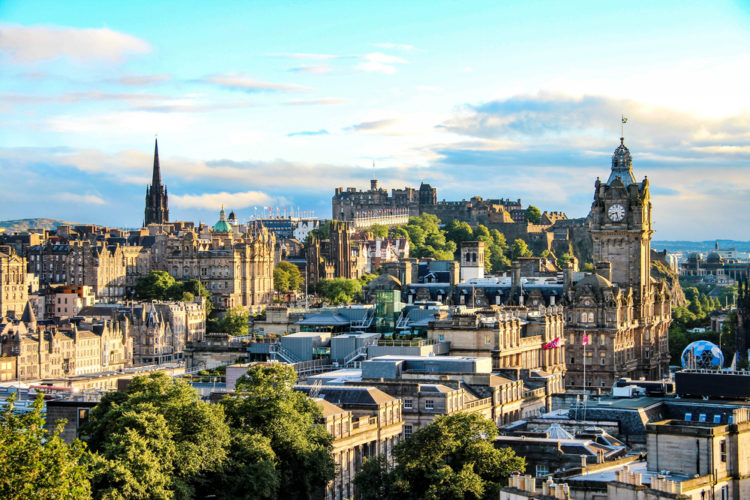
Swap England’s capital for Scotland’s capital for a more affordable trip back in time.

If you’re dying to see London’s blend of modern architecture and historic streets, with traditional features like red phone boxes and London cabs, but you’re put off by the extortionate prices of London hotels and experiences, I’d suggest Edinburgh as a budget alternative.

Visiting Scotland’s capital is like stepping back in time. As you walk the cobblestone streets of the Royal Mile, visit Edinburgh Castle and admire views of the city, you’ll feel almost as if you’re in medieval Scotland. And for any Harry Potter fans, there’s plenty to see that relates to the books and the movies. Walking up Victoria Street is like stepping foot in Diagon Alley (there’s even magical shops), Greyfriars Kirkyard is home to gravestones with some familiar names (like Thomas Riddell), and George Heriot’s School is rumored to have inspired Hogwarts.

And there are plenty of other literary attractions too. There might be literary pubs in London and London literary attractions, but Edinburgh has some amazing sights for avid readers. There’s the Writers’ Museum, Scott Monument, Greyfriars Kirkyard, and Abbotsford, the home of Sir Walter Scott.

In Summer, there’s also the infamous Edinburgh Fringe Festival — one of the world’s best comedy festivals.

On top of all these great attractions, Edinburgh is much more affordable than London.

14. Novigrad, Croatia Instead of Dubrovnik
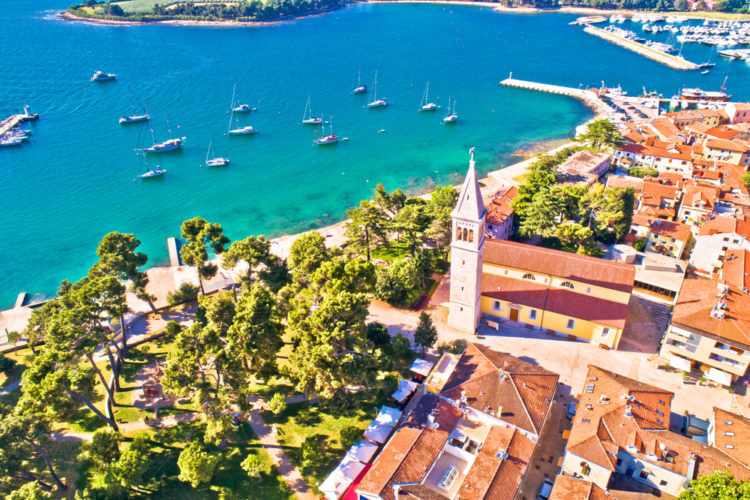
Visit Novigrad, rather than Dubrovnik for an affordable beach destination, complete with great food, water sports and shopping opportunities.

Dubrovnik quickly became one of Europe’s most popular tourist destinations and now it’s overly busy and prices have inflated dramatically.

So rather than heading to the south of Croatia, I’d suggest looking further north. Novigrad is a coastal town located in Istria and it’s one of my favorite Croatian destinations.

It’s so much quieter than Dubrovnik and Split, and accommodation is very affordable. There are luxury options too, but even they aren’t as expensive as their equivalents in more popular cities.

As for the beaches, these are beautiful. The water is so clear and is perfect for swimming, snorkeling, and water sports. There are sunbeds with straw umbrellas for hire on many beaches and water sports kiosks offering just about any water sport you can imagine.

You’ll find some incredible restaurants in Novigrad (this is controversial, but the best pizza I have ever had was in Novigrad). There are restaurants overlooking the water that can be a little pricey, but a few steps inland you’ll find budget-friendly options with food that’s just as good (if not better).

And of course, there are lovely little gift shops dotted throughout the town.

Ready to Get Packing?

Fingers crossed you’ve found a budget alternative to a popular destination that actually excites you. I write these articles to help fellow travelers plan the best trips so hopefully, you’ve found this one helpful!

I’m a bit of a sucker for “underdog” destinations — destinations that are a little more unusual and aren’t teeming with tourists. Not only are they cheaper, they also offer more authentic and traditional experiences than those offered in tourist hotspots.

If you’re looking for a budget alternative to a popular destination that isn’t on this list, feel free to drop me an email. I’d be happy to update this article with more suggestions and I’d love to hear what you think of the suggestions above.

8 Best Road Trip Destinations in the UK

When you think of travelling, you no doubt think of far-off destinations, but you don’t have to take a trip to a foreign country to have a great time. 

Sometimes all you need is a good hike in nature or a relaxing stroll along the beach to soothe your adventurous soul. And if your wanderlust has you wanting to explore new destinations, I’ll bet there are some beautiful gems not too far from you that you haven’t explored yet. This is exactly why road trips will never lose their charm.

Imagine hitting the road with your favourite playlist, your friends or family members in the passenger seats, and of course the snacks you’ll need along the way. We’ve all heard the cliche saying that travel is as much about the journey as it is the destination and on a road trip, the journey really is half of the fun. 

And when it comes to planning a route and choosing your stops, every country has so much to offer by way of stunning destinations, the UK included. If you’re searching for a road trip to untouched, natural destinations, then believe me, the UK will not disappoint.  

Whether you live in the UK or you’re a tourist, England, Northern Ireland, Scotland and Wales all have some stunning destinations that are well worth a visit. So buckle up and let’s go through the top 8 road trip destinations in the UK.

1: Enjoy the Scenery of the Lake District

Home to the finest lakes and picturesque drives in Europe, the Lake District is a famous holiday spot in Cumbria, in the North West of the UK. Filled with tons of outdoor activities, it offers unique and exciting experiences.

There are plenty of hikes to be had, kayaking and SUP opportunities, and countless photo spots. With quaint towns and villages dotted around the Lake District, you can also enjoy some retail therapy in village gift shops, or stop for a traditional pub lunch. 

You can hike to Scafell Pike, the third highest peak in the UK or make a stop at Lake Windermere, the largest natural lake of England. You can also visit Dove Cottage of the renowned English poet William Wordsworth or the little market town of Keswick to complete your tour.

And depending on whether you consider yourself an outdoorsy person or you like to travel with all of your home comforts, there are plenty of accommodation options, from campsites to caravan parks, hotels, B&Bs and cottages for hire. 

2: Learn From the Castles of Northumberland

If you’re a fan of British history, Northumberland is the perfect UK road trip destination for you. This county will transport you back to medieval times with castles and epic battlegrounds.

You can plan a stop at Bamburgh Castle, a much-loved fortress that has been home to a succession of Kings over the last 1,400 years. Or take a trip to Hogwarts by visiting Alnwick Castle. This castle has been the official residence of the Duke of Northumberland for 700 years but it rose to fame after its appearance in the Harry Potter movies. Other popular spots that are worth including on your road trip are Lindisfarne Castle and Chillingham Castle.

3: Hike Over the Ancient Cheddar Gorge

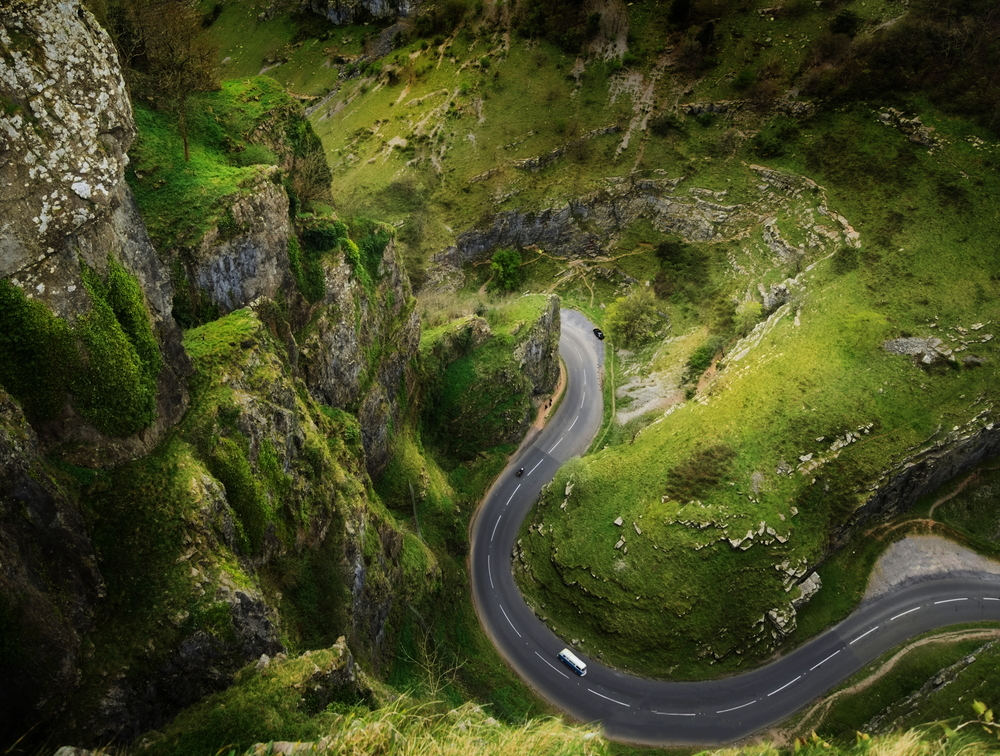
Somerset’s Cheddar Gorge, located 10 miles south-west of Bristol in Mendip Hills, is nothing short of a natural wonder. With towering 450ft high limestone cliffs — the highest inland, limestone cliffs in Britain — prehistoric caves, and roads that wind through some of Britain’s most scenic landscapes, a road trip to Cheddar Gorge is one of the most beautiful and fascinating trips you can take.

The roads are stunning and interesting to drive, and once you arrive there’s plenty to do. There are some incredible walks, caving opportunities for families and thrill-seekers alike, rock climbing sites, even free fall experiences (don’t worry, they’re completely safe). There are also escape rooms, over 30 local, independent shops to explore and a museum of prehistory.

The highlight of this landmark are the Gough caves that are over 500,000 years old. The skeleton of the Cheddar Man, the oldest skeleton to be excavated in the UK, was found in these very caves. For mountaineers, Jacob’s Ladder and the Lookout Tower are the landmarks to explore for the astounding views around the gorge.

4: Enjoy the Natural Beauty of the Cotswolds

Road trips in the UK can help you reconnect with nature and discover places that take you back in time. And one of the most adorable and nature-rich areas in the UK is the Cotswolds. With mountains, lakes, nature parks as well as dainty, medieval villages, the Cotswolds are the ideal destination for nature-lovers and history enthusiasts alike.

Brimming with lush green countryside, small pubs, narrow lanes and unique stone cottages, the Cotswolds is quintessentially English. This area offers everything you could hope for from an English road trip. And as the Cotswolds is an area that spans several counties, there are so many different sights to see within this area. Castle Combe in Wiltshire, Chipping Campden in Gloucestershire and Broadway in Worcestershire are few of the villages that should be on your bucket list.

5: Drive the Black Mountain Pass to the Brecon Beacons

A list of road trip destinations in the UK wouldn’t be complete without mentioning Wales. And one must-see, Welsh destination is the Brecon Beacons National Park. The Brecon Beacons are a mountain range with stunning scenery, waterfalls, caves, castles and beautiful villages. This 500 square miles piece of land includes breathtaking mountain ranges that are part of the UNESCO Global Geopark due to their amazing wildlife and geological formations. 

There are plenty of hikes, cycle and mountain biking routes, and other fun outdoor activities including watersports, horse riding, and family-friendly caving adventures. And one daring activity park that’s perfect for both adults and children is Zip World — you can try out the world’s fastest zipline and travel at speeds of over 100mph, bounce on underground trampolines in the slate caverns or make your way through an underground assault course.

Other attractions include Monmouthshire and Brecon Canal that offer magical, fairytale scenery. Craig y nos Country Park is also worth visiting — this area will take you back to Victorian times with its historic heritage and architecture.

And when you visit the Brecon Beacons, you’ll have the chance to drive what is often considered the best road in Wales: Black Mountain Pass. Not only is it scenic, but it’s also super fun to drive with the occasional hairpin bend and roads that cut through the countryside. Just watch out for sheep in the road!

6: Unravel the Mysteries of the Isle of Skye

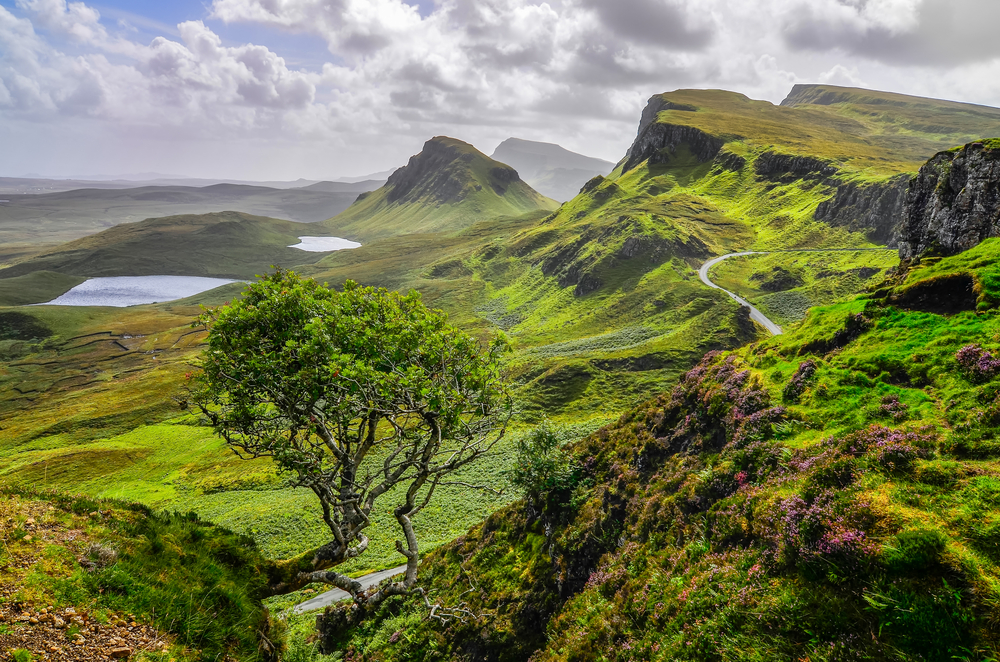
Scotland has some absolutely stunning scenery that looks completely untouched by man. And one place to drive through unspoilt landscapes and reconnect with nature is the Isle of Skye. The mysterious blend of historical sites, quaint little towns and spectacular landscapes will make you fall in love with this region. 

The Old Man of Storr is the perfect hiking spot for adventure lovers whereas the mystical Fairy Glen and Fairy Pools will hook you with their mythical charms. And you don’t want to miss the sunset at Neist Point — it’s one of the best sunsets you’ll ever see, and it’s the perfect area to appreciate the beauty and natural magnificence of this island.

7: Travel the Causeway Coast Route and Explore the Giant’s Causeway

The Causeway Coast Route in Northern Ireland is without a doubt one of the best roads to drive in the UK. Starting in Belfast, you can drive your way through picturesque coast roads, past beautiful little villages and unforgettable landscapes, and there are countless attractions to stop and visit along the way.

For example, you could visit the Carrickfergus Castle, Nine Glens of Antrim and Carrick-a-Rede Rope Bridge but one place that is going to take your breath away is the Giant’s Causeway. It is characterized by horizontally lined polygonal basalt columns formed as a result of volcanic eruptions over centuries. However, the legend says that the Irish Giant Fionn Mac Cumhaill made this path to have a fight with its Scottish counterpart over territorial issues. But whatever the story may be, this UNESCO world heritage site is a symbol of pride for Northern Ireland.

There are also plenty of gardens to admire, fairytale-like scenery to discover, adventurous activities to try and even Game of Thrones attractions to explore.

To get to this Northern Ireland route from mainland UK, you can take your car on a ferry, or fly to Belfast and rent a car.

8: Discover the Elegance of the White Cliffs of Dover

If you are coming from London, take a drive from the town of Kent along the English coast to the magnificent White Cliffs of Dover. Overlooking the English Channel and facing France over the Strait of Dover, the cliffs are a popular spot for keen hikers, cyclists and photographers.

And as well as offering beautiful flora and fauna, Dover has seen its share of historical events ranging from the Roman invasion to the evacuation mission from Dunkirk during World War II. Other interesting areas around the cliffs are the South Foreland Lighthouse and Dover Castle.

When touring these destinations it doesn’t matter if you are a foreigner or a local. All that matters are the wonderful experiences you gain from each and every one of these road trips. So pack your raincoat and camera, and enjoy the gifts that the UK has to offer.

Kyoto Travel Itinerary: How to Spend 3 Perfect Days in Kyoto

With plenty of historical sites to explore, beautiful natural scenes to admire and traditional experiences to enjoy, Kyoto is one of Japan’s must-visit cities. As a cultural hub and a destination that’s surrounded by nature, it’s the perfect place for travelers and tourists hoping to immerse themselves in Japanese history and tradition and escape to nature. 

Just imagine walking through towering bamboo forests, setting foot in ancient temples and traditional teahouses, and soaking up the natural beauty of cherry blossoms or autumn leaves. A trip to the former capital of Japan can be a real dream come true. 

And you can explore this city in three magical days. So I’ve created this 3-day Kyoto travel itinerary to help you plan the perfect three days in Kyoto.

Whether you’re following Japan’s “Golden Route” and visiting Tokyo, Osaka, and Kyoto, or you’re just visiting Kyoto, this Kyoto travel itinerary can help you plan your trip to perfection. Even if you’re spending longer than three days in this city, this itinerary will give you an idea of some of the best things to do during your stay.

Kyoto Day 1 Itinerary

Arashiyama Bamboo Forest 

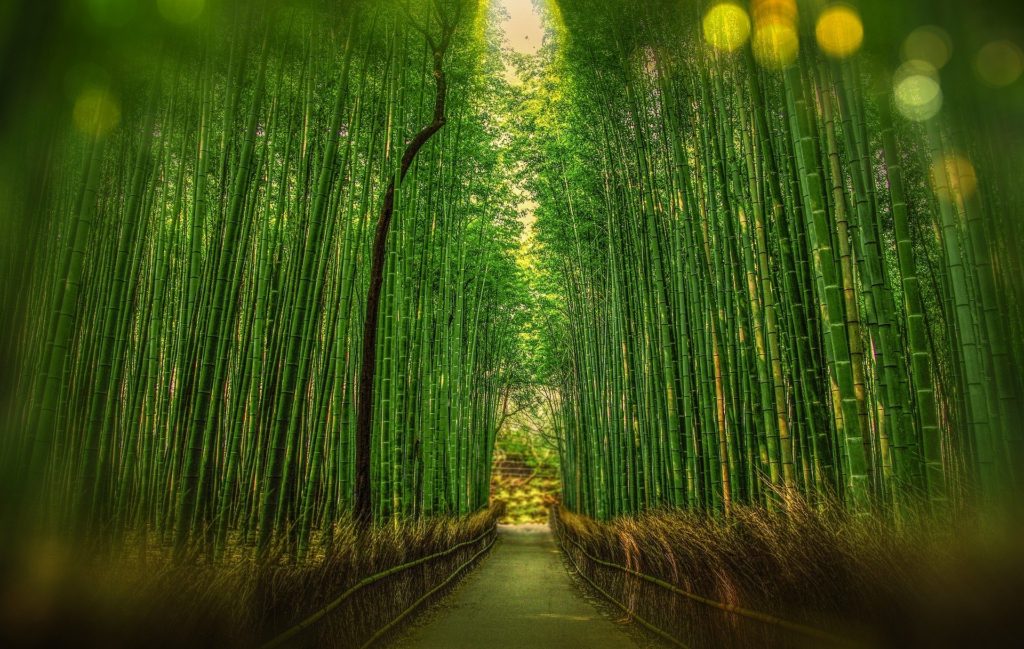
You’ve no doubt seen pictures of this famous forest, and the pathway that winds its way through the towering bamboo stalks. The Arashiyama bamboo forest is one of Kyoto’s most beautiful sights — it’s a retreat into nature, in the middle of the city. 

So why not start your first day in Kyoto with a breath of fresh air by taking a relaxing walk through this stunning forest? 

The earlier in the morning you can get to the bamboo forest, the quieter it will be. So if you’re hoping to avoid the crowds, take perfect pictures, and enjoy the serenity of the forest, I’d recommend arriving as early as possible — definitely before 9 am, or if you don’t mind rising early, a sunrise trip is definitely worth it. 

At sunrise, you’ll see the changing colours of the bamboo forest as the sun starts to filter through the bamboo stalks. But if you arrive after the sun is already in the sky, you’ll experience the beautiful green colour of the bamboo grove.
The Arashiyama bamboo forest is a short walk from the JR Saga-Arashiyama station. After walking for about 15 minutes through the bamboo grove, you will come upon Tenryu-ji temple.

Tenryu-ji Temple

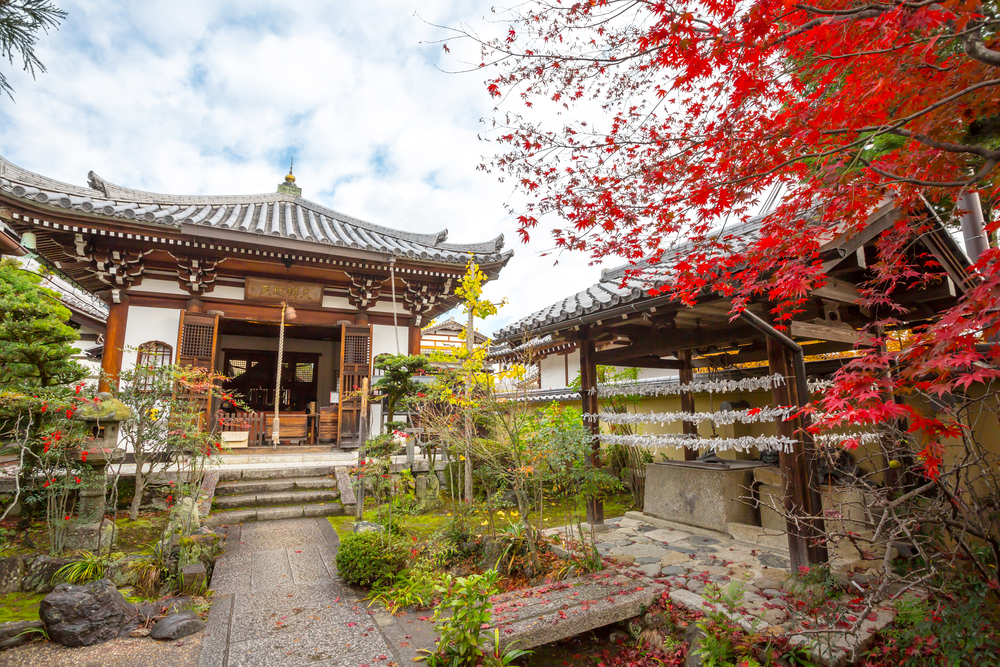
Tenryu-ji temple is a world heritage site and one of the main Zen temples in Kyoto. Although the temple dates back to the 14th century, many of the temple buildings have been destroyed in fires, and compared to other Japanese temples, Tenryu-ji is now fairly minimal. 

However, the temple is surrounded by mountains and forest, and the temple gardens alone are well worth a visit. Japan is well known for its careful garden designs, but the Tenryu-ji gardens have a much more natural feel, and they’ve remained the same for many centuries. 

After exploring the garden of Tenryu-ji temple, another 15 minutes through the bamboo forest will bring you to the Arashiyama Monkey Park.

Arashiyama Monkey Park

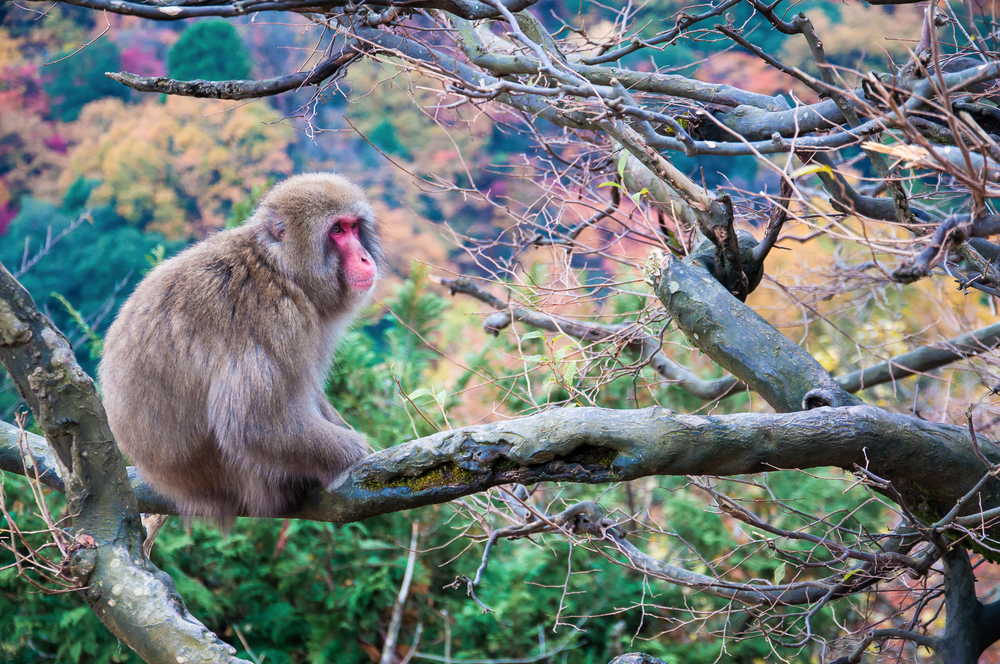
If you’re hoping to encounter some Japanese wildlife on your trip, you’ll want to visit Arashiyama Monkey Park, also known as Iwatayama Monkey Park. Don’t be put off by the term ‘park’, all of the monkeys here are wild, in fact it’s humans that are in a cage at this park.

As you venture into the park you’ll follow a path that leads you up the mountain, and as you approach the summit you’ll officially be in monkey territory. Over 120 Japanese macaque monkeys live in this area, so keep an eye out for these mischievous little beings — if you’re lucky you may even spot some babies. Just make sure you follow the rules which will be written on signs around the park. The monkeys are used to being around humans, so they won’t hurt you as long as you stick to rules like staying at least two metres away and avoiding eye contact.

At the end of your hike through the park, at the top of the mountain, you’ll be greeted by staff and the welcome sight of benches. Here you can stop for a much-needed rest while enjoying one of the best views of Kyoto. You can enter an enclosed, caged area where you can look out over Kyoto and feed monkeys safely from behind the cage.

To enter the park you’ll need to pay an entrance fee of 550 yen. And if you want to feed the monkeys you’ll need to buy food for 100 yen.

Fushimi Inari Shrine

Fushimi Inari Shrine

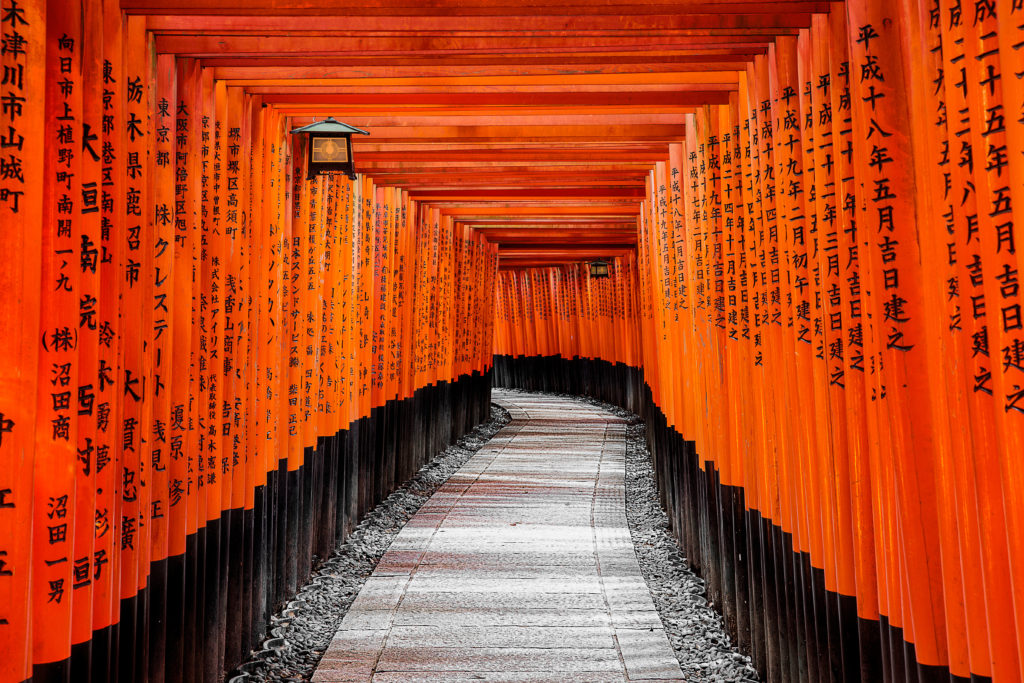
Fushimi Inari shrine is an important shrine in Kyoto, dedicated to ‘Inari’, the Shinto god of rice. The messengers of the god are thought to be foxes, so you’ll spot many fox statues and emblems throughout the shrine grounds. But this shrine is most famous for the thousands of torii gates lining the paths behind the shrine. These red vermilion gates have made these paths one of the most popular photography spots in Kyoto. As the sun shines, paths are illuminated in red and orange, or if you opt for an evening visit, the atmosphere at the Fushimi Inari Shrine at night is quite something, with the illuminated orange gates casting dramatic shadows. 

If you choose to follow the paths until the end, you’ll be walking for around 2-3 hours until you reach the top of a mountain. However, most visitors don’t get this far. Most people will simply walk a little through the paths before turning around, and some will walk to the halfway point, where the paths open up into a clearing, halfway up the mountain. Here you can relax on benches overlooking Kyoto. If you find yourself getting a little peckish or thirsty, there are several places to stop for a drink or a meal along the path.

The further along the path you walk, the quieter it will be, and the better photo opportunities you’ll get. However, past the halfway point you’ll start to less of the iconic red gates.

After walking through the Arashiyama forest in the morning and the Fushimi Inari shrine paths in the afternoon, you’re probably going to be pretty tired and ready for a break. So this attraction marks the end of day 1 in Kyoto.

Kyoto Day 2 Itinerary

Ginkaku-ji (The Silver Pavilion)

Ginkaku-ji (The Silver Pavilion)

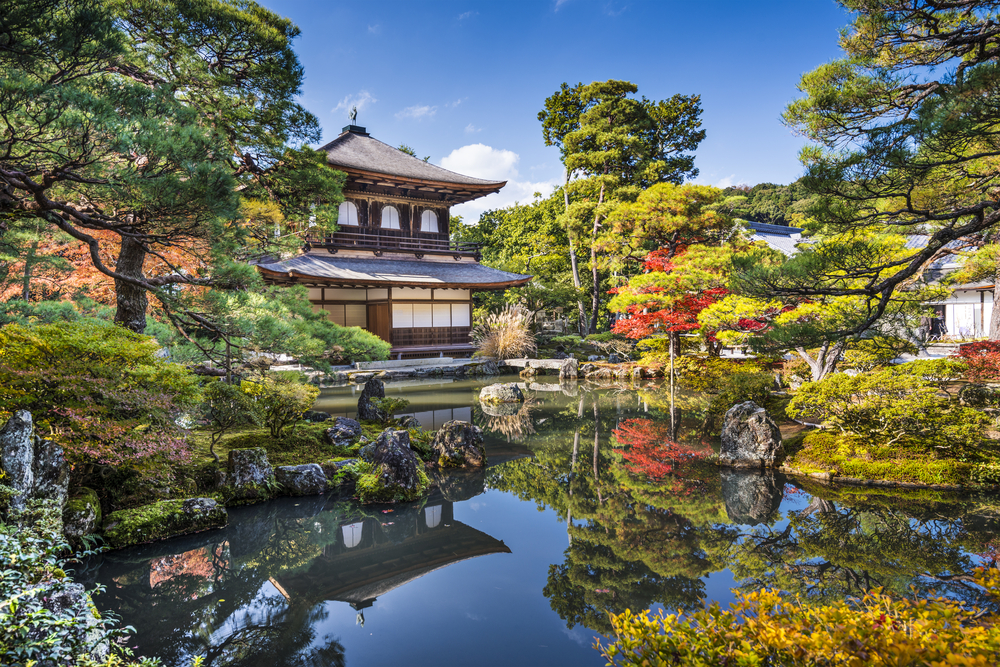
I’d recommend you start your second day in Kyoto with a trip to the Eastern side of the city to see Ginkaku-ji, the 15th century Silver Pavilion, also known as Higashiyama Jisho-ji temple. 

This beautiful pavilion was modeled on Kinkaku-ji (The Gold Pavilion) and named the Silver Pailion not because when the temple was first built it was originally covered in a dark finish which reflected silver in the moonlight. 

The pavilion is surrounded by a number of other temple buildings and beautiful gardens, including a moss garden and a dry sand garden. The sand garden, also known as ‘The Sea of Silver Sand’, is symbolic of Zen concepts and peacefulness. It leads to a silver cone, designed for moon-gazing and reflection. The moss garden also embodies Zen ways of thinking in its slow growth to beauty. There are a number of ponds and small bridges in this garden. The intricacy of the moss garden perfectly contrasts the simplicity of the sand garden.

Tetsugaku No Michi (The Path of Philosophy)

Tetsugaku No Michi (The Path of Philosophy)

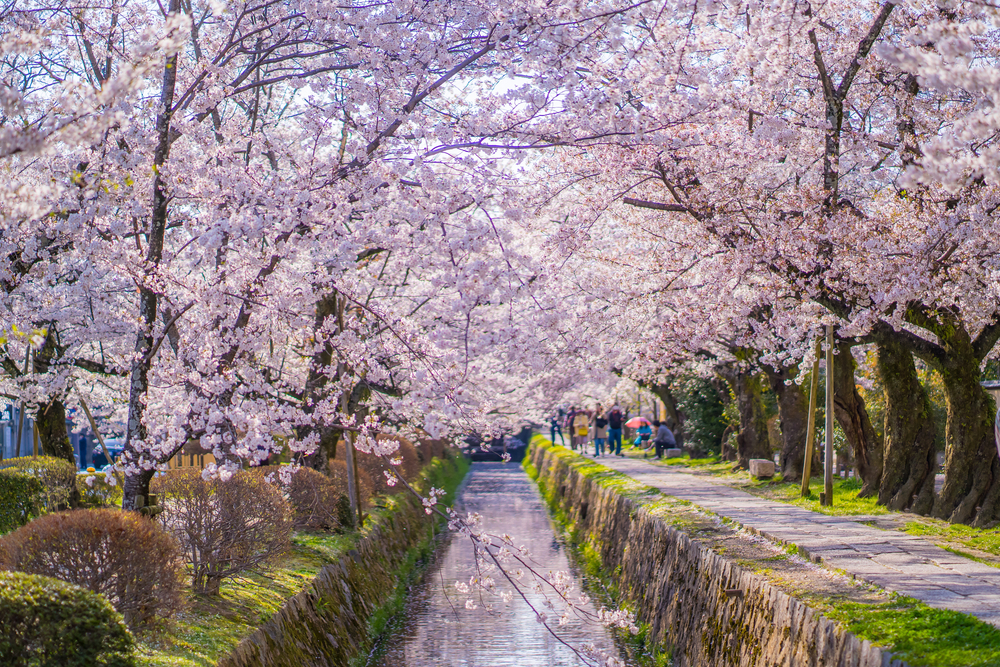
From Ginkaku-ji, you can go for a wander through Tetsugaku No Michi, also known as the Path of Philosophy or the Philosopher’s Walk. This is a 2km long ancient stone path between Ginkaku-ji and Nanzen-ji temple. 

The path runs alongside a canal and is lined with cherry trees. In spring, this path makes for a stunning walk and it’s one of the best places in Kyoto to enjoy the famous cherry blossoms. 

If you want to walk the entire length of the path, you can also visit Nanzen-ji temple. However, you don’t need to walk the entire 2km to appreciate the beauty of this walkway.

Kinkaku-ji (The Golden Pavilion)

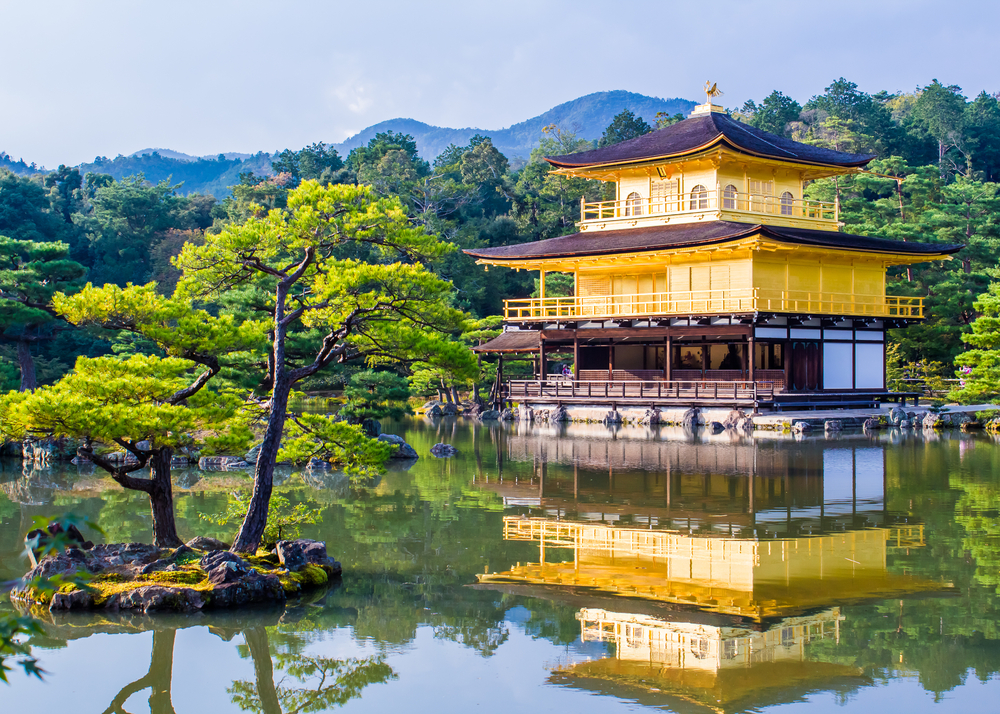
Kinkaku-ji (The Golden Pavilion)

Kinkaku-ji is the sister temple and original inspiration for Ginkaku-ji (The Silver Pavilion). In contrast to Ginkaku-ji, Kinkaku-ji holds true to it’s name and appears gold at any time of day. The top two floors of the temple are covered in gold leaf.

Kinkaku-ji is famously picturesque in all seasons. The temple is set at the edge of a large pond with a colourful forest backdrop and on clear days the temple reflects perfectly in the still waters of the pond. In spring, the cherry blossoms perfectly frame the temple, and in winter, the gold of the temple glistens against the snow. 

The entry fee for Kinkaku-ji is 400yen. It only takes a short time to see all the temple grounds have to offer, but the grandeur of the Golden Pavilion makes it an absolute must-see. 

After visiting Kinkaku-ji a good transition into the afternoon and evening is a visit to the entertainment and dining district of Gion.

Gion, Kyoto’s Geisha District

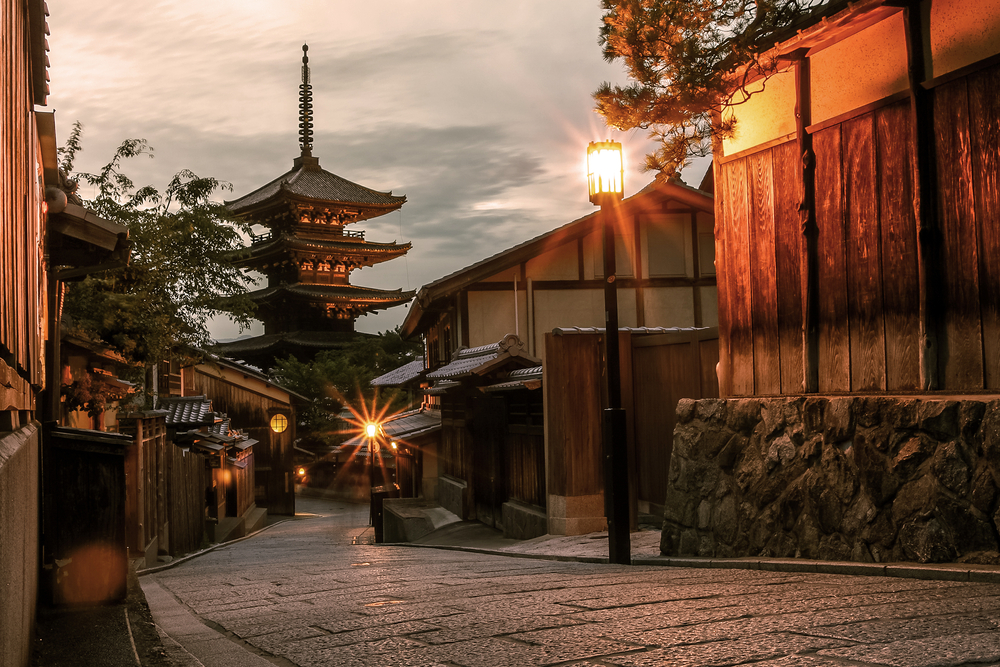
Gion, Kyoto's Geisha District

Gion is the perfect place to end your second day in Kyoto. A visit to this district, which is well-known as the Geisha district, can feel like stepping back in time. This is where Geisha culture comes to life — you’ll see Geisha (Japanese women trained in traditional arts) walking between traditional wooden houses, teahouses, shops and restaurants.

In Gion, you can dine in restaurants serving both traditional Japanese cuisine and international food, and attend cultural shows.  A cultural show is held every day at the end of Hanami-koji Street to showcase a range of traditional Japanese arts, including tea ceremonies, flower arranging, dancing and comic plays. This is a great way to experience traditional Japanese culture.

Kyoto Day 1 Itinerary

Nijo Castle

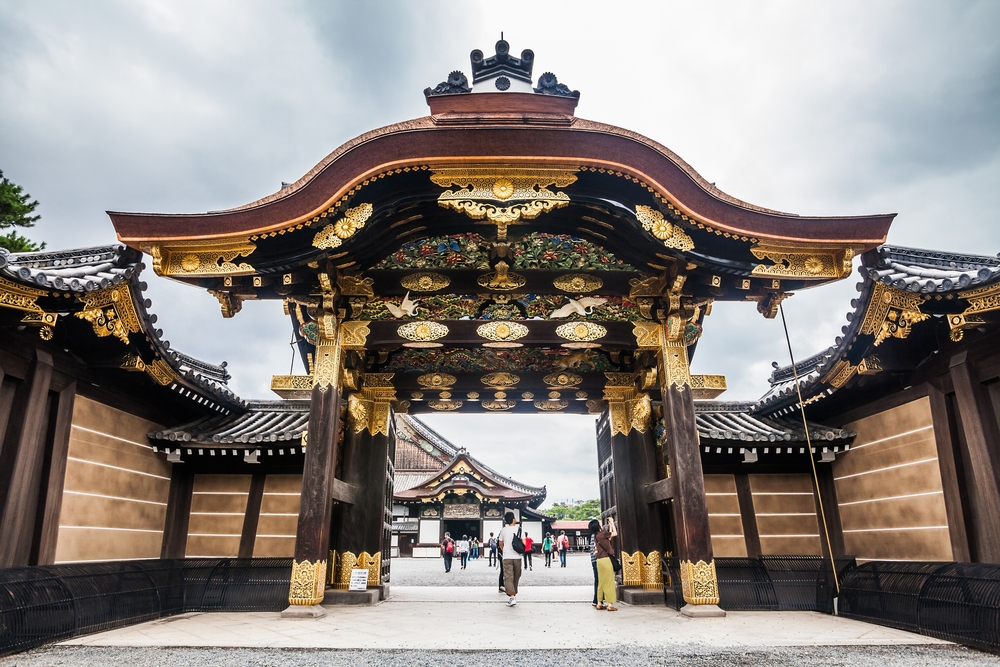
Nijo Castle, Kyoto

During the Edo period, Japan was governed by the Tokugawa shogunate, a military dictatorship founded by the first shogun, Tokugawa Ieyasu, also known as the unifier of Japan. And for many years, Nijo Castle was Tokugawa Ieyasu’s main residence. 

The castle was built in 1603 and has remained largely intact since the Edo period. Today it’s one of the best examples of Japanese architecture from this period. The Castle has two rings of fortification, each one built as a line of defence. These two areas are surrounded by Japanese-style gardens and ponds. In the centre of the fortress, you’ll find the most impressive building: Ninomaru Palace. For those interested in Japanese history or architecture, this castle provides a unique insight and understanding.

Kiyomizu-dera Temple

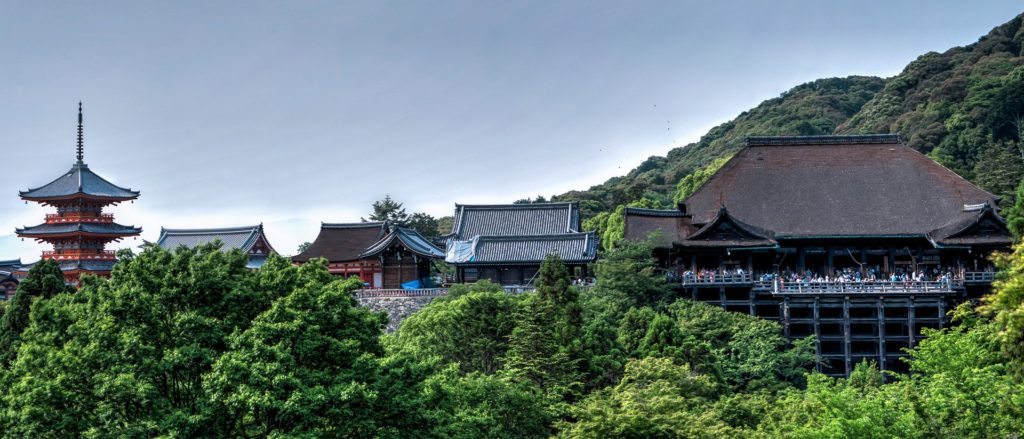
Kiyomizu Temple

Dating back to 778AD, Kiyomizu-dera Temple offers a glimpse into Japan’s ancient history. It was built mostly from Japanese cypress and entirely without nails, and it’s one of the oldest temples to remain in its original form. 

The temple is well-known for its wooden stage, which is 13 meters high and protrudes over the mountainside, offering a panoramic view of the beautiful landscape. 

Kiyomizu-dera quite literally translates to Pure Water Temple — it was named because it’s located beside the Otowa waterfall, where pure water flows. The water has been re-directed through the temple grounds and it is possible to drink this water from a ladle. To drink the water is said to give good fortune and success. You’ll often see school students gathering to drink the water before sitting exams. 

Nijo Castle and Kiyomizu Temple are both keystones of Japanese history and have been preserved exceptionally well. Visiting both of these beautiful sites will give you an insight into Japanese history, architecture, and culture. And you’re sure to get some incredible photos too.

What Did You Think of this Kyoto Travel Itinerary?

I hope you’ve found this guide useful! I created this Kyoto travel itinerary to help you plan an incredible three days in this wonderful Japanese city, packed with temples, castles, shrines, and gardens.

If you follow this itinerary I’d love to know how you found it, or if you’ve already visited Kyoto, what would you do differently?

When is the Best Time to Visit Bali?

One of the first things you’ll need to decide when planning a trip to Bali is when to visit this beautiful island. Find out which months have the best weather, when the high and low season is, and choose the best month for your trip to Bali. 

So you’re planning a trip to Bali? Good choice! After spending 4 months in Bali last year, I fell in love with this little island and decided to spend most of this year there too.

I’ve experienced different seasons in Bali, so I’ve basked in the Bali sun and got caught in the crazy Bali rain. I’ve seen the island heaving with tourists in high season and experienced it slightly less crowded in low season. So when is the best time to visit Bali?

Most people visit between April and October, simply because this is the dry season. You’ll get beautiful weather and clear skies (mostly, no promises), and if you’re into surfing these months are perfect for catching waves too. However, dry season is also high season, and you’re likely to experience Bali at its busiest between April and October. July and August are particularly busy, but this seems to be the case with almost every destination.

So there are pros and cons to different months in Bali. When you should visit will depend on whereabouts in Bali you’re visiting, the activities you have planned, and your budget for flights and accommodation.


Which Months Have the Best Weather in Bali?

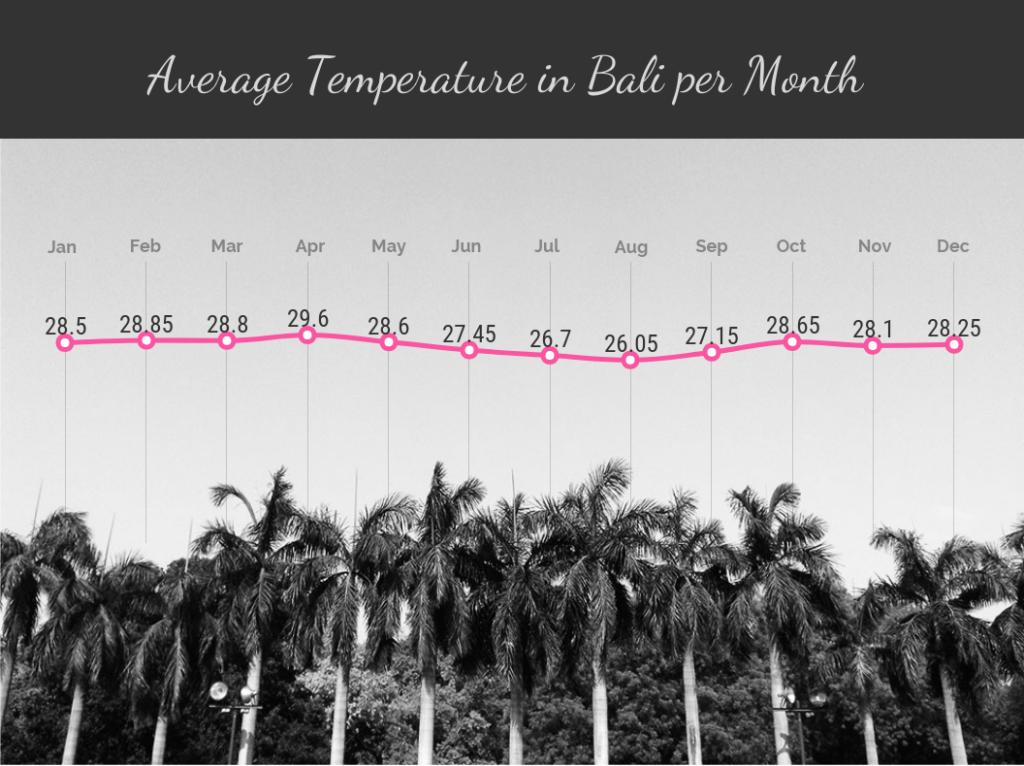
If it’s warm weather you’re looking for, Bali has this year-round. You can expect average temperatures between 26°C and 29°C, but the reality is that average high temperatures regularly reach over 30°C. Coastal areas in Bali, such as Kuta, Canggu, Seminyak and Sanur will generally be a bit warmer (and more humid) than places like Ubud which are further inland and surrounded by mountains.

If you check out the chart below, you’ll see there’s not much difference in average temperatures from month to month.

Watch Out for Rainy Season!

As well as considering the temperature, you’ll also want to think about the Bali seasons. Bali has two main seasons: the dry season and the rainy season. The Bali rainy season is usually between October and April, so for most people, the best time to visit Bali is between April and October.

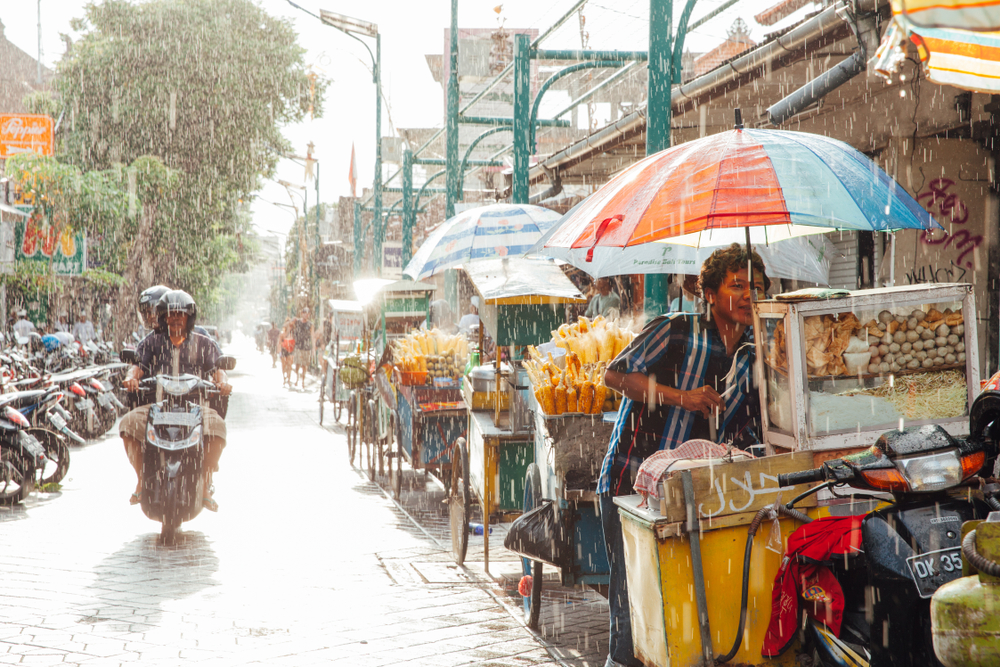
Even if you’re the sort of person that doesn’t mind the rain, it’s worth noting that Bali rain is pretty intense. It’s often torrential, non-stop rain for days during the wet season. And while it can be exciting to see such heavy rain, especially if like me, you’re from a country where the rain is a little pathetic, it quickly wears thin, and it will ruin your plans to get out and explore, lounge around by the pool or enjoy the beach. Almost all of the tourist attractions and things to do in Bali are outside, so if you’re planning to explore Bali’s sights and natural beauty, the rainy season isn’t the best time to visit.

However, the wet season is the cheapest time to visit Bali, so if you’re travelling on a budget, you may decide to brave the rain. And if you do visit Bali between October and April, check out this list of things to do in Bali in rainy season.

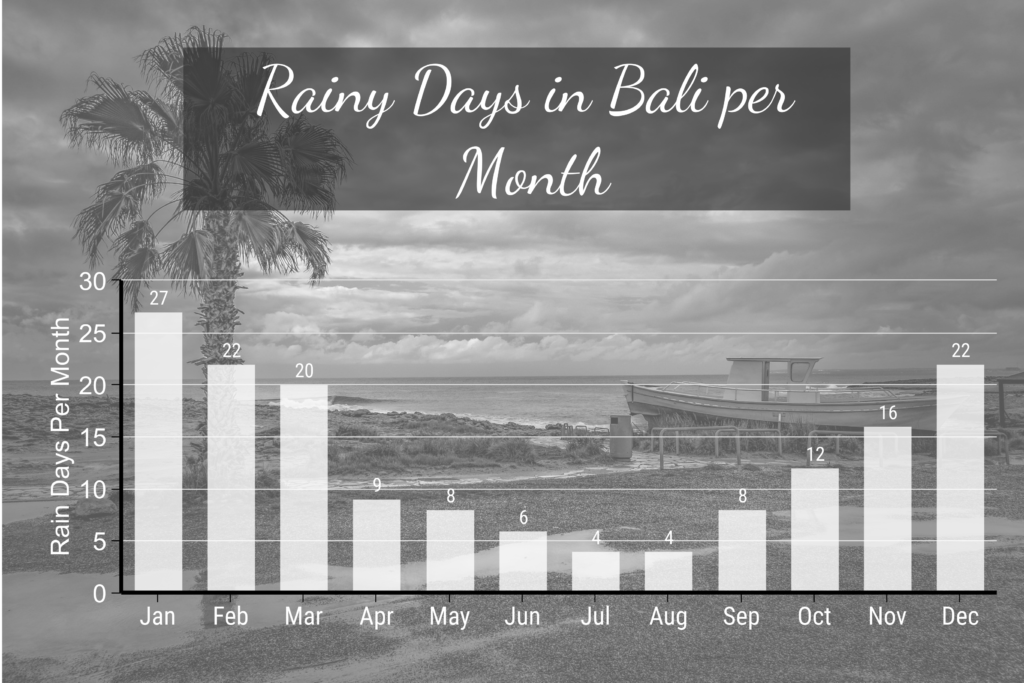
Rainy Days in Bali per Month

A Breakdown of the Months in Bali

If you want to get an idea of what Bali is like in different months, here’s a breakdown of what to expect from each month of the year.

January in Bali

January is Bali’s most rainy month. With an average of 27 days of rain, it rains almost every day, and there are often multiple showers a day. There are quite a few thunderstorms during this month, which usually occur during the afternoon, evening or overnight. The tropical thunder and lightning can be quite impressive to watch, but it’s not ideal if you have day trips planned.

Rainy Season in Bali

February in Bali

February isn’t quite as bad as January in terms of rain and thunderstorms, but it still rains an average of 22 days a month. Even though you’ll have more sunny and dry days than in January, the beaches may not be at their best — storms can wash up a lot of debris and seaweed, so February isn’t the best time to visit if you’re hoping to visit Insta-worthy beaches.  And just like January, February is a particularly hot and humid month.

March in Bali

March is the last month of the Bali rainy season, and while it’s slightly drier than February, you can still expect rain on most days. March is the most humid month in Bali, so you can expect to get hot and sweaty if visiting the island during this month. It’s not too busy in March, but you will find a lot of long-term travellers head to Bali at this point. Many tourists also want to experience Nyepi, the Balinese day of silence. Scroll down to read more about this Nyepi.

April in Bali

April is the start of the dry season, and with an average of only 9 days of rain in the month, you can expect good weather for most of the month. However, during this month, tourism starts to pick up, especially over Easter. It’s still nowhere near as busy as July and August though, so if you’re looking for a mix of good weather and bearable crowds, this could be the best month to visit.

May in Bali

Weather in May is much the same as April, but it can be a little quieter as there’s no Easter rush of tourists. You can get some good deals in May, and with beautiful weather, quieter streets and beaches, this is a great time to plan your visit to Bali.

June in Bali

June is one of the best months to visit Bali. The weather is perfect and not too humid, with a very slim chance of rain. Tourism really starts picking up in June so you can expect more crowds, but still it’s a great time to visit.

July and August in Bali

July and August are Bali’s busiest months, because of school holidays and the perfect weather. Traffic can be crazy, and beaches fill up. You can also expect higher prices as this is the peak time to visit the island. While the weather is great, I’d suggest avoiding these months if you can, and instead plan your visit for one of the dry season’s shoulder months: April, May, June or September.

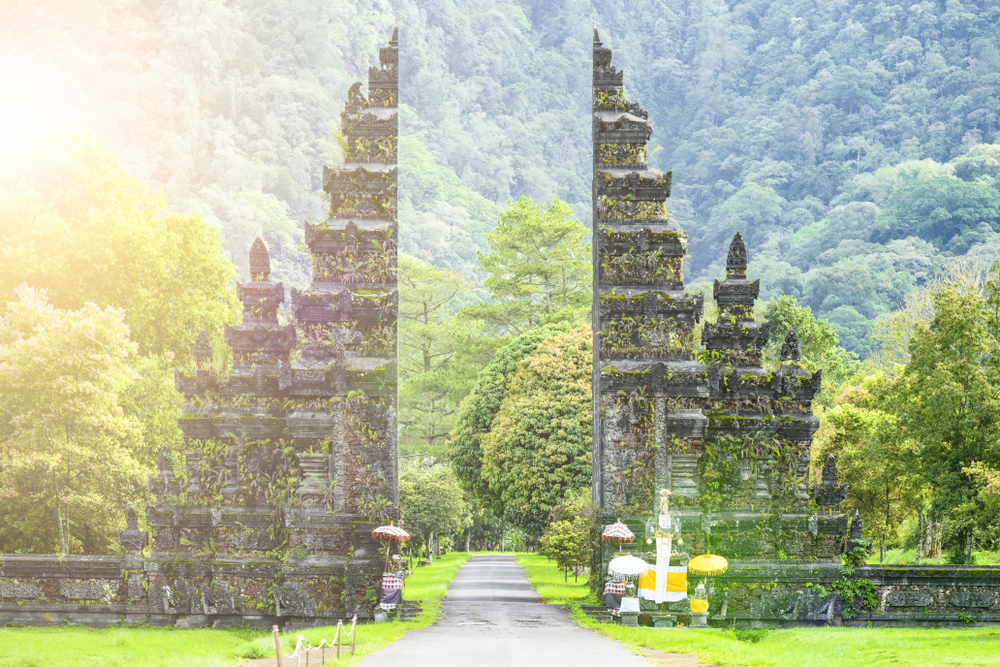
Bali Handura Gate in August

September in Bali

You can still expect good weather for most of September, but as this is the last month of the dry season, you might experience a few days of rainfall and slightly higher levels of humidity.

Flights to Bali from Australia can be more expensive towards the end of September as there is an Australian school holiday at the end of the month, and into the first two weeks of October.

October in Bali

October is the start of the rainy season in Bali. On average, it rains on around 12 days of the month, and while the rest of the month is generally blue skies and great weather, it can get quite humid. However, it’s worth noting that in recent years, perhaps because of global warming, the rainy season hasn’t kicked in until late October/early November. So if you’re planning a trip in October, you may not experience any rain.

The first two weeks of October are Australian school holidays, so it can be a little busier than September, but it’s still much quieter than peak season, and you can still find some good deals on accommodation and activities. But flights from Australia can be more expensive.

November in Bali

Visiting Bali in November is a good choice if you’re on a budget. The weather isn’t fantastic: it’s a fairly rainy month and high levels of humidity mean you’re going to get pretty sweaty, but you’ll find plenty of affordable accommodation options, and you can get some good flight and tour deals.

December in Bali

In December, Bali starts to enter the height of the wet season. The start of the month can be relatively quiet, but over Christmas and towards New Year tourism can start to pick up as lots of people love to get away for the holidays and celebrate somewhere hot. Indonesian school holidays and year-end work leave also fall in December, so it can be busy with local tourists.

Which Months Are Best for Surfing in Bali?

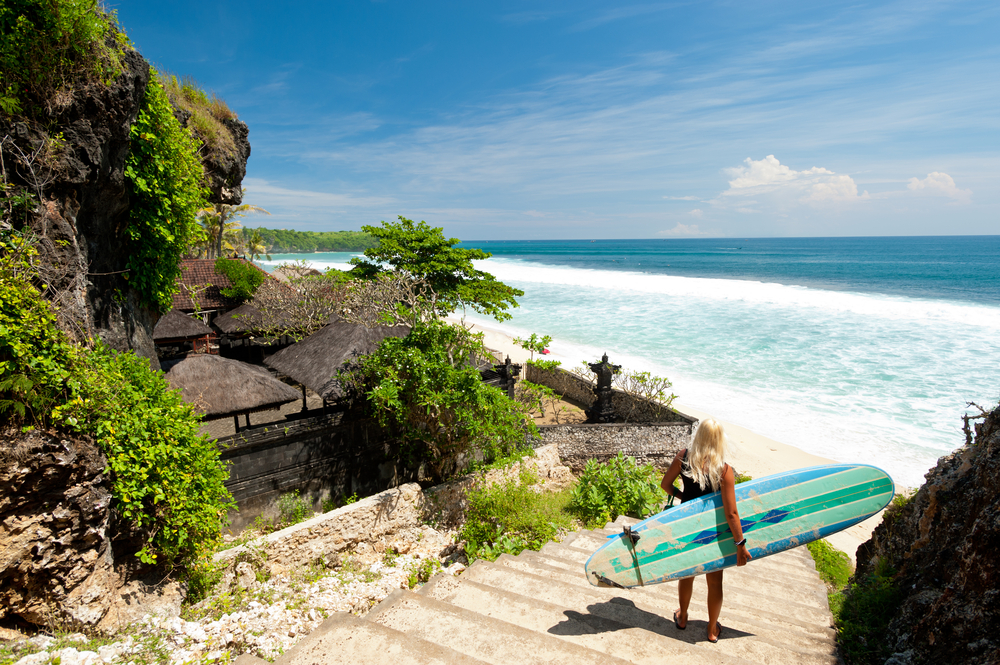
Bali is the perfect destination for surfers. The island is famous for its surfing spots. Whether you’re a pro surfer or a complete beginner, Bali has the waves for you. But if you want the best possible wave-catching experience, it’s worth planning around the best months for surfing in Bail.

If you’re planning on surfing on the west coast in areas like Kuta, Seminyak, Canggu and Legian, the best time to visit is between April and October. During these months the offshore wind creates the best waves for surfing.

However, the reef breaks in the east coast might appeal more to you if you’re an experienced surfer. And if you’re hoping to surf east coast shores in areas like Sanur, it’s best to visit between November and March. This may be the rainy season, but you’ll still have some clear days, and the swell will make up for it. Plus, there’ll be fewer people about, which is always an added bonus.

The Best Time to Surf in Bali

When is the Most Affordable Time to Visit Bali?

Bali is a fairly affordable destination all year round. The cost of living is less than most destinations in Europe, North America and Australasia. Like anywhere, there’s both an expensive and affordable side to Bali. And as long as you’re not fine-dining every day, and staying in 5* resorts, Bali is a great destination for backpacking on a budget. 

However, the most affordable time to visit Bali is in low-season, also known as the wet season. Between October and March, you can find accommodation, flights and tours that are attractively priced and perfect for travelling on a budget. February and March in particular are often the best time to find deals, as during these months, tourism is at its lowest.

Events and Ceremonies in Bali

If you’re really hoping to throw yourself into local ceremonies, you’re probably hoping to experience some local events, ceremonies or festivals. The good news is, Bali has hundreds of ceremonies and you’re going to encounter lots of them during your visit. For example, ceremonies are held to mark the ‘birthday’ of temples, and as there are around 20,000 temples in Bali, I’m sure you can imagine these ceremonies are quite frequent.

Here are some of the Balinese events that you might want to experience.
Melasti and Nyepi

Nyepi is Bali’s day of silence and it’s the most important Balinese Hindu celebration. The day marks the New Year in the Caka Calendar and for 24 hours the island is completely silent. Silence is compulsory, so even tourists need to stay in, be silent, and turn off the lights. Yep, you read that right, no lights are allowed during Nyepi.
In fact, there are several rules that everyone on the island must follow during Nyepi:

1: Don’t go out onto the street
2: No fire, light or electricity (this also means there will likely be no internet)
3: No motor vehicles
4: Be silent — no one outside of your room should be able to hear you
5: No travelling — the airport will be closed, and you won’t be allowed to drive anywhere

The only people allowed to break these rules are emergency services.

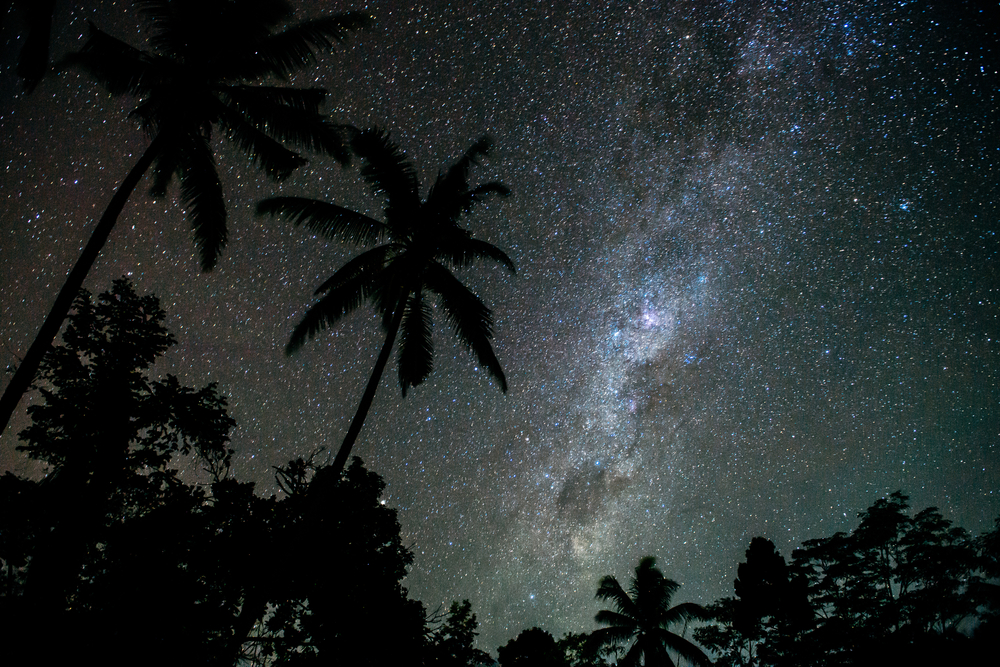
It’s an incredible day to experience. With no traffic, no talking, or TVs blaring, no music and no lights, the island is at its most peaceful. You’ll see the stars like you’ve never seen them before, thanks to the lack of light pollution. And if you’re a keen photographer, you capture beautiful pictures of the stars, and even of the Milky Way.

Nyepi Stars in Bali

The days leading up to Nyepi also involve a variety of preparations and Melasti ceremonies — purification rituals and ceremonies. Locals create ‘ogoh-ogoh’ which are statues that take the form of mythical beings and demons. These figures represent the bad spirits that are guided to leave the island during Nyepi. They are paraded through the streets the evening before Nyepi.

Galungan and Kuningan

Galungan is a holiday that celebrates the victory of good over evil and it occurs during the 11th week of the 210-day Pawukon calendar (the Balinese have several different calendars). Kuningan

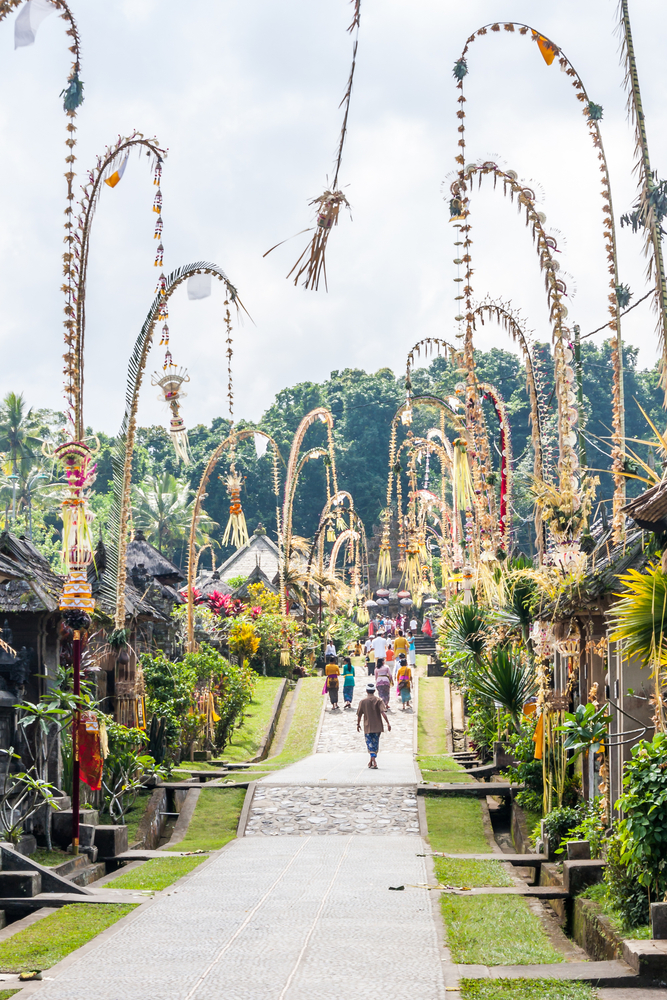
The holiday will consist of a series of ceremonies and for 10 consecutive days, you’ll find traditional decorations over the whole island, and locals will be participating in festivities and ceremonies.  You’ll see penjors lining streets and decorating temples — these are ornate bamboo poles that hold religious offerings. Walking through streets decorated with penjors is quite an experience, and these traditional decorations can make for some beautiful photos.

Galungan Bali Penjors

While you’ll still see some decorations like these at other times of the year in Bali, the island is even more beautiful during Galungan. And visiting Bali during this holiday gives you a chance to immerse yourself in Balinese culture.

Bali Arts Festival

The Bali Arts Festival happens every year and usually lasts for a whole month. It celebrates Balinese culture and art with performances, exhibitions and traditional decorations all over the island. This festival usually starts in June and ends in July.

Ubud Writers and Readers Festival

The Ubud Writers and Readers Festival happens every year in October. The festival consists of five days packed with writing workshops, talks from authors and journalists, live performances and artistic events. This is a great event to visit if you love literature and want to learn more about Indonesian culture and how it is represented in literature and the media. This is a reflective event that will leave you feeling inspired to write and read more, and you’ll come away with a deeper understanding of Indonesian history and culture.

27 Things To Do In Ho Chi Minh City (Saigon)

I was so excited to explore Vietnam that when I booked my Airbnbs, I booked much longer in each location than I needed. So whilst most people only spend a couple of days in Saigon, I booked an apartment in District 3 for an entire month.

After two days there, I’d completed most of the major tourist attractions, so I thought I’d set about finding the city’s hidden gems and quirky attractions.

By the end of my month in Ho Chi Minh City, I’d compiled a list of 27 things to do. And don’t worry, it’s a wholesome list, with genuine places to go, there’s nothing like ‘try the streetfood’ – although you should also do that too.

So for anyone else looking to spend a while in Saigon, here are 27 fun and unusual things to do in and around the city.

(I’ll start with the classic tourist attractions, so if you want the more unusual things to do, keep scrolling down the list!)

1: War Remnants Museum

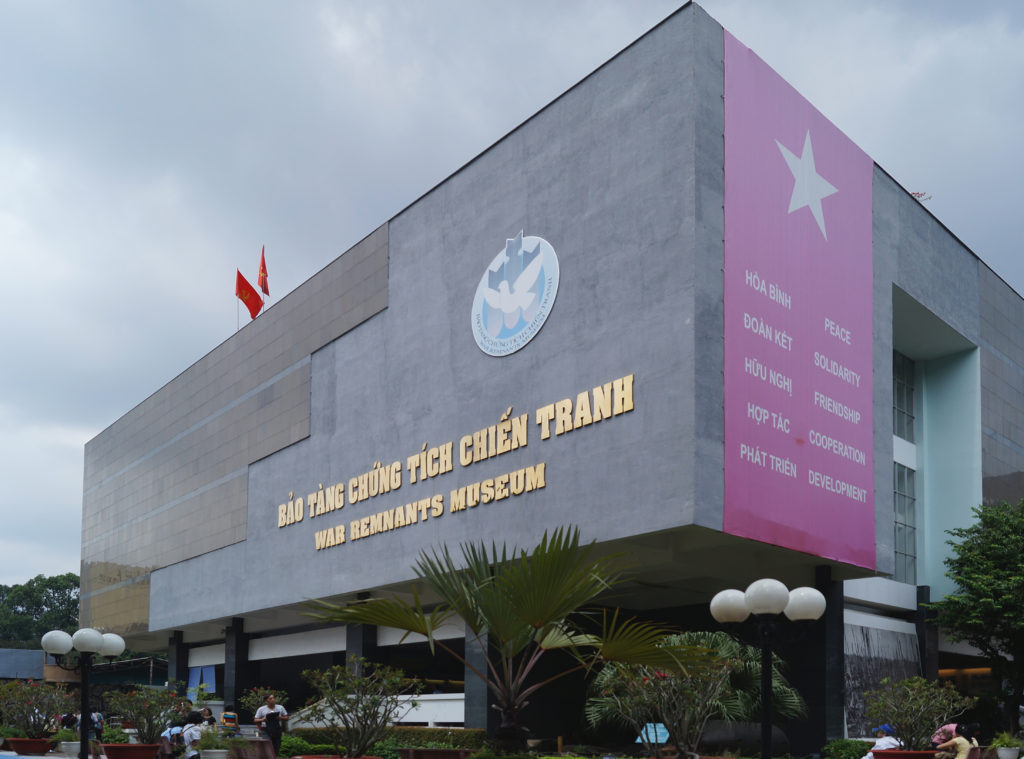
War Remnants Museum Vietnam

The War Remnants Museum is packed full of information about the Vietnam War, and the lasting effects of the weapons used.

I was guilty of not knowing all that much about the Vietnam War, so for me, this was a real learning experience. There was political information, as well as stories from individuals and pictures that captured the devastation of war.

As well as the main building, there was also a collection of war machines like tanks and planes outside. And round the back, there was a prison area, with information about how the prisoners were tortured and what crimes they’d committed.

I won’t lie, this museum is full-on. I had planned to combine it with the Independence Palace, but it didn’t seem right rushing on to another attraction. It’s a sobering but insightful experience.

Ticket Price: 40,000 VND

2: Benh Thanh Market

Benh Thanh Market

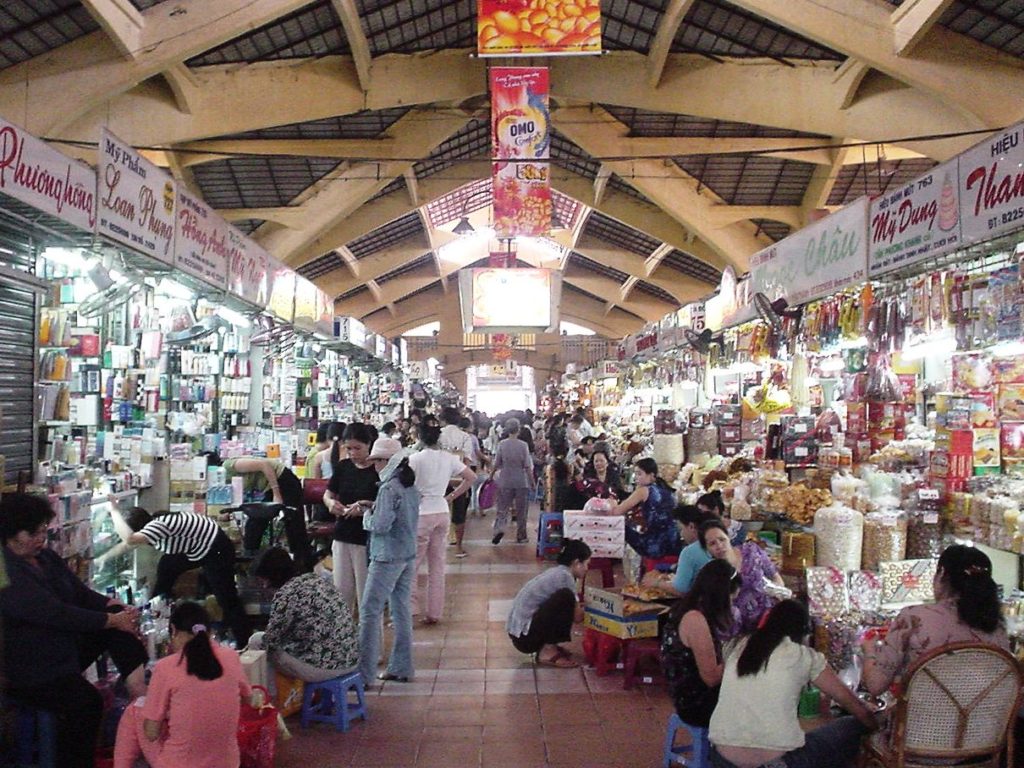
Benh Thanh Market is the most popular tourist market in Saigon, and it’s a must-see. There’s plenty of souvenirs to buy and even if you’re not interested in shopping, just walking through the narrow market paths is an experience.

There are colours everywhere, and some good food too. To find the food section of the market, just follow the smells.

Cost: Free! (Unless you buy something of course)

3: Thien Hau Temple

Thien Hau Temple

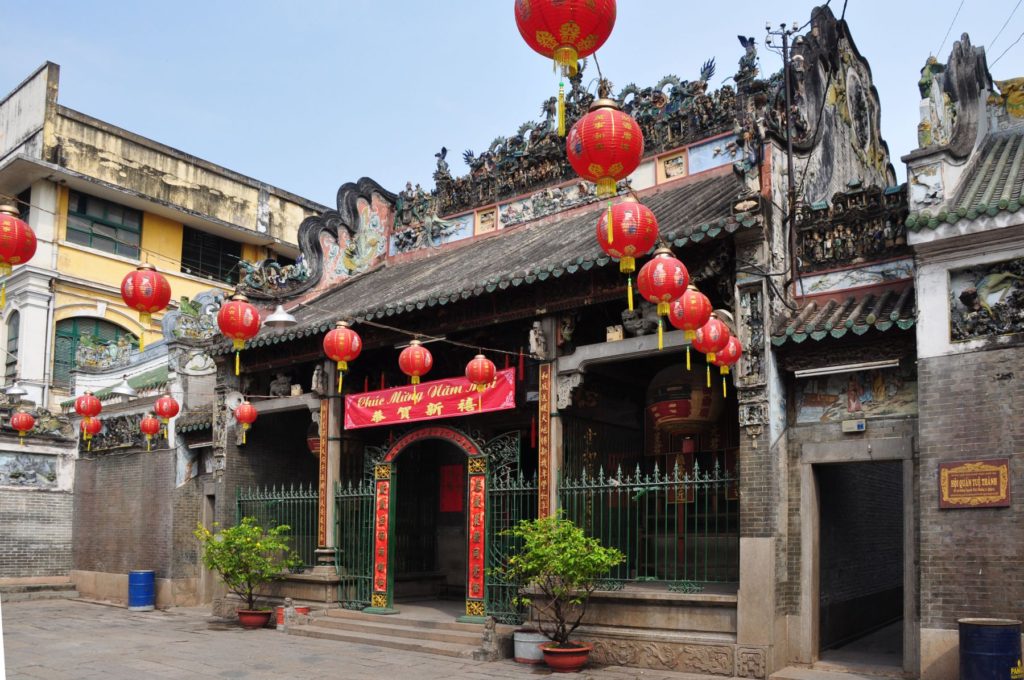
Thien Hau Temple is built with Chinese style designs and architecture. You can admire the intricate decorations, and learn about the history of the temple from a guide. It’s one of the most important temples in Saigon, so it’s definitely worth a visit.

I’d recommend visiting this temple as part of a tour (you can find tours that combine different attractions in the city centre for about $7 per person). This way, you’ll learn all about the temple’s history.

Cost: Free if you visit independently, or from $7 per person if you join a tour (the tour will involve other attractions as well)

4: Binh Tay Market

This is another market, but it’s one that’s not so touristy. It’s in Saigon’s Chinatown, in a two-storey building and it’s a great place to get a taste of local life.

There are lots of foods including colourful fruit and veg stands, but there’s also crafts, pottery, clothes and a few souvenirs for sale.

Cost: Free (unless you buy something)

5: Museum of Ho Chi Minh City

Ho Chi Minh City Museum

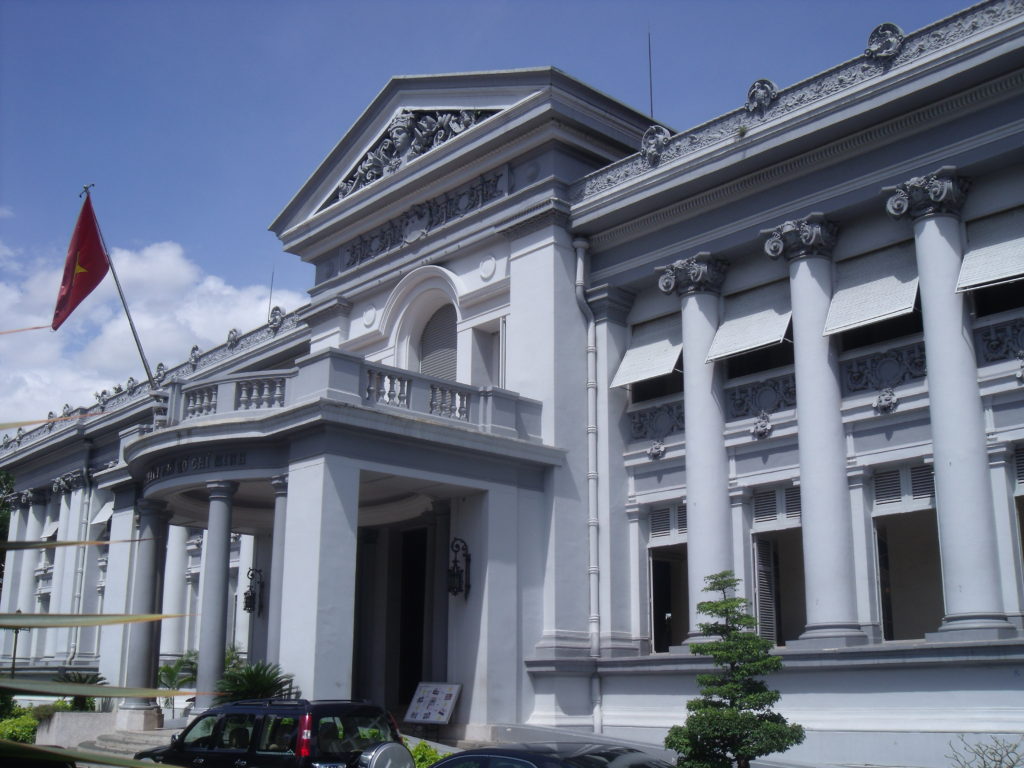
If you want to learn a little more about Vietnam’s founder, Ho Chi Minh, this is the museum to come to. There’s plenty of information about Ho Chi Minh’s life, and lots of photographs and objects from his life.

Ticket Price: 10,000 VND

6: Bitexco Financial Tower

When I go to cities, the first thing I do is try and find a good view. And the Bitexco Financial Tower has the best views in the whole city.

It’s a little pricey, but you can go up to the observation deck where there are panoramic views and information about the city’s most prominent buildings.

When I visited, I wanted to get higher up than the observation deck (because can you believe it, the observation deck isn’t even on the top floor!). So I asked if I could go for a cocktail in the bar which was slightly higher up.

To get to the bar we had to go up in a private elevator and pay extortionate rates for a drink, but it was worth it to be able to sit down and take in the views with a good cocktail.

Ticket price: 200,000 VND for entrance to the observation deck. The drinks in the bar were around 220,000 for one of the cheapest cocktails. 

7: Independence Palace

Vietnam Independence Palace

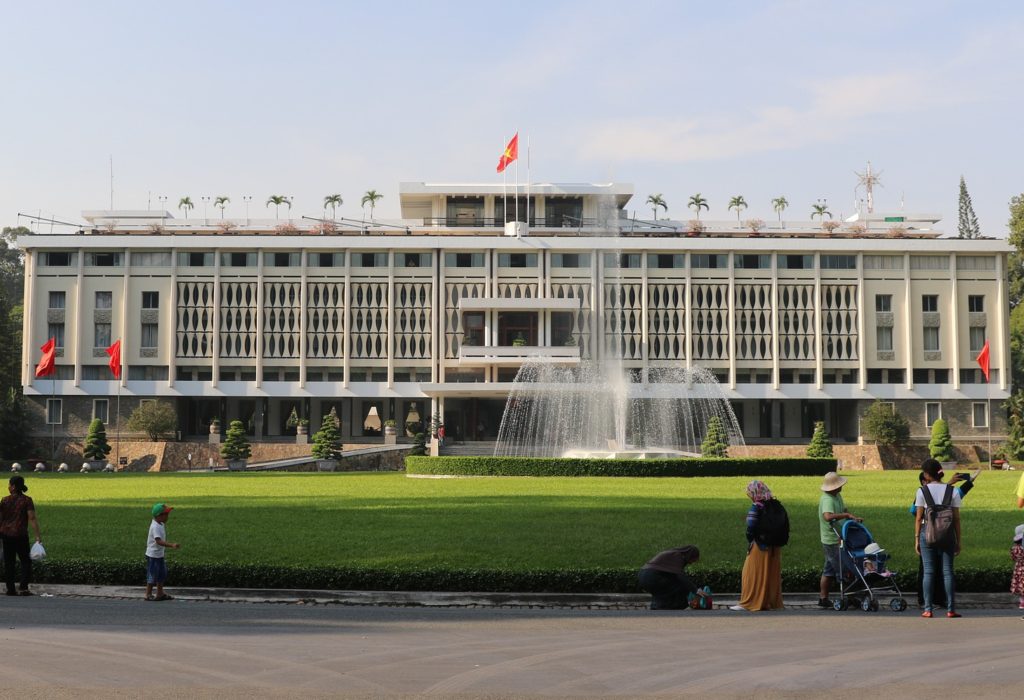
The Independence Palace is another popular tourist attraction. It was a government building before Communist tanks crashed through the gates in 1975, and now it’s still used for a lot of important official events.

The Palace feels quite eerie, as everything has been left or displayed exactly as it would have been back in the day. The décor is in perfect condition, and the chairs are still sat around the tables in meeting rooms.

It’s a great place to visit if you want to learn more about Vietnam’s history. But even if you’re not a history buff, walking the gigantic corridors and waving from the balcony can make you feel like royalty.

Ticket price: 30,000 VND

8: Saigon Cathedral of Notre Dame

Saigon Notre Dame Cathedral

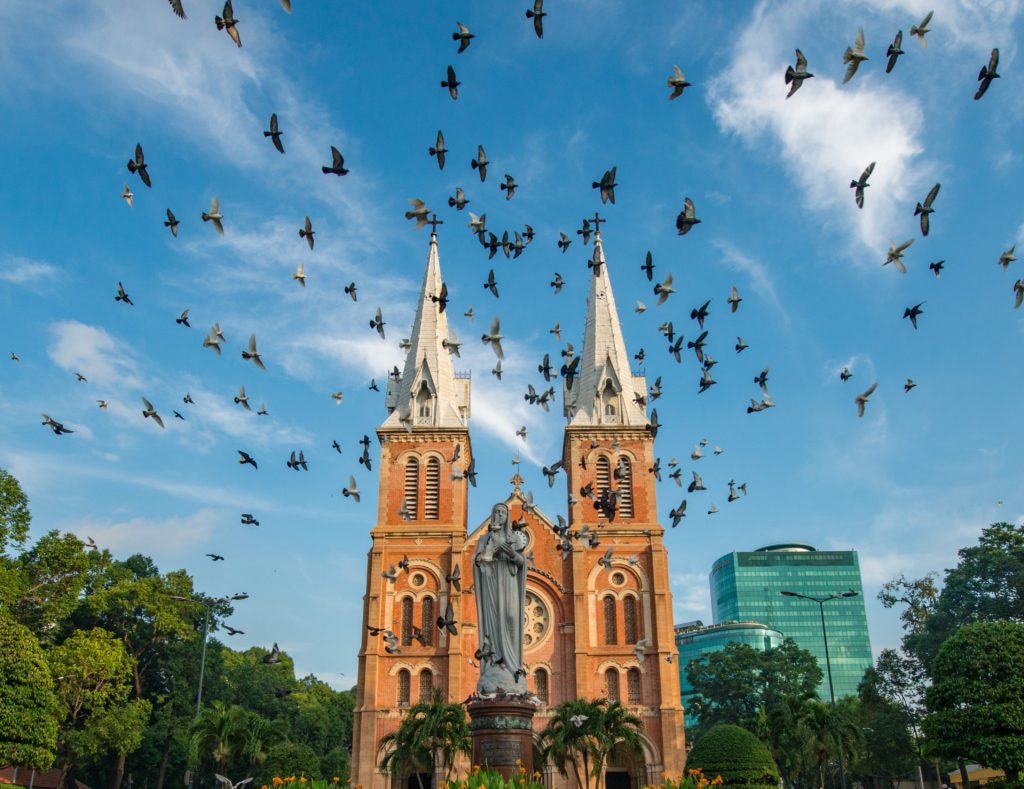
The Saigon Notre Dame Basilica is one of the most famous landmarks in Ho Chi Minh City. The red brick, European style makes it stand out from the rest of the modern city, and with the Central Post Office just across from it it’s like stepping back in time.

You can go into the Cathedral during mass, or you can admire it and take photos from outside. There’s always lots of birds who fly in groups round and round the Cathedral, which makes for great photos and videos.

Cost: free!

9: Central Post Office

Saigon Central Post Office

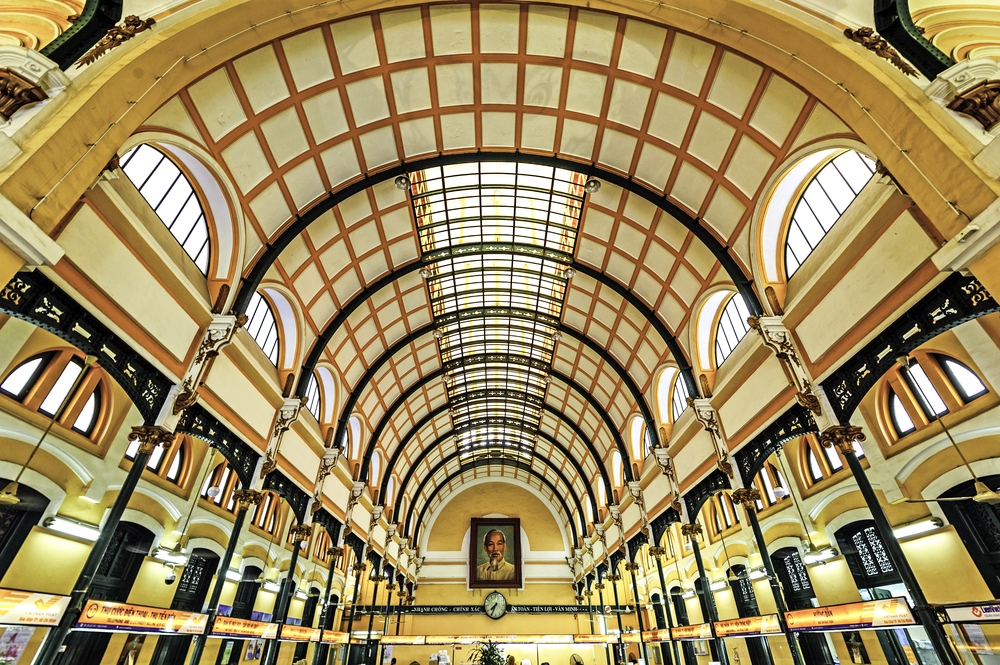
The Central Post Office is just across from the Notre Dame Basilica, so it’s worth combining these two attractions. The Post Office doesn’t look like much from the outside but once you step inside, it’s really quite grand.

The ceiling is so high it feels as though it’s miles away, and there are huge paintings of maps on the walls, with old fashioned booths beneath and clocks for different time zones.

There are several businesses within the Post Office, including several local services and a few little souvenir shops.

Cost: free! 

10: A O Show

The Saigon Opera House is definitely something you should consider seeing, but rather than just visiting the building, why not watch a show?

Don’t panic, you don’t have to sit through an opera, there are several shows about the history and development of Vietnam, the best being the A O Show.

You’ll see gymnastics, interpretative dance, and clever performances that demonstrate the growth of Ho Chi Minh City. And afterwards, you’ll have the opportunity to meet the performers!

Ticket price: 700,000 VND, 1,150,000 VND or 1,600,000 VND depending on what seats you choose

12: Fito Museum

If like me, you’re a fan of quirky museums, you’ll definitely want to visit the Fito Museum. It’s full of traditional medicines and set up like a pharmacy. You’ll be shown around by a guide who will fill you in on the history of Vietnamese medicine. You’ll even learn about stone-age remedies.

Ticket price: 120,000 VND

13: Starlight Bridge

Star Light Bridge Ho Chi Minh

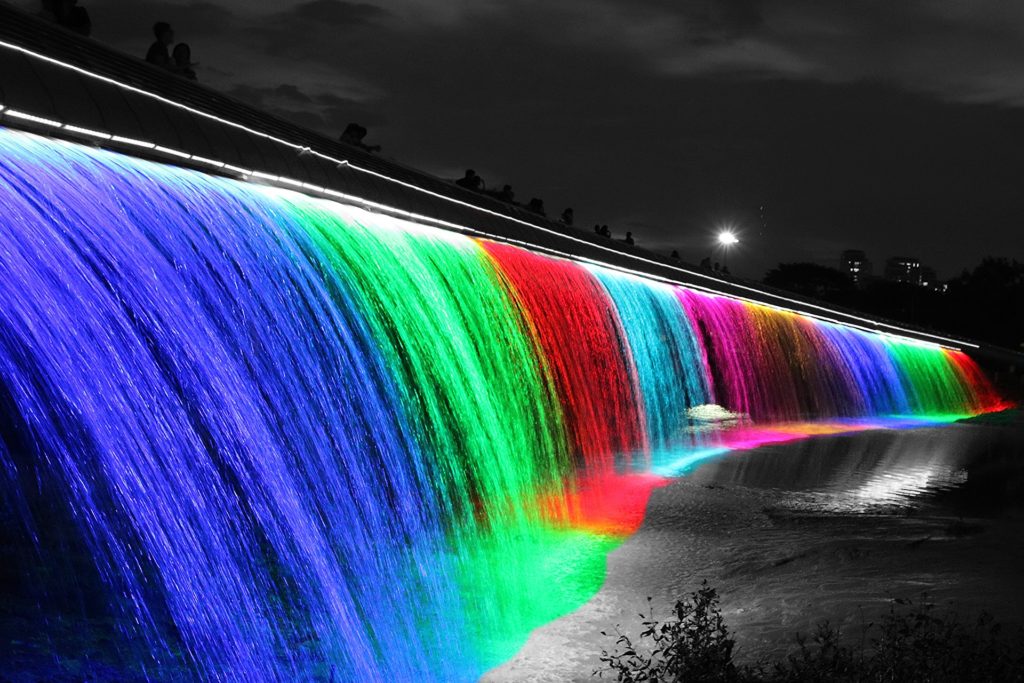
The Starlight Bridge in District 7 is beautiful after dark. From the side of the bridge pours a multi-coloured waterfall that makes for great photos and a romantic setting. It might not be a whole day out, but it’s definitely worth taking a stroll by the bridge at least once during your stay.

Cost: free!

14: Cu Chi Tunnels

Cu Chi Tunnels

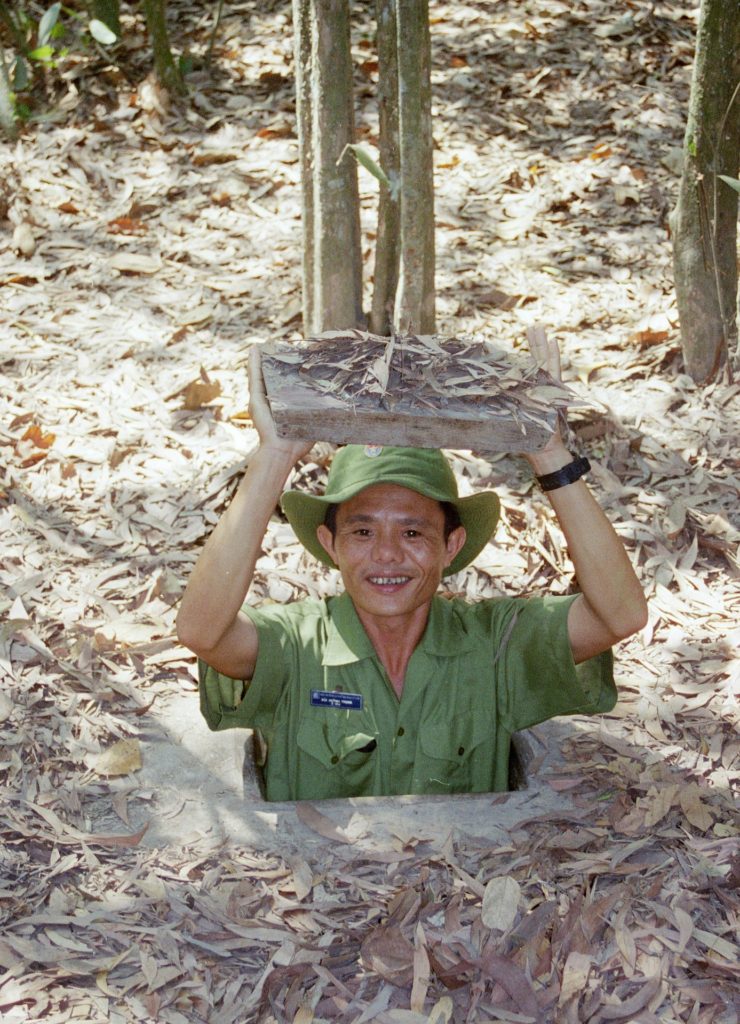
The Cu Chi Tunnels were used by the Vietcong during the Vietnamese War. I went on a cheap $7 tour to these tunnels and it was one of my best days in Saigon.

You get to see machines like tanks and helicopters used during the war and even venture into different tunnels. The tunnels have been widened for tourists, but be warned, they’re still terrifyingly small.

I’d definitely recommend going with a tour group, as the tunnels are two and a half hours out of the city. And tour guides are able to give much more information than you’d get on your own.

Cost: Anywhere from $7-$160 (there are basic tours, combination tours, or luxury tours by limo)

15: Jade Emperor Pagoda

If you’re hoping to check out some Vietnamese temples or architecture, the Jade Emperor Pagoda is over 100 years old and it’s a sight to behold. The temple has some beautiful and intricate carvings, and inside you’ll find some interesting statues of characters from both Buddhist and Taoist legends.

Cost: Free!

16: Mekong Delta

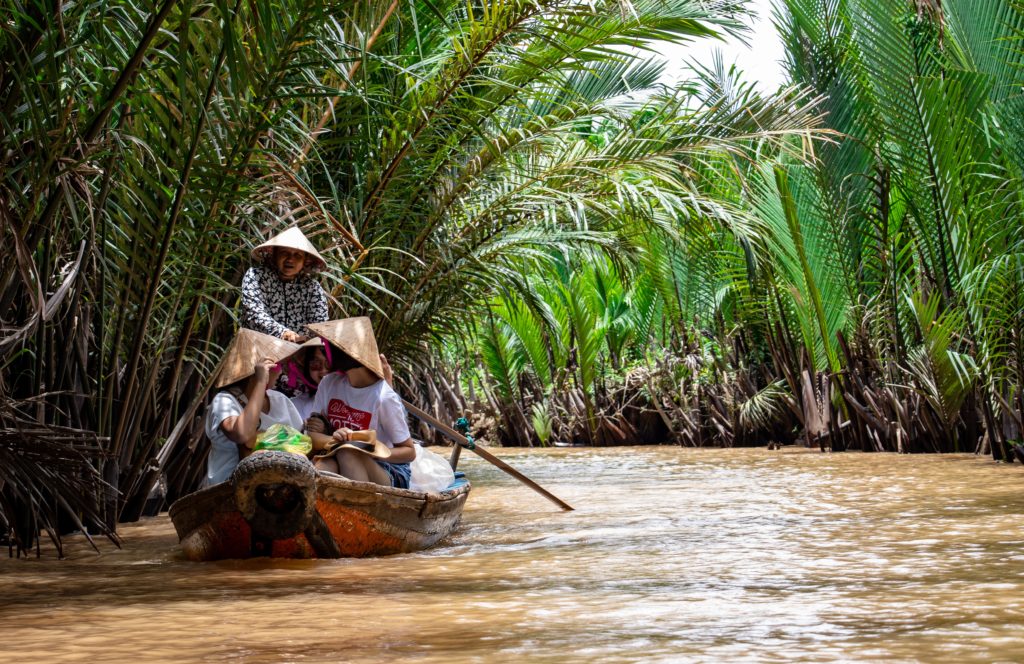
Mekong Delta Saigon

There are so many different ways to see the famous Mekong Delta, but one thing’s for certain, you NEED to see it.

You can kayak down the river, take a speed boat, luxury boat or a tour boat. Most tours will also show you around the riverside villages, so you can see what life is really like in rural Vietnam.

As you cruise down the river you’ll learn about Vietnamese history and culture, whilst passing locals, wildlife and spots that were once home to the combat of the Vietnam war.

Tours range in price, some will involve basic boat trips, bike hire and a coach for large groups. But if you want to experience a luxury tour, you can get a private car (or limousine!) to the Mekong Delta region and then enjoy a speedboat ride down the river.

Cost: $30-200

17: Go Shopping At One Of The Many Mega Malls

Ho Chi Minh City has some pretty impressive malls if you’re interested in shopping. There are malls with boutique shops, global brand stores, and some malls even have a level dedicated to pop-up market stalls. You can also find delicious and cheap meals in mall food halls.

Lots of the Saigon malls are so large they even have entertainment complexes with arcades, cinemas, and in one case, an ice rink!

Some of the best malls I visited included the Vincom Mega Mall, the Vincom Centre and the Diamond Plaza. If you’re in Saigon in rainy season, these malls are the perfect place to spend a rainy day.

18: Take to the Ice at the Vincom Mega Mall Ice Rink

Ice skating is probably the last thing you thought you’d be doing in Saigon, a tropical city. But this was the most refreshing activity after walking around in the heat. The ice rink here is huge, and it was rarely busy. It filled up after schools finished but most of the time it was fairly quiet. And I often came across professional skaters practising dance routines on the ice.

Cost: Approximately $5 for 1 hour

19: Play Arcade Games or Go Bowling at Diamond Plaza

Diamond Plaza, a mall in District 1 of the city, has a whole level dedicated to entertainment. You’ll find a huge arcade with some of the best games, and tokens are affordable — you can buy a handful of tokens for around $5-15 depending on how much you want to play.

There’s also a bowling alley so if you want to challenge your partner/travel companions to a game this is the place to go. The bowling is a little expensive though, so if you’re on a budget it may be worth giving it a miss. They charge per person, per game and for shoe hire (you’re not allowed to wear your own shoes). For two people, for two games it cost us about $18.

20: Take on an Escape Room

There are several escape rooms in Saigon, including one in Diamond Plaza. These challenges are considerably cheaper than escape rooms you’ll find in Europe or the US, and they usually cost around $5-10 per person. There’s even a live-action, haunted-themed escape room for those wanting a scary experience.

Cost: $5-$10 

21: Hit the cinema (they’re incredible)

Before I went to a cinema in Vietnam, I thought cinemas were all the same. Oh how wrong I was. I’m used to paying about $15 for a cinema ticket, and all that includes is an uncomfortable seat.

But in Ho Chi Minh City, there are some of the most luxurious cinemas you can imagine. Standard cinema tickets start at about $3, but many cinemas also offer sofa seats or armchairs, tickets that include a cocktail and snacks or even a meal (served by a waiter once the film begins). And don’t panic, almost all cinemas in the city show films in English.

Cost: $3-$8

22: Rock climbing at Push Climbing

If you fancy being active, Push Climbing has a range of indoor climbing walls for all abilities. There are lead climbing walls, and routes for top ropes. You can climb independently, or if you’d rather climb with the help of an instructor, they offer climbing classes.

Rock climbing here is good fun and great value — you can get a day pass with all the equipment you need for about $9.

Cost: $9 for a day pass. 

23: Bouldering at the Vertical Academy

This place is really tucked away but you can easily drive there if you have a bike, or take a Grab taxi. It’s worth making the trip out of the centre if you’re a climbing fanatic.

It’s a bouldering place, so there’s no ropes or harnesses, you just climb and land on the mats below. The walls include high climbs, overhangs, and different coloured routes of different difficulties.

The staff are super friendly, they’ll help you figure out climbing techniques, and they speak great English too.

You’ll need to hire climbing shoes when you arrive, but even so, it’s great value and you can climb for as long as you like. One thing to note though is they only have climbing shoes of sizes up to a UK Men’s 12.

Cost: Roughly $5 

24: Dining in the dark

This is a quirky experience that I’d never heard of before arriving in Saigon. It’s basically a tasting experience where you taste different dishes without being able to see them.

You really won’t know what to expect! But don’t worry, if you’re vegan or vegetarian, they can cater for that, so you won’t end up accidentally eating meat.

This is a slightly pricey experience if you’re on a budget, but it’s definitely worth a try if you consider yourself a foodie.

Cost: $30 

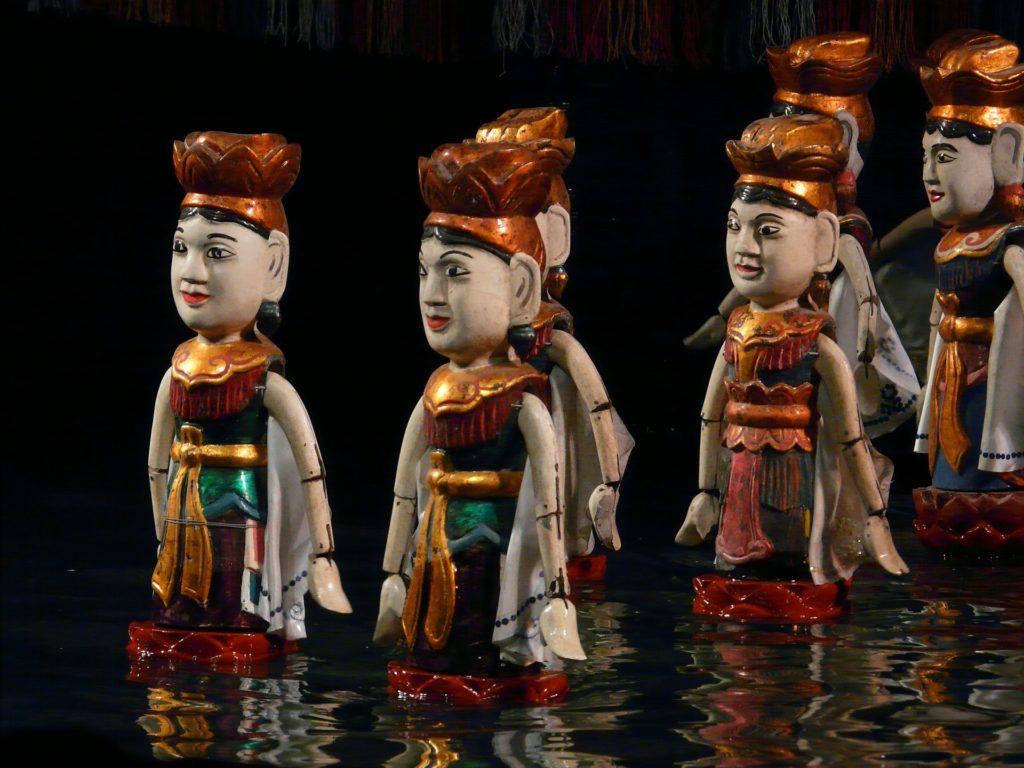
25: Watch a Water Puppet Show

Water Puppet Show Saigon

The Saigon Water Puppet Show is a famous show in Vietnam. Puppeteers act out traditional stories and legends while waist-deep in water. The performances are accompanied by traditional Vietnamese music, played with authentic instruments. These shows used to be performed in the rural rice paddies.

Cost: Approximately $5 for a ticket

26: Go to a bug café

Dining on bugs has become a popular tourist challenge, so if this is what you’re into, there are bug cafes that can satisfy your cricket cravings. You can try insects cooked and prepared in any which way — dine on gourmet bugs, or challenge your travel companions to eat a creepy crawly.

27: Meet Furry Friends at a Pet Cafe

Visit a cat cafe in Ho Chi Minh City

Pet cafes are super trendy in Vietnam — you’ll find cafes with cats and/or dogs roaming around and customers are free to cuddle, stroke and play with them. So if you want to make some furry friends, check out one of these pet cafes.

Cockroaches Broke My Nose In Vietnam (I Wish I Was Joking)

Follow my blog with Bloglovin

Three years ago, I sat in an English pub, listening to a friend tell me stories about their trip to Vietnam. From whirlwind romances to charming locals, beautiful sights and oh-so-cheap and delicious food, as they told me about their travels my mind was filled with beautiful images and I knew I had to go.

Ever since that evening, I’ve had this idea of Vietnam as the most beautiful destination on Earth. So when I finally booked a ticket there, three years on, I was overwhelmed with excitement.

I travelled with my then-boyfriend and we decided to spend a month in Hanoi/Halong Bay and a month in Ho Chi Minh City. We decided that since this was a trip I’d dreamed of for such a long time, it was worth allowing two months to really experience life in Vietnam.

My First Taste of Vietnam

The first month in North Vietnam went well, although as with any over-hyped dream, it didn’t quite live up to my expectations. I quickly realised the image I had of peacefully driving scooters alongside the river, and walking hand in hand around lakes and pagodas was as far from reality as possible. The roads were filled with thousands of motorbikes and scooters, each one of them slamming their horn as many times as humanly possible. Attractions were heaving with tourists and locals who would push past us or pester us to buy something, or pay for a picture with their props and animals. The entire experience was overwhelming and nothing like I imagined. The only respite we got from the madness of the city was in Halong Bay, on Cat Ba Island and the deserted Tuan Chau Island

I quickly realised that I’m definitely not a city person, which didn’t bode well for the second month I was due to spend in Southern Vietnam, in the apparently busier Ho Chi Minh City.

Any time we told locals how long we planned on staying in Saigon, they would look at us shocked and confused, or they’d laugh. Almost all of them asked ‘why would you do that?’. So by the time came for us to board our flight to HCMC, we were well and truly worried about what to expect from the Southern City.

The Saigon Apartment

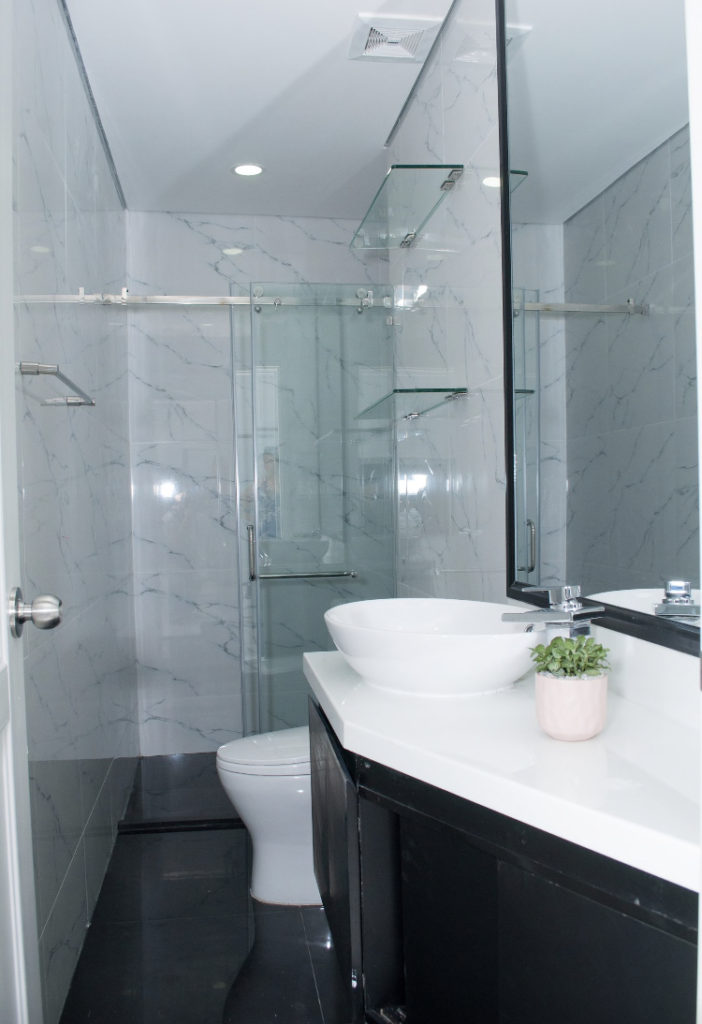
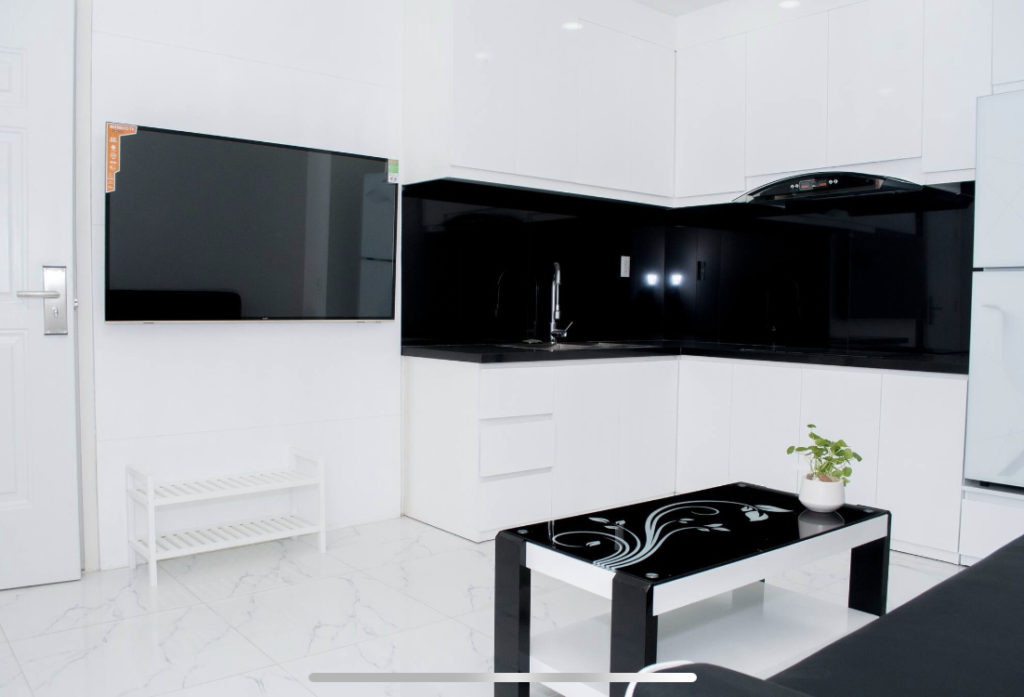
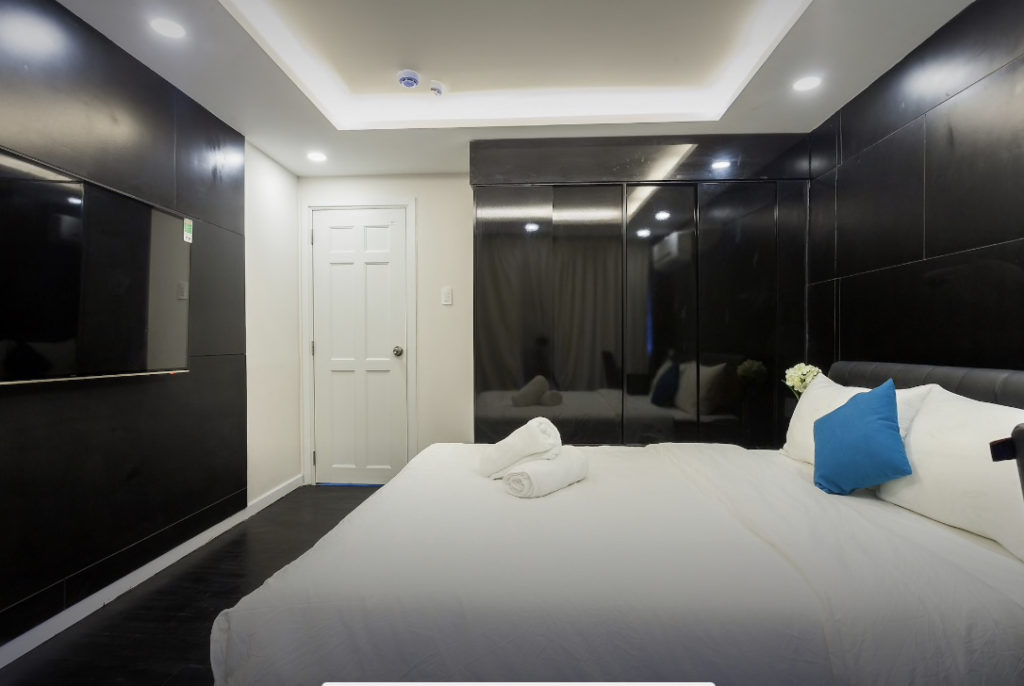
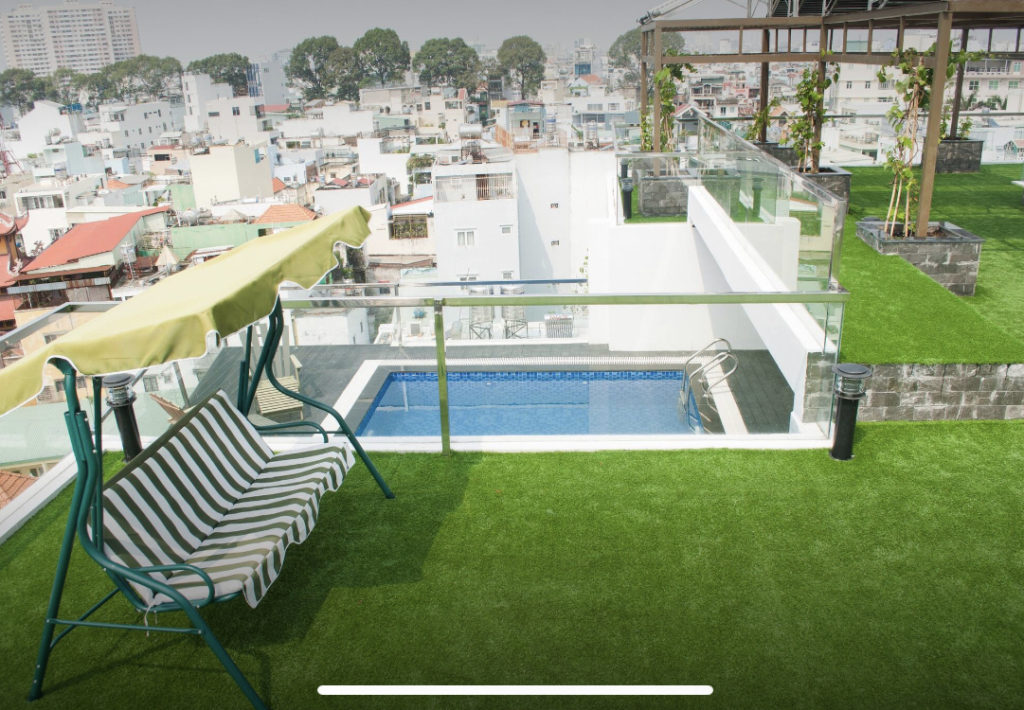
We had booked a Saigon apartment that looked like pure luxury. It was modern, it had air con and a rooftop area with swing seats and a pool. The apartment was located in District 3, so not too far from the city centre.

When we arrived at the apartment, we saw a baby cockroach on the stairs leading up to our flat. My boyfriend looked at it with disgust while I insisted that it was cute.

‘I have no idea why people are so scared of these little things’ I said, ‘I don’t think they even bite, and they run a mile when they see us coming anyway’.

Oh, how naive I was. This was before I realised that cockroaches are living embodiments of the devil. These guys are pure evil. And before any animal-lovers jump to defend them, I have my reasons (below) for now hating these insects! 

Anyway, we let ourselves into our room and were amazed by beautifully modern and clean it was. We took pictures before dumping our massive rucksacks in the wardrobe and running up to admire the rooftop area. It was incredible — the pool had a beautiful view of the city. We were impressed.

Cockroach Infested Bedroom, Saigon Apartment

Rooftop Area Saigon Apartment

Ho Chi Minh City Apartment

Oolong Tea Garden Apartment Saigon

But the first night, the problems began. When we switched out the lights and went to bed, we heard scuttling sounds. Switching the light back on, we saw a group of 5 or 6 cockroaches that had emerged from underneath the wardrobe. Still convinced that these little critters were completely harmless, we switched off the light and went to sleep not giving it a second thought.

The Invasion of the Cockroaches Begins

But the next night, we awoke to the same scuttling sound, and this time there were even more — probably more than 10 cockroaches all running around on the floor of our bedroom. One had even made its way on to my bedside table. That was a little too close for comfort, so the next morning we asked the housekeeper if there was a spray we could use that would get rid of them. She gave us a spray and we went crazy, spraying every nook and cranny we could find.

We let the spray work its magic for a while, and sure enough an hour later, 7 cockroaches had crawled out from their hiding places and died in the middle of the room. It’s a little grim, and cruel, I know, but trust me, they deserved it for what their buddies did the following night.

At 3 am the next day, I woke up in a panic. There was something crawling on me, lots of things,  on my legs, on my chest, my arms. My face. Yep, there were cockroaches all over me. And one of the buggers was on my face.

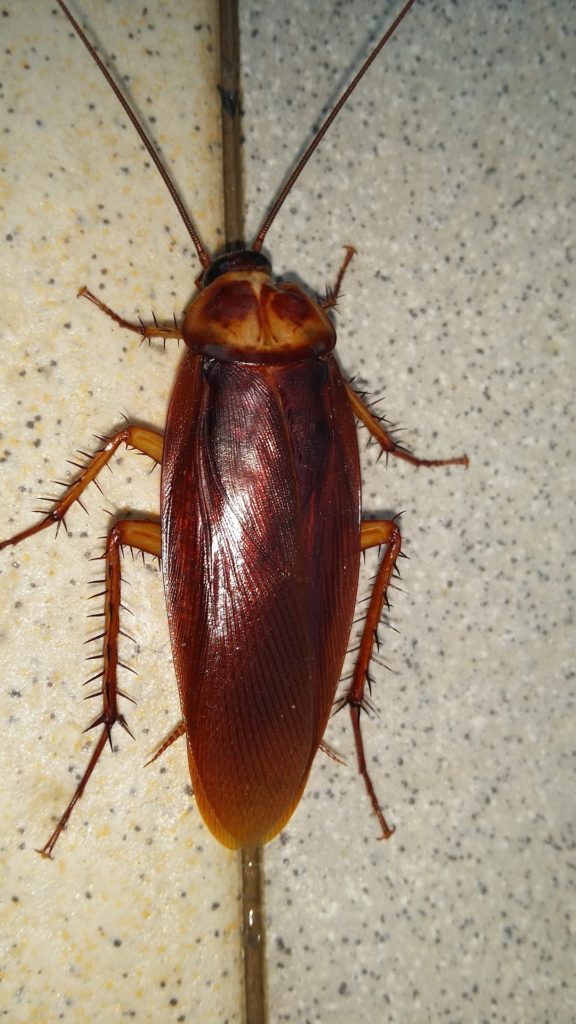
In a split second, I went from being someone who couldn’t care less about cockroaches, to sobbing like a maniac and screaming ‘please help me’ over and over while these horrible creatures carried on crawling all over me. And these weren’t small ones or babies, they were absolutely massive — the length of a finger, the width of a big toe. 

Cockroach Horror Story

My boyfriend tried to slap them off, but they were adamant that they wanted to continue their party on my body. And these guys are fast. They avoided every whack and carried on running all over me. It took a while to get them all off, by which point I was a mess. I was sobbing, and frantically scratching where tiny cockroach feet had been running all over me.

The Frightful Facts About Cockroaches

Eventually, I calmed down, but there was no way I could go back. I stayed awake googling cockroaches, what diseases they carry, their habits, and whether it’s common for them to crawl on humans while they sleep. I found myself reading academic papers on these insects — what else could I do? I couldn’t sleep.

And what I learned from my frantic google searches and academic reading only made me feel worse. If you see one cockroach, the chances are there are thousands of them hiding nearby. THOUSANDS. But the worst cockroach fact I found out was that the smell that comes from our mouths and nose when we sleep is a pheromone for cockroaches. So if you sleep in the same room as a cockroach, they will likely make it their mission to crawl inside your mouth, or up your nose. Once I found this out, I definitely wasn’t going back to sleep.

There was just one useful fact I learned, and that was that cockroaches don’t like light. If they can help it, they’ll only come out in the dark. So I tested this theory, I turned the light off for two minutes in the kitchen and closed the door. Then I switched the light back on, and sure enough, saw a bunch of cockroaches in the middle of the kitchen floor.

So now I knew I could sleep as long as the light was on.

But my boyfriend wasn’t having that. So I set up camp on the sofa in the kitchen, with the LED lights blaring. But still, I couldn’t sleep.

The Nightmare Continues…

I noticed that my face felt bruised and I gently touched my cheek, near my nose. It felt swollen, and if I pushed a little harder, it made a loud squeaking sound. It’s safe to say, I was super freaked out.

I panicked that I’d had an allergic reaction to the cockroach who waltzed his way across my face. But the more I searched google for answers, the more I came across videos of people with cockroaches stuck up their noses or in their ears. And this only fuelled my panic even more. Now I was panicking that a cockroach had actually crawled up my nose. Most of the cockroaches we’d seen were much bigger than my nostril, but we’d seen babies too, and one of these could have wiggled its way up my nasal passage.

I spent a further three nights too scared to sleep, and I don’t know if you’ve ever seen someone who hasn’t slept for three nights, but it’s not pretty. Each day I became more worried about my face. Most of the swelling in my cheek had gone down, but my right nostril had completely swollen shut. It was interfering with my ability to breathe, and I was having frequent panic attacks at the thought of a cockroach living in my sinuses.

So on the fourth day, I decided to go to see a doctor. I had an Amex card that included travel insurance, so I gave the number a call, only to find out that my card (and the insurance) had expired the week before. I was in Vietnam, potentially with a cockroach up the nose, with no travel insurance. I know, I know, this was my own fault — it was my first big trip, and I guess you live and you learn. 

At this point, I should also mention I had almost completely run out of money. I was financially unprepared for the long trip, I was working as a freelancer and that month four of my clients had decided they couldn’t afford to pay me on time, so the bank account took a hit and I had about £20 to my name. So a doctor was out of the question. And my lack of money also meant we couldn’t move apartments. We told the staff at the Oolong Tea Garden Apartments what had happened and asked if we could have a refund on all or even some of the money we had paid so that we could get a different apartment, but they just shrugged and said ‘no refunds’.

They say money can’t buy you happiness, but I’d have been a whole lot happier if I’d had the money for a doctor, or the money to move to an apartment that wasn’t infested.

I waited a month until payday, by which point we were so close to flying home that I decided to wait to see a doctor until I got back to England.

So after continuing the rest of my travels with very little money, and a swollen, squeaky face, I finally arrived back in England.

I went to the doctor as soon as possible, who transferred me to another doctor, who transferred me to another ENT (ear, nose and throat) specialist. After being sent to a handful of different doctors, and having several nasal endoscopies, I was told that the good news was that there was no cockroach in my nose. The bad news was that I’d had an allergic reaction and the swelling had caused the cartilage in my nose to break. And to be able to breathe through my nose again I’d need surgery.

So the outcome? In three months, I have to have surgery to fix the broken nose. Surgery. All because of cockroaches.

Pin It on Pinterest