Suffering From Dengue Fever In A Shared Hostel Dorm In Bali

During my first few days in Bali, I fell ill with Dengue Fever. I was travelling solo and staying in an 18-bed dorm room in a hostel, sharing two toilets between 36 hostel guests. Here’s what happened. 

The Incident That Started It All: The Mosquito Bite

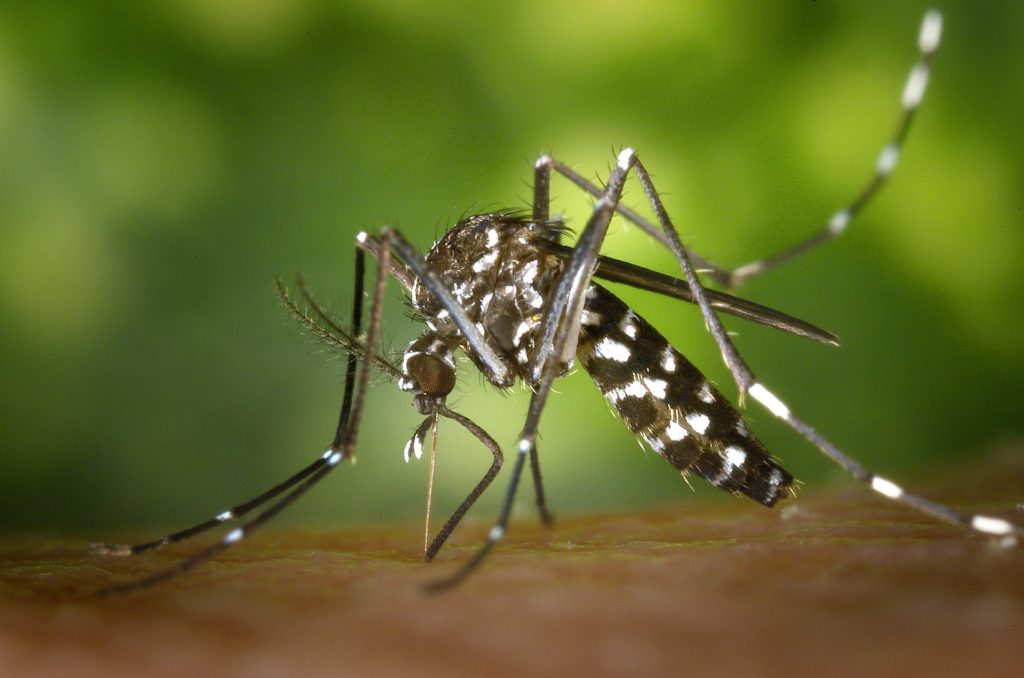
My first ever visit to Bali started with a trip to a coworking space. I wanted to get some work done before planning any adventurous day trips, so I set off with my laptop and found my way there. I took a seat in the garden to enjoy the sun while I worked and within minutes I felt a sharp stinging on my arm. And sure enough, there was a big black and white striped mosquito on my arm, with its mouth still firmly attached to my skin. I knew the type of mosquito: the Aedes Aegypti.

I knew it only because I’d researched dengue fever the year before, while travelling through Thailand, and this was the type of mosquito that carried the illness.

Once I’d smacked the mosquito off my arm and the stinging had stopped, I sighed. I bet I get dengue fever or typhoid, I thought. That would be just my luck. Contracting dengue on my very first day in Bali.
Dengue Fever Mosquito Bali

My Descent Into Illness

I carried on the rest of the day, and the day after the bite as normal. But on my third day in Bali, I woke up feeling absolutely bloomin’ awful. I told myself I was just tired and hauled myself out of bed and into the shower. I had a new members meeting at the coworking space at 10:30 am, so I rushed to get ready and started the 20-minute walk.

A few steps down the road I felt even worse than I had when I first woke up. My head was pounding, my back was aching like crazy and I felt the same sort of nausea you get with a hangover. I didn’t really think anything of it — I just put it down to not having had any breakfast. I’m a bit of a diva when it comes to breakfast.

I arrived at the meeting late and sat at the bark on a bench. The pain in my back was getting worse and I shuffled and fidgeted throughout the entire meeting, drawing my knees to my chest, twisting, turning and arching my back just to try and alleviate the pain.

Once the meeting was over I ordered a chocolate muffin (because what better way to try and get better than with a large serving of something chocolatey). Each mouthful was a struggle. Halfway through the muffin, I realised I was unwell. Normally I devour anything chocolatey in seconds, but the muffin was a struggle, and each mouthful made me feel worse. And the pain in my lower back had spread down to my knees and to my upper back and shoulders.

I’d only completed a measly seven minutes of work, but I slammed my laptop shut and started to walk back to the hostel. I quickly came across a guy with a motorbike yelling ‘taxi taxi’ (they’re everywhere in Ubud), and decided there was no way I could walk back to the hostel. So I got on the back of the taxi driver’s motorbike and did my best to cling on as he drove me home. Looking back, I should have found a taxi driver with a car. I barely had the strength to hold on as he swerved through the Ubud roads and tiny streets to get me home.

A Shared Hostel Dorm: The Worst Place To Be Ill

I got back to the hostel at about midday and went straight to my dorm. A team of about 7 cleaning staff were in there changing sheets, sweeping and mopping the floor and carrying out their cleaning routines. My heart sank, I had to lay down, and I couldn’t get to my bed.

I made my way down to the pool, where there were beanbags and sun loungers. I collapsed onto a bean bag and fell asleep almost immediately. I woke up about an hour later, feeling hot, thirsty and downright terrible. I had to make it to my bed.

Luckily the cleaning staff had finished up while I slept by the pool, so I stumbled into the room, kicking off one shoe before falling into bed. I drew the horribly thin and transparent curtain around the bed to give myself at least the illusion of privacy and again fell asleep, with one shoe still on.

I woke up about 8 hours later, in the evening, when a drunken man who was in the bunk bed above me fell against my bed, knocking the curtain open. He started to apologise, but his ‘sorry’ faded into muttering — he was clearly shocked by my appearance. I looked rough. And I knew that was probably just the first encounter I’d have with a drunken gap-year traveller that night. I was in a party hostel, and I knew from the previous nights I’d spent there that the partying and drinking wouldn’t stop until 4-5 am.

Sure enough, throughout the night I had to deal with the sound of girls vomiting in the bathroom, people having sex in the beds around me, music thumping on the offbeat of my throbbing headache. The worst part though was the bathroom situation. There were only two toilets for over 30 people, and the illness meant I needed those babies pretty regularly.

Each time I staggered to the toilet, which was only a few steps away from my bed, the aching pain got worse. My ankles, knees and hips felt like they were breaking each time I put weight on them. The pain was so intense it felt like I could hear my joints crunching and creaking. And when those few steps to the toilet were finally over, I would have to wait for the gaggles of drunken girls to finish weeing, vomiting and using the toilets to have heart-to-heart conversations.

The Quest for a Private Room

There was no way I could stay in the hostel. But every step I took felt like setting fire to my joints and muscles. I didn’t know what to do, how could I summon the strength to pack my rucksack, and carry the massive 15-kilogram pack to a new place?

A couple of days after being ill in the hostel I knew I had no choice but to face the pain and move to a private room in another guest house. I booked a room online and prepared to make a move. Packing up my things took the best part of four hours. After shoving each item into my backpack I laid back, breathing deeply, giving myself a pep talk to keep going. Eventually, I had packed and had pulled my backpack onto my back. The pain was excruciating.

I made it to reception to check out and was met with ‘Oh my goodness, are you okay?’ from the receptionist. It was at that moment I realised I couldn’t talk. I knew I had a sore throat, but next to all the other symptoms I hadn’t really given it a second thought. But no, trying to talk sent me into a coughing fit that seemed to last forever.

After coughing over the receptionist, and trying to say thank you through tear-filled eyes and spluttered sounds, I made my way to the main road. A taxi driver found me instantly, thank God. He took my rucksack and put it in the car, ignoring my attempts to ask him how much he charged. My guest house was only a ten-minute walk away, a five-minute drive maximum. It hurt to talk, it hurt to stand so eventually I gave up trying to ask how much and got in. He was grinning, and I knew instantly he was going to rip me off.

After a few minutes in the car we arrived near the guest house, he said he couldn’t get closer despite many other cars driving down the same road, and jumped out, threw my rucksack to the pavement and charged me 150,000 IDR — about £9. The journey shouldn’t have cost more than 60,000, but I didn’t have the strength to argue and he knew it.

I tried to pick my rucksack up of the floor where he had dumped it and didn’t even have the strength to lift it onto my shoulders. Eventually, someone helped me lift it up, and I stumbled a few minutes down the road to the guest house.

My room wasn’t ready yet, but I couldn’t stand, or even sit any longer. I laid down on a bench in a lobby — I don’t think I’ve ever looked more homeless. I was shivering despite the hot Bali weather, my hair was unbrushed, and I smelt like I hadn’t showered in weeks. But I had made it, I had my own private room, and I didn’t have to carry my stupidly large rucksack anymore.

Recovering From Dengue Fever

I was ill for another week and a half, but gradually I started to get better. Having my own room made the illness so much more bearable, but still, I was unable to leave the hotel to get food. Luckily there was water just a few steps from my room, but it took me six days to be able to leave the room to get something to eat. And if there’s one thing I’ve learnt from this whole ordeal, it’s that going six days without food is horrendous.

After a week I made it to the hospital to receive the care I needed, and now, about two weeks on from that silly mosquito bite, I’m doing much better.

So if you’re suffering from Dengue fever in Bali, or any other illness really, here are my tips to you:

  • If you’re in a hostel, leave immediately and find a private room, before the illness gets worse!
  • Go to a hospital or Doctors as soon as possible. Bali healthcare is actually very good.
  • Don’t go six days without food, you’ll just make yourself feel worse.
  • Wear mosquito spray! I literally never did this before I got ill, now you won’t see me out and about in Asia without it
  • Ask for help — I struggled through most of the illness on my own, but if I’d just asked for help there were so many people around me who would have given it gladly. The Balinese are such lovely people, and apart from the taxi driver, so many people did their best to help me.
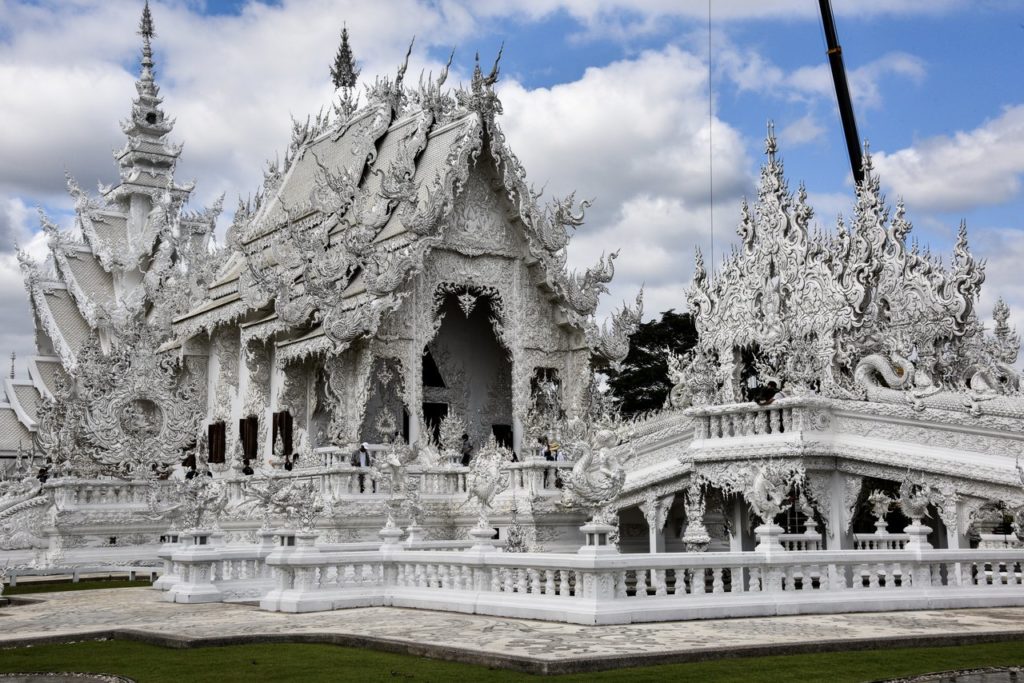
Day Trip To Chiang Rai White Temple From Chiang Mai

I’ve wanted to see Chiang Rai’s White Temple for ages. Everyone I met on my travels recommended it, and showed me the most incredible pictures they’d taken of it. So I started looking into how to plan a day trip there from Chiang Mai.

I know there’s much more to do in Chiang Rai than just the White Temple, but I was strapped for time so I couldn’t spend a few days in Chiang Rai like most people do. Instead I got up at 6am and set out for a day trip to Chiang Rai’s White Temple.

Traveling to Chiang Rai from Chiang Mai

I planned on getting the first bus at 7am, but after taking a little too long at breakfast (what can I say, I got distracted by food), I had to get the second bus at 9:15am. The bus was super easy to get, I just went to Chiang Mai Bus Terminal 3, and got my ticket from the Green Bus ticket counter. It only cost 245 baht each way (about $7 each way).

The bus took longer than I expected (about four hours) and the road was a bumpy one. In fact, in some places the road wasn’t even built yet, and we had to wait for the road to be laid before we could drive on.

I was expecting to get off at Chiang Rai bus station and then get a bus to Wat Rong Khun. But about thirty minutes before we were due to arrive at the central bus station, it stopped just outside the White Temple. I quickly grabbed my things and jumped off with a few other passengers.

Arriving at the White Temple

The road towards the temple was lined with market stalls and coffee shops. Normally, I would have said the street vendors ruined the atmosphere, but after four hours on a bus, I was thrilled to see a coffee shop right in front of the temple. I grabbed a surprisingly reasonably priced brownie and smoothie and sat directly opposite the temple to get a time lapse of the hundreds of tourists.

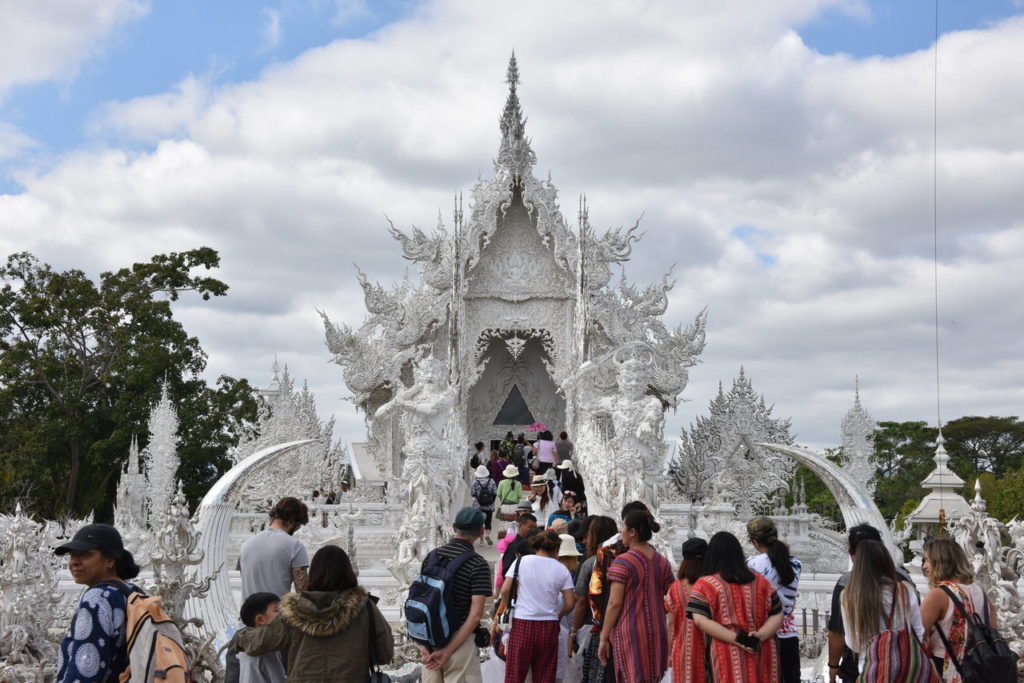
At first I was a little disappointed at how busy it was. There was a queue to get into the temple, and people EVERYWHERE with selfie sticks. I guess that’s what I get for arriving in the afternoon, rather than early in the morning. But despite the crowds, the White Temple was still an incredible sight to behold.

Understanding the White Temple

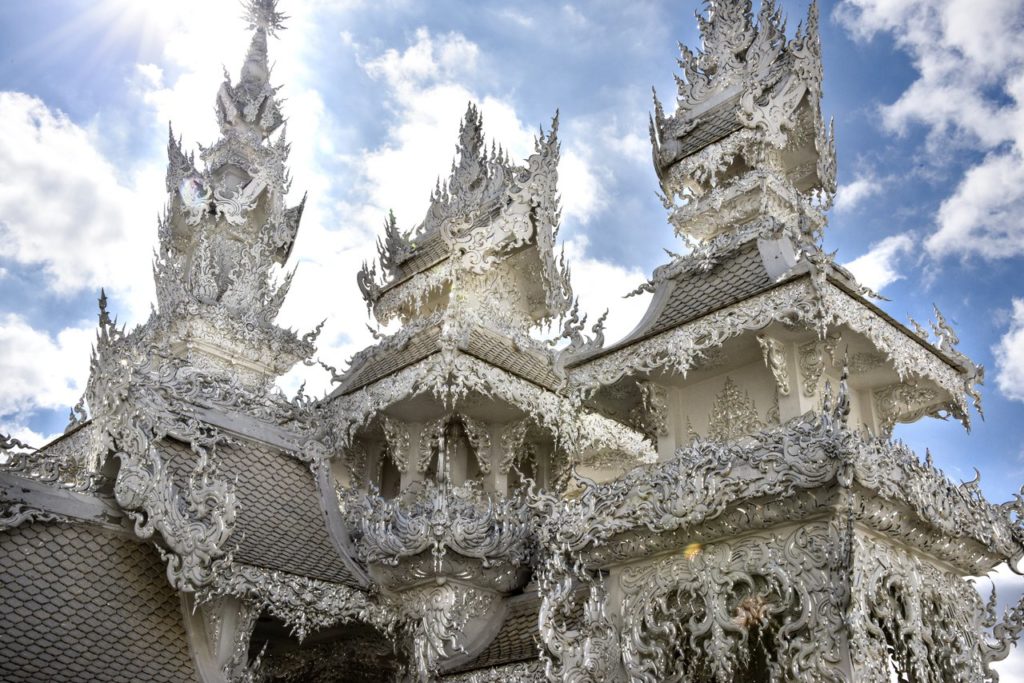
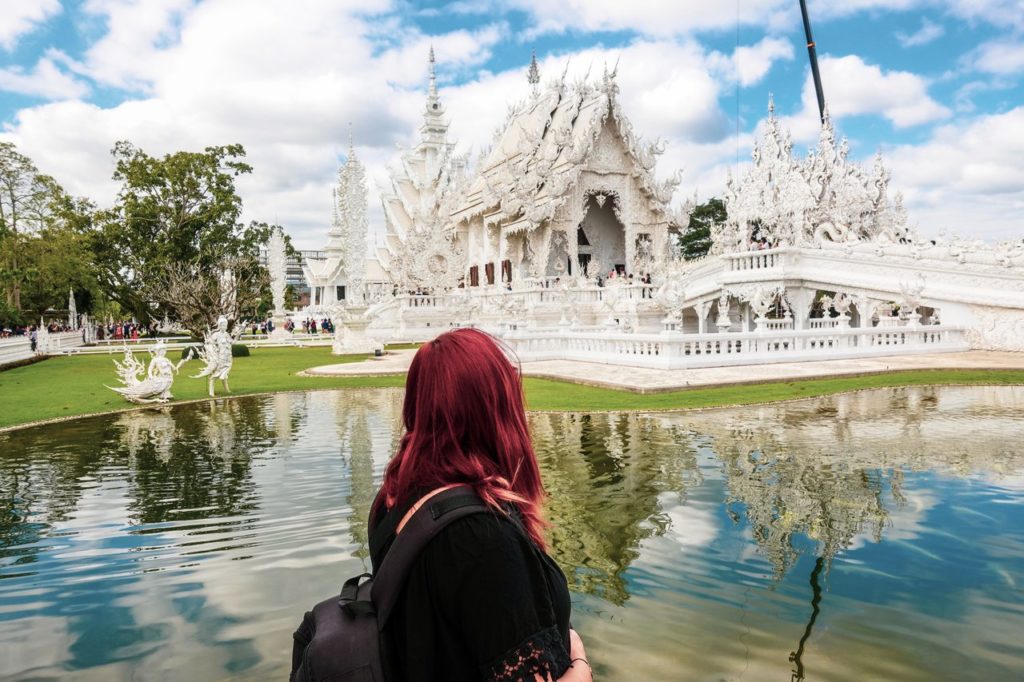
I quickly learnt that all around the temple was contrasts between good and evil. The White temple was symbolic of purity and the tiny mirrors all over the temple were tactically placed to reflect the teachings of Buddha.

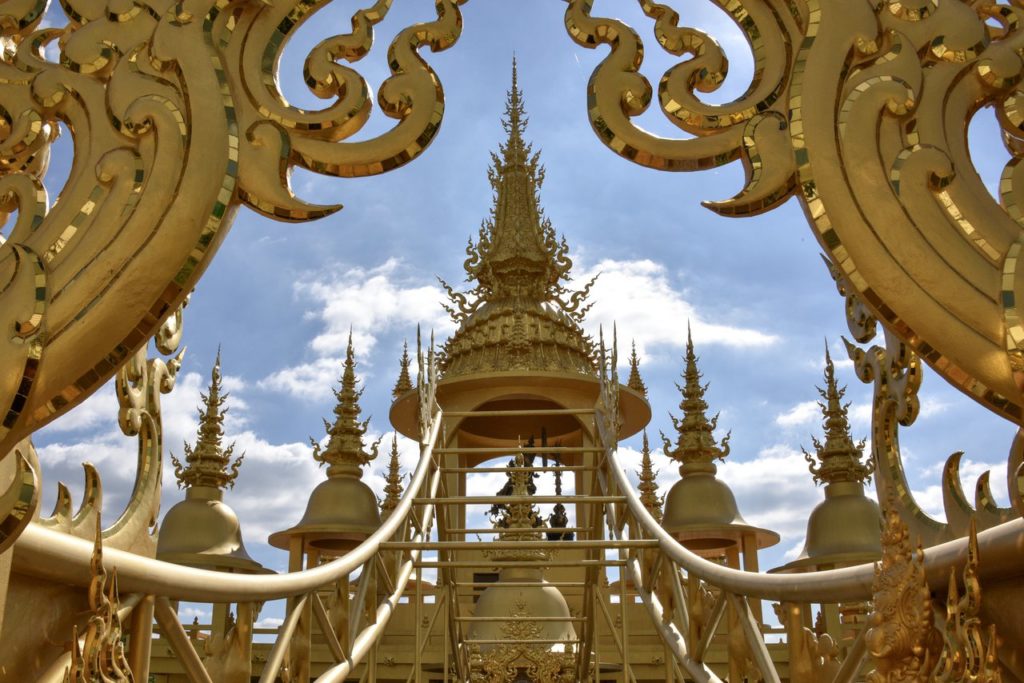
And to contrast the pure and good of the White Temple, there was a golden temple, and a golden toilet building. The gold of these buildings symbolises man’s desire and greed for money.

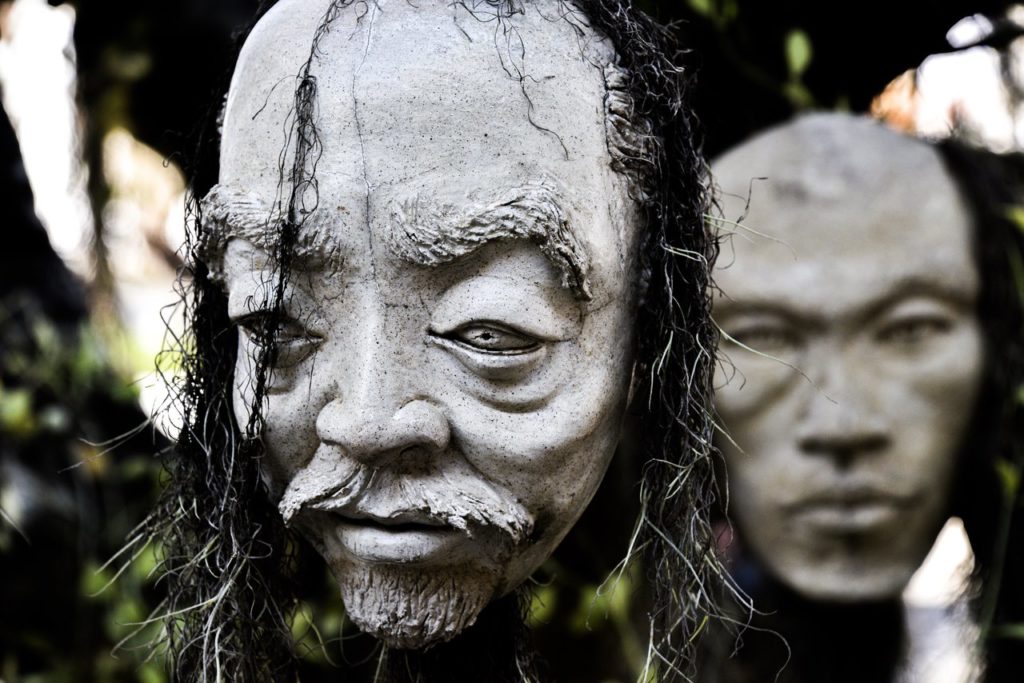
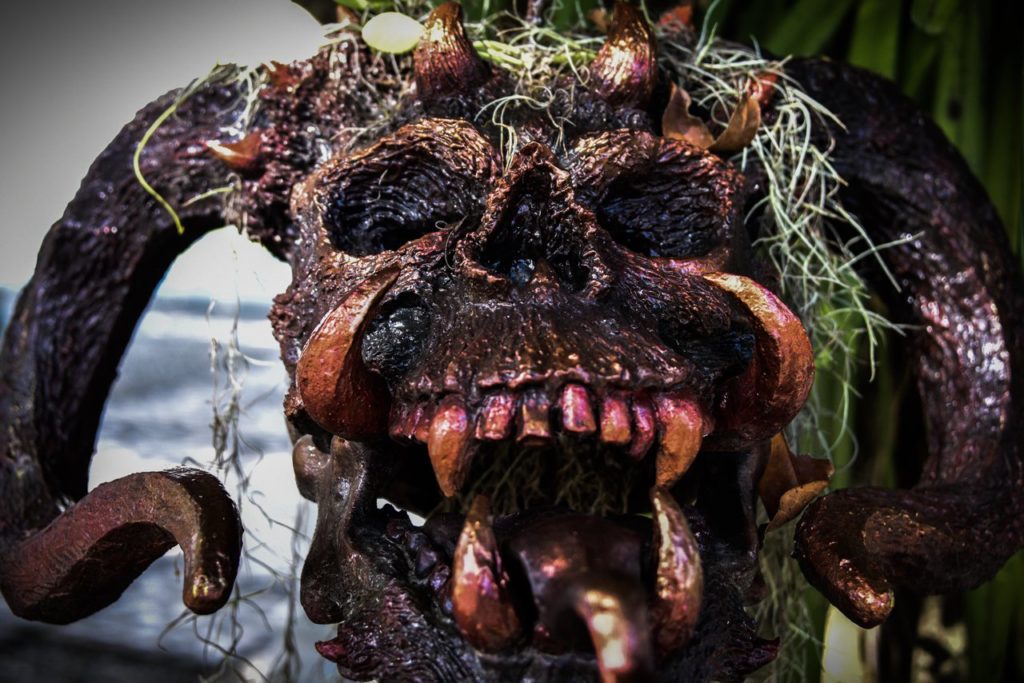
But there were lots of other, smaller contrasts between good and evil all around the temple complex. Just before the ticket counter there were trees with heads hanging from them (not real ones, obviously). Some were smiling, others were simply terrifying. It would be a great place to go at night, if you’re a fan of creepy stuff that is.

Underneath the bridge to the temple were hundreds of hands reaching up, apparently symbolising desire. The bridge represented rising above desire on the journey to purity.

I know there are lots of people who would probably disagree with me, but I found the small details around the temple just as impressive and interesting as the White Temple itself.

Each face, each statue and colour represented an emotion, a quality or a vice. I must have spent at least five minutes admiring each tiny detail.

Entering the White Temple

I’d hoped to get a perfect picture of the White Temple from the start of the bridge, but I should have realised that would be completely impossible with so many crowds.

But despite the hundreds of people rushing to see the temple, it was still incredibly impressive. First you have to walk over the bridge, over the sea of reaching hands, but each tiny part of the bridge was covered in sequin details, or more faces. So it’s safe to say, no one was moving very quickly.

We got to the White Temple entrance, and had to take off our shoes and carry them with us. Normally at temples you leave your shoes outside, but there’s no way that would have worked here, there were just too many people.

The inside of the temple was a little underwhelming compared to the outside, but still it was good to see. And walking around the temple’s veranda I got to admire the temple from different angles.

I even saw a couple of people that I’d met on Cat Ba Island (Ha Long Bay), so stopped for a catch up inside one fo the most impressive temples in the world.

Exploring the rest of Wat Rong Khun

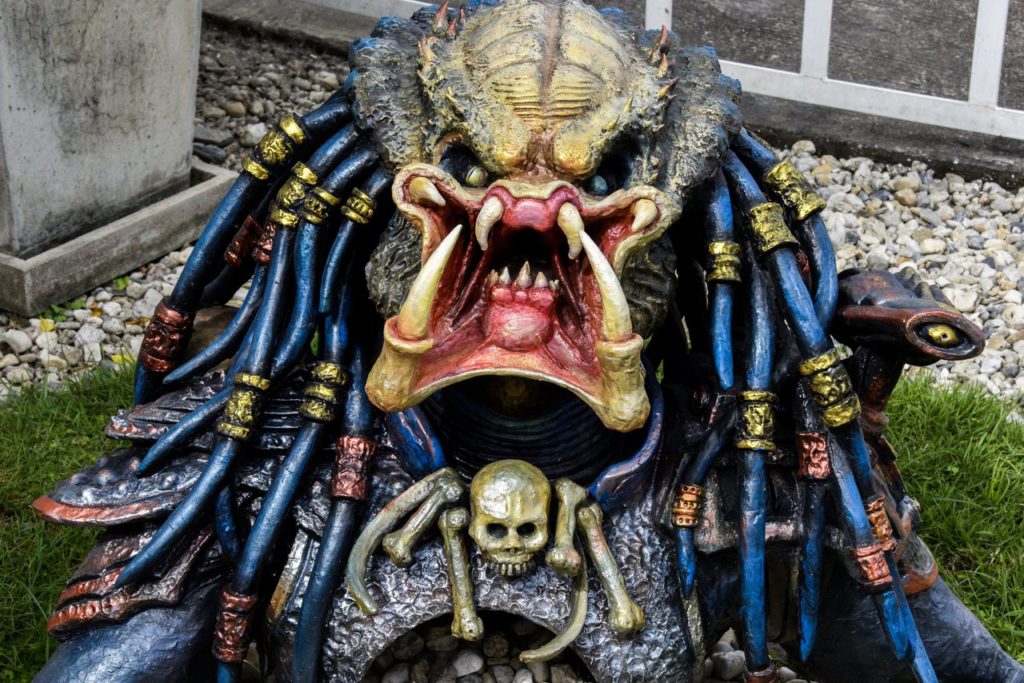
Wat Rong Khun has so much more to offer than just the White Temple. The theme of good and evil continued throughout the rest of the complex, with modern figures like Spiderman, and Predators dotted about in trees or on benches.

There was also another impressive white temple-like building in the same style of the White Temple, but nowhere near as crowded. This was a great spot for pictures and selfies without massive crowds in the background.

Then there was the golden temple, which I don’t actually think was a temple at all. It had a bridge leading over a lake, and then a walkway around the building. Inside I think was a small art gallery.

And I’ve got to say, a highlight of the rest of the Wat Rong Khun grounds was the toilet. The golden toilet building might have symbolised greed, but still, I felt like a royal whilst going for a wee.

Lunch at the White Temple

After the long bus journey and the excitement of exploring the White Temple, I’d worked up an appetite. There were a couple of coffee shops directly opposite the temple, and luckily there was one with a couple of seats free outside, facing the White Temple.

I wasn’t expecting much from the food, I was just pleased to have such a perfect seat. So I set up my camera and tripod and started a time lapse of the busy crowds.

The food was also surprisingly good. They didn’t have much on offer, apart from a few pastries, cakes and brownies, and some great smoothies, but it was all delicious.

Wat Rong Khun Art Gallery

Outside the temple complex there was a gallery which was well worth visiting. There was information about those that designed the White Temple, as well as small pieces from the original temple. There was also some weird and wacky paintings that I can definitely recommend to any conspiracy theorists.

Getting back to Chiang Mai

My bus back was from Chiang Rai bus station, so I had to get to the town centre. I could have got a public bus, but after a long day, to be honest, figuring out the timetable and waiting around for one seemed like too much hassle. So I ordered a grab, and got to Chiang Rai with time to kill.

When my driver heard I was early for my bus, he recommended his favourite cafe, so I thought I’d give it a try. And I’m glad I did. It was one of the best meals I’d had in Thailand, and it was right opposite the bus station.

The bus ride back was just as bumpy and long, and I got back to Chiang Mai at about 10pm. It was a long day, but so worth it.

The Deserted Theme Park Of Tuan Chau, Vietnam

After a week of sleeping on a rock hard bed, in a $3 per night hotel on Cat Ba Island (Vietnam) I decided to treat myself to a bit of a luxury. So I booked five nights in a 4* hotel, with a private beach and a steam shower on Tuan Chau Island. Perfection.

We arrived at the resort after getting a ferry and bus over to Tuan Chau from Cat Ba, and it was perfect, it was everything we could have hoped for. The beach had miles of untouched sand, and hammocks hanging from the Palm trees. I’d upped my budget to $50 a night, and it was worth every bit of that.

But after a few days of relaxing with fried noodles and cocktails on the beach, I started to get itchy feet. It was time to explore the island properly.

Tuan Chau – the ‘touristic’ island of Ha Long Bay

I’d read online that Tuan Chau was the ‘touristic island’ of Ha Long Bay, it was even marked on Google Maps as Touristic Centre, but the second we stepped outside the resort we knew there must have been some mistake.

Admittedly, we visited in October, which I guess is low season, but I’ve never seen a place so run down and eerily empty.

There was life-size Disney figurings laying damaged and scattered over the different gardens. It was like a graveyard of children’s dreams.

Then there was the fact that every shop was completely empty, no furniture, nothing, some of the buildings were half built, and there wasn’t a soul in sight.

We walked to the ferry port to get some snacks, as this seemed to be the only place that was 1) open and 2) not entirely deserted. There was a security standing outside, guarding the entrance, looking stern as they do, and when we walked into the building and into the convenience store, he followed us the whole way round, keeping uncomfortably close. I’ve never had such a tense snack-buying experience. I grabbed my cashew nuts and got out of there ASAP.

Just outside of the port was a YOLO bar. We’d been to a YOLO bar before in Siem Reap, with free beer pong and pool but this one was nothing like the chilled out backpacker bar in Siem Reap. We walked in and saw big black curtains hanging, blocking our view of the main bar. When we tried to walk through the curtains, three men starting shouting and quickly escorted us out.

Confused at why everyone on the island seemed annoyed at two tourists on the supposedly ‘touristic’ island, we headed back to the resort, back past the fallen Disney statues, and the empty buildings.

The deserted amusement park

On our walk back, we decided to stop off at a theme park that was literally just opposite our hotel. We’d heard loud music and seen sweeping spotlights each evening coming from the park, so we thought we’d check out what seemed like the one lively place on the island.

We got to the ticket office, and asked about the show, which turned out to be a dolphin show. So we booked tickets for 8:30pm and started to head back to grab some dinner before the show (it was only 5:30). But as we were walking away the ticket lady called out to us, telling us we could enjoy the rest of the amusement park before the show started.

Thrilled that for about $10 our tickets also included a theme park, apparently with roller coasters, arcades, and funfair rides, we jumped at the chance.

But the second we went through the ticket barriers we realised we’d made a mistake.

We walked up the hundreds multicoloured steps that faced an empty pool/fountain, and with a view over the whole park we realised we were the only ones there. There weren’t any workers, and there definitely weren’t any tourists.

The rides were all lit up, flashing spookily, with no one there to operate them. But what was creepier that around the rides – the children’s rides – was barbed wire lining the fences.

After walking through the rides and determining that they definitely weren’t the sort of rides you could operate yourself, we walked further into the park, walking through the forest until we came to a huge water arena. We could see the jets where a fountain would be, and the seats surrounding the arena, but again, there was no water, and no people.

The sun was setting, and soon we found ourselves in the pitch black, walking through a forest path with an abandoned kids’ play park on one side and the deserted water arena on the other.

It’s safe to say we were pretty freaked out, being completely alone in a deserted theme park, on a deserted island, with only rats to keep us company. Oh yea, didn’t I mention, there were rats running around the park having a great time.

We walked back towards the rides, because at least they were lit up and noticed that just beyond the rides, just past the perimeter fence of the park was a huge ditch where more Disney figures and kids statues lay abandoned and dirty in a pile.

As if that wasn’t creepy enough, a topless man, covered in dirt from the ditch walked slowly through the rubble and statues. Slowly he turned to look at us, and altered his course, walking in our direction.

Now, in the hard light of day, I’m fully aware that this guy probably worked there, and was likely coming to tell us about the park, but in the dark and silent theme park, I was already spooked, and so when I saw a strange man arising from the ruins of Disney statues, I did the only logical, and very British thing: I turned around and walked away as briskly as I could (you won’t catch me running).

I’m not sure why at this point we didn’t just go back, we were both thoroughly freaked out, but we thought we’d walk to the dolphin arena and see if that was as creepy. We followed the signs past the empty games room and kids’ soft play area, using our torches to guide the way, and in the dark we saw a family sat around a corner, eating a meal in the dark. Worried about what sort of characters eat their dinner in an abandoned theme park, on the floor, we didn’t stop to chat, but continued on towards the dolphin arena.

The path took us down a hill, further into darkness, before we reached the arena, which was right next to the main road. The arena was shut and padlocked, with no lights on – clearly they weren’t preparing for the evening show. There was also a gate that led out onto the main road, which was also locked with several padlocks.

That was it, we’d finally had enough of the dark, deserted park, so we made our way back to the entrance. When we got there the man who had let us in was gone, the ticket barriers were all shut, and the one gate out was padlocked.

I’m not going to lie, at this point, I was prepared to pole vault my way out of the park, I’d had enough, it was just too weird. Who lets people into a completely empty theme park and then padlocks the exit gate?

As we frantically tried each of the ticket barrier turnstiles, the lady from the ticket office appeared and asked us what we were doing – as if we were the strange ones for wanting to leave the world’s creepiest theme park. When we asked what was wrong with the park, and why everything was shut, she looked astounded.

For a while we had her try to convince us that the park was fully open, and that we should enjoy it, but eventually she let us out of the padlocked gate and stamped our hands in case we wanted to come back.

It’s safe to say, we didn’t go back, not even for the dolphin show that we’d paid for. The thought of once again being padlocked in, but this time inside an enclosed dolphin arena just didn’t appeal to me, so instead I spent the evening googling things like ‘why is Tuan Chau a ghost island’, ‘haunted amusement park Tuan Chau’ – you get the gist.

The mystery of Tuan Chau deepens

Slightly traumatised by the experience of wandering alone through an abandoned theme park and then being locked in, my imagination was going wild. So when my google searches returned a complete lack of any real information about the island, I got even more hyped up.

Everything is on Google. Everything. Sure you might occasionally stumble across a cafe or whatever without a website, but you can normally find just about anything on TripAdvisor, Reddit, and other travel forums. But we were getting nothing, just a government page stating that the island was the tourist hub of Ha Long Bay (it definitely isn’t).

The next stage in my detective work was to find out what the locals call the theme park. Eventually I found the Vietnamese name for the theme park, after looking through endless leaflets and websites, typed that into Google instead.

This got me a little further. I found the Google Business Page for the theme park, which meant I also found the Google reviews.

But the Google reviews just fuelled my imagination more. There had been no reviews for months, apart from a picture of one man standing outside the gates, holding a child and forcing a smile – he definitely didn’t look like he was having a good time, and he wasn’t even inside the park.

Most reviews were from 2012, and after scrolling through I realised that a lot of the reviews were actually written by the same person. Either that’s one very happy customer who returns every month or so, or someone’s going to great lengths to make this place look legit.

After going through what felt like every single Google result, it seemed that park has been mostly empty since 2012. The 2012 pictures show the theme park thriving and full of people, so what’s happened since? Was it just that I visited during low season? But even that doesn’t explain the lack of recent reviews. Perhaps no one has actually lived to tell the tale.

Okay, okay, that’s probably a little far fetched, but still, this was a spooky experience. I never did find out the full story behind the theme park, but still I’m curious. I asked my hotel reception staff about the park, but they refused to comment on whether or not it was worth visiting – perhaps because of the language barrier, perhaps because there’s a little more going on than meets the eye.

If you’ve got any theories or you know why Tuan Chau is such a ghost town, I’d love to hear your thoughts! I might even publish them as a second article! So don’t hesitate to contact me with your thoughts and theories!

I also managed to film some of the experience, so if you want to check out the abandoned theme park video, watch it below!

26 Things To Do In Siem Reap Besides Temples

Siem Reap is known around the world as the home of Angkor Wat, so most people visit the city to explore Cambodia’s most famous temples.

There are enough temples in and around the city to fill a week-long trip, but there’s only so many temple visits you can manage before getting ‘templed out’. So what else is there to do in Siem Reap beside Angkor Wat and the many temples?

Here’s 26 things to do in Siem Reap, besides temples.

1: Phare Circus

Phare is Siem Reap’s Cambodian Circus, and it’s famous around the world. It’s a small and intimate performance, but it’s one of the best circuses you’ll ever visit.

There’s everything you could hope for from a circus, from gymnastics, to comedy, to death defying stunts. And each performance tells a different story, which is usually a Cambodian folk tale.

I went to see the Sokrias (Eclipse) Phare performance, which told a story of rejection, revenge and forgiveness. But there are 10 different performances and storylines, so if you want to pick a certain storyline it’s worth checking out the ‘our shows’ section of their website.

Here are some of the highlights from the Eclipse performance:

It’s not just the performance itself that makes Phare worth the visit. The story behind the circus is that it was created by two guys who returned to Cambodia after spending time as refugees during the Khmer Rouge.

They set up the circus to provide opportunities to those from disadvantaged backgrounds. So young people from vulnerable households can join the circus, master the arts and receive an education. So it’s a great way to give back to the Cambodian community.

2: Go shopping at the Old Market

If you’re used to western prices, the Old Market is shopping heaven. You can find just about anything for under $5.

There are silk scarves, hand painted bowls, harem pants and all sorts of clothes, and trinket-type souvenirs. Just remember to haggle! You can get some real bargains; you just need to barter a little.

And prepare yourself for a very social shopping experience. Once you’ve entered the market, you’ll have people calling ‘lady!’ or ‘sir!’ from every direction. Everyone wants you to buy from them, and with most of the stalls selling more or less the same things, the market stall owners will work hard for a sale.

3: Visit the night market

The Angkor Night Market sells much the same as every other market in Siem Reap, but there’s something a little thrilling about shopping at night. There’s beer, there’s great snacks, and there are endless souvenirs on offer.

4: Get a cheap massage

Massages in Siem Reap are so cheap I could hardly believe it. I’m used to seeing massages on offer for over a hundred dollars, but you can get a full body Khmer massage for $6 in Siem Reap!

There are different types of massage, and the ones with oil are more expensive, but still most are under $10 for an hour.

We had a traditional Khmer massage, and it was amazing. Just beware of Thai massages, they’re cheap but apparently they involve a fair amount of pain and cracking!

5: Pamper yourself with a manicure or pedicure

It’s not just massages that are cheap in Siem Reap, you can also get a manicure or a pedicure for a couple of dollars.

You can choose between 30 minute and 60 minute treatments, but both are going to be $5 of less, and the results are super soft hands and feet, and gorgeous nails.

6: Visit the floating villages

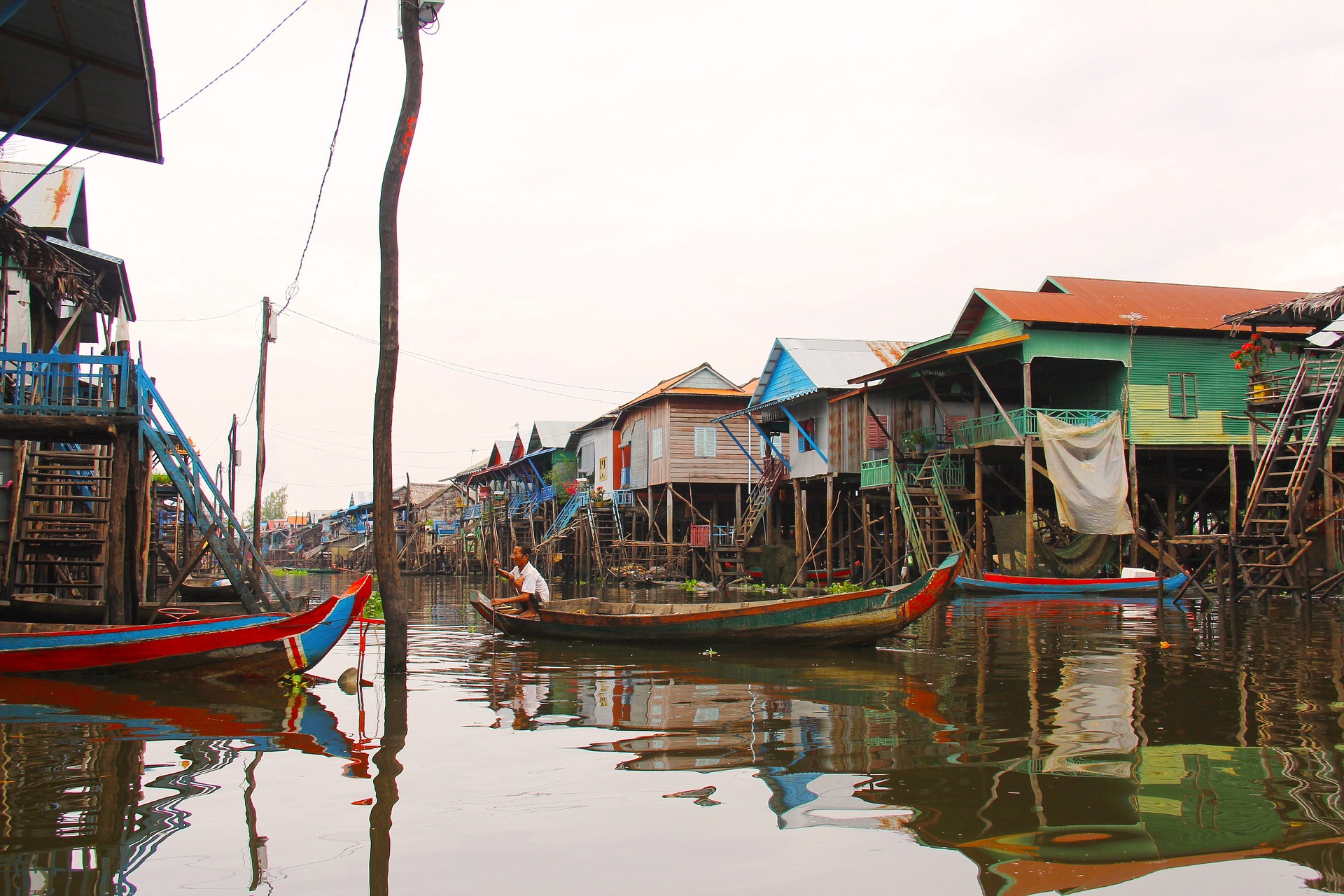
Visiting the floating villages on Tonle Sap lake is a great way to immerse yourself in Cambodian culture. You can travel by traditional wooden boat through the floating communities, and see fish farms and local markets.

Some tours even include a sunset on the lake, which makes for some great pictures.

7: Visit the rats that can detect landmines

Cambodia is still riddled with land mines that are left over from the Khmer Rouge, and slowly they’re trying to get rid of them all (because no one wants old, unexploded mines laying around). But they’ve found an unusual way of finding landmines quickly, and without the help of expensive tech. They use rats.

Rats can sniff out mines, and aren’t heavy enough to trigger them, so there’s a whole team of hero rats who are making Cambodia a safer place.

And you can visit these rats! The Apopo Visitor Center is open to the general public, and you go and watch the rats in action, whilst learning about Cambodia’s history of conflict.

You can book a museum tour that includes the Apopo Center here.

8: Visit the war museum

Siem Reap’s war museum is an eerie outdoor collection of the tanks, planes, mines, bombs and guns used in the Civil War. The field that houses the war display was once a killing field, which makes the museum a little more hard hitting.

You can walk freely around the museum, or join a tour run by one of the museum staff. The tour doesn’t cost you anything extra, they just ask for a small tip.

Generally, they’ll run the tours as and when there’s enough people, but it’s worth waiting until one starts. You’ll hear all about the Civil War, and Cambodia’s attitude to its past.

The War Museum are also doing their best to encourage people to learn about the past, in the hope that it will stop any future wars.

You can buy your War Museum admission ticket here.

9: Visit the land mine museum

The Land Mine Musuem is a great place to learn about the Civil War, and you can even see land mines exhibited.

The museum was started by an ex-child soldier, who returned to Siem Reap as an adult, and began removing the land mines that he had laid as a child. He removed them by hand, made them safe and then charged tourists $1 to look at them.

Nowadays though, the museum has come a long way, and it’s one of the most visited attractions in Siem Reap.

The museum also doubles as a Relief Facilities, where children are given food, lodgings and free education. And the money the museum raises goes towards creating schools and delivering free education to Cambodia’s children.

10: Take a trip to Phnom Kulen National Park

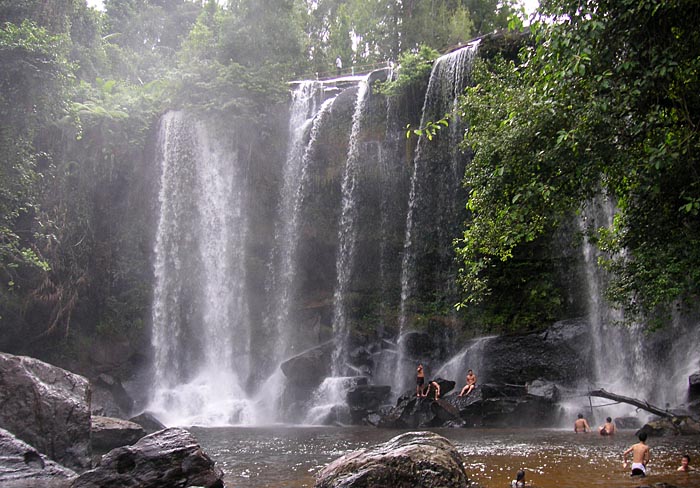
Phnom Kulen is quite a way out of the city, but it’s definitely worth it. You can hike up the mountain, and visit the temple at the top. You can also join the locals and go for a swim in the waterfall.

It’s one of Cambodia’s most beautiful national parks, and there’s plenty to see and do there. You could also combine it with a visit to the River of A Thousand Lingas.

The best way to visit Phnom Kulen is on a group tour, as you’ll have your admission fees, transport and lunch included.

11: Zip through the jungle at Angkor Zipline

Flight of the Gibbon might have closed, but Angkor Zipline now offers thrilling treetop adventures in Angkor Park.

There are different courses that include zip lines, rope bridges and even a leap of faith. There’s also a ‘honeymoon’ zip line for the couples. And most courses include a local lunch too.

You can book your zip line adventure here.

12: Angkor National Museum

It’s always good to learn a little more about your destination, and the Angkor National Museum is the perfect place to do just that.

There are exhibits and information about the different stages of Cambodian history, as well as Angkorian artefacts for you to browse.

You can buy your Angkor National Museum admission ticket here.

13: Grab a dollar smoothie

This isn’t something that’s going to keep you entertained for very long, but nevertheless it’s something you should do whilst in Siem Reap.

You’ll see hundreds of smoothie stalls around the Old Market area and the temples, and you have to try at least one during your stay.

If you’ve got time, you should definitely try a few different ones. There are so many different flavours, and they’re so refreshing and cooling.

Most of them are made with milk, but if you use Google Translate to ask for it without milk, you’ll get more of an icy slushy style drink (which is just as delicious, and vegan!).

14: Party on Pub Street

Siem Reap’s Pub Street is perfect for those that want to party. There are bars with free pool, free beer pong tables, and club-type bars with dance floors and blaring music. So whether you want to dance, play drinking games, or just enjoy a drink with friends, pub street is the place to go.

You can get beers for $0.50 and cocktails for $1.50, and if you walk up and down the street before going into any bars, you’ll be handed a load of leaflets for free drinks.

Even if you’re not a big drinker, it’s worth visiting this street at night just to see and soak up the atmosphere. The street is full of music, there are people dancing their way down the road, and with the night market spilling onto pub street, you can combine a pub trip with a shopping spree.

15: Get competitive at the Angkor Wat themed crazy golf

Angkor Wat Put is a crazy golf place that’s popular with expats, but just as welcoming for tourists. For just $4 per person you can play 14 holes, and most holes are temple-themed too. There’s also a bar on-site, so you can enjoy a few drinks whilst you play.

And there are prizes too! For every hole in one you get, you get a free beer, and if you make it onto the leader board you get a free t-shirt.

16: Go on a food tour

If you consider yourself a foodie, you need to go on one of Siem Reap’s food tours. You’ll get the chance to taste the flavours of Cambodia, and learn about the local delicacies.

There are different types of food tour, including vegetarian food tours, and even if you’re a little fussy, you don’t have to try everything if you don’t want to.

17: Take a cooking class

Another food related activity, cooking classes are a great way not just to taste the local cuisine, but also learn how to make it.

There are lots of different cooking classes in Siem Reap, you’ll often see them advertised in restuarants, but you can also book online too if you want to.

I went to a vegetarian cooking class at the Peace Café, and I couldn’t recommend it more. You can’t book online, you just need to book through them at least a day in advance. It was $20 each, but it was just us in the class, so once we’d made all the dishes we had an absolute feast to get through!

18: Go to a dinner and dance show

The Aspara dance is a famous dance from Cambodia, and a big thing in Siem Reap is dinner and dance shows. You pay a set amount for a buffet dinner, and whilst you eat you get to watch a live dance performance.

19: Snack on bugs at the bug café

If you’re brave enough, you can try a slightly more unusual local delicacy: bugs. That’s right, in Siem Reap you can snack and feast on all kinds of bugs, from crickets, to meal worms, to deep fried tarantulas.

And if you’re going to try it, there’s one place in particular you should go: The Bug Café. This café doesn’t just serve you straight up bugs, oh no, instead they create gourmet meals, but with insect meat rather than your normal pork, chicken or beef.

You can try bug burgers, ant spring rolls, bees egg soup, or if you’d rather go for some liquefied creepy crawlies, you can try a silkworm smoothie or a scorpion infused shot.

20: Visit the Cambodian Cultural Village

The Cambodian Cultural Village is basically like a huge park that encompasses everything Cambodian. Within the park you can visit the wax and taxidermy museums to learn about Cambodian culture and wildlife, and then you can wander around what is basically a mini Cambodia.

There’s reconstructions of Khmer towns and buildings from different periods in history, a floating village, sleeping Buddha and a waterfall to explore.

There’s also a zoo, which I didn’t realise, but I was quite shocked at how little space the animals had.

21: Go quad biking

I always like to do at least one adventurous activity at each destination, and quad biking through Cambodia’s countryside was too good of an opportunity to miss.

You can quad bike through local villages, and rural countryside, and even visit a temple. I definitely recommend quad biking at sunset though, because the views are just incredible.

You can book your Siem Reap quad biking tour here.

 22: Go horseback riding

Whether you’ve ridden before of not, horse riding through the countryside is a great day trip. You can master the skill of horse riding, if you haven’t before, and take in stunning views of rice fields, rural villages and temple ruins whilst feeling like a cowboy.

You can book your horseback riding tour of Siem Reap here.

23: Go for a countryside bike ride

There are loads of different ways you can explore Siem Reap by bike. Whether you want to cycle around the temples, or pedal your way through the countryside, perhaps to the edge of Tonle Sap, there’s a whole number of affordable tours you can join.

Cycling through your destination gives you the chance to stop at any point and explore an area further. It’s also quite liberating to feel the sun and wind beating down on you as you cycle. Plus, cycling is a great way to get a tan in Siem Reap.

24: Take part in a yoga class

Siem Reap is a very Zen destination, which means there are more yoga classes than you can imagine. Different restaurants and studios offer private and group yoga sessions for advanced yoga enthusiasts and beginners alike.

A yoga class can be the perfect way to meet new people, and unwind after a long day of sightseeing.

25: Chat with a monk at the Peace Café

This might sound like a bit of an odd one, but if you’re visiting Siem Reap, then you’re visiting one of the most Buddhist countries in the world, and it makes sense that you’d want to know more about it.

The Peace Café offer a ‘talk with a monk’ on set weekdays, and the idea is that you can ask them any questions you might have about Buddhism, and how you can adopt Buddhist values and practices.

26: Take part in a pottery class

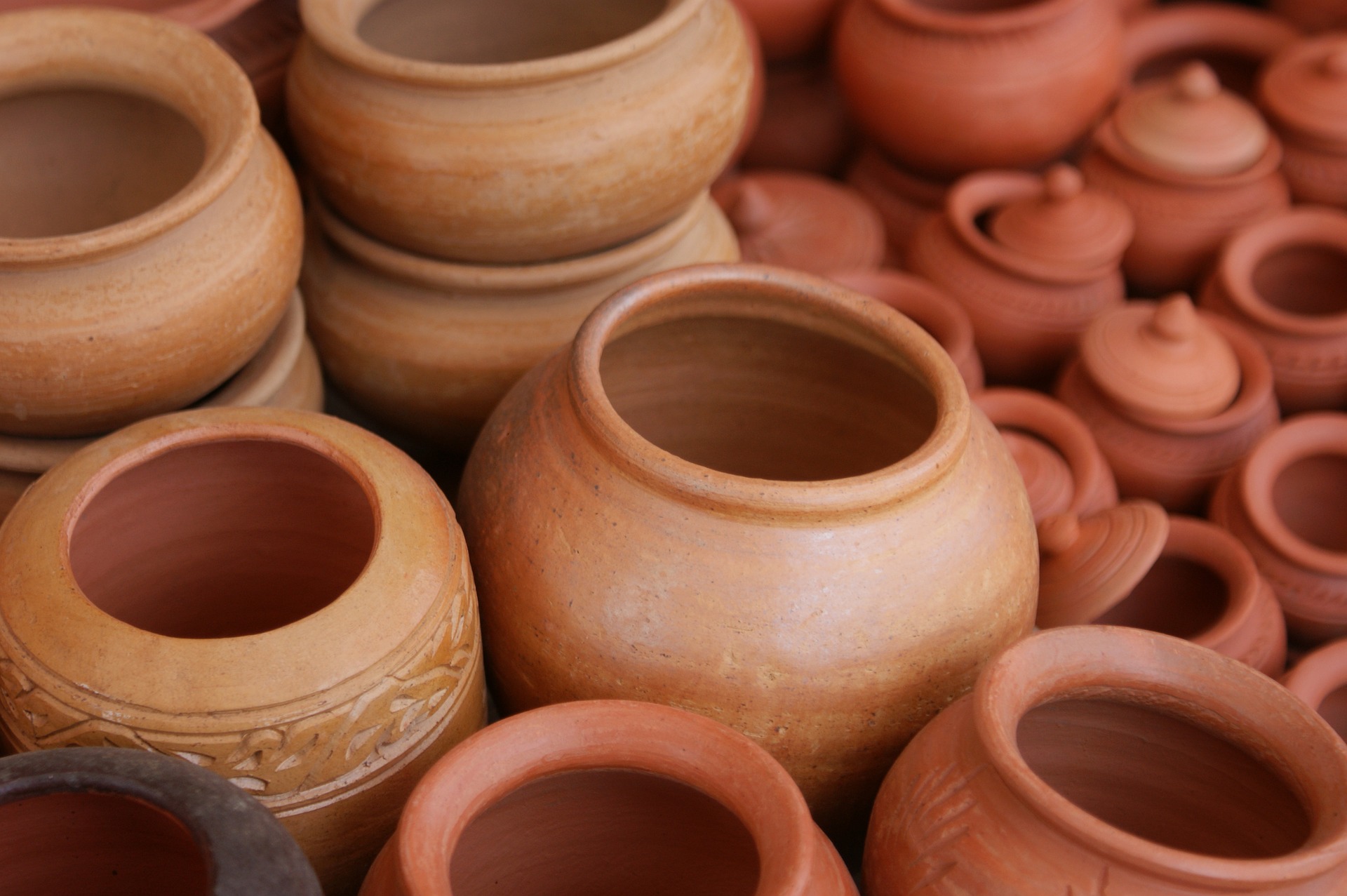
Why not learn a local craft whilst you’re in Siem Reap? There are several different pottery classes in the city that will give you the chance to master pottery like a local, and take home a souvenir traditional Angkor-style bowl.

You’ll get to mould the bowls you make, and then carve a design into them. It’s the perfect thing to do in Siem Reap for those who want to unleash their creativity.

So to sum up…

There are enough Siem Reap activities in this list to create an almost-month-long itinerary, and I haven’t even mentioned any temples. So if you’re worried about getting templed out in Siem Reap, work in a few of these excursion and activity ideas to your itinerary and you’ll have the perfect balance.

Everything You Need To Know About Tuk Tuks in Siem Reap

You might be used to Grab taxi or Uber, but in Siem Reap, it’s all about tuk tuks. Seriously, they’re everywhere, and they’re the main method of transport for most tourists.

Now I don’t know about you, but before I visited Siem Reap, I’d never been in a tuk tuk, and if I’m quite honest I wasn’t entirely sure what they were.

But after spending a number of weeks in Siem Reap, traveling by tuk tuk at least once a day, I came to love them.

Here’s everything you need to know about traveling by tuk tuk in Siem Reap.

What is a tuk tuk?

A tuk tuk is a kind of open carriage with two wheels that’s attached to the driver’s motorbike. It can seat up to four people, and it’s the main form of transport in Siem Reap.

Personally, after being in Siem Reap for a few days, I decided that tuk tuks were by far the best way to travel. You get to take in the fresh air, and enjoy the view. Plus, the lack of a seat belt gave me all the adventure I could hope for in one day.

Hiring a Siem Reap Tuk Tuk driver

You don’t need to worry about where to find a tuk tuk driver in Siem Reap, they’ll find you. Tuk tuk drivers are everywhere around the old market and the temples, so wherever you are and wherever you’re going, you’ll be spoilt for choice.

If you’re staying in a hotel, it’s worth asking if they offer a free tuk tuk service, as a lot of the bigger hotels offer free tuk tuks to the old market area.

If you’re hoping to visit the temples, you’ll want to hire a Siem Reap tuk tuk driver for the day. This way you’ll pay a set rate, and they can work out the best route based on what you want to see.

Siem Reap Tuk Tuk Prices 2018

The cost of a tuk tuk journey will depend on how far you’re going and what tuk tuk you’ve chosen.

There are a few different tuk tuks around the city that have been pimped up, like the Bat Mobile Tuk Tuk and the entirely pink and fluffy tuk tuk, and naturally these cost more than your standard, non-pimped tuk tuk.

But for a journey from one part of the main town to another, your ride should be between $2 and $5. And it’s not like taxis, where the cost goes up after or before a certain a time. So if you’re coming back from pub street in the early hours of the morning you’ll pay the same sort of price. To give you a better idea, it cost me $2-3 each day to travel 1km away from the old market.

For day trips to the temples though you’ll pay considerably more, because they’re quite a way out and your driver will be with you all day.

Tuk tuk prices for Angkor Wat and other temples generally range between $30 and $50. But they’ll drive to a range of different temples of your choice, help you plan your day, recommend restaurants and some even supply you with ice cold drinking water throughout the day.

If you want to get the best tuk tuk price, it’s worth finding a driver and staying loyal. If tuk tuk drivers know you’re planning on using them for most of your day trips they’ll often offer you a better deal.

Angkor Wat: Should you go by tuk tuk or car?

If you’ve never been in a tuk tuk before it can be tempting to go with what you know and pay for a car and a driver. But this is going to cost you more and it’s not actually as enjoyable.

Tuk tuks are maybe a third of the price of cars in Siem Reap, and you’ll get the experience of traveling like a local and feeling the wind against your face as you race through the bumpy streets.

Best tuk tuk in Siem Reap

Most tuk tuks are basically the same – it’s a motorbike with a carriage attached. But if you’re looking for a truly unique experience, you could always go for one of the novelty tuk tuks.

There are movie-themed tuk tuks, colour-themed tuk tuks, and simply tuk tuks with booming sound systems (and before you ask, yes you can plug in your own phone and choose your own music).

Tuk Tuk safety

I’m a great advocate of tuk tuks, but I’ll admit, they’re not as safe as cars. They’re more prone to accidents, mainly because they’re more unstable and can’t cope with bad roads as well as cars.

However, they’re great for short rides around the city and to the temples, just maybe consider a car for the further out temples like Beng Mealea and Phnom Kulen National Park.

You can also make your tuk tuk ride much safer just by keeping your wits about you.

Tuk tuks are a bumpy ride, and there’s nothing really to keep you or your belongings in. So hold on to your hats and sunglasses, and try not to drop anything valuable whilst you’re on the go.

You should also always clarify a price before getting in, you don’t want to get ripped off, and a tuk tuk driver will always stick to the quote he gave you.

Tuk Tuk tipping etiquette

People often ask if you should tip tuk tuk drivers, but the short answer is no, not usually. Tipping is a western tradition, and most tuk tuk drivers don’t expect it, not for short one-off trips anyway.

It’s okay to say ‘keep the change’ and drivers won’t be offended by a tip at all, just know that you’re not obliged to, and you won’t be frowned upon if you don’t.

However, if you’ve hired one driver for most days of your trip, and they’ve treated you well, it’s usually the done thing to give them a tip at the end of your stay. It doesn’t have to be a lot, maybe $15-$30 at the end of your trip.

12 Things You Should Know Before Climbing The Great Wall Of China

So recently I climbed the Great Wall of China, from Jingshanling to Simatai, and in more ways than one, it was not what I was expecting.

Every few minutes, I found myself thinking ‘I wish someone had mentioned this online’. I think, to put it simply, I just wasn’t mentally prepared.

I’m not going to be one of those people that pretends I ran the entire length of the Great Wall without even breaking a sweat, instead I’m going to be brutally honest: it was hard work. So hard in fact, that in my exhausted state of mind, I genuinely wondered how much it would cost to get someone to air lift me off of the wall, and back to safety.

This might sound like an exaggeration, and of course I would never actually have called myself a helicopter because 1) that would be ridiculous, and 2) that would have been the worst Great Wall victory story ever.

But the point is, I lived to tell the tale, and tell the tale I shall. So for those about to embark on an adventure on the Great Wall of China, here are 10 things you should know before doing so, so that you can mentally prepare yourself for what’s to come.

1) Climbing the Great Wall is hard work

The Wall stretches for thousands of miles, and climbing even a bit of it is hard work. Okay, if you go to the restored, more popular areas, like the area with a Starbucks built into the side of it, it’s going to be a little easier to wander about. But if you want to walk a good stretch of it, and go beyond the tourist sections, you’re in for a hard hike.

I walked 12km of the Great Wall, starting from Jinshanling, expecting a moderate hike, but 20 minutes in, I realised I was sorely mistaken.

Flat paths are few and far between on the Great Wall, instead, there are hundreds of rises and falls, with tall steps and ridiculously steep slopes.

If (like me) you’ve got short legs, the Great Wall isn’t going to be a walking experience, or even a hiking experience, it’s going to be a day of climbing. I had to use both my hands and feet to pull me up the Wall, and when it came to the steep downwards slopes, I won’t lie, I ungracefully stumbled and bum-shuffled my way down.

That being said though, it only took just over 3 hours, and whilst it was hard work, it was 100% worth it. Plus, I was able to indulge in a calorific meal afterwards, completely guilt-free.

2) It’s very, very high up

I never realised I was scared of heights, until I climbed the Great Wall. One thing I definitely wasn’t expecting was the sheer height of it.

Because I visited a relatively untouched section of the Wall, in spots the Wall had crumbled, giving way to massive drops. One wrong foot and I’d have tumbled off the Wall, into the Jungle.

At first, I hardly noticed the height, but as the slopes got steeper, with nothing to stop me from sliding down, and over the edge, my legs started to wobble a little.

When someone suggested we take a seat on one of the steepest slops, to take in the view, I reluctantly sat down, but sat clinging to the slates beneath me, and keeping my eyes shut most of the time.

3) The steps are not suited to those with short legs

The steps were much easier to tackle than the slopes, but still, they definitely weren’t built with shorter people in mind.

I’m 5ft3 and a lot of the steps were as tall as my waist, so I had to do some serious gymnastics to get up and down them. And when I say gymnastics, it wasn’t anywhere near as graceful as that.

4) There are some scary insects on the Great Wall

We’ve all read about the scary creatures that live in Asia, from the Asian Hornet to the Botfly, but what they don’t tell you is these critters apparently love to hang out at the Great Wall.

In the crevices of the Wall lurked spiders and beetles, and hornets and paper wasps seemed to be everywhere.

Looking back, I think the insects might have been what kept me going. Every time I stopped for more than a few moments, something would scuttle across the path in front of me, or buzz in my ear.

5) Don’t walk up to the Great Wall, take the cable car!

Before we started our walk on the Great Wall, we were given the option to either walk up to the Great Wall, or take the cable car.

We opted for the cable car, and after talking the rest of our group who walked it, we knew that we’d made the right decision.

Climbing the Wall was hard enough, and I can’t imagine how much harder it would have been if I’d have used all my energy on the 6km climb up to the start of it.

6) There was no one around for miles

The last thing I wanted was to go to a section of the Wall that was just a tourist trap, so I was pleased when we were the only group at Jinshanling. I could get perfect shots without having to battle through crowds, and without the risk of anyone’s head appearing in the bottom of my photos.

Although I was on a tour, we were simply given the instructions to walk the Wall at our own pace, and take the exit at the 500thtower or something like that, so after twenty minutes or so, our group had spread out so dramatically that at times there was no one in sight.

7) Dress in gym clothes

Our guide picked us up at 6:15am, the day after I’d arrived in Beijing, and being jet lagged, I overslept my alarm, and woke up at 6:08am, 7 minutes before we were due to meet Chen (our guide) in our hotel lobby.

I threw on some harem pants and a baggy top, put my hair up in an unintentionally messy pony tail and grabbed my day bag (luckily I’d already got this ready). In my rush though, I hadn’t actually had time to think about what a practical outfit for climbing the Great Wall might be.

Now that I’ve been there and done that, I can definitely say: wear gym clothes! Anything light and breathable that’s going to wick the moisture away from your skin, because trust me, you are going to sweat.

8) Pack light

My day bag consisted of two cameras, two different lenses, a GoPro, a gimbal, a bottle of water, headphones, a book, and a whole load of other pointless nonsense.

Whilst I’m pleased I was able to get some photos of the Great Wall, I definitely didn’t need all my camera gear. I quickly realised how heavy DSLRs are, and how unsuited to big hikes they are.

In fact, after about an hour of walking and climbing, I put all of my camera gear away, and I didn’t touch it again for the rest of the climb.

Whilst you might not be traveling with camera gear, the point is: make your day bag as light as possible, and don’t bring anything that’s ridiculously and unnecessarily heavy.

10) Watch your step

So I’ve mentioned the slopes and steps, but seriously, the slopes can be lethal. At times, there’s no ‘wall’ to hang onto, just an open slope, with a steep drop either side.

This wasn’t so much an issue for us, because it was a sunny day, but even then it was slippy in places. And if we’d have slipped, we’d probably have slipped all the way back down the slope.

So especially if you’re going in wet weather, wear the right shoes, and watch your step.

11) Definitely have a hearty meal before climbing the Wall

I’m normally a budget traveller, but on this occasion I’d booked a four-star hotel, with a buffet breakfast, so that I could get the perfect night’s sleep and a full breakfast before the climb.

But because I woke up so late, I had to skip breakfast entirely, and got on the coach with a rumbling tummy. Our guide gave us all a Soreen loaf, which I know is packed with energy and protein, but in all honesty, it tasted awful.

So I climbed the Great Wall without having had anything to eat, and instantly I knew I’d made a mistake. My lack of breakfast was likely the reason I’d struggled so much, so moral of the story? Have breakfast before climbing the Great Wall.

12) The Great Wall is beautiful, and definitely worth the climb

Despite all my errors in preparation, and the hard work it took to climb the 12km, it was definitely worth it.

The views were beautiful, and it really was the most impressive thing I’d ever seen. It’s one of those things that you can’t really appreciate fully until you’ve seen it in person. So even if you’ve stalked every inch of the Great Wall on Instagram, visiting it in person is an entirely different experience.

And even though Jinshanling was a harder section of the wall to climb than Mutianyu, I would definitely recommend visiting this section for a more authentic Great Wall experience.

Miles away from civilisation, there were no tourist traps at Jinshanling. Just beautiful scenery and the noises of the jungle.

Pin It on Pinterest