Category: Travel Articles

  • Things To Know About Traveling As A Couple

    Things To Know About Traveling As A Couple

    Traveling as a couple can be quite a different experience to traveling solo or with friends. It has a completely different vibe. It can be an incredible experience, and one that helps you grow as a couple. However, there are some things you should know about traveling as a couple.

    There will be times when you’ll want to do separate things

    Remember, both you and your partner are different people, with different interests. So the chances that there are going to be points where you both want to do different things, and that’s okay!

    If you’re traveling long term, you’ll need to learn to be together, but apart. What I mean by that, is that yes you’ll be traveling together, but it’s okay for you to split up sometimes. That way you can both see everything you want to see, and mingle with people you want to mingle with. You might not be together during the day, but it’s coming back to each other after your individual adventures that counts. Then you can tell each other about your days, and doing so might even bring you closer.

    You’ll further discover your independence within the relationship

    One thing that couples often struggle with, is finding their independence within the relationship. It’s easy to start to view yourself as a girlfriend or boyfriend, and forget to focus on your individual identity.

    When you go traveling with your partner, you’ll rediscover your individuality. You’ll experience things both together and as individuals, and in doing so you might even find that you fall in love with each other all over again.

    You’re probably going to argue

    Traveling can be stressful, especially if it’s your first time traveling together. And naturally, you’re going to have arguments. Maybe you’ll be tired or jet lagged, and you won’t be able to help getting irritable and snappy. And that’s something you’ll need to be prepared for as a couple.

    Even if you argue, you’ll need to find a resolution when traveling together, and you’ll need to make up afterwards and go back to being there for each other. Just don’t view arguments as the be all and end all of your relationship.

    Your travels probably won’t be as party or drinking-orientated

    When you travel as a couple, the vibe of your travels will be slightly different to that of solo travel trips, or travel trips with friends. When you travel alone or with friends, your trip has a tendency to focus around drinking and socialising. But when you travel with your significant other, you might not be as enthusiastic on the drinking front. You might find that you replace the partying travel lifestyle with cultural and adventure experiences.

    Your relationship might be put to the test

    Traveling the world with your partner will put the pair of you in situations you’ve never come across before. There’ll be more people around, new temptations, and new opportunities – all of which can challenge your relationship.

    That’s not to say that you can’t get through these challenges though. In fact, if you manage to face any struggles and challenges together, you’ll come out of it stronger than ever.

    You’ll go through ‘honeymoon stages’

    Traveling together is exciting, there’s no denying that. And it can feel like the most romantic thing in the world. You’ll be living the dream! So whilst you might have arguments along the way, you’ll go through periods that feel like honeymoon stages – you’ll feel more in love than ever before. The trick is to carry that love on when your travels come to an end.

    To sum up…

    Traveling as a couple will put new strains on your relationship, but it will also bring you closer together than you’ve been. Make sure you deal with everything your travels throw at you as a couple, but also remember to fulfil your individual needs, and (excuse the cliché) ‘find yourself’ along the way.

  • 20 Do’s And Don’ts To Help You Get Over Jet Lag Quickly

    20 Do’s And Don’ts To Help You Get Over Jet Lag Quickly

    There are so many amazing moments and memories that come with a traveling lifestyle, but one of the not-so-amazing parts of traveling is jet lag. It gets even the best of us, and sometimes it lasts for days. It’s not even just the tiredness that affects us, in fact, it can even cause indigestion, tummy troubles, loss of appetite (which is a real shame when you’re in a new place with new food), and lack of concentration. And the worst part is there seems to be no getting around it! But, there are some things you can do (or not do) to get over it as quickly as possible. Here are 25 do’s and don’ts to help you defeat the dreaded jet lag.

    The Do’s

    1. Do set your watch to your destination’s time before you take off

      Before you’ve even taken off, start getting used to the new time zone. Set your watch, and/or the time on your digital devices to the time zone of your destination. The sooner you start getting used to it, the sooner you’ll get over the jet lag that comes with it. This will also help you plan when to sleep or not sleep on the plane.

    2. Do eat healthy foods

      Both on the plane, and afterwards, when you’re feeling the effects of jet lag, eating healthy foods can help you overcome symptoms of jet lag. Stay away from heavy, carbohydrate-rich foods, especially on the plane, as these are just going to send you to sleep. Protein rich foods, and fruits and vegetables are always a good idea. They’ll give you the energy you need to stay awake.

    3. Do get some sleep at the right time

      If you want to make the most of the days you have at your destination, or if you want to get back on your feet as quickly as possible after coming home, you’ll need to make sure you’re getting some sleep at the right time. It might be a little difficult, and you might find yourself waking up during the night, but do your best to get as much natural sleep, at the right time, as possible.

      This also applies whilst you’re on the plane. If you’re flying during your destination’s night time, try and get some shut eye, even if you’re not all that tired.

    4. Do pack a sleep mask

      This is essential if you want to get some good sleep on the plane. If your flight is during your destination’s night time, it’s important to try and get some rest in then. The only trouble is, the lights are often on, or the light is shining in from the outside, or someone next to you is using a particularly bright laptop. Any small detail like this, and you’ll find it near impossible to get any sleep at all. So pack a sleep mask, and you’ll be able to shut out all of the distractions, and create complete darkness – exactly what you need to get a good rest.

    5. Do pack headphones

      You’ll also want to block out noise, as well as light. Noise can be just as distracting, if not more. Whether it’s a screaming child, the dinging seatbelt sign, or the tipsy chattering of a hen party, any noise is going to keep you up when you should be sleeping.

    6. Do get enough water

      If you don’t drink enough water whilst you’re struggling with jet lag, this dreaded tiredness will start to resemble an awful hangover. The last thing you want when your body clock is already messed up, is the added symptoms of dehydration.

    7. Do get out in the sun (and wear sun screen)

      By getting out in the sun, your body will soak up all the goodness and vitamin D that comes with each ray of sunshine. Plus, the more natural light you expose yourself to, the less likely you are to start feeling like it’s time for a nap. The natural light will reduce your body’s melatonin levels, melatonin being what makes you feel tired of an evening.However, if you’re going to get out in the sun, make sure you wear sun screen. The last thing you want when you’re already feeling jet lagged is

    8. Do keep busy

      Keep yourself busy and you won’t have time to worry about feeling jet lagged. On the day you arrive in your destination, and the days afterwards, pack your days full of fun activities. If you’ve only got a limited number of days at your destination, you don’t want to waste them nursing the symptoms of jet lag, so keep busy and don’t let jet lag ruin any of your precious holiday days.

    9. Do keep active

      Sometimes getting active is the last thing you want to do when you’re feeling jet lagged. But a bit of exercise is one of the best things for getting over the awful timezone tiredness. As well as taking your mind off your adjusting body clock, the more active you are, the quicker your body will adjust to the new timezone.

    10. Do use caffeine strategically to keep yourself awake

      Sometimes, jet lag hits you hard, and you might need a little help keeping yourself awake. Most of us are fans of coffee or at least tea, and these caffeinated drinks can be a God-send when you can barely keep your eyes open.

      Obviously don’t go overboard, as caffeine isn’t great for you. But a few coffees throughout the day can be the perfect solution to staying awake until it’s time for bed. Another bonus to using caffeine strategically is the ‘caffeine crash’. Normally, this is the bane of every coffee drinker’s life, but you might actually welcome it when you’re jet lagged. By the time it reaches bedtime, your caffeine crash will have kicked in, and you might just sleep like a baby, despite your adjusting body clock.

    The Don’ts

    1. Don’t drink alcohol when you’re feeling jet lagged

      Jet lag has a tendency to feel a bit like a hangover, so you really don’t want to add an actual hangover on top of it. Plus, alcohol dehydrates you, and if you want to get over your jet lag as quickly as possible, you need to stay hydrated.

    2. Don’t drink the night before traveling!

      The no drinking rule also applies to the night before you travel. If you want to be tactical about getting over jet lag, you’ll need to start helping your body adjust on the plane. But if you’re hungover and dehydrated when you fly, your body is going to be focused on recovering from the previous wild night. And trust me, it’s going to take a lot longer to recover from a hangover AND jet lag, than just jet lag.

    3. Don’t forget to eat

      To get over tiredness, jet lag in particular, you want your body to be at its strongest. And to be at its strongest your body needs fuel – food. Otherwise, you’ll be running on empty, and your body is going to struggle to adjust.

    4. Don’t eat junk food

      Whilst making sure you eat enough is important, that’s not to say that you should scoff down anything and everything that takes your fancy. Try and steer clear of junk food, as tempting as it can be, and instead have a healthy alternative.

      Junk food doesn’t do your body any favours. You’ll actually feel more tired and unwell after eating it, and your body won’t have the nutrients it needs to effectively battle the symptoms of jet lag.

    5. Don’t just stay indoors

      If you stay indoors when you’re feeling jet lagged you’ll end up giving in to your tiredness. It’s difficult to stay active and busy when you’re indoors. In fact, it’s much more tempting just to slob out on the sofa, and maybe have a nap. So rather than staying indoors, get out and about! That way you’ll recover from jet lag much quicker.

    6. Don’t arrive at night (where possible)

      If you can choose what time you fly, try and avoid arriving at night. Arriving during the night can make jet lag much worse. The first thing you feel when you get somewhere new is excitement, and the last thing you want to do is sleep. So if you arrive at night, the chances are you’re probably not going to get a great night’s sleep.

    7. Don’t take sleeping pills

      Sleeping pills can actually make you feel more jet lagged in the following days after you land. Your body needs to adjust naturally, and sleeping pills can cause confusion in your body’s adjustment. So if you can get to sleep without them, it’s often best not to take them.

    8. Don’t drink too much coffee

      Whilst coffee can be used strategically with jet lag, it’s important not to overdo it. Drinking too much coffee can interfere with your body’s adjustment. It can make it difficult to get to sleep, or if you have a caffeine crash in the day time, you might just end up falling asleep before it’s even dark.

    9. Don’t have a nap on arrival

      If you arrive during the day and have a nap, you’ll find it much more difficult to get to sleep at the right time later on. If you want to get over jet lag as quickly as possible, you’ll need to get used to the new timezone as soon after arrival as you can. The best way to do this is to get a good night’s sleep at the right time. So if you nap, and then can’t sleep at night, you might just drag your jet lag out for another day.

    10. Don’t think about it too much!

      You know when you get a cut, or a graze, and you know how it hurts more when you think about it? It’s exactly the same with jet lag. The more you think about it, the more you’ll feel the effects. So do your best not to think about it! Don’t count the amount of hours you’ve been awake for, or think about what time it is back home. Just tell yourself that you’re already used to this new timezone. It’ the age old remedy of ‘mind over matter’.

    So to sum up…

    There are a whole load of things you can do to get over jet lag as quickly as possible, or at least make the symptoms a little more bearable. From thinking a little more carefully about your diet, to getting active, and avoiding having a nap, you can easily overcome the dreaded jet lag without it affecting your travels too much. You’ve read the 20 tips, so now it’s up to you to take action and defeat this timezone tiredness!

  • Get Paid To Travel The World – Freelance Your Way To Freedom

    Get Paid To Travel The World – Freelance Your Way To Freedom

    Getting paid to travel the world – it’s everybody’s dream, right? But most people will dismiss the idea as just that, a dream, and so for most people it becomes a dream that’s never brought to life. But if these people realised just how easy it is to make money on the go, they’d never have dismissed the idea. In fact, they’d probably be traveling the world, and making a killing at the same time.

    When I first realised how easy it was to make money whilst traveling, I did three things: I booked a few flights and Airbnb lodgings, I wrote this article, and then I wrote a book to help others figure it out too (hopefully a little quicker than I did).

    So here’s a guide to what I consider to be one of the most interesting and effective ways to make money whilst traveling – online freelancing. It’s one of my favourite ways to top up the bank account, and it’s so easy! No matter who you are or where you’re from, the chances are, there’s something you’re good at. And more often than not, there’ll be someone out there who’s looking for someone with your talents.

    If you’re after more money-making ideas though, you’ll want my eBook, 15 Ways To Make Money Whilst Traveling. The eBook is much more in-depth – it’ll walk you through each idea, so no background knowledge is required! You can get it here from Amazon, or if you subscribe to Travel Lifestyle Magazine, a FREE copy will be sent straight to your inbox! But anyway, on with the article, and everything you need to know about supporting a traveling lifestyle with a freelance salary.

    Online Freelance Writing Work

    This is my forte, and this is how I started building an income that allowed me to travel. So for any non-believers out there, I’m living proof that there’s money to be made as a freelance writer.

    If you’re good at writing, there are millions of freelance writing jobs, and all you have to do to get them is send a proposal written in fairly good English. You don’t even need any qualifications or writing experience! Honestly, just send out a few proposals to jobs that interest you – it can even be as simple as: ‘Dear Hiring Client, I may be new to freelancing but I’m definitely not new to writing, and I’d love to write this article for you!’ Maybe throw in a little more about yourself and why you’re interested in the job, but basically, as long as you can write in proper English, you’ll find jobs that pay.

    Getting started as a freelance writer

    First off, you’re going to need to choose a freelance platform. The two main options are Upwork and Freelancer. Set up your profile on one or both of these sites, add a picture and a bit about yourself, and as easy as that, you’re ready to start applying to jobs.

    Most people that start out freelance writing go through a stage of down-heartedness. They haven’t got any jobs yet, or they haven’t found any well paying jobs. And in all honesty, at the start, this might be the case. But that’s only because you haven’t sussed it yet.

    Sussing the freelance system

    If you want to get the stage where you can travel full time on your freelance salary, you’re going to need to stick with it. Over time, you’ll realise which proposals work, and which will get instantly dismissed. Once you’ve figured that out, and formed a basic proposal template that lands you jobs 90% of the time, you’ll have your pick of clients.

    So how do you get to this stage? How do you suss the system? Basically, it comes down to trial and error. But the results will be worth it. You need to send at least 10 proposals a day when you first start out, 20 if you can manage it. The more proposals you send, the more likely it is that one of them will get results. And try and vary your proposal from time to time, test out a few different templates, and ALWAYS personalise proposals to the job. Then, you should start to notice a pattern in what proposals get a response. Once you reach that stage, you’ll start applying to each job with confidence, and what’s more, you’ll have more and more clients wanting to hire you. Then it’s up to you to choose which clients you take on.

    To start with, you might need to take on a few jobs that don’t pay so well, just to boost your job success score. Think of like eBay, most people wouldn’t go to a seller with no feedback, just as the high paying clients aren’t likely to hire freelancers with no feedback or experience. So take on a few starter jobs at first, and you’ll work your way up to the well-paying clients. Starting out with the smaller, less well-paid jobs will also boost your confidence as a writer – you’ll get used to the way things work and what clients are looking for.

    How much can you earn as a freelance writer?

    This is the question that’s no doubt been running through your mind since the beginning of this article, so how much can you earn as a freelance writer? The simple answer is, it varies. But the more effort you put in to sussing the freelance system, and building your reputation and job success score, the more you’ll be able to charge per hour, or per article.

    In all honesty, when you start out, your first jobs might only pay $10 or so per article, but once you’ve got a few jobs under your belt, you’ll be eligible for better paying ones. It’s not uncommon for experienced and top rated freelancers to set their rates at up to $75 an hour. So that’s a rate you can work towards.

    How practical is it to travel on a freelance salary?

    [sociallocker] Freelancing can be a lot more lucrative than a lot of regular jobs, which makes it perfect for those who want to do more and see more than the average person. If you really apply yourself to it, you’ll be earning big bucks in no time, which is exactly what you need to support a traveling lifestyle.

    But as for the logistics of being a freelancer whilst traveling, how does it work? Basically, all you need is a laptop and some Wi-Fi. So as long as you can find a hostel, an Airbnb, or hotel with decent Wi-Fi, you’ll always be able to make money on the go. What’s more, if you manage to find a beach bar with Wi-Fi, you can even work with an ocean view to admire and a cocktail to slurp (hey, as long as your articles are still coherent, your clients are never going to know if you’ve had a cocktail or two on the job).

    Another great part about being a traveling freelance writer is that some of the jobs you take on might even be travel writing jobs. You’ll be getting paid to travel and write about all of your adventures!

    Other types of freelance work

    Okay, so writing isn’t everyone’s forte, and some people downright hate it. But there are always other types of freelance work for those with different talents – some are even more lucrative than freelance writing.

    If you speak more than one language, there’s a high demand for translators at the moment. In fact, there will always be work for those who can translate. Whether you’re translating speech or writing, you’ll be able to charge a fair amount for your time, because those that are bilingual or multilingual are often few and far between in the western world.

    Web design is another lucrative branch of freelance work. Web design and development jobs can even be some of the most high paying freelance jobs out there, because there aren’t too many people that are familiar with web coding. If you know anything about software development, that’s even more well paying.

    Other high paying freelance jobs include legal contract drafting, accountancy, voice acting, and graphic design. Even freelance photography is an option! And you’ll be seeing plenty of photo-worthy sights on your travels. These might be things that require a bit of background knowledge and experience, but it just goes to show that there are endless freelance opportunities out there. And all of them go hand in hand with the traveling lifestyle.
    [/sociallocker]

  • 11 Pieces of Survival Gear That Could Save Your Life

    11 Pieces of Survival Gear That Could Save Your Life

    [et_pb_section admin_label=”section”]
    [et_pb_row admin_label=”row”]
    [et_pb_column type=”4_4″]
    [et_pb_text admin_label=”Text”]
    The elements of nature provide some of the biggest obstacles to the everyday traveler. Even the most seasoned of travelers can benefit from owning some useful pieces of survival gear. It could even save your life!

    If you ever find yourself in a situation where your survival skills are put to the test, or you want to give Bear Grills a run for his money, you want to have all the right tools with you. So here are some of the most useful pieces of survival gear for when you’re exploring the wilderness.

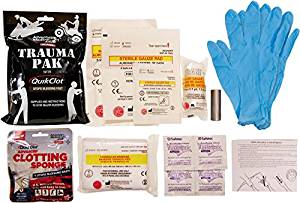
    1: Trauma Pak

    Trauma Pak Survival Kit

    Having a first aid kit is a necessity, just in case of injury. It’s something that’s useful even just for day trips.

    Who knows what will happen in the wild?! You might scrape a knee, cut your arm, or get a nasty sting – the wild is full of unexpected situations. But whatever you’re faced with, a trauma pak is going to be a massive help. And if you manage to escape the wild unscathed, at least you’ll have peace of mind with the trauma pak by your side.

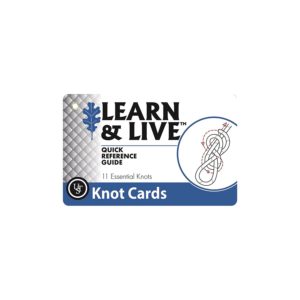
    2: Learn and Live Knot Tying

    Learn and Live Knot Tying Cards

    Having rope on hand is only useful if you know what to do with it. These small, informative diagrams will teach you how to quickly fasten the knot that you need. Not only is this guide useful, but it’s also compact and easy to carry with you wherever your travels take you.

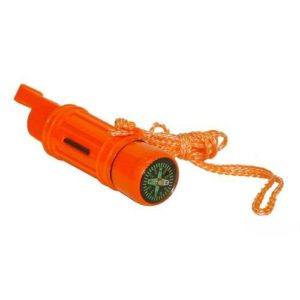
    3: 5 in 1 Survival Whistle

    5 In 1 Survival Whistle

    If you ever get lost in the woods, the dessert or whatever wild landscape you’re heading to, you’re going to want people to find as quickly as possible. This survival whistle is sure to be a life saver if you find yourself lost.

    The 5 in 1 whistle makes sure that you’re both heard and seen. It features a whistle, compass, signaling mirror, matchbox, and fire starter. It’s so versatile! So if you only ever get one piece of survival gear, this is a good one to go for.

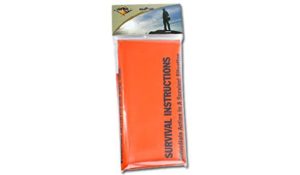
    4: Emergency Sleeping Bag

    Emergency Sleeping Bag

    While you may not be expecting to camp out, you should prepare for it just in case. With an emergency sleeping bag you won’t need to worry about being left exposed to harsh weather conditions, you’ll be well and truly protected.

    Snuggling up in the emergency sleeping bag will also make you visible to others, as it’s made from reflective material. This is a great feature if you’re having to use the sleeping bag because you’re lost!

    It also folds down so that it’s super compact and easily portable. You can carry it in a rucksack or maybe even a pocket.

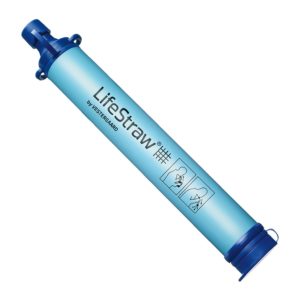
    5: Personal Water Filter

    Personal Water Filter - Survival Essential

    Packing water is an essential if you’re spending prolonged periods of time outdoors. If you run out of water, you’re in trouble. Your only hope will be to find natural water sources.

    But if you’re doing this, you need to make sure that the water is safe for consumption. A personal water filter will make any river or lake water drinkable for you.

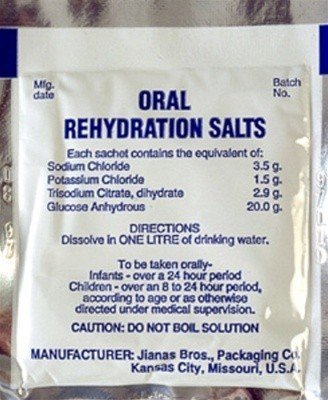
    6: Rehydration Salts

    Oral Rehydration Salts

    One of the most common ailments that goes hand-in-hand with being outdoors is dehydration. And these rehydration salts are the perfect solution.

    Hold on a minute, doesn’t salt normally dehydrate us? Yes, so don’t go drinking salt water as that will definitely make the situation worse. But these rehydration salts are different from regular salt. They can be used to help you get rehydrate you if you’re severely dehydrated, and can help you overcome dehydration symptoms like vomiting, diarrhea, and cold sweats.

    These salts are made from sodium, potassium and glucose, ingredients to help you get your levels back to where they should be.

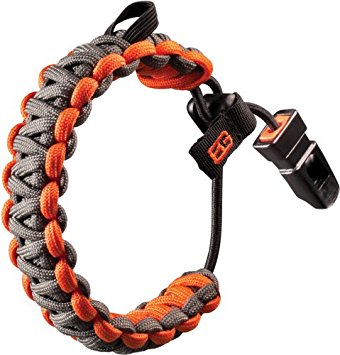
    7: Paracord Bracelet

    Bear Grylls Paracord Survival Bracelet

    One of the bulkiest items in your survival gear pack can often be your rope. These compact paracord bracelets contain rope that won’t get in your way or take up too much space. Just wear them on your wrist and you won’t even notice them. Then if you end up needing rope, it’s super easy to unravel the cord and make use of it.

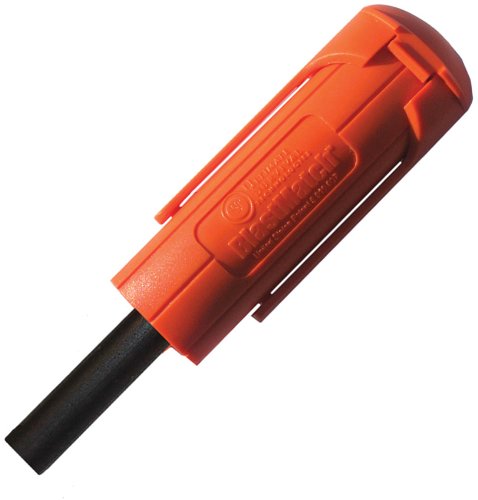
    8: BlastMatch Fire Starter

    Blastmatch Firestarter

    .Ordinary matches can prove to be difficult to deal with when you’re outdoors and the wind’s howling away. They can break, they often only last for a few seconds, and they can go out easily. This fire starter can be used with one hand and lasts for up to 4,000 strikes. It also generates 3x the heat of an average match, so hopefully your fires will be slightly more successful with this tool.

    9: Aluminium Stainless Steel Carabina

    Caribena Clip For Survival Use In Wild

    These carabiners are the definition of heavy duty. They can withstand all climates and hold up to 4457 lbs. Using a carabiner will make knots and tensions more secure. If you need a simple way to quickly fasten items together in a time of need, these will also come into play.

    10. Emergency Food Supply

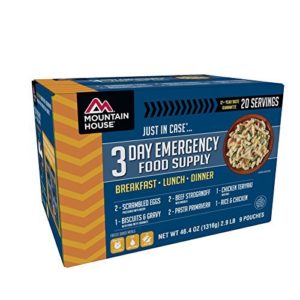
    Mountain House Emergency Food Supply

    Whilst it might be possible to rely on nature’s resources if you’re stranded in the wild, this could likely lead to digestive discomfort.

    These packets of food will last you 3 days in case of an emergency. The boxes are easy to store and will not take up too much room. It’s a good emergency stash to have with you on adventures, especially if you know you wouldn’t fare well surviving from what the wild has to offer.

    11: Survivor Dry Box

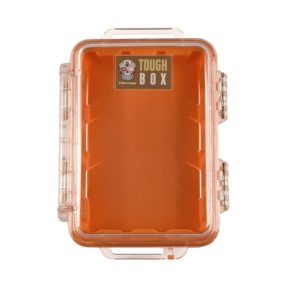
    Tough Box - Survivor Dry Box

    Keep your resources safe and you’ll keep yourself safe – that’s the logic behind this piece of survival gear. You can store all of your important items in this weather-proof casing.

    It’s brightly coloured so you can easily keep your eye on it, and it’s easy to carry, so taking survival gear with you doesn’t have to be a nuisance. It even floats so it really is suited to any situation.
    [/et_pb_text]
    [/et_pb_column]
    [/et_pb_row]
    [/et_pb_section]

  • The French Presidential Election 2017: Everything You Need To Know

    The French Presidential Election 2017: Everything You Need To Know


    We’ve had the vote for Brexit, and the election of Trump, and now the French election is the new center of attention in European politics. It may not be as widely covered as the politics of 2016, but it’s had a lot of international interest as the looming results seem to get less and less predictable.


    When is the French election?

    The election will begin on April 23rd, and by May 7th France will have elected its new President.


    Who are the candidates for the French election?

    The elections are usually a fight for presidency between the conservative Les Republicans and the left-wing Socialist party.

    Currently, the leading candidates fighting for office include Emmanuel Macron, Marine Le Pen, Francois Fillon, Benoit Hamon, and Jean-Luc Melenchon.

    Marine Le Pen

    Le Pen has drawn a lot of attention to the French election as one of the more popular candidates, and potentially France’s first female president. There’s also the fact that she’s on the far right of the political spectrum, as the leader of the Front National party. Her policies and personality have so far acted in accordance with the increasingly right wing and nationalist politics that we’ve seen across the world over the last year.

    She’s openly and strongly against the European Union, as it seems the majority of the UK were when they voted for Brexit. And like Trump, her policies revolve around immigration – which seems to be the go-to at the moment, when looking for solutions to social discontent.

    The way the polls are going, it’s likely that Le Pen could make it into the second stage of the election (more on that later in this article).

    Francois Fillon

    Fillon is another right wing candidate, only this time from the Les Republicains party, so slightly less extreme than Le Pen. Interestingly, he’s also a former president of France, so a familiar face in French politics.

    He started out as the favourite presidential candidate, but was soon overtaken by Le Pen. He’s still a fairly popular candidate though, and has the potential to make it to stage 2 of the election.

    Like every western politician at the moment, his policies have a strong focus on terrorism, with mention of Islam. He aims to increase security and defense with €100bn that will come from reducing unemployment benefits. He also aims to sack 500,000 people who work for the government.

    Fillon is much like Le Pen in his belief that the European Union is useless, but is more focused on reform than ‘Frexit’ or whatever else we might term France’s version of Brexit. He also aims to maintain good relations with the UK and interestingly, with Putin.

    Emmanuel Macron

    Macron is a character who, like Donald Trump was, is mistrusted by many due to him having less political experience than the other candidates.

    Rather than being affiliated with a political party, Macron has his own political movement, ‘En Marche!’ which has been especially popular with the French youth.

    He’s a political figure that is recognized by many as a sincere personality, who doesn’t align with either the left or right of the political spectrum. He has instead been labelled a centrist.

    His focus is more on the problems at home, with policies to reform education and more positive when it comes to foreign policy. Macron isn’t a believer of Brexit, and nor is he concerned with France following suit.

    Despite his lack of a deeply routed political profile, he’s a pretty popular candidate, the second most popular in fact at the moment.

    Jean-Luc Melenchon

    Despite an increase in right wing attitudes, there are still some lefties out there, and Jean-Luc Melenchon is one of them.

    His policies are based on the people of France and their quality of life, hoping to increase minimum wage and set a retirement age of 60 he’s focusing more on the smaller social details than on blaming foreigners for social discontent.

    It’s unlikely that he’ll reach the second stage of the election, as he’s one of the least popular candidates.

    Benoit Hamon

    Another lefty, but more central than Jean-Luc Melenchon.

    Unlike the right wing candidates, he’s all for Europe and believes in a universal wage. Albeit it’s an unlikely goal, but at least his heart is in the right place. However, that’s clearly not what the people of France are looking right now, as he is currently one of the least popular candidates.

    Who’s the most likely to win at the moment?

    The 2017 French election is looking like one of the most unpredictable elections that France has had in decades, so it’s hard to predict the outcome.

    France could have its first female president, Marine Le Pen, but there’s no solid prediction on whether Marine Le Pen could take it all the way home.

    The latest polls display Marine Le Pen ahead of her other four competitors. However, it’s no landslide – there’s still a tight battle between the leading candidates. In 2002, Marie Le Pen managed to get through the second round, but she lost to Jacques Chirac.


    So, how does the election work?

    For most elections, the system is conducted in 2 stages. The first stage, kor round, will take place on April 23rd. It consists of any candidate who meets the requirements. The requirements include enough funding for their campaign and the written support of five hundred elected representatives. In the second round, the competition lies between the top two leading candidates. The next president will be whoever gets the majority of votes in the second round.

    Unlike countries such as the United States, the French election is decided by the people rather than representatives or elected officials. In fact, France is a representative democracy – so the popular vote will decide the next president. So any French citizen age 18 or older will be able to vote for their candidate.

    In the first round, if a candidate ends up with the absolute majority, he or she will immediately be elected as the next president. This has actually never happened in French history, but in 1995 – candidate Charles de Gualle came close with 44%.

    The elections are always held on Sundays, and the campaigns usually finish at Friday midnight. Voting stations open at 8am and close at 6pm. In a way, it’s a fairly simple system – and it’s worked for years. The only exception to this system can be referred to as the Alternative Vote or Instant-Runoff Voting. So, instead of voting for one single candidate – the citizens of France can rank the candidates in order of preference. If a candidate receives more than half of these votes, then he or she is declared the winner.

    However, the Alternative Vote only occurs when neither candidate secures the majority vote in the second round. In the Instant-Runoff Voting (or Alternative), if none of the candidates receive 50% of the popular vote, then the worst-performing or least popular candidate will be eliminated. Therefore, supporters will have to switch to their second candidate choice.


    So to sum up…

    As mentioned before, Marine Le Pen seems to be stacking up approval ratings from France. Then there’s the runner-up to consider. Perhaps Emmanuel Macron or Benoit Hamon will face Le Pen in the second round.

    Presently, it doesn’t look like Republican candidate Francois Fillon will receive many votes from the French. A corruption scandal involving his wife and children. Apparently, they earned 1 million euros for jobs they were never doing. For now, there hasn’t been any chargers but presidential candidate Fillon doesn’t look under the formal investigation.

    But, who’s to deny a surprising outcome? Sometimes, an allegation or evidence of a past affair isn’t enough to throw away candidates’ campaigns. I mean, look at U.S. President Donald Trump. Throughout his campaign, he suffered claims from over a dozen women for rape or sexual assault. The comeback? Although, he didn’t win the popular vote – he still managed to defeat his political opponent and become president.


    So, thankfully the French election isn’t that complicated. It’s a simple voting system that’s as democratic as you could hope for, unlike the American electoral college system. And what’s more, it’s worked for years.


  • The American Voting System Explained: Here’s How Trump Won The Election

    The American Voting System Explained: Here’s How Trump Won The Election

    The 2016 US election was one of the most controversial elections in modern American history. The two candidates, Trump and Clinton, were perhaps the most unpopular candidates that American politics has ever seen.

    Trump’s win, despite Hillary winning the majority votes, didn’t exactly go down well with the millions of American’s who didn’t vote for him. It was the second time the Democrats have suffered at the hand of the electoral college system. The first time being Al Gore’s loss to George W. Bush, despite (like Hillary) him winning the majority vote.

    The election between Al Gore and George W. Bush definitely brought some light to the flaws of America’s voting system, but the 2016 election had a much wilder reaction as emotions ran high.

    Many people, Democrats and Republicans alike, are now questioning the purpose and legitimacy of the American voting system. The Electoral College may date back to the 18th century, but quite frankly, it’s not surprising that people are now questioning the whole system.

    After all, isn’t it a government for the people, by the people? So, why aren’t the people in whole deciding? Why isn’t the popular vote rather than the Electoral College deciding our president? Well, for starters – it’s complicated.

    How does the Electoral College work?

    The process used in America to elect a President is called the electoral college. The idea behind it is that the President is decided by both the popular vote and a vote in Congress.

    Everyone qualified to vote can do so, but ultimately, it’s the overall state vote that matters.

    Each state has electors, who are decided before the general election by their parties. The number of electors each state gets is the same as the number of representatives (Congressmen and Senators) that they have in the House of Representatives. The number of representatives is determined by the size of the state’s population, and so the number of electors each state has is also dependent on the state’s population.

    You’re now probably wondering why the number of electors matters so much. It matters because for a President to be elected, they need at least 271 of 538 electoral votes, otherwise the House of Representatives decide the winner.

    So to put it simply, the biggest states have the most impact on the vote (which is why Trump focused his campaigns at the more populated states like Texas and Florida).


    How it Started

    Back in 1787, the Constitutional Convention – a group of delegates that met to discuss the flaws of the central government, considered several methods of choosing the next president.

    Should the Congress select the next president? The state governors? Or should it be a direct popular election?

    These were all options considered, but finally the matter was handled with a method called the ‘electoral college.’ It was widely approved by the delegates and political leaders. Therefore, after adding the system to the Constitution, each state was given a number of electors due to the combined membership of the Senate.

    How it’s changed

    The voting system has been modified a bit over the centuries. Originally, states chose electors equal in number to the representatives and the senators. The electors voted for two candidates, and the person with the majority of votes became President. The runner-up became Vice President.

    So, essentially – there was no clear presidential or vice-presidential candidate.

    Today, to become president – the candidate has to win an absolute majority of 270 electoral votes. Now, if neither candidate receives enough delegates, the House of Representatives will decide the winner from the top 3 candidates with the most electoral votes. Presently, the number of electors per state ranges from three to 54, giving a total of 538. But again, you can see how the bigger states have the most say.

    Misinterpretation of Democracy

    Protests and general uproar have accompanied an increased lack of faith in America’s voting system. People have begun questioning how a system that allows the most unpopular candidate to become President can be called a democracy.

    So is it fair? Well, it depends. We have been attached to the idea that ‘we the people’ are deciding our own president, but it’s more of an indirect voting.


    Many Americans believed they were voting directly for the candidate of their choice. But, technically – it’s the representatives of their local government that will actually decide for them. Voters in Broward County may cast the majority of ballots for Hillary Clinton, but the elector can decide to vote for Donald Trump instead.

    When you think of democracy you probably think of the people electing parties and Presidents based on what the majority want. But the thing to remember is that we also misinterpret the country as a democracy. America isn’t a democracy, it’s a republic. The general public may refer to it as a democracy but even the constitution declares the nation a ‘republic for which we stand.’


    It may not be exactly democratic, but the electoral college has its advantages

    So, besides the fact that the U.S. is a Republic – why can’t they use the popular vote to decide the president? To put it simply – there would be chaos without the electoral college.

    The system may cause controversy around democracy, but it actually plays an important part in the stability of the country. If the voting system worked in a way where Presidents were decided purely by popular vote, the chances are that a whole load of people would run for President.

    For instance, in the recent election, Hillary Clinton won the popular vote by 48%. The other 52% belonged to Donald Trump and third party candidates. If we merely chose a president because of the popular vote, we would be swamped with candidates. The electoral college encourages a system of two parties, making it a simple choice, and a choice that will always please a large amount of people, whether they are the majority or not.


    For those who are upset with the outcomes of the recent presidential  election, or even the Al Gore vs George W. Bush, you have to understand the chaos that would erupt from getting rid of the electoral college. It may not be the best system, but it’s the system left to America by its Founding Fathers. Over the next century, perhaps the voting system will be modified but it’s going to be a long time before we get rid of the age-old system.


  • Moving Abroad – From A Post-Brexit Brit’s Point Of View

    Moving Abroad – From A Post-Brexit Brit’s Point Of View

    Moving to another country is without a doubt a scary prospect. Not only are you leaving your familiar surroundings but if you, like me, move to another European country, this will more often than not mean that you have to communicate in a new language.

    I come from the UK but lived in France for nine months and in September 2016, I moved abroad once again… but this time, to the Land of the Lederhosen (Germany).

    Ever since I was a teenager, I knew that it was my goal to move abroad and experience another culture, speak another language and explore new places. I loved learning languages and knowing that I could spend time overseas ticked all the right boxes.

    Anyone who knows me will know that I’m not the world’s most adventurous type. It’s unlikely that you’d find me trekking up mountains, abseiling or bungee jumping, but I do certainly get a kick out of living somewhere new.


    The reality of moving abroad

    It would be untrue to say that this passion for living abroad and experiencing a new culture hasn’t been tested throughout the years. I quickly discovered that the idea of moving abroad can often be romanticized and my once visions of wandering along French streets saying Bonjour to beret wearing people carrying their morning baguettes, of cycling through the towns being carefree and able to communicate without any difficultés soon changed.

    The realisation of actually moving away from my town, friends, family and of course, the UK, now gripped me with an intense fear. A fear of the unknown which I had never experienced before.

    I had chosen my degree course specifically to spend a year in another country and had waited for what had felt like an eternity to get there. Yet, somehow, I had never considered the practicalities of moving abroad beforehand. I hadn’t thought about admin such as opening up bank accounts and enrolling at universities, let alone actually being away from my nearest and dearest.

    So, suddenly in August 2014, it was time to head off to France and begin my adventure.

    As predicted, the realities of living away from home began to reveal themselves. Endless admin, heated discussions with accommodation staff about living arrangements, a lack of internet, not enough tea and much more. Furthermore, I was suddenly living in a new city, and as beautiful and characterful as Strasbourg is, I was suddenly yearning for the familiarity of my hometown.

    And to top it all off, everything was in French.

    Living abroad now felt somewhat overwhelming and exhausting. It wasn’t the carefree cultural experience which I had envisaged and soon, pangs of homesickness kicked in.

    Yet, despite all this, I persevered.

    An suddenly, semester one was done.

    And I had made it.


    Moving abroad is a rollercoaster, but it’s worth it

    Despite my initial homesickness, the overwhelming admin and some accommodation challenges, (like having to move out because of a bedbug infestation…), I had managed to navigate my way through my first semester without too many hiccups. I had also managed to make a few friends along the way.

    By placing myself in challenging situations, my French progressed in leaps and bounds. I was suddenly able to communicate with my friends in a more fluent way, I felt a lot more self-confident as a functioning independent woman and was completing ‘adult’ tasks such as making official complaints, opening a bank account and organizing insurance documents.

    I suddenly realized how far I had come since those initial nerve wracking weeks away from family.

    The first semester was a challenge, but my goodness was it worth it. I did it.

    I continued living in France and completed two semesters out there. The second of which being much easier than the first. By the time the second semester rolled around, everything was familiar and I was enjoying my French vie. My experience of living in France also led me to where I am today.

    As soon as I finished my year abroad in France, it was time to return to the UK and finish my studies. And whilst I was excited to be living in Blighty again, there was still a part of me which yearned to be abroad, experiencing the excitement of discovering a new place and immersing in the culture.

    So off to Northern Germany I went. Yet this time around has been very different.


    Living abroad as a post-Brexit Brit

    Being a post-Brexit Brit abroad has been a unique experience.

    Whilst I have definitely received a warm welcome from the Germans, I have been constantly questioned about my country’s decision to leave the European Union and what that means for the future. I have become a makeshift spokesperson for the UK government.
    The uncertainty which surrounds the vote to leave has also meant that I have a strong desire to reap the benefits of a European passport whilst I still am able to. A passport which allows me to reside and work in any other EU member state without a visa. The unknown factors which surround the decision to leave means that the privilege of being able to travel freely may only last for another two years…

    Therefore, in my opinion, moving and living abroad for a British citizen now has a totally new meaning. I now feel the need to capitalize on my opportunity of visa free living and travelling abroad whilst the opportunity still exists.

    Being a Europhile Brit means that I feel I have an obligation to encourage as many Brits as possible to make the most of living abroad whilst it remains simple and flexible.

    Moving abroad has molded me into a stronger, more independent and confident woman. I can communicate in three languages and am able to appreciate different countries from their perspectives. I have learnt so much about French and German history and culture, and in many respects, I have learnt to appreciate the UK in a new light.

    I’ve developed a strong sense of European identity, and despite Brexit, that will never change.

    So I urge you, people of Britain and elsewhere, make the move. Whether it be for a month or a year, give it a try. You won’t regret it and will always cherish it.

  • Why You Should Visit Mecklenburg-West Pomerania: Is ‘Meck-Pom’ Germany’s Hidden Gem?

    Why You Should Visit Mecklenburg-West Pomerania: Is ‘Meck-Pom’ Germany’s Hidden Gem?

    You need to go on holiday to Mecklenburg-West Pomerania.

    Never heard of it?

    Well don’t worry, you’re not alone. If you had to name a German Bundesland (Federal state), your first thought is probably Bavaria, rather than Mecklenburg-West Pomerania, or ‘Meck-Pom’ as the locals call it.

    But Meck-Pom is a great location that’s largely untouched by tourists. So if you’re looking for a destination that not everyone has been to, this German state could be the one for you. With hidden gems and plenty to see and do, it’s a perfect holiday destination. So here’s why you should visit (and why you’ll fall in love with) Mecklenburg-West Pomerania.

    Getting To Meck-Pom

    Located in North Eastern Germany, the federal state spans across a large area and borders Poland to the east. Despite being one of the country’s largest federal states, it is the least populated. (About 1.6 million people… but who’s counting?) Yet with its long coastline, an incredible, albeit rocky, history, and of course, beautiful port cities, the region offers plenty to visitors.

    Getting there, however, isn’t straight forward. The region has a couple of international airports including Rostock, but with limited flights across Germany and Europe, your best bet is to fly to Hamburg or Berlin, and then take the train or bus.

    Schwerin Castle – The ‘Neuschwanstein of the North’

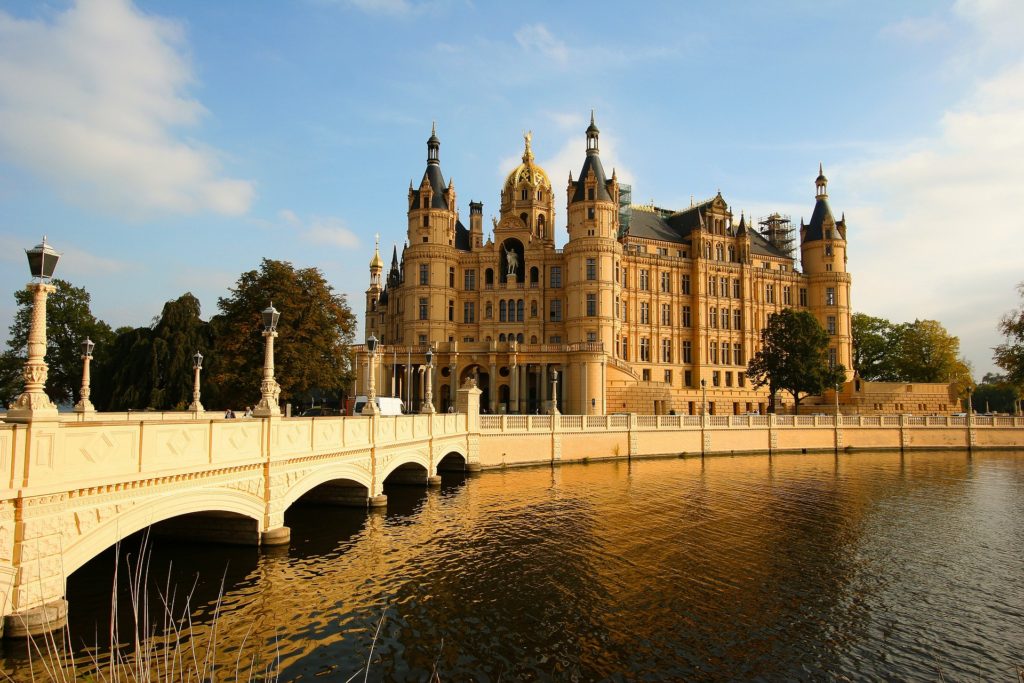
    Schwerin is a city well worth a visit. Being the capital of Meck-Pom, it attracts many visitors who come to gaze in wonder at its beautiful old churches and cathedral, its narrow cobbled streets and most importantly the ‘Neuschwanstein of the North’.

    The ‘Neuschwanstein of the North’ is the parliament building which is located in an idyllic castle, enveloped by a large lake in the heart of the city. This Schloss (castle), is often compared with Schloss Neuschwanstein in Bavaria, which many may recognise from the film Chitty Chitty Bang Bang and is seen as the inspiration for the Disney castle. Whilst the Schwerin castle may not have Neuschwanstein’s mountainous backdrop, it still has turrets a plenty, beautiful gardens and stunning lake views. It is free to visit the grounds, but it’ll set you back 8 € to venture inside.

    Rostock – Meck-Pom’s second city

    Rostock is, in many respects, Meck-Pom’s second city. With a population of over 200,000 people and lying directly on the Baltic coast, it is one of the region’s most historically fascinating cities.

    The summer months unsurprisingly see Rostock welcoming tourists from all over Germany and also those by ferry from Scandinavia.

    Its mixture of colourful Germanic buildings alongside its stark reminders of its communist past, create a distinctive feel. Free access to a former Stasi interrogation unit in the heart of the city alongside speedy connections to the nearest beach, mean that the city offers each visitor a unique experience and can cater for all types of holiday.
    Moreover, the Rostock Christmas Market, has been voted as the best market in Northern Germany, and is perfect for a cheeky mulled wine!

    Visit Wismar

    Wismar, a world heritage site city located west of Rostock is not only another lovely location to visit, but also the region’s second most important port city. Once under Swedish rule, the city has a very Scandinavian feel to it with its many fisheries, colourful harbour buildings and Swedish restaurants.

    Like Rostock, it also offers a mixture of GDR history with old abandoned factories alongside beautifully painted narrow streets which follow small rivers towards the Baltic Sea. Walking around the city for several hours and stopping to eat a Fischbrötchen (Fish sandwich), is the perfect way to spend an afternoon in Wismar.

    Meck-Pom as the perfect beach holiday

    Despite Meck-Pom being home to the stunning above mentioned cities, its best attribute is perhaps its landscape.

    When you think about going on holiday to the seaside, your first thought might be sunny southern Spain or perhaps even a Greek island… however, in my opinion, you need look no further than the Baltic coast.
    With long golden beaches and beautiful seaside towns such as Warnemünde, Rerik and Kühlungsborn, it is unsurprising that so many Germans decide to head to this part of the world for their beach holiday every year.

    The piers, clear blue sea and not forgetting the surprisingly warm temperature in the summer time (30 degrees Celsius), mean that it’s not only in southern Europe where you can enjoy warm weather. The beaches are also accompanied by beautiful white cliffs on the island of Rügen, which is located off the coast of Meck-Pom to the North East. Its white cliffs and gorgeous natural parks offer tourists the opportunity to experience beautiful landscapes.

    Meck-Pom as a gateway to the rest of Europe

    Its geographical location means that Meck-Pom is also the gateway to other European cities and countries. For example, you can buy a return ferry ticket to Copenhagen from Rostock with a sightseeing trip included for about 40€.

    If you were looking to head east to Poland, it only costs 23€ to travel to Stettin, (the closest Polish border city), and is well worth the trip. Moreover, with direct and cheap train and bus travel to Hamburg and Berlin, Meck-Pom is ideal.

    So plan a visit to Meck-Pom!

    Mecklenburg-West Pomerania is fast becoming my favourite region of Germany. There is something very unique to this region, which you will not encounter elsewhere.

    It may not have the chocolate box charm of Bavaria or the international standing of Frankfurt, but the imprints communism has left on the region’s architecture and the allure of the Baltic coast make the region especially unique.

    If you want to experience a holiday where you can combine history, nature and beautiful harbour cities, then Meck-Pom is the place for you.


  • Top Things To Do In Dublin, Ireland

    Top Things To Do In Dublin, Ireland

    Dublin, Ireland is one of the most beautiful and mystic cities in the world. Known as the “Emerald Isle”, Ireland is a country full of culture and history. Whether it’s your first visit or you have visited before, there is always something new to see.

    Get yourself on one of Dublin’s tours

    Scheduling tours are a great idea when visiting Dublin because it will give you a great opportunity to not only see everything but also learn from those who live the culture on an everyday basis.

    The Guinness Storehouse – for those who like a drink

    The Irish are stereotypically known for enjoying a drink or two, and if you’re fan of beer, Dublin has just the tour for you. The Guinness Storehouse, which is actually shaped like a Pint of Beer, is one of the most popular tourist attractions in Dublin. Guests have the opportunity to see how a pint of the traditional Guinness Beer is created and of course, sample a glass.

    Delicious Dublin Tours – get the taste of Dublin

    The Delicious Dublin Tours run every Saturday and really offer visitors the chance to experience even more Irish culture. The tours run every Saturday and while traveling through the city, visitors will try traditional Irish cuisine and beverages while touring some of the best restaurants in Dublin.

    Dalkey Castle – explore Dublin’s history

    To learn more about the deep routed history of Dublin, the Dalkey Castle and Heritage Centre is a must-see. The Dalkey Castle, which was a former port, presents tours that are led by a professional guide that will share tales of what life was like as far back as Medieval Times.

    The Writers’ Gallery at the Castle gives visitors the chance to learn more about the history of Irish writers and some of the greatest works that have even been written. Another fascinating part of the Castle’s property is St. Begnet’s Church which is believed to have been a part of the culture since the 10th century.


    Family days out

    If you are traveling with family or even young children, there are a few places that are definitely worth checking out. The Dublin Zoo is a great place to visit, as one of the oldest Zoos in the entire world, millions of tourists have visited the Dublin Zoo for a one of a kind day of exploring hundreds of animals from around the world.

    The AquaZone at the National Aquatic Centre is an indoor aquatic park that will bring visitors of all ages a day of fun. For those who are just looking to take a swim, there is a traditional swimming pool that is great for taking laps if that’s the goal. But, for visitors who want to accelerate their level of fun, there is a water roller coaster, a wave pool, a pool for wave surfing, water slides, a lazy river and much more.

    The Imaginosity, Dublin Children’s Museum is definitely a top spot for kids while traveling through the city. The younger members of the family can use their imagination and pretend to take different career paths through various exhibits in the museum. There is also an outdoor section of the Children’s Museum that teaches about gardening and environmentally friendly ways of living.


    Dublin’s pubs and cafes

    Dublin is known for their pubs and cafes and there are a few that must be on the checklist when in town.

    A couple of notable cafes

    Butler’s Chocolates has been a staple in Ireland since the 1930’s with their delectable homemade chocolates. The Krust Bakery is a great spot to get a Cronut or other pastry and perhaps a cup of coffee while touring the city.

    All over the world, there’s a lot of hype about traditional Irish pubs, and of course you’ll find quite a few in Ireland’s capital.

    Traditional Irish Pubs

    The Jennings Pub is a place where you can grab a pint and listen to live music too. Besides the Guinness Brewery, Brogan’s Bar gives patrons another opportunity to have a pint of Guinness in a pub fully decorated in Guinness memorabilia.

    If you’re a fan of literature, you’ve probably heard of James Joyce. But what you might not have heard of is Joyce’s favourite drinking spot, and Dublin’s oldest pub, The Brazen Head. Joyce even mentioned it in his book Ulysses. The Brazen Head is definitely a spot worth visiting, even if you have no idea who James Joyce is. It’s small but very sweet. It’s full of character, history, and is usually bustling with a load of great people.

    As you might expect, Dublin has way too many great pubs for me list them all in this article, but head to Temple Bar and you’ll find most of Ireland’s classic pubs. Temple Bar, believe it or not, isn’t just one bar, but an area, where you’ll find a whole load of places to drink the night away.

    Dublin's Temple Bar


    Dublin as an artistic experience

    For visitors that are looking for to learn more about the arts in Dublin then the museums and galleries should definitely be on the list of stops while visiting.

    The National Gallery of Ireland contains thousands of pieces of artwork which include work from Van Gogh and Picasso.

    There’s also the Irish Museum of Modern Art which has mostly modern and contemporary styles. There are even studios located on the property.

    The National Museum of Ireland-Archaeology is for visitors who appreciate the Viking Era of Dublin and will get to see Celtic pieces in the museum as well.

    Farmleigh house and garden attractions

    A great place to spend a relaxing afternoon would definitely be on the grounds of the Farmleigh House. Originally built in the 1700s, the Farmleigh House property has a beautiful Clock Tower and Fountain Lawn that are just picturesque. The Benjamin Iveagh Library features a lot of unique and one of a kind Irish literature and newspapers that visitors will find fascinating. There are also various traveling exhibits and Garden Shows that make their way through the Farmleigh House as well, so there is always something to see. Visitors can pick up a delicious coffee and pastry at the Boathouse Café while overlooking some of the best views in the city.

    Farmleigh House, DublinFor visitors who wish to see even more garden properties, the National Botanic Gardens in County Dublin is one of the most popular in all of Europe. The Gardens are a free attraction and visitors can stroll around and see thousands of beautiful rose gardens, ponds, rock gardens and plants that are known solely in Ireland while learning a lot along the way.

    St. Patrick’s Cathedral – some history

    You’ve heard of St. Patrick’s Day, I’m sure, but a trip to Dublin wouldn’t be complete without visiting St. Patrick’s Cathedral, a part of the country’s history and tradition dating back to the 1200’s. There is an exhibit at St. Patrick’s Cathedral entitled “Lives Remembered” which pays tribute to those lost during World War I. Visitors can take a tour with a guide or take a tour on their own with the use of a designated app that can be downloaded.


    No matter what season or who you are there is never a bad time to visit the gorgeous, historical city of Dublin. There is always so much to see and visit that there will never be a dull moment and additional trips, or maybe even trips, might be necessary!


  • Does Being Smart Having Its Disadvantages? Here are 8 Surprising Downsides Of Intelligence

    Does Being Smart Having Its Disadvantages? Here are 8 Surprising Downsides Of Intelligence

    Gone are the days when acting dumb was cool. Smart really is the new sexy. Intelligence is one of the most highly valued and sought after qualities anyone can have. From having a clearer understanding of the world, to acing pub quizzes, there are so many advantages to being intelligent.

    We’re all encouraged to pursue intelligence, and be the best we can be. There’s never any question that knowledge is anything other than good. There’s no list of consequences handed over with your A* grades in high school.

    But then, thinking about the old saying, ‘every rose has its thorns’, there must surely be some downsides to having a high IQ. So here are 8 disadvantages you might be familiar with if your IQ is way above average.

    1. Your level of patience probably isn’t as high as your IQ 

    Think about those times when you’re trying to tell someone something, but they don’t hear you. They don’t hear the first time, or the second time, and after the third time you throw your hands up in despair and give up. It’s exactly that kind of frustration that those of higher intelligence experience when people just don’t understand.

    We all get frustrated every now and then, but when you’ve got a valid and interesting line of conversation, and people just don’t get it, it drives you insane, right?

    Having a high IQ means that every now and then, you’ll find yourself in conversation with others who perhaps aren’t as gifted in the intelligence department. You might be desperate to offload your thoughts about some new philosophical question that’s arisen, or give your opinion on the latest state of political affairs, but everyone you try and talk to just doesn’t have a clue what you’re talking about.

    The chances are that whilst your IQ is sky high, your level of patience probably isn’t quite as impressive. Explaining concepts and issues in layman’s terms, when you have a deeper understanding, is a good skill to have, but when it’s a constant requirement of every conversation, it can be infuriating.

    Intelligence can be frustrating

    2. Little achievements go unnoticed

    Think back to when you went to school, were your classes split into higher and lower sets? If they were, and if you ever found yourself in the higher set, you might have noticed those in lower sets were rewarded for things that were just expected of you.

    Maybe someone got an award in assembly for finally memorising their times tables, something you did months, maybe years, before. It can feel pretty unfair, and it’s not something that necessarily stops when you leave education either.

    If you’ve grown up with more being expected of you than most, because you have the ability to excel more than most then the chances are that throughout your life, it won’t just be others expecting more from you, but rather you expecting more of yourself.

    You’ll push yourself, and sure, at times that will be a good thing, the more you push yourself the further you’ll go. But if you don’t reach your goals, and you don’t get to wherever it was that you thought you were going, you might feel like you’ve let yourself down more than anyone else. And despite however many achievements you may have made along the way, you might not even recognise them as notable.

    3. Complacency – the intellect’s downfall

    On the other hand, rather than pushing yourself too hard, you might find yourself not putting any effort in at all, because you might not need to!

    Things that others need to work hard for, and put time and effort into, you might be able to do without a moment of preparation. Think again of your school days, and how there’s always some who can put in minimal effort, perhaps only revising a few hours before an exam, and do better than those that had been revising for months.

    It’s great to be able to breeze through life without much work, worry or stress, but that’s when you become complacent. You’ll be pleased with your achievements, and probably quite smug. Obviously there’s no real harm in that, but the likelihood is that everything you attempt, you’ll approach with the same lack of effort that got you the results of your previous achievements.

    Eventually though, you might come across something that’s not as easy to breeze. And if you’ve already got into the habit of not needing to do much work, you might struggle more than those that are used to challenges.

    4. Ignorance is bliss

    Most of us, if not all, can probably think of a time when we became aware of something that it would’ve been easier to remain unaware of. Whether it was something that hurt to find out, or just some grim detail about your mate’s personal life that wish you’d never heard. Sometimes the truth can be hard to swallow, and we long for ignorance. As the saying goes, ignorance is bliss.

    But when you’re gifted with a higher than average intelligence, ignorance can be hard to come by. Others might be fooled by the well worded speeches and false promises of politicians, whilst you instead let the economy talk for itself. Sure, it would be nice to believe that things will change for the better, taxes might go down, and standard of living might go up, but generally, the more intelligent of us are also realists.

    When you know more than most, there’s not really any way you can blindly believe promises of change and improvement without first turning to the facts of history, and the stats of today.

    5. The more you know, the more you realise you don’t know

    With everything you learn, you’ll be constantly realising how much more there is to learn that you haven’t even looked at yet. No one person will ever have complete understanding of anything, and as soon as you realise that, the pursuit of knowledge begins.

    You’ll pursue as much knowledge as you can, but ultimately there’ll always be an underlying frustration at the fact that there’s just not enough time in the world for you to grasp everything.

    Despite your relatively high intelligence, you might feel overwhelmed by the amount you don’t know, and disheartened by how little you know in comparison. To be humble isn’t a bad trait, but you have a right to feel proud of your level of intellect.

    6. Being smart can actually lead to sleepless nights

    We’ve all had nights were we’ve sat awake till the early hours, going over and over something that’s already happened, or dwelling on something that might never happen.

    But if you’ve got a higher IQ, you probably overthink things more than those without your level of intelligence. From analysing each word of a past conversation, to assessing the possible outcomes of future situations, to panicking about politics, your overly active mind can actually stop you from getting a good nights sleep.

    The trouble with a great mind, is that it’s pretty hard to stop it whirring thoughts round and round, all hours of the day.

    Intelligence can lead to sleepless nights

    7. You tend to ignore your heart, and follow your head

    We all know someone who’s taken huge risks, ignoring their head and following their heart, even if it leads them into trouble. Those of extreme intelligence though are more likely to do the opposite – ignore their heart.

    You can’t really go wrong with allowing logic to dictate your choices ,but when it means your heart goes ignored, at point do you allow yourself to feel?

    Feeling and loving is what makes us human. There are obvious, well reasoned and clever choices, and then there are impulsive decisions that ignore what we should do, and take advantage of what we can do. Letting yourself be vulnerable is sometimes just as important as protecting yourself. That’s what living is.

    8. You might become what they call a ‘Grammar Nazi’

    Think about times you’ve heard people talking about something you’re particularly clued up on, and they’ve got the facts wrong, you were probably dying to correct them. It’s natural.

    With social media on the rise, this is particularly relevant in grammar. Every day you see misspelt statuses and comments full of grammar mistakes. And then you see other comments, by the perhaps more intelligent, correcting the mistakes.

    You might have heard the term ‘grammar nazi’ thrown around at those who are sticklers for perfect spelling and sentence constructions.  And its exactly those that find themselves subject to the phrase ‘grammar Nazi’. The more you understand the rules of grammar, the closer you get to becoming the living and walking demonstration of the term.