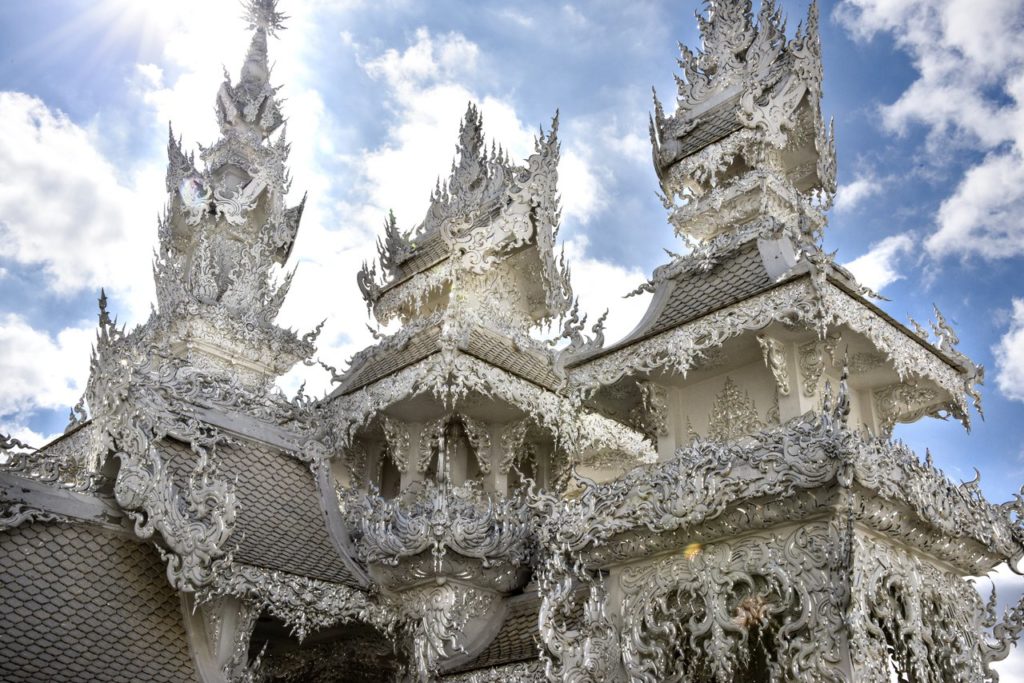
Kyoto Travel Itinerary: How to Spend 3 Perfect Days in Kyoto

With plenty of historical sites to explore, beautiful natural scenes to admire and traditional experiences to enjoy, Kyoto is one of Japan’s must-visit cities. As a cultural hub and a destination that’s surrounded by nature, it’s the perfect place for travelers and tourists hoping to immerse themselves in Japanese history and tradition and escape to nature. 

Just imagine walking through towering bamboo forests, setting foot in ancient temples and traditional teahouses, and soaking up the natural beauty of cherry blossoms or autumn leaves. A trip to the former capital of Japan can be a real dream come true. 

And you can explore this city in three magical days. So I’ve created this 3-day Kyoto travel itinerary to help you plan the perfect three days in Kyoto.

Whether you’re following Japan’s “Golden Route” and visiting Tokyo, Osaka, and Kyoto, or you’re just visiting Kyoto, this Kyoto travel itinerary can help you plan your trip to perfection. Even if you’re spending longer than three days in this city, this itinerary will give you an idea of some of the best things to do during your stay.

Kyoto Day 1 Itinerary

Arashiyama Bamboo Forest 
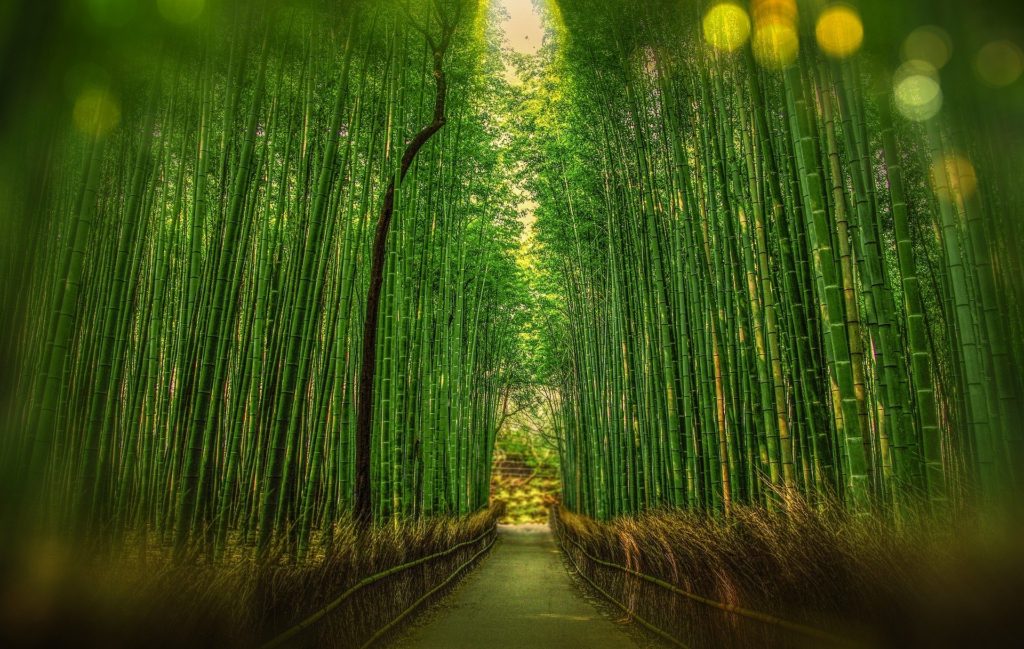
You’ve no doubt seen pictures of this famous forest, and the pathway that winds its way through the towering bamboo stalks. The Arashiyama bamboo forest is one of Kyoto’s most beautiful sights — it’s a retreat into nature, in the middle of the city. 

So why not start your first day in Kyoto with a breath of fresh air by taking a relaxing walk through this stunning forest? 

The earlier in the morning you can get to the bamboo forest, the quieter it will be. So if you’re hoping to avoid the crowds, take perfect pictures, and enjoy the serenity of the forest, I’d recommend arriving as early as possible — definitely before 9 am, or if you don’t mind rising early, a sunrise trip is definitely worth it. 

At sunrise, you’ll see the changing colours of the bamboo forest as the sun starts to filter through the bamboo stalks. But if you arrive after the sun is already in the sky, you’ll experience the beautiful green colour of the bamboo grove.

The Arashiyama bamboo forest is a short walk from the JR Saga-Arashiyama station. After walking for about 15 minutes through the bamboo grove, you will come upon Tenryu-ji temple.

Tenryu-ji Temple
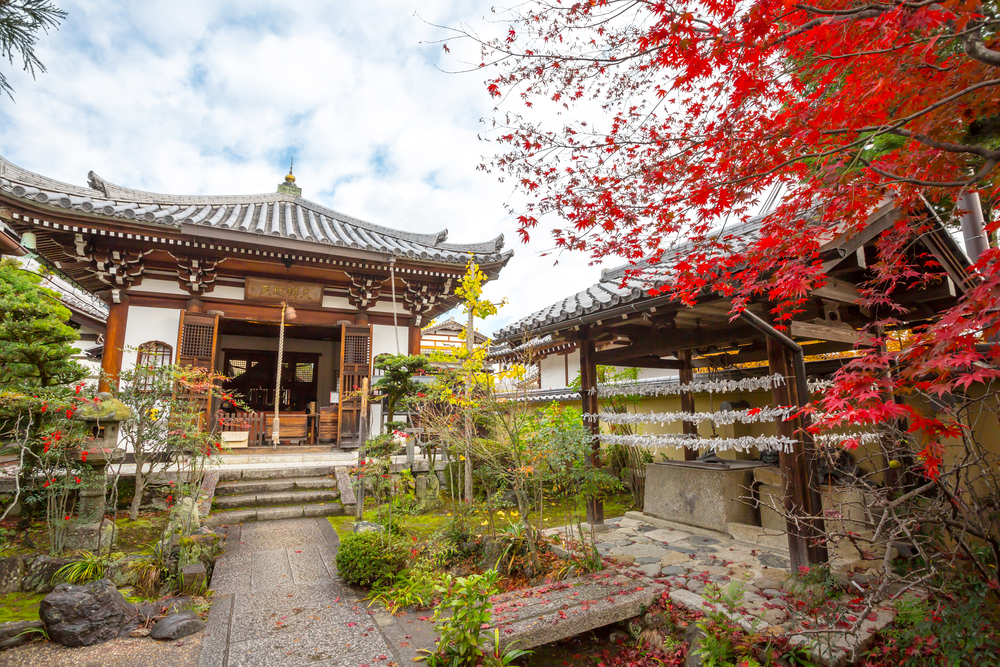
Tenryu-ji temple is a world heritage site and one of the main Zen temples in Kyoto. Although the temple dates back to the 14th century, many of the temple buildings have been destroyed in fires, and compared to other Japanese temples, Tenryu-ji is now fairly minimal. 

However, the temple is surrounded by mountains and forest, and the temple gardens alone are well worth a visit. Japan is well known for its careful garden designs, but the Tenryu-ji gardens have a much more natural feel, and they’ve remained the same for many centuries. 

After exploring the garden of Tenryu-ji temple, another 15 minutes through the bamboo forest will bring you to the Arashiyama Monkey Park.

Arashiyama Monkey Park
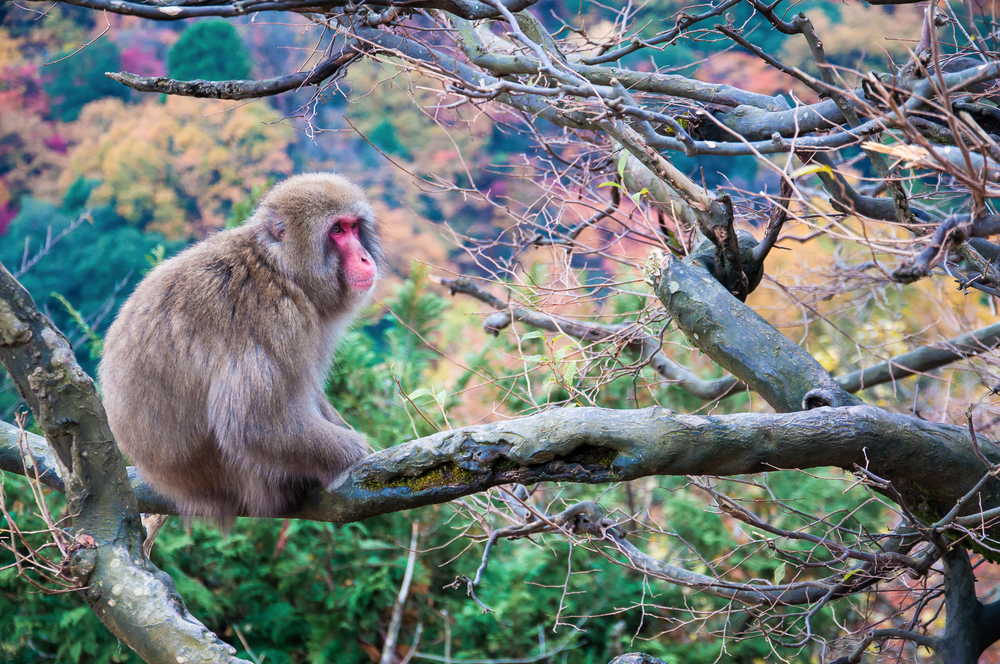
If you’re hoping to encounter some Japanese wildlife on your trip, you’ll want to visit Arashiyama Monkey Park, also known as Iwatayama Monkey Park. Don’t be put off by the term ‘park’, all of the monkeys here are wild, in fact it’s humans that are in a cage at this park.

As you venture into the park you’ll follow a path that leads you up the mountain, and as you approach the summit you’ll officially be in monkey territory. Over 120 Japanese macaque monkeys live in this area, so keep an eye out for these mischievous little beings — if you’re lucky you may even spot some babies. Just make sure you follow the rules which will be written on signs around the park. The monkeys are used to being around humans, so they won’t hurt you as long as you stick to rules like staying at least two metres away and avoiding eye contact.

At the end of your hike through the park, at the top of the mountain, you’ll be greeted by staff and the welcome sight of benches. Here you can stop for a much-needed rest while enjoying one of the best views of Kyoto. You can enter an enclosed, caged area where you can look out over Kyoto and feed monkeys safely from behind the cage.

To enter the park you’ll need to pay an entrance fee of 550 yen. And if you want to feed the monkeys you’ll need to buy food for 100 yen.

Fushimi Inari Shrine
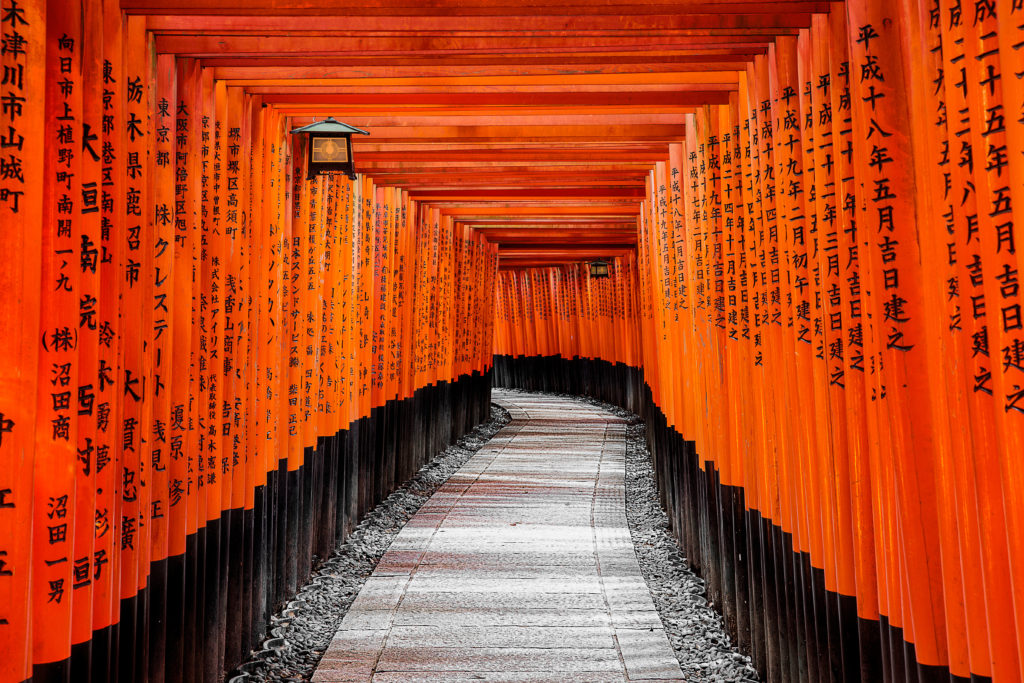
Fushimi Inari Shrine

Fushimi Inari shrine is an important shrine in Kyoto, dedicated to ‘Inari’, the Shinto god of rice. The messengers of the god are thought to be foxes, so you’ll spot many fox statues and emblems throughout the shrine grounds. But this shrine is most famous for the thousands of torii gates lining the paths behind the shrine. These red vermilion gates have made these paths one of the most popular photography spots in Kyoto. As the sun shines, paths are illuminated in red and orange, or if you opt for an evening visit, the atmosphere at the Fushimi Inari Shrine at night is quite something, with the illuminated orange gates casting dramatic shadows. 

If you choose to follow the paths until the end, you’ll be walking for around 2-3 hours until you reach the top of a mountain. However, most visitors don’t get this far. Most people will simply walk a little through the paths before turning around, and some will walk to the halfway point, where the paths open up into a clearing, halfway up the mountain. Here you can relax on benches overlooking Kyoto. If you find yourself getting a little peckish or thirsty, there are several places to stop for a drink or a meal along the path.

The further along the path you walk, the quieter it will be, and the better photo opportunities you’ll get. However, past the halfway point you’ll start to less of the iconic red gates.

After walking through the Arashiyama forest in the morning and the Fushimi Inari shrine paths in the afternoon, you’re probably going to be pretty tired and ready for a break. So this attraction marks the end of day 1 in Kyoto.

Kyoto Day 2 Itinerary

Ginkaku-ji (The Silver Pavilion)
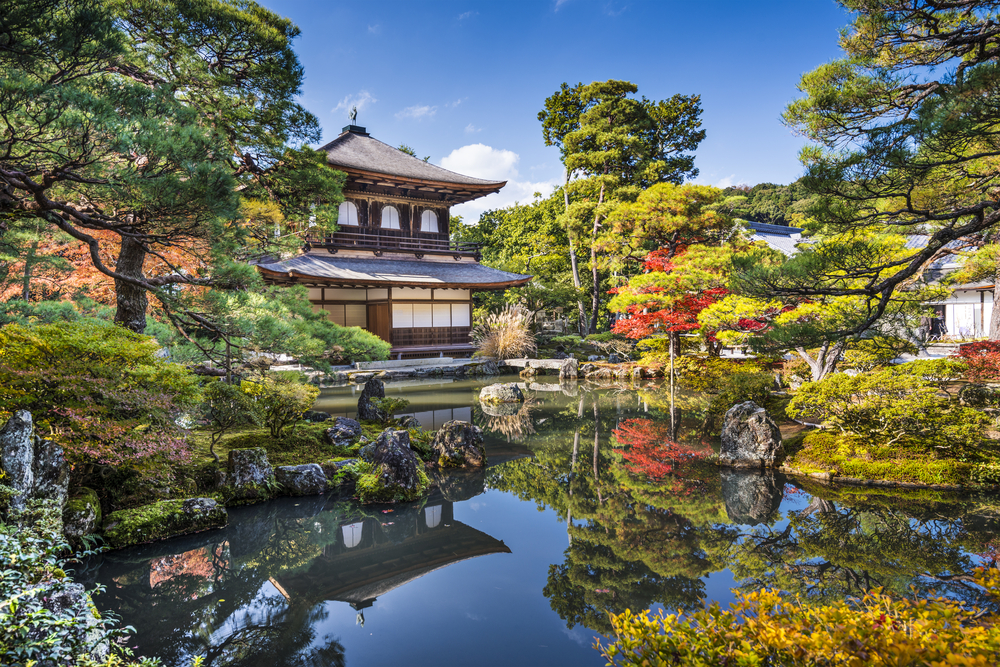
Ginkaku-ji (The Silver Pavilion)

I’d recommend you start your second day in Kyoto with a trip to the Eastern side of the city to see Ginkaku-ji, the 15th century Silver Pavilion, also known as Higashiyama Jisho-ji temple. 

This beautiful pavilion was modeled on Kinkaku-ji (The Gold Pavilion) and named the Silver Pailion not because when the temple was first built it was originally covered in a dark finish which reflected silver in the moonlight. 

The pavilion is surrounded by a number of other temple buildings and beautiful gardens, including a moss garden and a dry sand garden. The sand garden, also known as ‘The Sea of Silver Sand’, is symbolic of Zen concepts and peacefulness. It leads to a silver cone, designed for moon-gazing and reflection. The moss garden also embodies Zen ways of thinking in its slow growth to beauty. There are a number of ponds and small bridges in this garden. The intricacy of the moss garden perfectly contrasts the simplicity of the sand garden.

Tetsugaku No Michi (The Path of Philosophy)
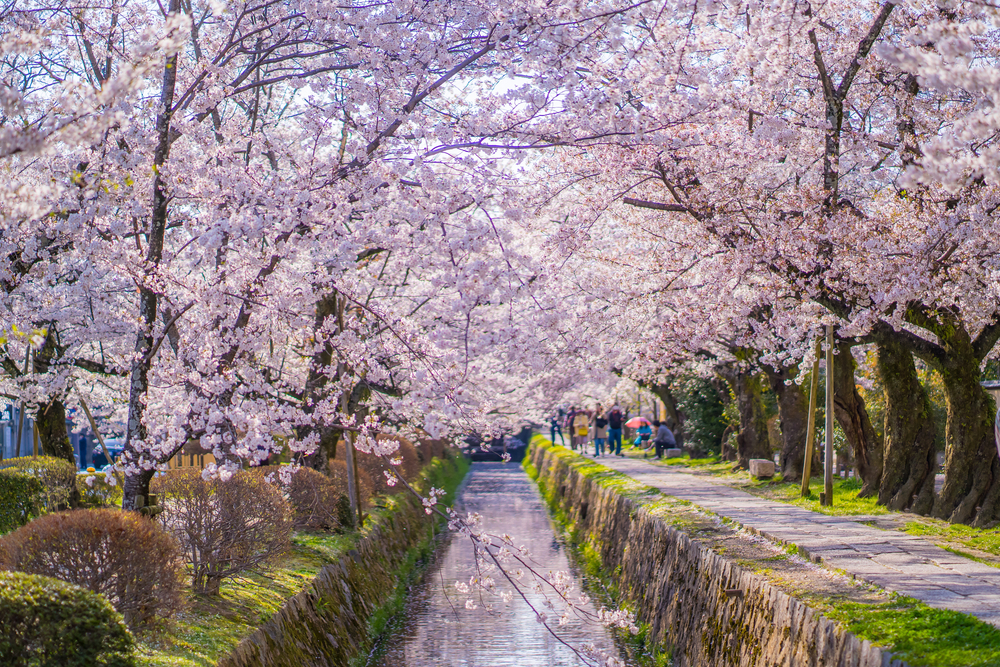
Tetsugaku No Michi (The Path of Philosophy)

From Ginkaku-ji, you can go for a wander through Tetsugaku No Michi, also known as the Path of Philosophy or the Philosopher’s Walk. This is a 2km long ancient stone path between Ginkaku-ji and Nanzen-ji temple. 

The path runs alongside a canal and is lined with cherry trees. In spring, this path makes for a stunning walk and it’s one of the best places in Kyoto to enjoy the famous cherry blossoms. 

If you want to walk the entire length of the path, you can also visit Nanzen-ji temple. However, you don’t need to walk the entire 2km to appreciate the beauty of this walkway.

Kinkaku-ji (The Golden Pavilion)
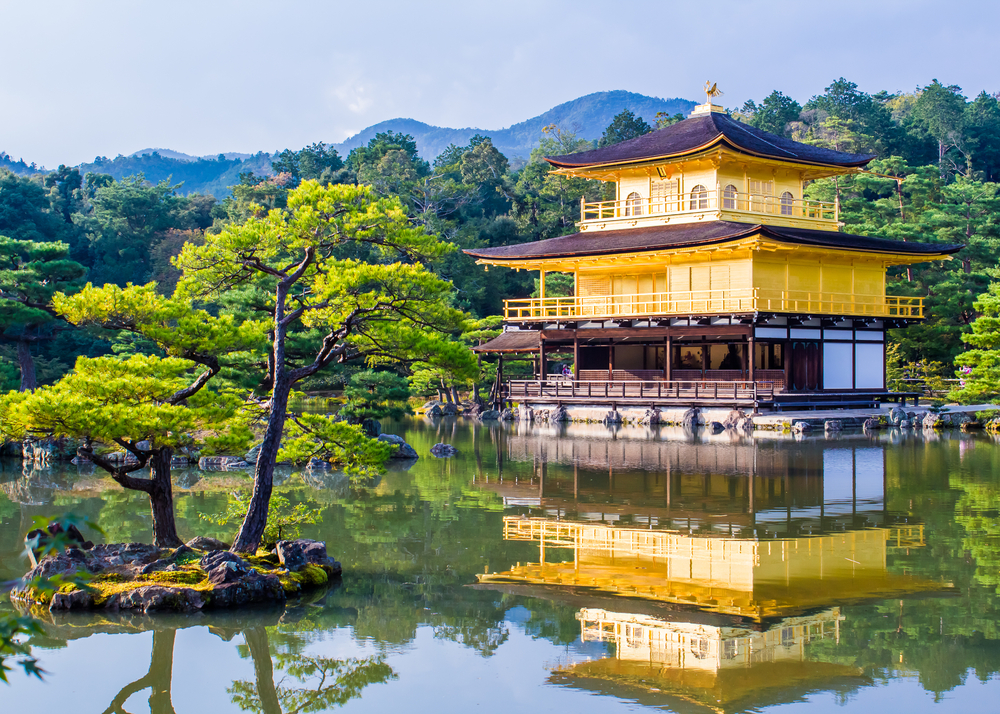
Kinkaku-ji (The Golden Pavilion)

Kinkaku-ji is the sister temple and original inspiration for Ginkaku-ji (The Silver Pavilion). In contrast to Ginkaku-ji, Kinkaku-ji holds true to it’s name and appears gold at any time of day. The top two floors of the temple are covered in gold leaf.

Kinkaku-ji is famously picturesque in all seasons. The temple is set at the edge of a large pond with a colourful forest backdrop and on clear days the temple reflects perfectly in the still waters of the pond. In spring, the cherry blossoms perfectly frame the temple, and in winter, the gold of the temple glistens against the snow. 

The entry fee for Kinkaku-ji is 400yen. It only takes a short time to see all the temple grounds have to offer, but the grandeur of the Golden Pavilion makes it an absolute must-see. 

After visiting Kinkaku-ji a good transition into the afternoon and evening is a visit to the entertainment and dining district of Gion.

Gion, Kyoto’s Geisha District
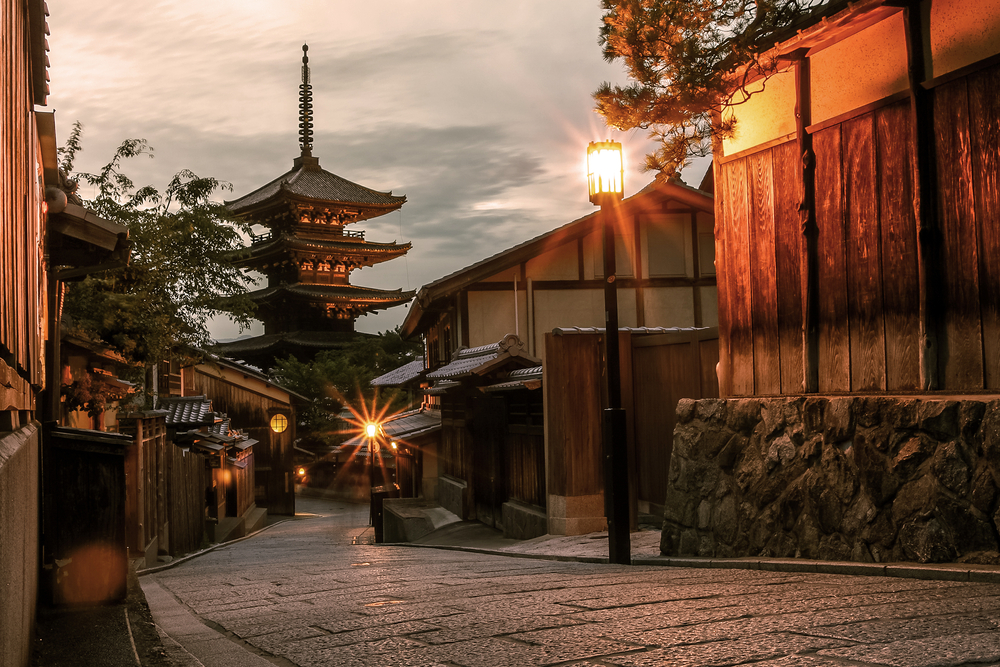
Gion, Kyoto's Geisha District

Gion is the perfect place to end your second day in Kyoto. A visit to this district, which is well-known as the Geisha district, can feel like stepping back in time. This is where Geisha culture comes to life — you’ll see Geisha (Japanese women trained in traditional arts) walking between traditional wooden houses, teahouses, shops and restaurants.

In Gion, you can dine in restaurants serving both traditional Japanese cuisine and international food, and attend cultural shows.  A cultural show is held every day at the end of Hanami-koji Street to showcase a range of traditional Japanese arts, including tea ceremonies, flower arranging, dancing and comic plays. This is a great way to experience traditional Japanese culture.

Kyoto Day 1 Itinerary

Nijo Castle
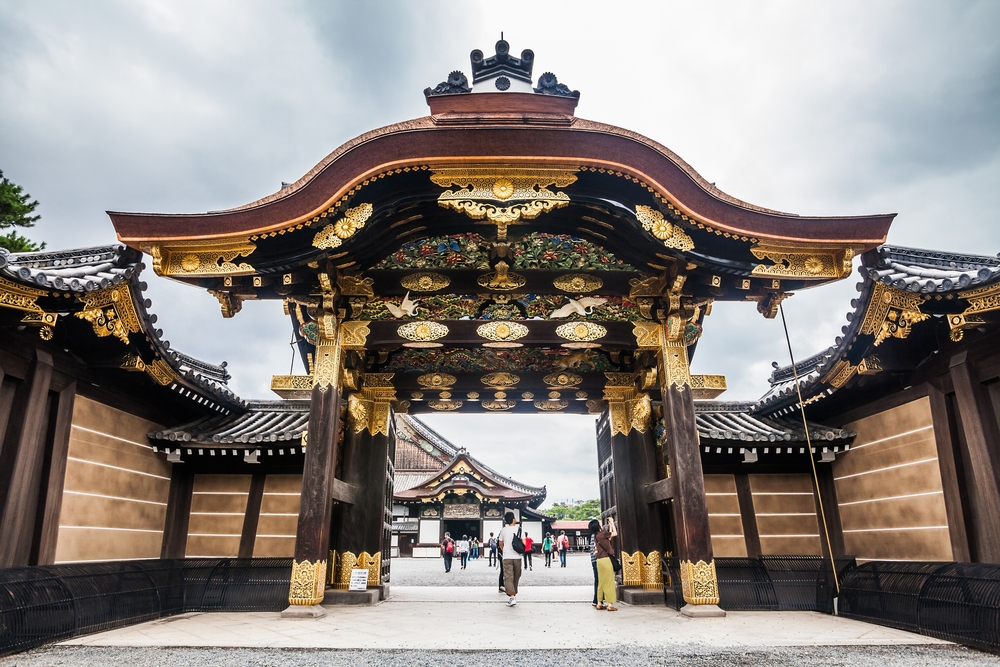
Nijo Castle, Kyoto

During the Edo period, Japan was governed by the Tokugawa shogunate, a military dictatorship founded by the first shogun, Tokugawa Ieyasu, also known as the unifier of Japan. And for many years, Nijo Castle was Tokugawa Ieyasu’s main residence. 

The castle was built in 1603 and has remained largely intact since the Edo period. Today it’s one of the best examples of Japanese architecture from this period. The Castle has two rings of fortification, each one built as a line of defence. These two areas are surrounded by Japanese-style gardens and ponds. In the centre of the fortress, you’ll find the most impressive building: Ninomaru Palace. For those interested in Japanese history or architecture, this castle provides a unique insight and understanding.

Kiyomizu-dera Temple
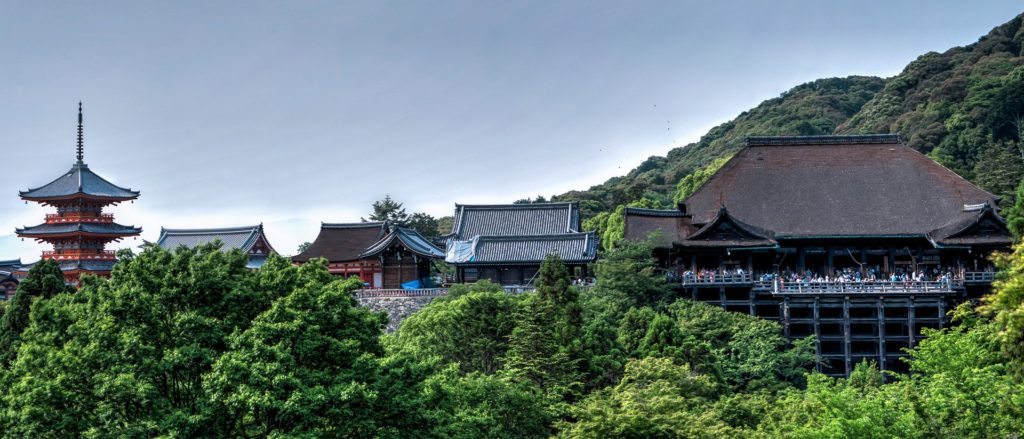
Kiyomizu Temple

Dating back to 778AD, Kiyomizu-dera Temple offers a glimpse into Japan’s ancient history. It was built mostly from Japanese cypress and entirely without nails, and it’s one of the oldest temples to remain in its original form. 

The temple is well-known for its wooden stage, which is 13 meters high and protrudes over the mountainside, offering a panoramic view of the beautiful landscape. 

Kiyomizu-dera quite literally translates to Pure Water Temple — it was named because it’s located beside the Otowa waterfall, where pure water flows. The water has been re-directed through the temple grounds and it is possible to drink this water from a ladle. To drink the water is said to give good fortune and success. You’ll often see school students gathering to drink the water before sitting exams. 

Nijo Castle and Kiyomizu Temple are both keystones of Japanese history and have been preserved exceptionally well. Visiting both of these beautiful sites will give you an insight into Japanese history, architecture, and culture. And you’re sure to get some incredible photos too.

What Did You Think of this Kyoto Travel Itinerary?

I hope you’ve found this guide useful! I created this Kyoto travel itinerary to help you plan an incredible three days in this wonderful Japanese city, packed with temples, castles, shrines, and gardens.

If you follow this itinerary I’d love to know how you found it, or if you’ve already visited Kyoto, what would you do differently?
When is the Best Time to Visit Bali?

One of the first things you’ll need to decide when planning a trip to Bali is when to visit this beautiful island. Find out which months have the best weather, when the high and low season is, and choose the best month for your trip to Bali. 

So you’re planning a trip to Bali? Good choice! After spending 4 months in Bali last year, I fell in love with this little island and decided to spend most of this year there too.

I’ve experienced different seasons in Bali, so I’ve basked in the Bali sun and got caught in the crazy Bali rain. I’ve seen the island heaving with tourists in high season and experienced it slightly less crowded in low season. So when is the best time to visit Bali?

Most people visit between April and October, simply because this is the dry season. You’ll get beautiful weather and clear skies (mostly, no promises), and if you’re into surfing these months are perfect for catching waves too. However, dry season is also high season, and you’re likely to experience Bali at its busiest between April and October. July and August are particularly busy, but this seems to be the case with almost every destination.

So there are pros and cons to different months in Bali. When you should visit will depend on whereabouts in Bali you’re visiting, the activities you have planned, and your budget for flights and accommodation.


Which Months Have the Best Weather in Bali?

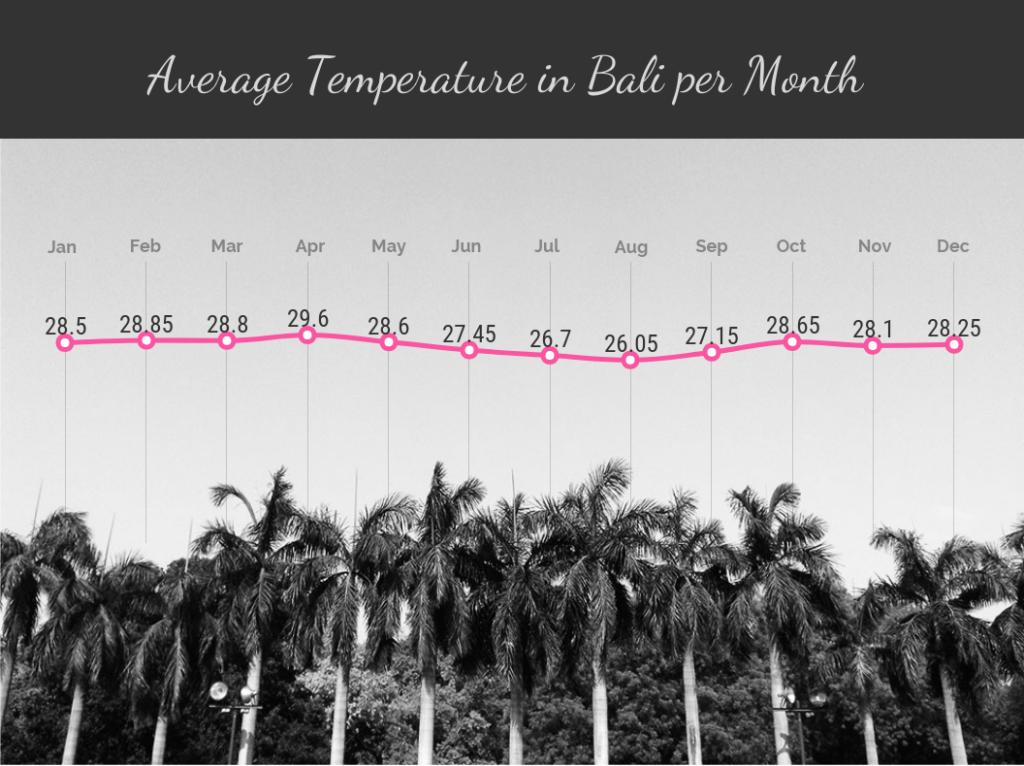
If it’s warm weather you’re looking for, Bali has this year-round. You can expect average temperatures between 26°C and 29°C, but the reality is that average high temperatures regularly reach over 30°C. Coastal areas in Bali, such as Kuta, Canggu, Seminyak and Sanur will generally be a bit warmer (and more humid) than places like Ubud which are further inland and surrounded by mountains.

If you check out the chart below, you’ll see there’s not much difference in average temperatures from month to month.

Watch Out for Rainy Season!

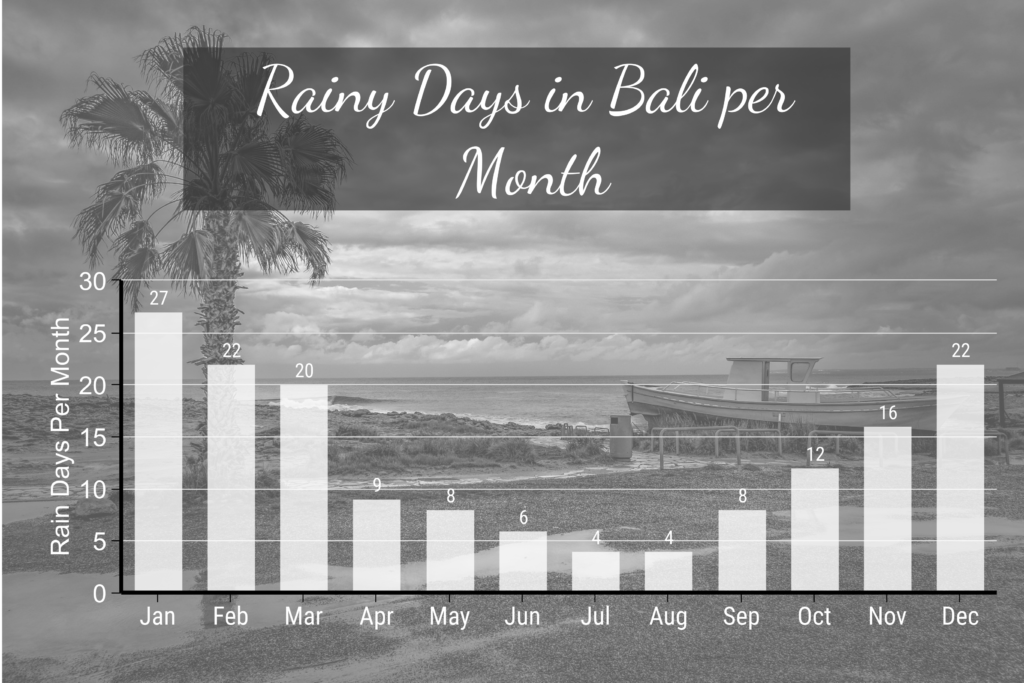
As well as considering the temperature, you’ll also want to think about the Bali seasons. Bali has two main seasons: the dry season and the rainy season. The Bali rainy season is usually between October and April, so for most people, the best time to visit Bali is between April and October.

Even if you’re the sort of person that doesn’t mind the rain, it’s worth noting that Bali rain is pretty intense. It’s often torrential, non-stop rain for days during the wet season. And while it can be exciting to see such heavy rain, especially if like me, you’re from a country where the rain is a little pathetic, it quickly wears thin, and it will ruin your plans to get out and explore, lounge around by the pool or enjoy the beach. Almost all of the tourist attractions and things to do in Bali are outside, so if you’re planning to explore Bali’s sights and natural beauty, the rainy season isn’t the best time to visit.

However, the wet season is the cheapest time to visit Bali, so if you’re travelling on a budget, you may decide to brave the rain. And if you do visit Bali between October and April, check out this list of things to do in Bali in rainy season.

Rainy Days in Bali per Month

A Breakdown of the Months in Bali

If you want to get an idea of what Bali is like in different months, here’s a breakdown of what to expect from each month of the year.

January in Bali

January is Bali’s most rainy month. With an average of 27 days of rain, it rains almost every day, and there are often multiple showers a day. There are quite a few thunderstorms during this month, which usually occur during the afternoon, evening or overnight. The tropical thunder and lightning can be quite impressive to watch, but it’s not ideal if you have day trips planned.

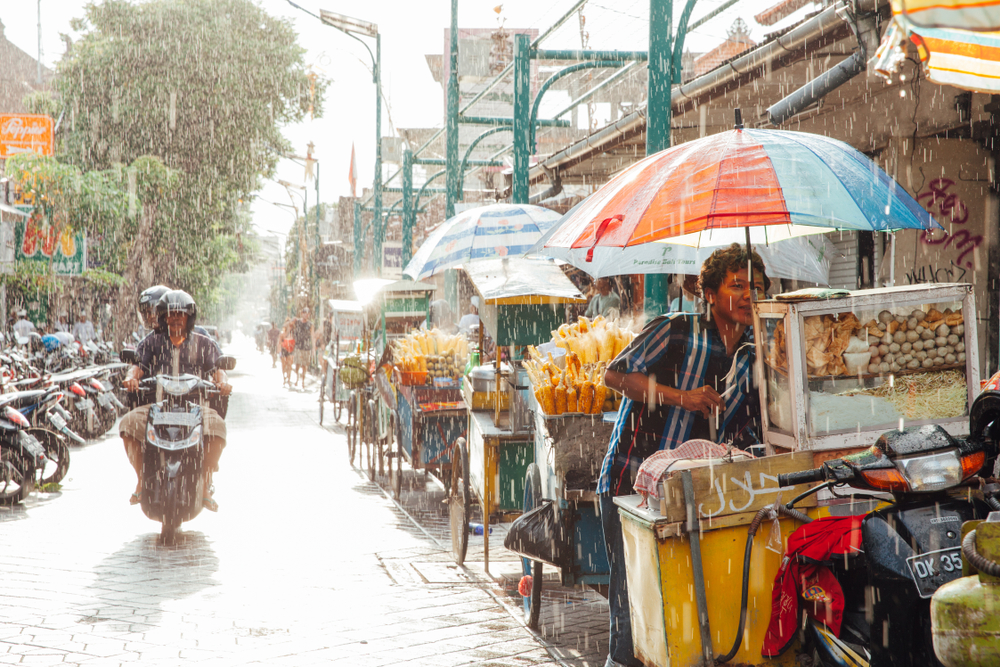
Rainy Season in Bali

February in Bali

February isn’t quite as bad as January in terms of rain and thunderstorms, but it still rains an average of 22 days a month. Even though you’ll have more sunny and dry days than in January, the beaches may not be at their best — storms can wash up a lot of debris and seaweed, so February isn’t the best time to visit if you’re hoping to visit Insta-worthy beaches.  And just like January, February is a particularly hot and humid month.

March in Bali

March is the last month of the Bali rainy season, and while it’s slightly drier than February, you can still expect rain on most days. March is the most humid month in Bali, so you can expect to get hot and sweaty if visiting the island during this month. It’s not too busy in March, but you will find a lot of long-term travellers head to Bali at this point. Many tourists also want to experience Nyepi, the Balinese day of silence. Scroll down to read more about this Nyepi.

April in Bali

April is the start of the dry season, and with an average of only 9 days of rain in the month, you can expect good weather for most of the month. However, during this month, tourism starts to pick up, especially over Easter. It’s still nowhere near as busy as July and August though, so if you’re looking for a mix of good weather and bearable crowds, this could be the best month to visit.

May in Bali

Weather in May is much the same as April, but it can be a little quieter as there’s no Easter rush of tourists. You can get some good deals in May, and with beautiful weather, quieter streets and beaches, this is a great time to plan your visit to Bali.

June in Bali

June is one of the best months to visit Bali. The weather is perfect and not too humid, with a very slim chance of rain. Tourism really starts picking up in June so you can expect more crowds, but still it’s a great time to visit.

July and August in Bali

July and August are Bali’s busiest months, because of school holidays and the perfect weather. Traffic can be crazy, and beaches fill up. You can also expect higher prices as this is the peak time to visit the island. While the weather is great, I’d suggest avoiding these months if you can, and instead plan your visit for one of the dry season’s shoulder months: April, May, June or September.

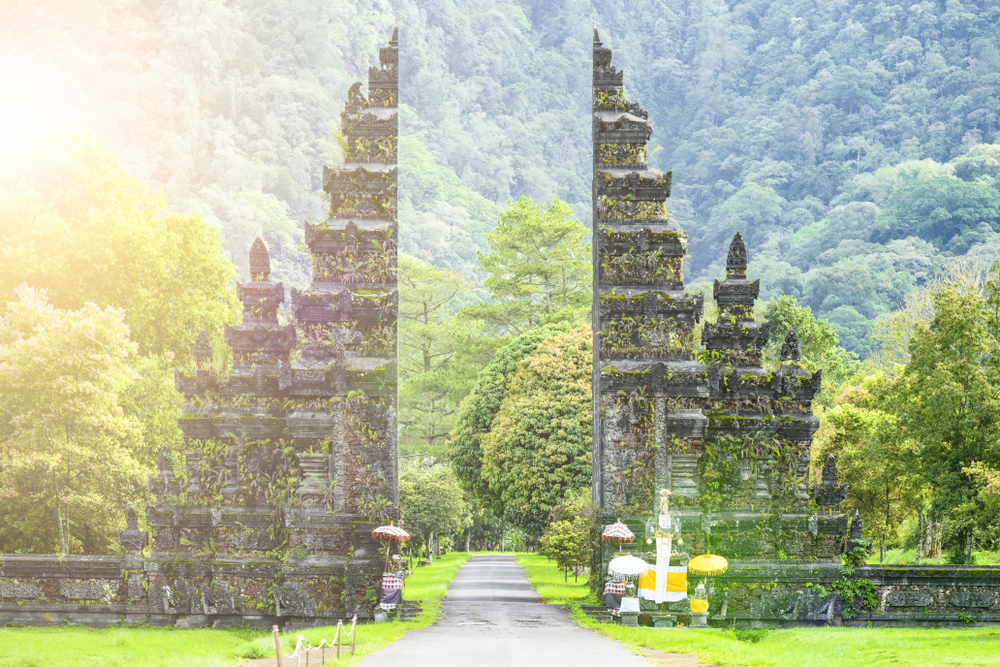
Bali Handura Gate in August

September in Bali

You can still expect good weather for most of September, but as this is the last month of the dry season, you might experience a few days of rainfall and slightly higher levels of humidity.

Flights to Bali from Australia can be more expensive towards the end of September as there is an Australian school holiday at the end of the month, and into the first two weeks of October.

October in Bali

October is the start of the rainy season in Bali. On average, it rains on around 12 days of the month, and while the rest of the month is generally blue skies and great weather, it can get quite humid. However, it’s worth noting that in recent years, perhaps because of global warming, the rainy season hasn’t kicked in until late October/early November. So if you’re planning a trip in October, you may not experience any rain.

The first two weeks of October are Australian school holidays, so it can be a little busier than September, but it’s still much quieter than peak season, and you can still find some good deals on accommodation and activities. But flights from Australia can be more expensive.

November in Bali

Visiting Bali in November is a good choice if you’re on a budget. The weather isn’t fantastic: it’s a fairly rainy month and high levels of humidity mean you’re going to get pretty sweaty, but you’ll find plenty of affordable accommodation options, and you can get some good flight and tour deals.

December in Bali

In December, Bali starts to enter the height of the wet season. The start of the month can be relatively quiet, but over Christmas and towards New Year tourism can start to pick up as lots of people love to get away for the holidays and celebrate somewhere hot. Indonesian school holidays and year-end work leave also fall in December, so it can be busy with local tourists.

Which Months Are Best for Surfing in Bali?

Bali is the perfect destination for surfers. The island is famous for its surfing spots. Whether you’re a pro surfer or a complete beginner, Bali has the waves for you. But if you want the best possible wave-catching experience, it’s worth planning around the best months for surfing in Bail.

If you’re planning on surfing on the west coast in areas like Kuta, Seminyak, Canggu and Legian, the best time to visit is between April and October. During these months the offshore wind creates the best waves for surfing.

However, the reef breaks in the east coast might appeal more to you if you’re an experienced surfer. And if you’re hoping to surf east coast shores in areas like Sanur, it’s best to visit between November and March. This may be the rainy season, but you’ll still have some clear days, and the swell will make up for it. Plus, there’ll be fewer people about, which is always an added bonus.

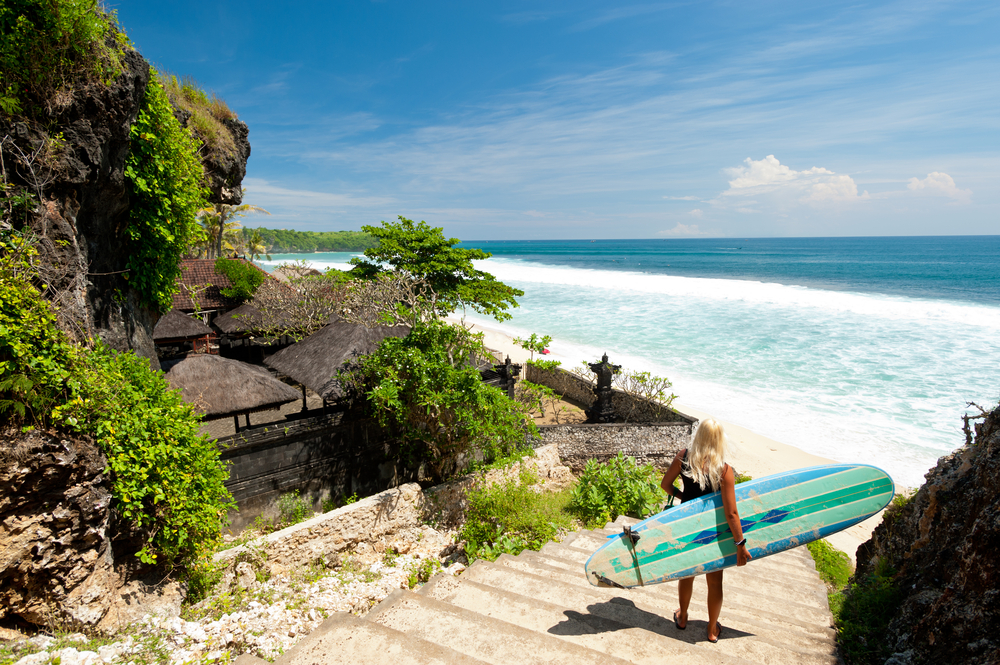
The Best Time to Surf in Bali

When is the Most Affordable Time to Visit Bali?

Bali is a fairly affordable destination all year round. The cost of living is less than most destinations in Europe, North America and Australasia. Like anywhere, there’s both an expensive and affordable side to Bali. And as long as you’re not fine-dining every day, and staying in 5* resorts, Bali is a great destination for backpacking on a budget. 

However, the most affordable time to visit Bali is in low-season, also known as the wet season. Between October and March, you can find accommodation, flights and tours that are attractively priced and perfect for travelling on a budget. February and March in particular are often the best time to find deals, as during these months, tourism is at its lowest.

Events and Ceremonies in Bali

If you’re really hoping to throw yourself into local ceremonies, you’re probably hoping to experience some local events, ceremonies or festivals. The good news is, Bali has hundreds of ceremonies and you’re going to encounter lots of them during your visit. For example, ceremonies are held to mark the ‘birthday’ of temples, and as there are around 20,000 temples in Bali, I’m sure you can imagine these ceremonies are quite frequent.

Here are some of the Balinese events that you might want to experience.

Melasti and Nyepi

Nyepi is Bali’s day of silence and it’s the most important Balinese Hindu celebration. The day marks the New Year in the Caka Calendar and for 24 hours the island is completely silent. Silence is compulsory, so even tourists need to stay in, be silent, and turn off the lights. Yep, you read that right, no lights are allowed during Nyepi.

In fact, there are several rules that everyone on the island must follow during Nyepi:

1: Don’t go out onto the street
2: No fire, light or electricity (this also means there will likely be no internet)
3: No motor vehicles
4: Be silent — no one outside of your room should be able to hear you
5: No travelling — the airport will be closed, and you won’t be allowed to drive anywhere

The only people allowed to break these rules are emergency services.

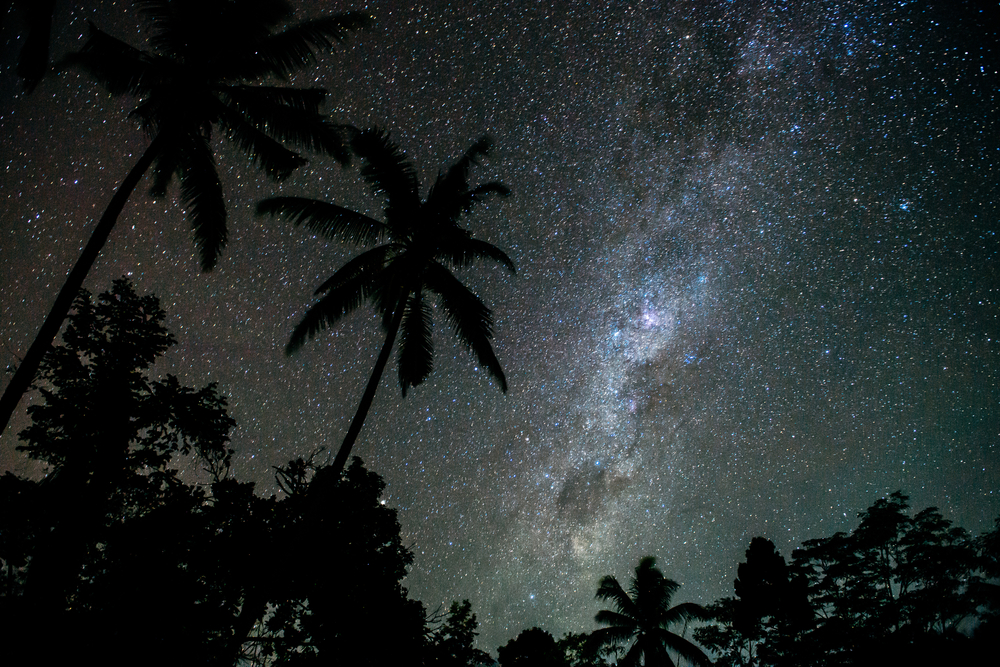
It’s an incredible day to experience. With no traffic, no talking, or TVs blaring, no music and no lights, the island is at its most peaceful. You’ll see the stars like you’ve never seen them before, thanks to the lack of light pollution. And if you’re a keen photographer, you capture beautiful pictures of the stars, and even of the Milky Way.

Nyepi Stars in Bali

The days leading up to Nyepi also involve a variety of preparations and Melasti ceremonies — purification rituals and ceremonies. Locals create ‘ogoh-ogoh’ which are statues that take the form of mythical beings and demons. These figures represent the bad spirits that are guided to leave the island during Nyepi. They are paraded through the streets the evening before Nyepi.

Galungan and Kuningan

Galungan is a holiday that celebrates the victory of good over evil and it occurs during the 11th week of the 210-day Pawukon calendar (the Balinese have several different calendars). Kuningan

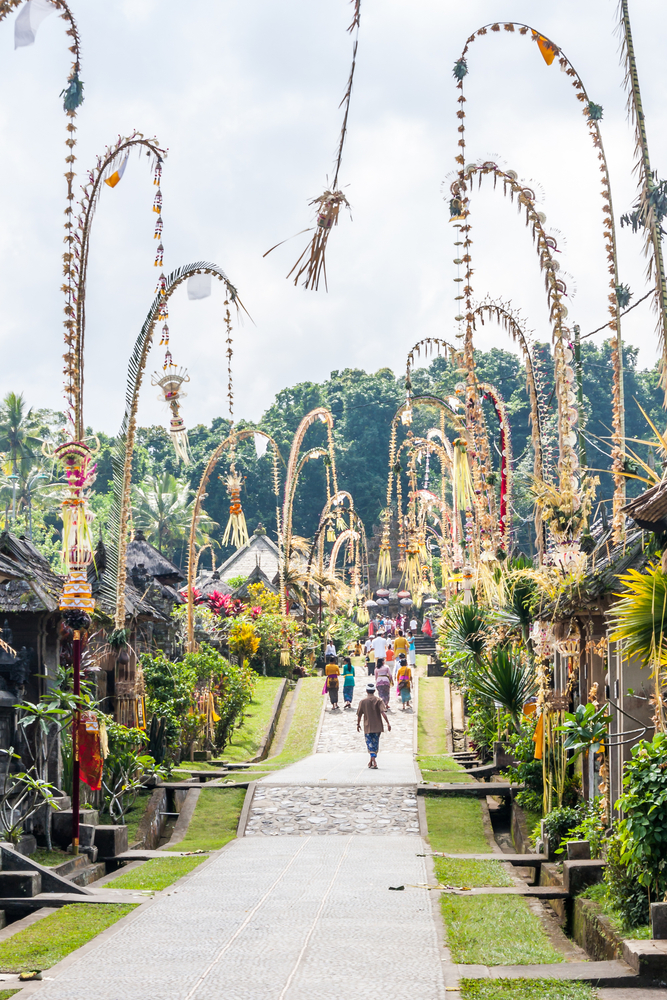
The holiday will consist of a series of ceremonies and for 10 consecutive days, you’ll find traditional decorations over the whole island, and locals will be participating in festivities and ceremonies.  You’ll see penjors lining streets and decorating temples — these are ornate bamboo poles that hold religious offerings. Walking through streets decorated with penjors is quite an experience, and these traditional decorations can make for some beautiful photos.

Galungan Bali Penjors

While you’ll still see some decorations like these at other times of the year in Bali, the island is even more beautiful during Galungan. And visiting Bali during this holiday gives you a chance to immerse yourself in Balinese culture.

Bali Arts Festival

The Bali Arts Festival happens every year and usually lasts for a whole month. It celebrates Balinese culture and art with performances, exhibitions and traditional decorations all over the island. This festival usually starts in June and ends in July.

Ubud Writers and Readers Festival

The Ubud Writers and Readers Festival happens every year in October. The festival consists of five days packed with writing workshops, talks from authors and journalists, live performances and artistic events. This is a great event to visit if you love literature and want to learn more about Indonesian culture and how it is represented in literature and the media. This is a reflective event that will leave you feeling inspired to write and read more, and you’ll come away with a deeper understanding of Indonesian history and culture.

27 Things To Do In Ho Chi Minh City (Saigon)

I was so excited to explore Vietnam that when I booked my Airbnbs, I booked much longer in each location than I needed. So whilst most people only spend a couple of days in Saigon, I booked an apartment in District 3 for an entire month.

After two days there, I’d completed most of the major tourist attractions, so I thought I’d set about finding the city’s hidden gems and quirky attractions.

By the end of my month in Ho Chi Minh City, I’d compiled a list of 27 things to do. And don’t worry, it’s a wholesome list, with genuine places to go, there’s nothing like ‘try the streetfood’ – although you should also do that too.

So for anyone else looking to spend a while in Saigon, here are 27 fun and unusual things to do in and around the city.

(I’ll start with the classic tourist attractions, so if you want the more unusual things to do, keep scrolling down the list!)

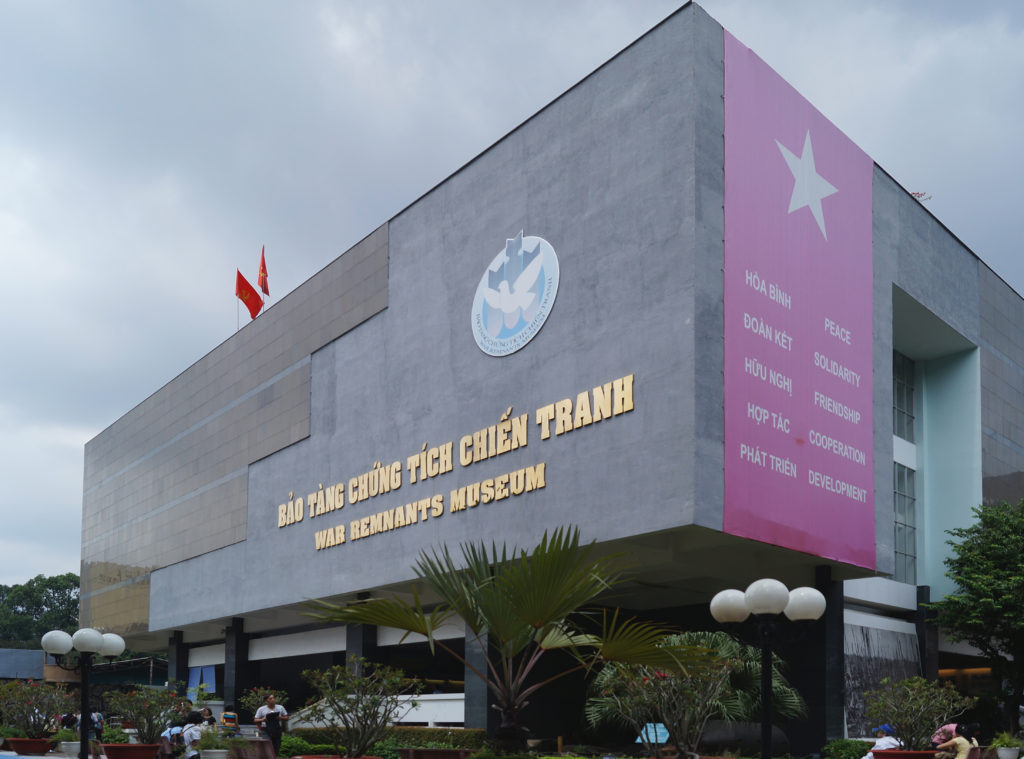
1: War Remnants Museum

War Remnants Museum Vietnam

The War Remnants Museum is packed full of information about the Vietnam War, and the lasting effects of the weapons used.

I was guilty of not knowing all that much about the Vietnam War, so for me, this was a real learning experience. There was political information, as well as stories from individuals and pictures that captured the devastation of war.

As well as the main building, there was also a collection of war machines like tanks and planes outside. And round the back, there was a prison area, with information about how the prisoners were tortured and what crimes they’d committed.

I won’t lie, this museum is full-on. I had planned to combine it with the Independence Palace, but it didn’t seem right rushing on to another attraction. It’s a sobering but insightful experience.

Ticket Price: 40,000 VND

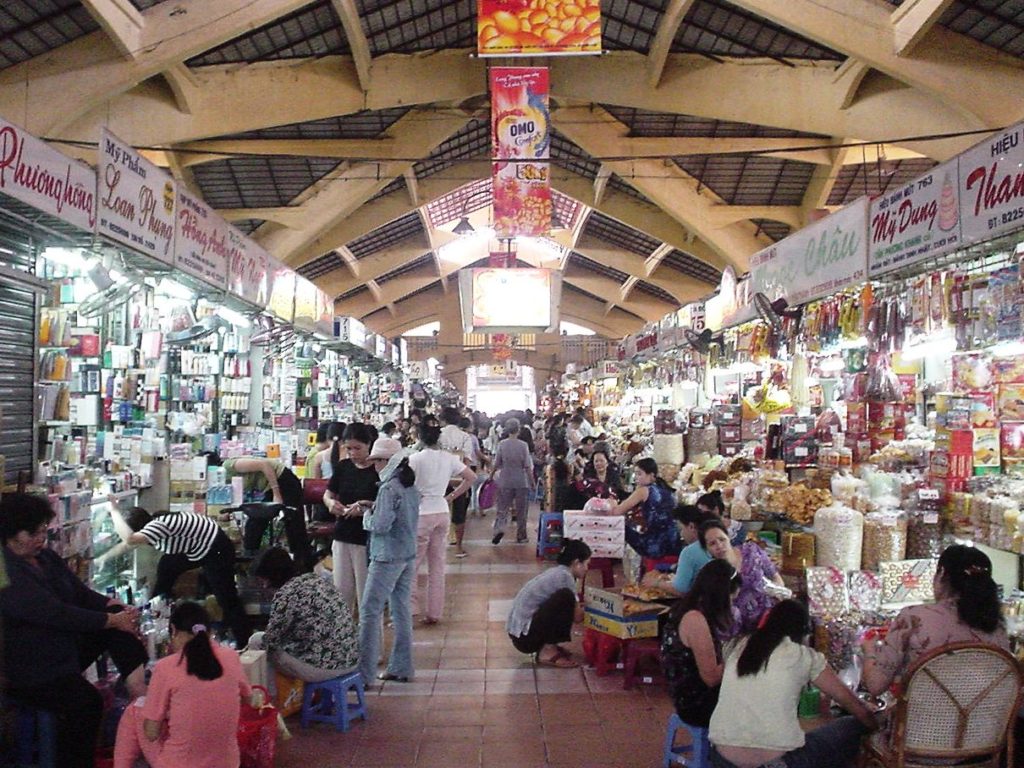
2: Benh Thanh Market

Benh Thanh Market

Benh Thanh Market is the most popular tourist market in Saigon, and it’s a must-see. There’s plenty of souvenirs to buy and even if you’re not interested in shopping, just walking through the narrow market paths is an experience.

There are colours everywhere, and some good food too. To find the food section of the market, just follow the smells.

Cost: Free! (Unless you buy something of course)

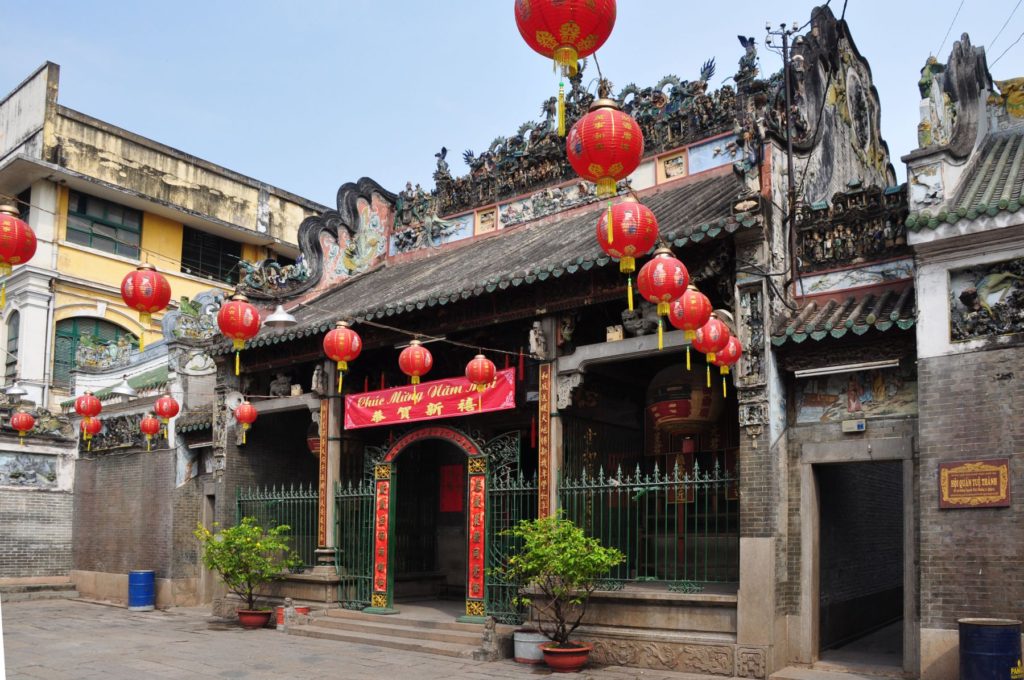
3: Thien Hau Temple

Thien Hau Temple

Thien Hau Temple is built with Chinese style designs and architecture. You can admire the intricate decorations, and learn about the history of the temple from a guide. It’s one of the most important temples in Saigon, so it’s definitely worth a visit.

I’d recommend visiting this temple as part of a tour (you can find tours that combine different attractions in the city centre for about $7 per person). This way, you’ll learn all about the temple’s history.

Cost: Free if you visit independently, or from $7 per person if you join a tour (the tour will involve other attractions as well)

4: Binh Tay Market

This is another market, but it’s one that’s not so touristy. It’s in Saigon’s Chinatown, in a two-storey building and it’s a great place to get a taste of local life.

There are lots of foods including colourful fruit and veg stands, but there’s also crafts, pottery, clothes and a few souvenirs for sale.

Cost: Free (unless you buy something)

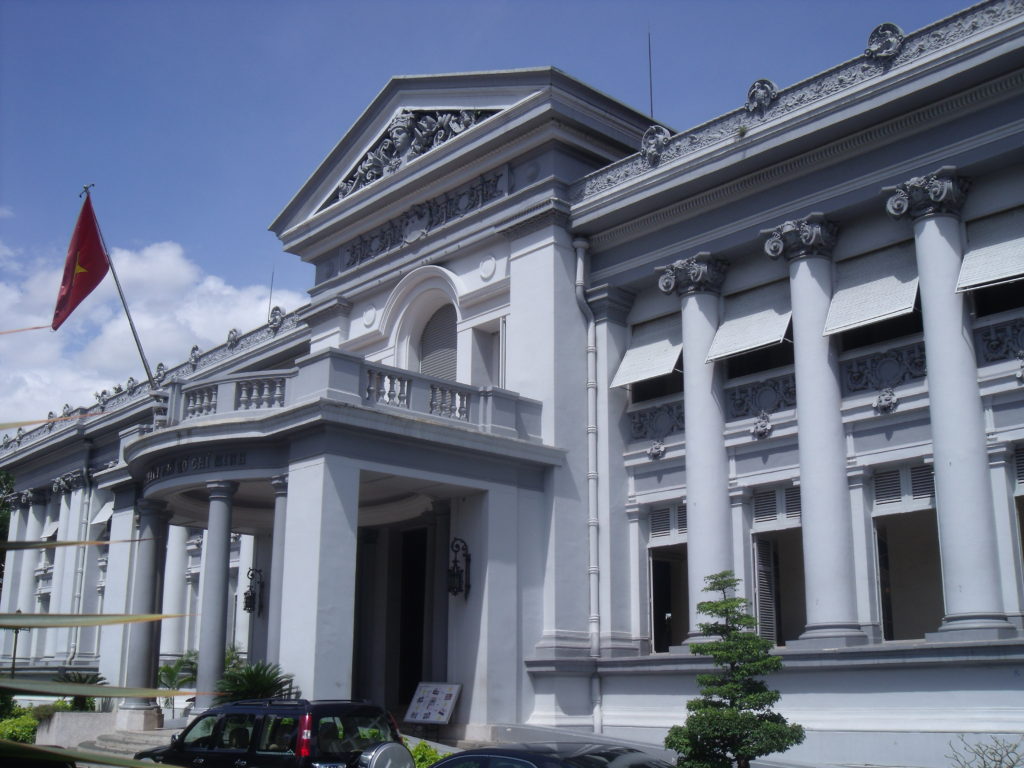
5: Museum of Ho Chi Minh City

Ho Chi Minh City Museum

If you want to learn a little more about Vietnam’s founder, Ho Chi Minh, this is the museum to come to. There’s plenty of information about Ho Chi Minh’s life, and lots of photographs and objects from his life.

Ticket Price: 10,000 VND

6: Bitexco Financial Tower

When I go to cities, the first thing I do is try and find a good view. And the Bitexco Financial Tower has the best views in the whole city.

It’s a little pricey, but you can go up to the observation deck where there are panoramic views and information about the city’s most prominent buildings.

When I visited, I wanted to get higher up than the observation deck (because can you believe it, the observation deck isn’t even on the top floor!). So I asked if I could go for a cocktail in the bar which was slightly higher up.

To get to the bar we had to go up in a private elevator and pay extortionate rates for a drink, but it was worth it to be able to sit down and take in the views with a good cocktail.

Ticket price: 200,000 VND for entrance to the observation deck. The drinks in the bar were around 220,000 for one of the cheapest cocktails. 

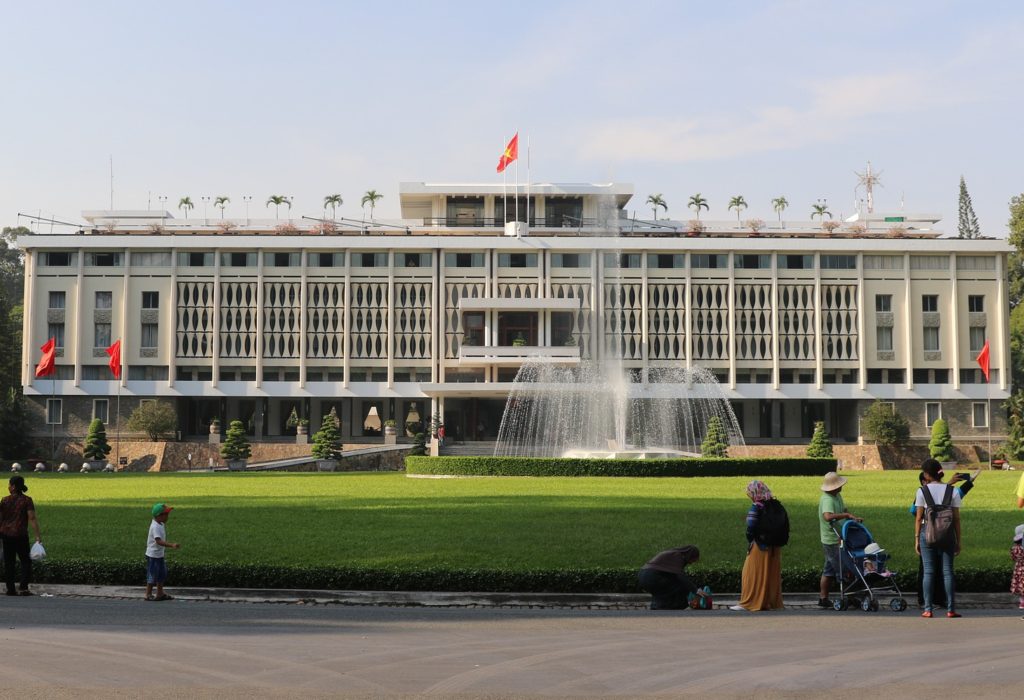
7: Independence Palace

Vietnam Independence Palace

The Independence Palace is another popular tourist attraction. It was a government building before Communist tanks crashed through the gates in 1975, and now it’s still used for a lot of important official events.

The Palace feels quite eerie, as everything has been left or displayed exactly as it would have been back in the day. The décor is in perfect condition, and the chairs are still sat around the tables in meeting rooms.

It’s a great place to visit if you want to learn more about Vietnam’s history. But even if you’re not a history buff, walking the gigantic corridors and waving from the balcony can make you feel like royalty.

Ticket price: 30,000 VND

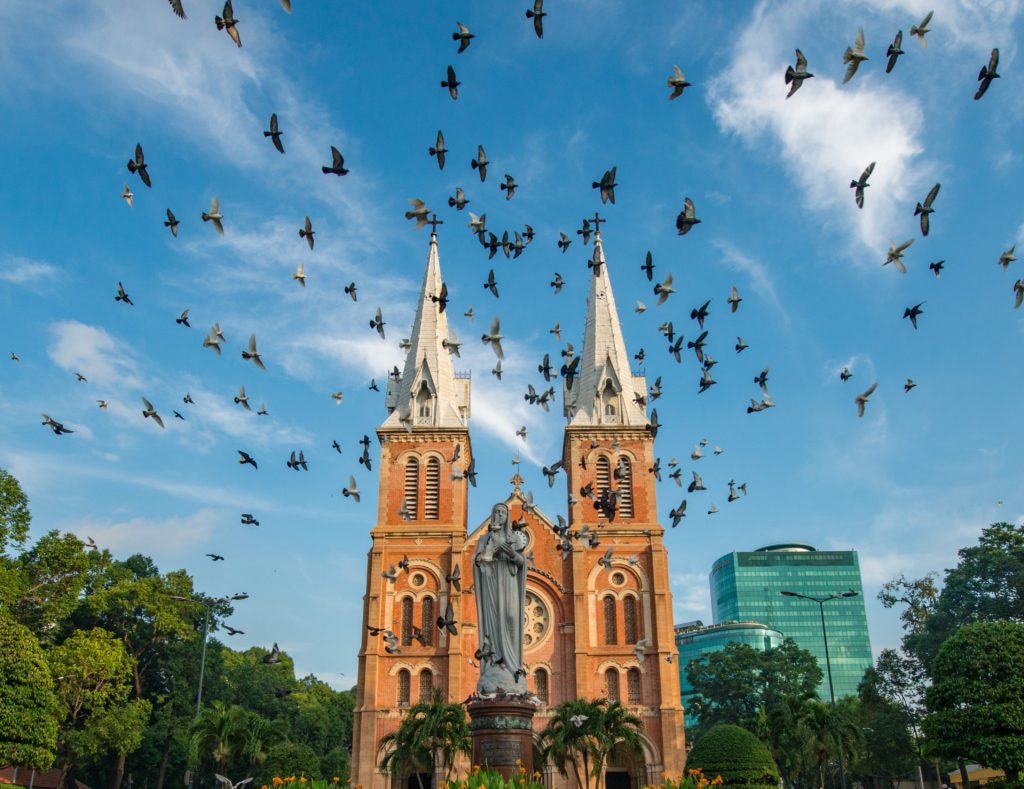
8: Saigon Cathedral of Notre Dame

Saigon Notre Dame Cathedral

The Saigon Notre Dame Basilica is one of the most famous landmarks in Ho Chi Minh City. The red brick, European style makes it stand out from the rest of the modern city, and with the Central Post Office just across from it it’s like stepping back in time.

You can go into the Cathedral during mass, or you can admire it and take photos from outside. There’s always lots of birds who fly in groups round and round the Cathedral, which makes for great photos and videos.

Cost: free!

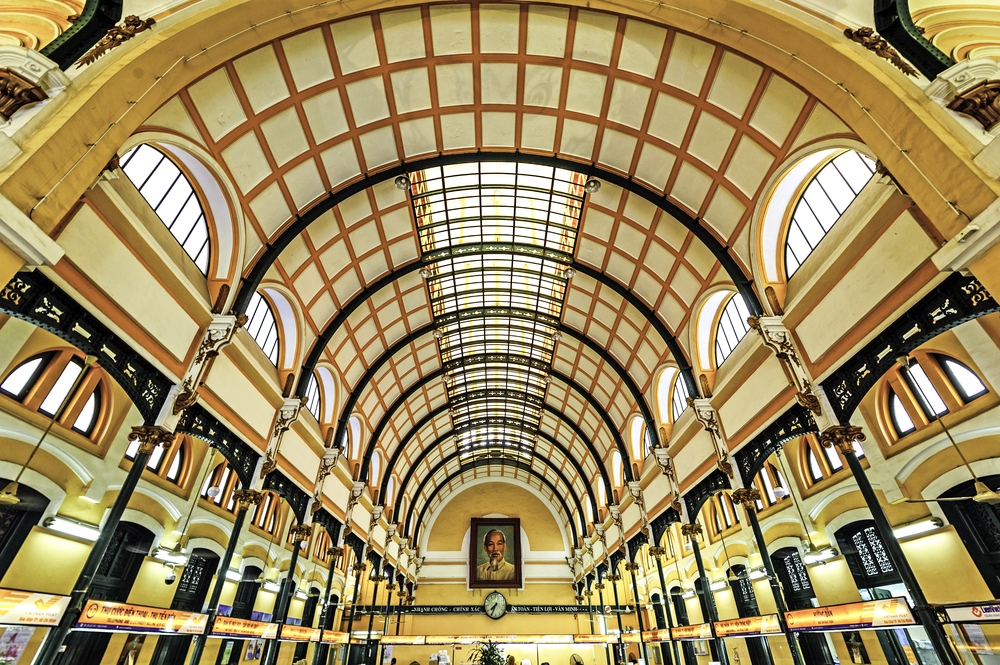
9: Central Post Office

Saigon Central Post Office

The Central Post Office is just across from the Notre Dame Basilica, so it’s worth combining these two attractions. The Post Office doesn’t look like much from the outside but once you step inside, it’s really quite grand.

The ceiling is so high it feels as though it’s miles away, and there are huge paintings of maps on the walls, with old fashioned booths beneath and clocks for different time zones.

There are several businesses within the Post Office, including several local services and a few little souvenir shops.

Cost: free! 

10: A O Show

The Saigon Opera House is definitely something you should consider seeing, but rather than just visiting the building, why not watch a show?

Don’t panic, you don’t have to sit through an opera, there are several shows about the history and development of Vietnam, the best being the A O Show.

You’ll see gymnastics, interpretative dance, and clever performances that demonstrate the growth of Ho Chi Minh City. And afterwards, you’ll have the opportunity to meet the performers!

Ticket price: 700,000 VND, 1,150,000 VND or 1,600,000 VND depending on what seats you choose

12: Fito Museum

If like me, you’re a fan of quirky museums, you’ll definitely want to visit the Fito Museum. It’s full of traditional medicines and set up like a pharmacy. You’ll be shown around by a guide who will fill you in on the history of Vietnamese medicine. You’ll even learn about stone-age remedies.

Ticket price: 120,000 VND

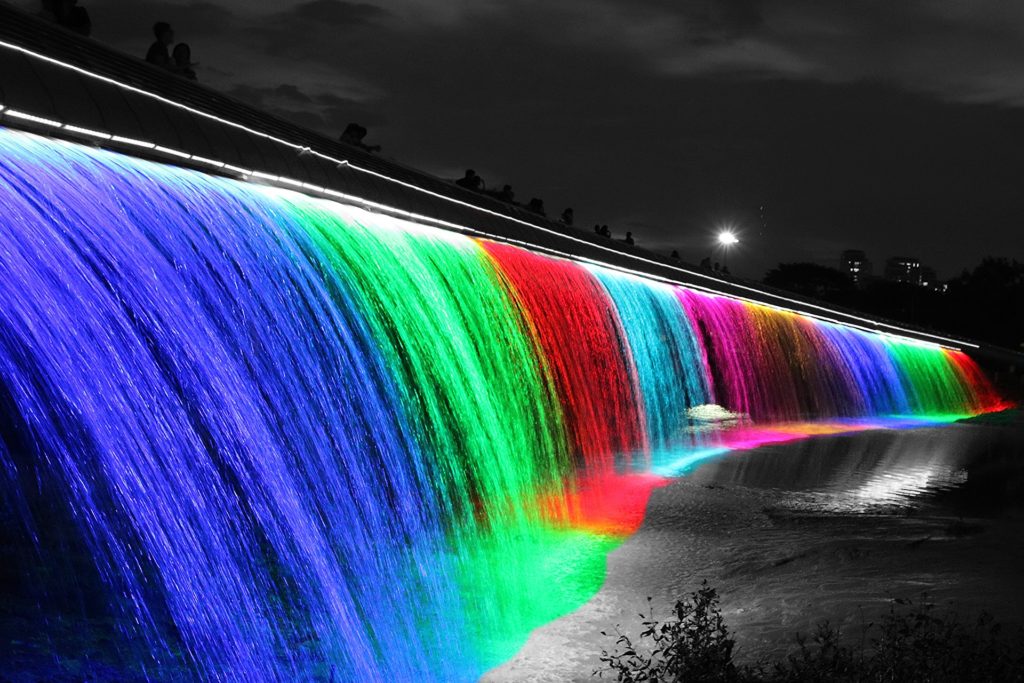
13: Starlight Bridge

Star Light Bridge Ho Chi Minh

The Starlight Bridge in District 7 is beautiful after dark. From the side of the bridge pours a multi-coloured waterfall that makes for great photos and a romantic setting. It might not be a whole day out, but it’s definitely worth taking a stroll by the bridge at least once during your stay.

Cost: free!

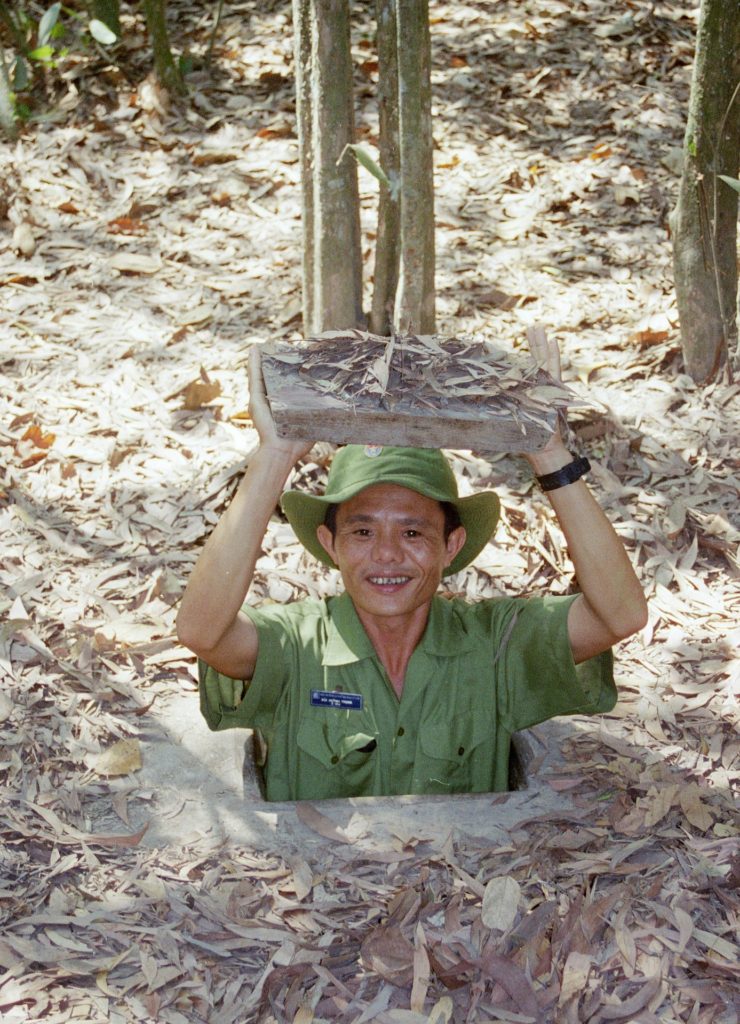
14: Cu Chi Tunnels

Cu Chi Tunnels

The Cu Chi Tunnels were used by the Vietcong during the Vietnamese War. I went on a cheap $7 tour to these tunnels and it was one of my best days in Saigon.

You get to see machines like tanks and helicopters used during the war and even venture into different tunnels. The tunnels have been widened for tourists, but be warned, they’re still terrifyingly small.

I’d definitely recommend going with a tour group, as the tunnels are two and a half hours out of the city. And tour guides are able to give much more information than you’d get on your own.

Cost: Anywhere from $7-$160 (there are basic tours, combination tours, or luxury tours by limo)

15: Jade Emperor Pagoda

If you’re hoping to check out some Vietnamese temples or architecture, the Jade Emperor Pagoda is over 100 years old and it’s a sight to behold. The temple has some beautiful and intricate carvings, and inside you’ll find some interesting statues of characters from both Buddhist and Taoist legends.

Cost: Free!

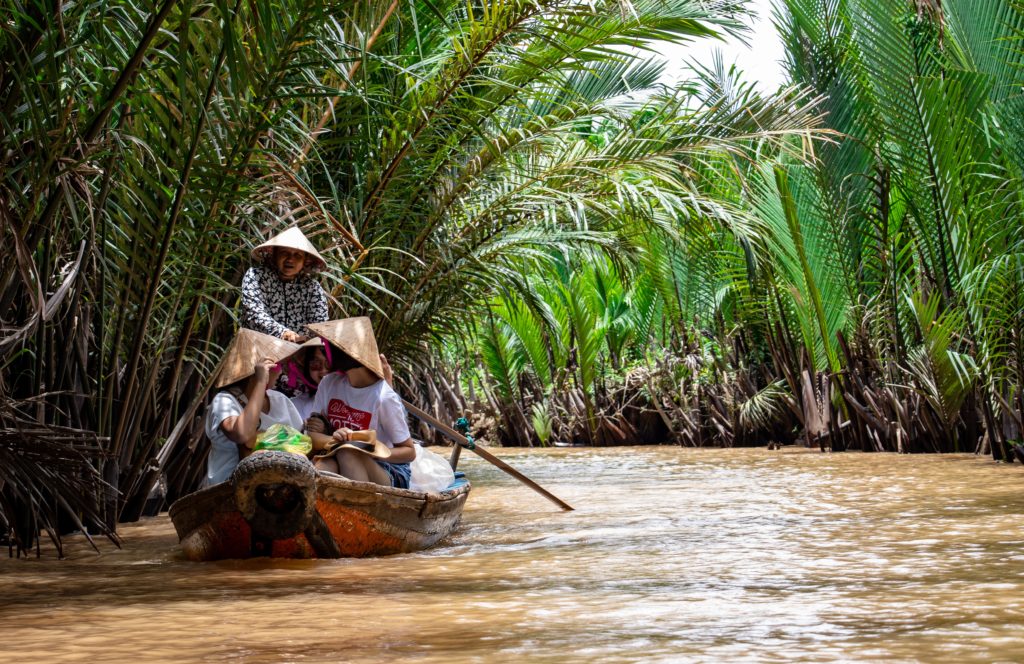
16: Mekong Delta

Mekong Delta Saigon

There are so many different ways to see the famous Mekong Delta, but one thing’s for certain, you NEED to see it.

You can kayak down the river, take a speed boat, luxury boat or a tour boat. Most tours will also show you around the riverside villages, so you can see what life is really like in rural Vietnam.

As you cruise down the river you’ll learn about Vietnamese history and culture, whilst passing locals, wildlife and spots that were once home to the combat of the Vietnam war.

Tours range in price, some will involve basic boat trips, bike hire and a coach for large groups. But if you want to experience a luxury tour, you can get a private car (or limousine!) to the Mekong Delta region and then enjoy a speedboat ride down the river.

Cost: $30-200

17: Go Shopping At One Of The Many Mega Malls

Ho Chi Minh City has some pretty impressive malls if you’re interested in shopping. There are malls with boutique shops, global brand stores, and some malls even have a level dedicated to pop-up market stalls. You can also find delicious and cheap meals in mall food halls.

Lots of the Saigon malls are so large they even have entertainment complexes with arcades, cinemas, and in one case, an ice rink!

Some of the best malls I visited included the Vincom Mega Mall, the Vincom Centre and the Diamond Plaza. If you’re in Saigon in rainy season, these malls are the perfect place to spend a rainy day.

18: Take to the Ice at the Vincom Mega Mall Ice Rink

Ice skating is probably the last thing you thought you’d be doing in Saigon, a tropical city. But this was the most refreshing activity after walking around in the heat. The ice rink here is huge, and it was rarely busy. It filled up after schools finished but most of the time it was fairly quiet. And I often came across professional skaters practising dance routines on the ice.

Cost: Approximately $5 for 1 hour

19: Play Arcade Games or Go Bowling at Diamond Plaza

Diamond Plaza, a mall in District 1 of the city, has a whole level dedicated to entertainment. You’ll find a huge arcade with some of the best games, and tokens are affordable — you can buy a handful of tokens for around $5-15 depending on how much you want to play.

There’s also a bowling alley so if you want to challenge your partner/travel companions to a game this is the place to go. The bowling is a little expensive though, so if you’re on a budget it may be worth giving it a miss. They charge per person, per game and for shoe hire (you’re not allowed to wear your own shoes). For two people, for two games it cost us about $18.

20: Take on an Escape Room

There are several escape rooms in Saigon, including one in Diamond Plaza. These challenges are considerably cheaper than escape rooms you’ll find in Europe or the US, and they usually cost around $5-10 per person. There’s even a live-action, haunted-themed escape room for those wanting a scary experience.

Cost: $5-$10 

21: Hit the cinema (they’re incredible)

Before I went to a cinema in Vietnam, I thought cinemas were all the same. Oh how wrong I was. I’m used to paying about $15 for a cinema ticket, and all that includes is an uncomfortable seat.

But in Ho Chi Minh City, there are some of the most luxurious cinemas you can imagine. Standard cinema tickets start at about $3, but many cinemas also offer sofa seats or armchairs, tickets that include a cocktail and snacks or even a meal (served by a waiter once the film begins). And don’t panic, almost all cinemas in the city show films in English.

Cost: $3-$8

22: Rock climbing at Push Climbing

If you fancy being active, Push Climbing has a range of indoor climbing walls for all abilities. There are lead climbing walls, and routes for top ropes. You can climb independently, or if you’d rather climb with the help of an instructor, they offer climbing classes.

Rock climbing here is good fun and great value — you can get a day pass with all the equipment you need for about $9.

Cost: $9 for a day pass. 

23: Bouldering at the Vertical Academy

This place is really tucked away but you can easily drive there if you have a bike, or take a Grab taxi. It’s worth making the trip out of the centre if you’re a climbing fanatic.

It’s a bouldering place, so there’s no ropes or harnesses, you just climb and land on the mats below. The walls include high climbs, overhangs, and different coloured routes of different difficulties.

The staff are super friendly, they’ll help you figure out climbing techniques, and they speak great English too.

You’ll need to hire climbing shoes when you arrive, but even so, it’s great value and you can climb for as long as you like. One thing to note though is they only have climbing shoes of sizes up to a UK Men’s 12.

Cost: Roughly $5 

24: Dining in the dark

This is a quirky experience that I’d never heard of before arriving in Saigon. It’s basically a tasting experience where you taste different dishes without being able to see them.

You really won’t know what to expect! But don’t worry, if you’re vegan or vegetarian, they can cater for that, so you won’t end up accidentally eating meat.

This is a slightly pricey experience if you’re on a budget, but it’s definitely worth a try if you consider yourself a foodie.

Cost: $30 

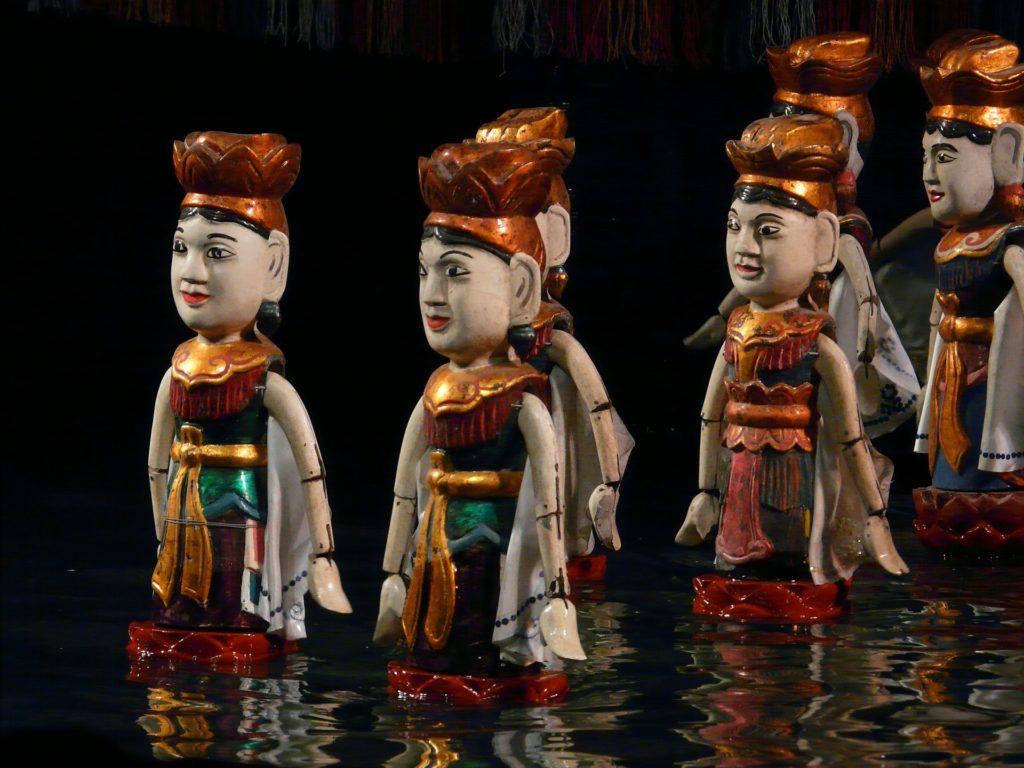
25: Watch a Water Puppet Show

Water Puppet Show Saigon

The Saigon Water Puppet Show is a famous show in Vietnam. Puppeteers act out traditional stories and legends while waist-deep in water. The performances are accompanied by traditional Vietnamese music, played with authentic instruments. These shows used to be performed in the rural rice paddies.

Cost: Approximately $5 for a ticket

26: Go to a bug café

Dining on bugs has become a popular tourist challenge, so if this is what you’re into, there are bug cafes that can satisfy your cricket cravings. You can try insects cooked and prepared in any which way — dine on gourmet bugs, or challenge your travel companions to eat a creepy crawly.

27: Meet Furry Friends at a Pet Cafe

Visit a cat cafe in Ho Chi Minh City

Pet cafes are super trendy in Vietnam — you’ll find cafes with cats and/or dogs roaming around and customers are free to cuddle, stroke and play with them. So if you want to make some furry friends, check out one of these pet cafes.

Suffering From Dengue Fever In A Shared Hostel Dorm In Bali

During my first few days in Bali, I fell ill with Dengue Fever. I was travelling solo and staying in an 18-bed dorm room in a hostel, sharing two toilets between 36 hostel guests. Here’s what happened. 

The Incident That Started It All: The Mosquito Bite

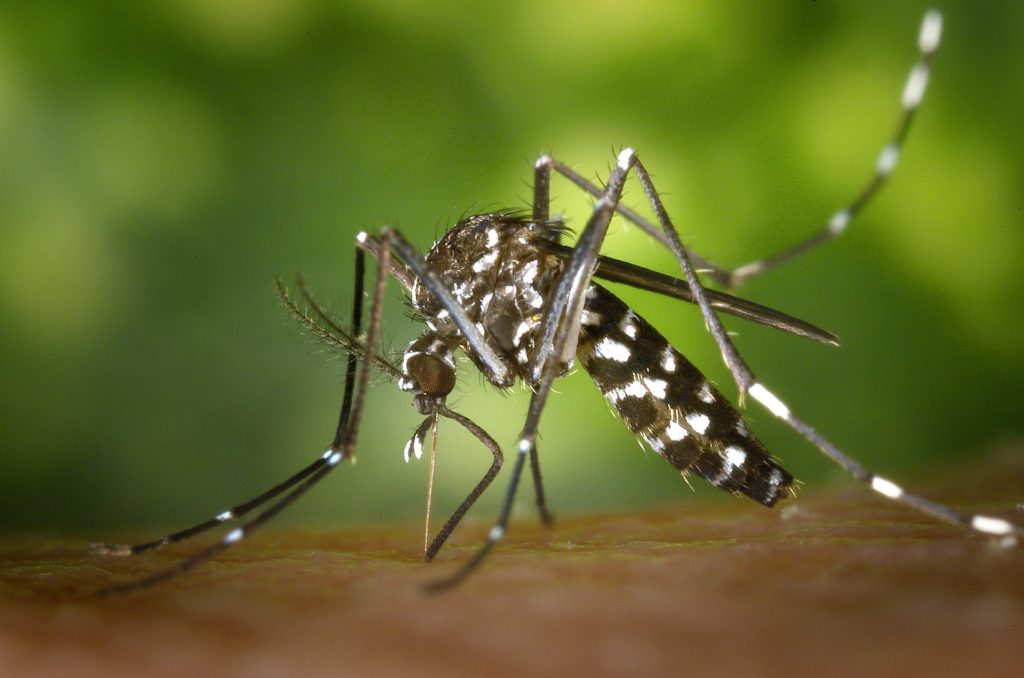
My first ever visit to Bali started with a trip to a coworking space. I wanted to get some work done before planning any adventurous day trips, so I set off with my laptop and found my way there. I took a seat in the garden to enjoy the sun while I worked and within minutes I felt a sharp stinging on my arm. And sure enough, there was a big black and white striped mosquito on my arm, with its mouth still firmly attached to my skin. I knew the type of mosquito: the Aedes Aegypti.

I knew it only because I’d researched dengue fever the year before, while travelling through Thailand, and this was the type of mosquito that carried the illness.

Once I’d smacked the mosquito off my arm and the stinging had stopped, I sighed. I bet I get dengue fever or typhoid, I thought. That would be just my luck. Contracting dengue on my very first day in Bali.

Dengue Fever Mosquito Bali

My Descent Into Illness

I carried on the rest of the day, and the day after the bite as normal. But on my third day in Bali, I woke up feeling absolutely bloomin’ awful. I told myself I was just tired and hauled myself out of bed and into the shower. I had a new members meeting at the coworking space at 10:30 am, so I rushed to get ready and started the 20-minute walk.

A few steps down the road I felt even worse than I had when I first woke up. My head was pounding, my back was aching like crazy and I felt the same sort of nausea you get with a hangover. I didn’t really think anything of it — I just put it down to not having had any breakfast. I’m a bit of a diva when it comes to breakfast.

I arrived at the meeting late and sat at the bark on a bench. The pain in my back was getting worse and I shuffled and fidgeted throughout the entire meeting, drawing my knees to my chest, twisting, turning and arching my back just to try and alleviate the pain.

Once the meeting was over I ordered a chocolate muffin (because what better way to try and get better than with a large serving of something chocolatey). Each mouthful was a struggle. Halfway through the muffin, I realised I was unwell. Normally I devour anything chocolatey in seconds, but the muffin was a struggle, and each mouthful made me feel worse. And the pain in my lower back had spread down to my knees and to my upper back and shoulders.

I’d only completed a measly seven minutes of work, but I slammed my laptop shut and started to walk back to the hostel. I quickly came across a guy with a motorbike yelling ‘taxi taxi’ (they’re everywhere in Ubud), and decided there was no way I could walk back to the hostel. So I got on the back of the taxi driver’s motorbike and did my best to cling on as he drove me home. Looking back, I should have found a taxi driver with a car. I barely had the strength to hold on as he swerved through the Ubud roads and tiny streets to get me home.

A Shared Hostel Dorm: The Worst Place To Be Ill

I got back to the hostel at about midday and went straight to my dorm. A team of about 7 cleaning staff were in there changing sheets, sweeping and mopping the floor and carrying out their cleaning routines. My heart sank, I had to lay down, and I couldn’t get to my bed.

I made my way down to the pool, where there were beanbags and sun loungers. I collapsed onto a bean bag and fell asleep almost immediately. I woke up about an hour later, feeling hot, thirsty and downright terrible. I had to make it to my bed.

Luckily the cleaning staff had finished up while I slept by the pool, so I stumbled into the room, kicking off one shoe before falling into bed. I drew the horribly thin and transparent curtain around the bed to give myself at least the illusion of privacy and again fell asleep, with one shoe still on.

I woke up about 8 hours later, in the evening, when a drunken man who was in the bunk bed above me fell against my bed, knocking the curtain open. He started to apologise, but his ‘sorry’ faded into muttering — he was clearly shocked by my appearance. I looked rough. And I knew that was probably just the first encounter I’d have with a drunken gap-year traveller that night. I was in a party hostel, and I knew from the previous nights I’d spent there that the partying and drinking wouldn’t stop until 4-5 am.

Sure enough, throughout the night I had to deal with the sound of girls vomiting in the bathroom, people having sex in the beds around me, music thumping on the offbeat of my throbbing headache. The worst part though was the bathroom situation. There were only two toilets for over 30 people, and the illness meant I needed those babies pretty regularly.

Each time I staggered to the toilet, which was only a few steps away from my bed, the aching pain got worse. My ankles, knees and hips felt like they were breaking each time I put weight on them. The pain was so intense it felt like I could hear my joints crunching and creaking. And when those few steps to the toilet were finally over, I would have to wait for the gaggles of drunken girls to finish weeing, vomiting and using the toilets to have heart-to-heart conversations.

The Quest for a Private Room

There was no way I could stay in the hostel. But every step I took felt like setting fire to my joints and muscles. I didn’t know what to do, how could I summon the strength to pack my rucksack, and carry the massive 15-kilogram pack to a new place?

A couple of days after being ill in the hostel I knew I had no choice but to face the pain and move to a private room in another guest house. I booked a room online and prepared to make a move. Packing up my things took the best part of four hours. After shoving each item into my backpack I laid back, breathing deeply, giving myself a pep talk to keep going. Eventually, I had packed and had pulled my backpack onto my back. The pain was excruciating.

I made it to reception to check out and was met with ‘Oh my goodness, are you okay?’ from the receptionist. It was at that moment I realised I couldn’t talk. I knew I had a sore throat, but next to all the other symptoms I hadn’t really given it a second thought. But no, trying to talk sent me into a coughing fit that seemed to last forever.

After coughing over the receptionist, and trying to say thank you through tear-filled eyes and spluttered sounds, I made my way to the main road. A taxi driver found me instantly, thank God. He took my rucksack and put it in the car, ignoring my attempts to ask him how much he charged. My guest house was only a ten-minute walk away, a five-minute drive maximum. It hurt to talk, it hurt to stand so eventually I gave up trying to ask how much and got in. He was grinning, and I knew instantly he was going to rip me off.

After a few minutes in the car we arrived near the guest house, he said he couldn’t get closer despite many other cars driving down the same road, and jumped out, threw my rucksack to the pavement and charged me 150,000 IDR — about £9. The journey shouldn’t have cost more than 60,000, but I didn’t have the strength to argue and he knew it.

I tried to pick my rucksack up of the floor where he had dumped it and didn’t even have the strength to lift it onto my shoulders. Eventually, someone helped me lift it up, and I stumbled a few minutes down the road to the guest house.

My room wasn’t ready yet, but I couldn’t stand, or even sit any longer. I laid down on a bench in a lobby — I don’t think I’ve ever looked more homeless. I was shivering despite the hot Bali weather, my hair was unbrushed, and I smelt like I hadn’t showered in weeks. But I had made it, I had my own private room, and I didn’t have to carry my stupidly large rucksack anymore.

Recovering From Dengue Fever

I was ill for another week and a half, but gradually I started to get better. Having my own room made the illness so much more bearable, but still, I was unable to leave the hotel to get food. Luckily there was water just a few steps from my room, but it took me six days to be able to leave the room to get something to eat. And if there’s one thing I’ve learnt from this whole ordeal, it’s that going six days without food is horrendous.

After a week I made it to the hospital to receive the care I needed, and now, about two weeks on from that silly mosquito bite, I’m doing much better.

So if you’re suffering from Dengue fever in Bali, or any other illness really, here are my tips to you:

  • If you’re in a hostel, leave immediately and find a private room, before the illness gets worse!
  • Go to a hospital or Doctors as soon as possible. Bali healthcare is actually very good.
  • Don’t go six days without food, you’ll just make yourself feel worse.
  • Wear mosquito spray! I literally never did this before I got ill, now you won’t see me out and about in Asia without it
  • Ask for help — I struggled through most of the illness on my own, but if I’d just asked for help there were so many people around me who would have given it gladly. The Balinese are such lovely people, and apart from the taxi driver, so many people did their best to help me.

Day Trip To Chiang Rai White Temple From Chiang Mai

I’ve wanted to see Chiang Rai’s White Temple for ages. Everyone I met on my travels recommended it, and showed me the most incredible pictures they’d taken of it. So I started looking into how to plan a day trip there from Chiang Mai.

I know there’s much more to do in Chiang Rai than just the White Temple, but I was strapped for time so I couldn’t spend a few days in Chiang Rai like most people do. Instead I got up at 6am and set out for a day trip to Chiang Rai’s White Temple.

Traveling to Chiang Rai from Chiang Mai

I planned on getting the first bus at 7am, but after taking a little too long at breakfast (what can I say, I got distracted by food), I had to get the second bus at 9:15am. The bus was super easy to get, I just went to Chiang Mai Bus Terminal 3, and got my ticket from the Green Bus ticket counter. It only cost 245 baht each way (about $7 each way).

The bus took longer than I expected (about four hours) and the road was a bumpy one. In fact, in some places the road wasn’t even built yet, and we had to wait for the road to be laid before we could drive on.

I was expecting to get off at Chiang Rai bus station and then get a bus to Wat Rong Khun. But about thirty minutes before we were due to arrive at the central bus station, it stopped just outside the White Temple. I quickly grabbed my things and jumped off with a few other passengers.

Arriving at the White Temple

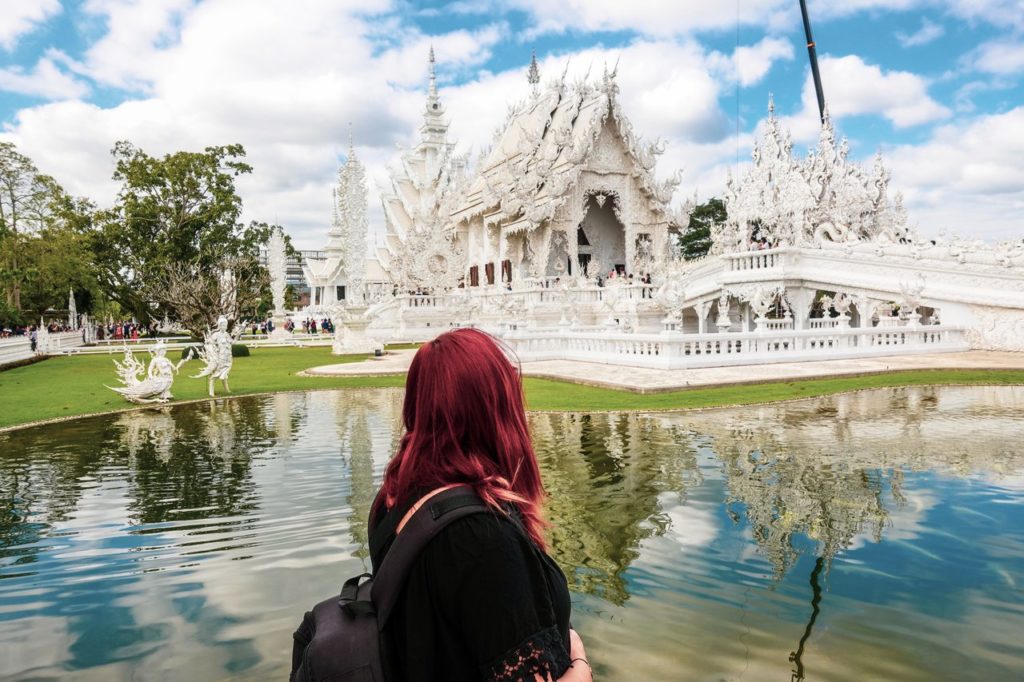
The road towards the temple was lined with market stalls and coffee shops. Normally, I would have said the street vendors ruined the atmosphere, but after four hours on a bus, I was thrilled to see a coffee shop right in front of the temple. I grabbed a surprisingly reasonably priced brownie and smoothie and sat directly opposite the temple to get a time lapse of the hundreds of tourists.

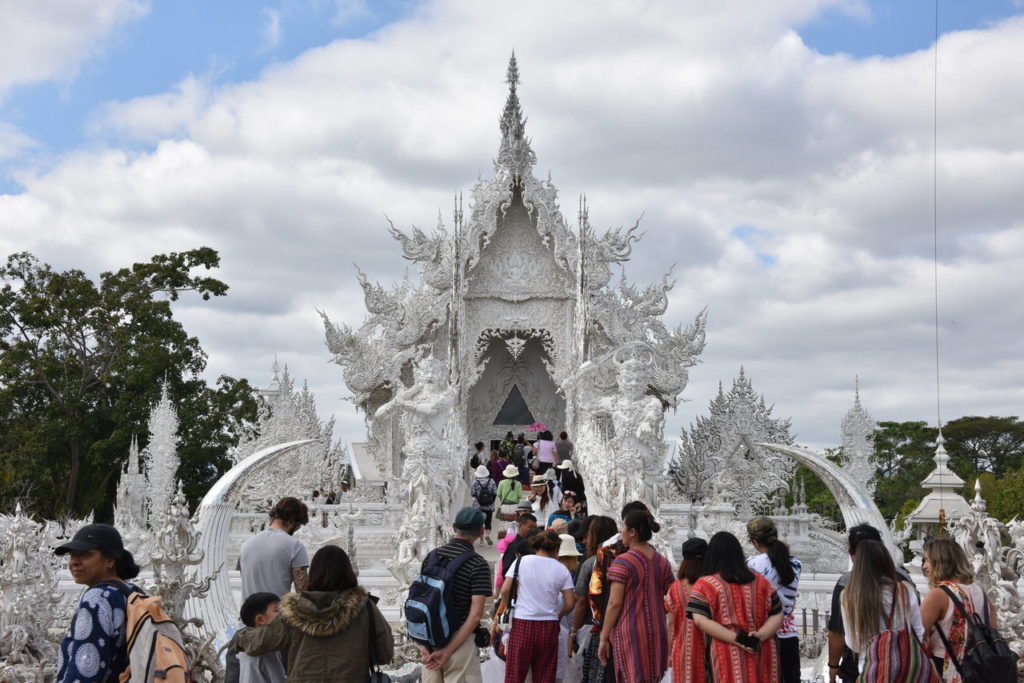
At first I was a little disappointed at how busy it was. There was a queue to get into the temple, and people EVERYWHERE with selfie sticks. I guess that’s what I get for arriving in the afternoon, rather than early in the morning. But despite the crowds, the White Temple was still an incredible sight to behold.

Understanding the White Temple

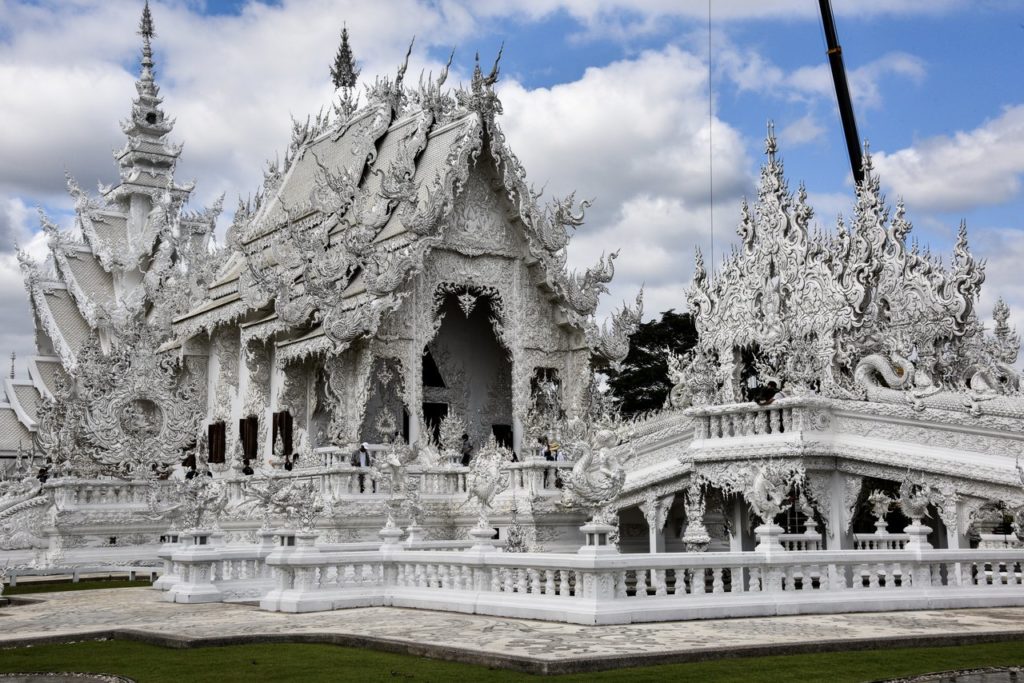
I quickly learnt that all around the temple was contrasts between good and evil. The White temple was symbolic of purity and the tiny mirrors all over the temple were tactically placed to reflect the teachings of Buddha.

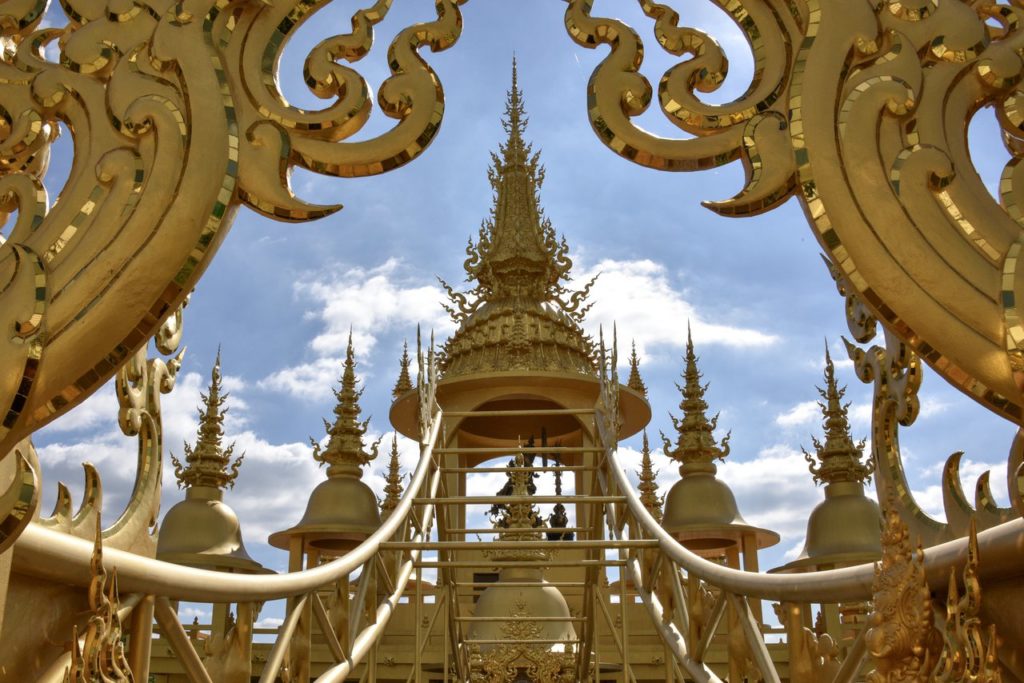
And to contrast the pure and good of the White Temple, there was a golden temple, and a golden toilet building. The gold of these buildings symbolises man’s desire and greed for money.

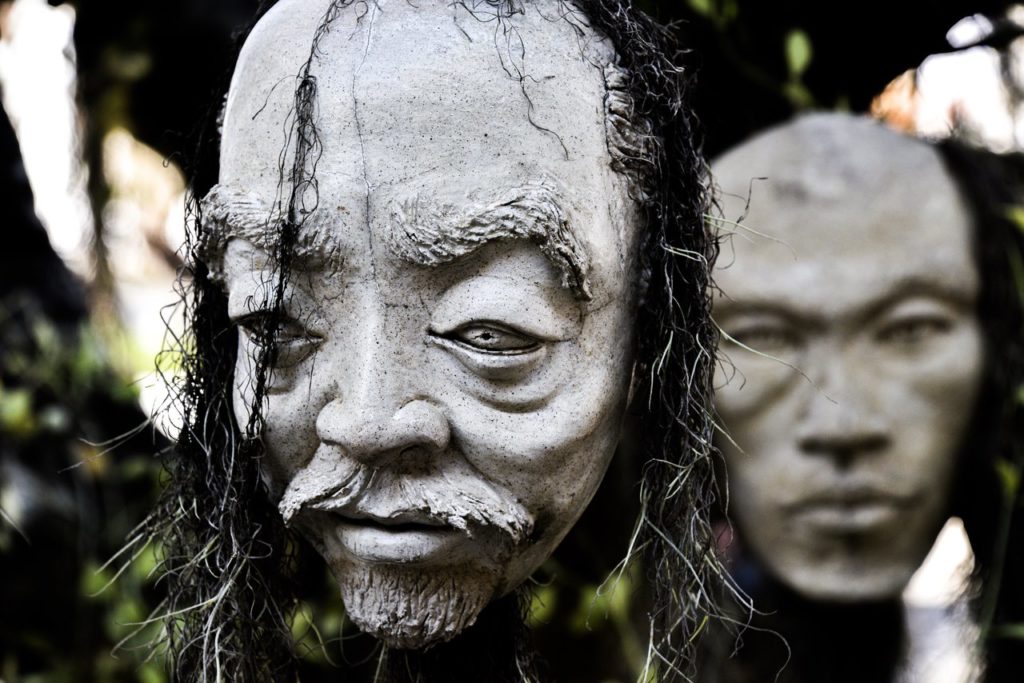
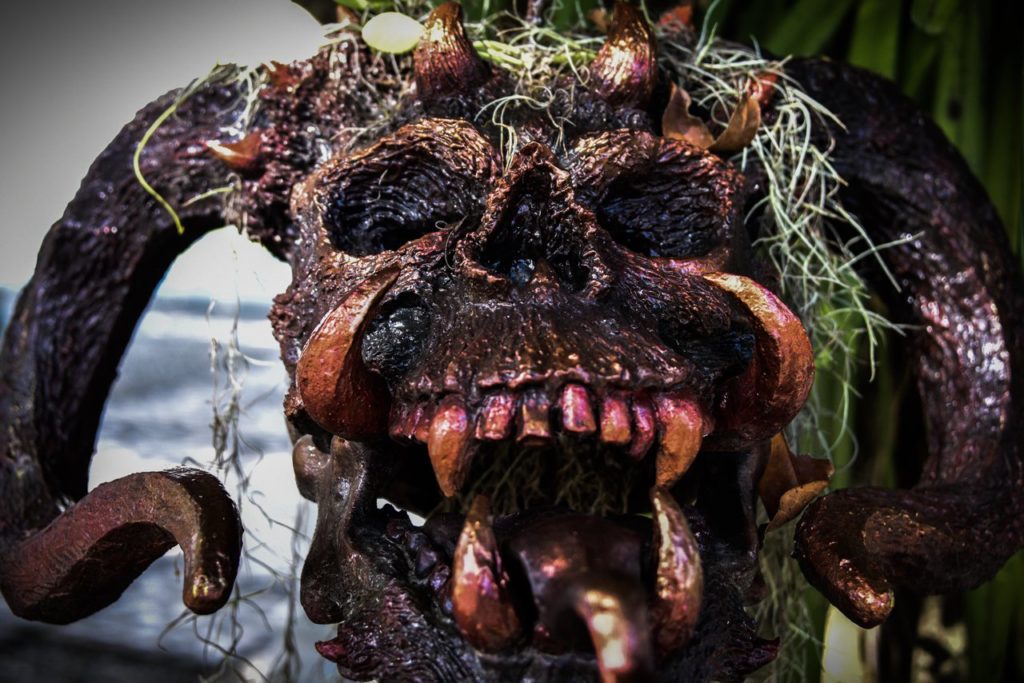
But there were lots of other, smaller contrasts between good and evil all around the temple complex. Just before the ticket counter there were trees with heads hanging from them (not real ones, obviously). Some were smiling, others were simply terrifying. It would be a great place to go at night, if you’re a fan of creepy stuff that is.

Underneath the bridge to the temple were hundreds of hands reaching up, apparently symbolising desire. The bridge represented rising above desire on the journey to purity.

I know there are lots of people who would probably disagree with me, but I found the small details around the temple just as impressive and interesting as the White Temple itself.

Each face, each statue and colour represented an emotion, a quality or a vice. I must have spent at least five minutes admiring each tiny detail.

Entering the White Temple

I’d hoped to get a perfect picture of the White Temple from the start of the bridge, but I should have realised that would be completely impossible with so many crowds.

But despite the hundreds of people rushing to see the temple, it was still incredibly impressive. First you have to walk over the bridge, over the sea of reaching hands, but each tiny part of the bridge was covered in sequin details, or more faces. So it’s safe to say, no one was moving very quickly.

We got to the White Temple entrance, and had to take off our shoes and carry them with us. Normally at temples you leave your shoes outside, but there’s no way that would have worked here, there were just too many people.

The inside of the temple was a little underwhelming compared to the outside, but still it was good to see. And walking around the temple’s veranda I got to admire the temple from different angles.

I even saw a couple of people that I’d met on Cat Ba Island (Ha Long Bay), so stopped for a catch up inside one fo the most impressive temples in the world.

Exploring the rest of Wat Rong Khun

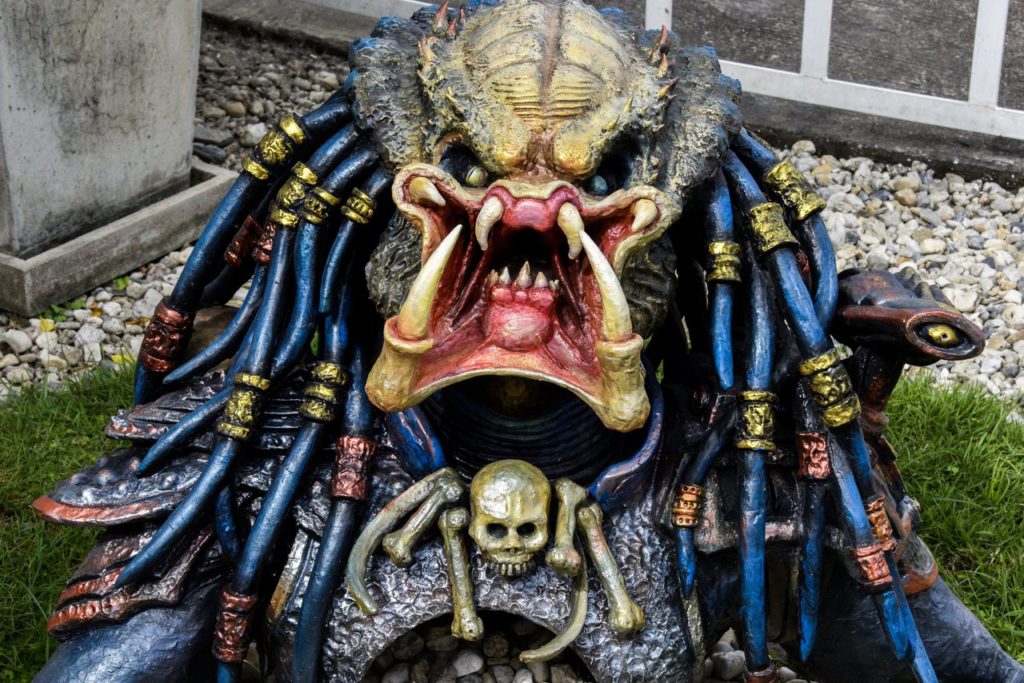
Wat Rong Khun has so much more to offer than just the White Temple. The theme of good and evil continued throughout the rest of the complex, with modern figures like Spiderman, and Predators dotted about in trees or on benches.

There was also another impressive white temple-like building in the same style of the White Temple, but nowhere near as crowded. This was a great spot for pictures and selfies without massive crowds in the background.

Then there was the golden temple, which I don’t actually think was a temple at all. It had a bridge leading over a lake, and then a walkway around the building. Inside I think was a small art gallery.

And I’ve got to say, a highlight of the rest of the Wat Rong Khun grounds was the toilet. The golden toilet building might have symbolised greed, but still, I felt like a royal whilst going for a wee.

Lunch at the White Temple

After the long bus journey and the excitement of exploring the White Temple, I’d worked up an appetite. There were a couple of coffee shops directly opposite the temple, and luckily there was one with a couple of seats free outside, facing the White Temple.

I wasn’t expecting much from the food, I was just pleased to have such a perfect seat. So I set up my camera and tripod and started a time lapse of the busy crowds.

The food was also surprisingly good. They didn’t have much on offer, apart from a few pastries, cakes and brownies, and some great smoothies, but it was all delicious.

Wat Rong Khun Art Gallery

Outside the temple complex there was a gallery which was well worth visiting. There was information about those that designed the White Temple, as well as small pieces from the original temple. There was also some weird and wacky paintings that I can definitely recommend to any conspiracy theorists.

Getting back to Chiang Mai

My bus back was from Chiang Rai bus station, so I had to get to the town centre. I could have got a public bus, but after a long day, to be honest, figuring out the timetable and waiting around for one seemed like too much hassle. So I ordered a grab, and got to Chiang Rai with time to kill.

When my driver heard I was early for my bus, he recommended his favourite cafe, so I thought I’d give it a try. And I’m glad I did. It was one of the best meals I’d had in Thailand, and it was right opposite the bus station.

The bus ride back was just as bumpy and long, and I got back to Chiang Mai at about 10pm. It was a long day, but so worth it.

The Deserted Theme Park Of Tuan Chau, Vietnam

After a week of sleeping on a rock hard bed, in a $3 per night hotel on Cat Ba Island (Vietnam) I decided to treat myself to a bit of a luxury. So I booked five nights in a 4* hotel, with a private beach and a steam shower on Tuan Chau Island. Perfection.

We arrived at the resort after getting a ferry and bus over to Tuan Chau from Cat Ba, and it was perfect, it was everything we could have hoped for. The beach had miles of untouched sand, and hammocks hanging from the Palm trees. I’d upped my budget to $50 a night, and it was worth every bit of that.

But after a few days of relaxing with fried noodles and cocktails on the beach, I started to get itchy feet. It was time to explore the island properly.

Tuan Chau – the ‘touristic’ island of Ha Long Bay

I’d read online that Tuan Chau was the ‘touristic island’ of Ha Long Bay, it was even marked on Google Maps as Touristic Centre, but the second we stepped outside the resort we knew there must have been some mistake.

Admittedly, we visited in October, which I guess is low season, but I’ve never seen a place so run down and eerily empty.

There was life-size Disney figurings laying damaged and scattered over the different gardens. It was like a graveyard of children’s dreams.

Then there was the fact that every shop was completely empty, no furniture, nothing, some of the buildings were half built, and there wasn’t a soul in sight.

We walked to the ferry port to get some snacks, as this seemed to be the only place that was 1) open and 2) not entirely deserted. There was a security standing outside, guarding the entrance, looking stern as they do, and when we walked into the building and into the convenience store, he followed us the whole way round, keeping uncomfortably close. I’ve never had such a tense snack-buying experience. I grabbed my cashew nuts and got out of there ASAP.

Just outside of the port was a YOLO bar. We’d been to a YOLO bar before in Siem Reap, with free beer pong and pool but this one was nothing like the chilled out backpacker bar in Siem Reap. We walked in and saw big black curtains hanging, blocking our view of the main bar. When we tried to walk through the curtains, three men starting shouting and quickly escorted us out.

Confused at why everyone on the island seemed annoyed at two tourists on the supposedly ‘touristic’ island, we headed back to the resort, back past the fallen Disney statues, and the empty buildings.

The deserted amusement park

On our walk back, we decided to stop off at a theme park that was literally just opposite our hotel. We’d heard loud music and seen sweeping spotlights each evening coming from the park, so we thought we’d check out what seemed like the one lively place on the island.

We got to the ticket office, and asked about the show, which turned out to be a dolphin show. So we booked tickets for 8:30pm and started to head back to grab some dinner before the show (it was only 5:30). But as we were walking away the ticket lady called out to us, telling us we could enjoy the rest of the amusement park before the show started.

Thrilled that for about $10 our tickets also included a theme park, apparently with roller coasters, arcades, and funfair rides, we jumped at the chance.

But the second we went through the ticket barriers we realised we’d made a mistake.

We walked up the hundreds multicoloured steps that faced an empty pool/fountain, and with a view over the whole park we realised we were the only ones there. There weren’t any workers, and there definitely weren’t any tourists.

The rides were all lit up, flashing spookily, with no one there to operate them. But what was creepier that around the rides – the children’s rides – was barbed wire lining the fences.

After walking through the rides and determining that they definitely weren’t the sort of rides you could operate yourself, we walked further into the park, walking through the forest until we came to a huge water arena. We could see the jets where a fountain would be, and the seats surrounding the arena, but again, there was no water, and no people.

The sun was setting, and soon we found ourselves in the pitch black, walking through a forest path with an abandoned kids’ play park on one side and the deserted water arena on the other.

It’s safe to say we were pretty freaked out, being completely alone in a deserted theme park, on a deserted island, with only rats to keep us company. Oh yea, didn’t I mention, there were rats running around the park having a great time.

We walked back towards the rides, because at least they were lit up and noticed that just beyond the rides, just past the perimeter fence of the park was a huge ditch where more Disney figures and kids statues lay abandoned and dirty in a pile.

As if that wasn’t creepy enough, a topless man, covered in dirt from the ditch walked slowly through the rubble and statues. Slowly he turned to look at us, and altered his course, walking in our direction.

Now, in the hard light of day, I’m fully aware that this guy probably worked there, and was likely coming to tell us about the park, but in the dark and silent theme park, I was already spooked, and so when I saw a strange man arising from the ruins of Disney statues, I did the only logical, and very British thing: I turned around and walked away as briskly as I could (you won’t catch me running).

I’m not sure why at this point we didn’t just go back, we were both thoroughly freaked out, but we thought we’d walk to the dolphin arena and see if that was as creepy. We followed the signs past the empty games room and kids’ soft play area, using our torches to guide the way, and in the dark we saw a family sat around a corner, eating a meal in the dark. Worried about what sort of characters eat their dinner in an abandoned theme park, on the floor, we didn’t stop to chat, but continued on towards the dolphin arena.

The path took us down a hill, further into darkness, before we reached the arena, which was right next to the main road. The arena was shut and padlocked, with no lights on – clearly they weren’t preparing for the evening show. There was also a gate that led out onto the main road, which was also locked with several padlocks.

That was it, we’d finally had enough of the dark, deserted park, so we made our way back to the entrance. When we got there the man who had let us in was gone, the ticket barriers were all shut, and the one gate out was padlocked.

I’m not going to lie, at this point, I was prepared to pole vault my way out of the park, I’d had enough, it was just too weird. Who lets people into a completely empty theme park and then padlocks the exit gate?

As we frantically tried each of the ticket barrier turnstiles, the lady from the ticket office appeared and asked us what we were doing – as if we were the strange ones for wanting to leave the world’s creepiest theme park. When we asked what was wrong with the park, and why everything was shut, she looked astounded.

For a while we had her try to convince us that the park was fully open, and that we should enjoy it, but eventually she let us out of the padlocked gate and stamped our hands in case we wanted to come back.

It’s safe to say, we didn’t go back, not even for the dolphin show that we’d paid for. The thought of once again being padlocked in, but this time inside an enclosed dolphin arena just didn’t appeal to me, so instead I spent the evening googling things like ‘why is Tuan Chau a ghost island’, ‘haunted amusement park Tuan Chau’ – you get the gist.

The mystery of Tuan Chau deepens

Slightly traumatised by the experience of wandering alone through an abandoned theme park and then being locked in, my imagination was going wild. So when my google searches returned a complete lack of any real information about the island, I got even more hyped up.

Everything is on Google. Everything. Sure you might occasionally stumble across a cafe or whatever without a website, but you can normally find just about anything on TripAdvisor, Reddit, and other travel forums. But we were getting nothing, just a government page stating that the island was the tourist hub of Ha Long Bay (it definitely isn’t).

The next stage in my detective work was to find out what the locals call the theme park. Eventually I found the Vietnamese name for the theme park, after looking through endless leaflets and websites, typed that into Google instead.

This got me a little further. I found the Google Business Page for the theme park, which meant I also found the Google reviews.

But the Google reviews just fuelled my imagination more. There had been no reviews for months, apart from a picture of one man standing outside the gates, holding a child and forcing a smile – he definitely didn’t look like he was having a good time, and he wasn’t even inside the park.

Most reviews were from 2012, and after scrolling through I realised that a lot of the reviews were actually written by the same person. Either that’s one very happy customer who returns every month or so, or someone’s going to great lengths to make this place look legit.

After going through what felt like every single Google result, it seemed that park has been mostly empty since 2012. The 2012 pictures show the theme park thriving and full of people, so what’s happened since? Was it just that I visited during low season? But even that doesn’t explain the lack of recent reviews. Perhaps no one has actually lived to tell the tale.

Okay, okay, that’s probably a little far fetched, but still, this was a spooky experience. I never did find out the full story behind the theme park, but still I’m curious. I asked my hotel reception staff about the park, but they refused to comment on whether or not it was worth visiting – perhaps because of the language barrier, perhaps because there’s a little more going on than meets the eye.

If you’ve got any theories or you know why Tuan Chau is such a ghost town, I’d love to hear your thoughts! I might even publish them as a second article! So don’t hesitate to contact me with your thoughts and theories!

I also managed to film some of the experience, so if you want to check out the abandoned theme park video, watch it below!

Pin It on Pinterest