by Hannah Leigh
The elements of nature provide some of the biggest obstacles to the everyday traveler. Even the most seasoned of travelers can benefit from owning some useful pieces of survival gear. It could even save your life!
If you ever find yourself in a situation where your survival skills are put to the test, or you want to give Bear Grills a run for his money, you want to have all the right tools with you. So here are some of the most useful pieces of survival gear for when you’re exploring the wilderness.
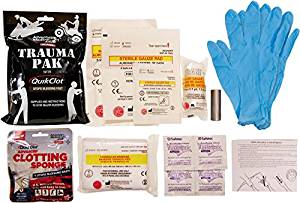
Having a first aid kit is a necessity, just in case of injury. It’s something that’s useful even just for day trips.
Who knows what will happen in the wild?! You might scrape a knee, cut your arm, or get a nasty sting – the wild is full of unexpected situations. But whatever you’re faced with, a trauma pak is going to be a massive help. And if you manage to escape the wild unscathed, at least you’ll have peace of mind with the trauma pak by your side.
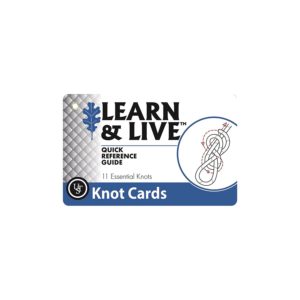
Having rope on hand is only useful if you know what to do with it. These small, informative diagrams will teach you how to quickly fasten the knot that you need. Not only is this guide useful, but it’s also compact and easy to carry with you wherever your travels take you.

If you ever get lost in the woods, the dessert or whatever wild landscape you’re heading to, you’re going to want people to find as quickly as possible. This survival whistle is sure to be a life saver if you find yourself lost.
The 5 in 1 whistle makes sure that you’re both heard and seen. It features a whistle, compass, signaling mirror, matchbox, and fire starter. It’s so versatile! So if you only ever get one piece of survival gear, this is a good one to go for.

While you may not be expecting to camp out, you should prepare for it just in case. With an emergency sleeping bag you won’t need to worry about being left exposed to harsh weather conditions, you’ll be well and truly protected.
Snuggling up in the emergency sleeping bag will also make you visible to others, as it’s made from reflective material. This is a great feature if you’re having to use the sleeping bag because you’re lost!
It also folds down so that it’s super compact and easily portable. You can carry it in a rucksack or maybe even a pocket.
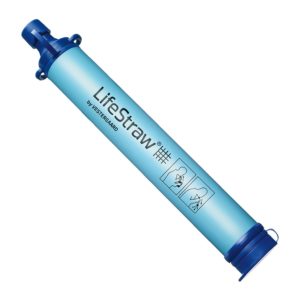
Packing water is an essential if you’re spending prolonged periods of time outdoors. If you run out of water, you’re in trouble. Your only hope will be to find natural water sources.
But if you’re doing this, you need to make sure that the water is safe for consumption. A personal water filter will make any river or lake water drinkable for you.
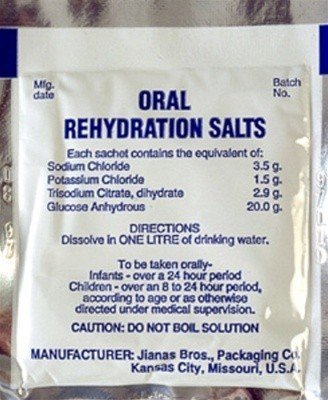
One of the most common ailments that goes hand-in-hand with being outdoors is dehydration. And these rehydration salts are the perfect solution.
Hold on a minute, doesn’t salt normally dehydrate us? Yes, so don’t go drinking salt water as that will definitely make the situation worse. But these rehydration salts are different from regular salt. They can be used to help you get rehydrate you if you’re severely dehydrated, and can help you overcome dehydration symptoms like vomiting, diarrhea, and cold sweats.
These salts are made from sodium, potassium and glucose, ingredients to help you get your levels back to where they should be.
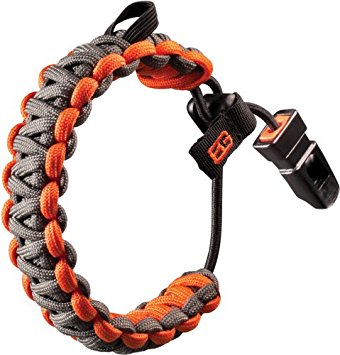
One of the bulkiest items in your survival gear pack can often be your rope. These compact paracord bracelets contain rope that won’t get in your way or take up too much space. Just wear them on your wrist and you won't even notice them. Then if you end up needing rope, it's super easy to unravel the cord and make use of it.
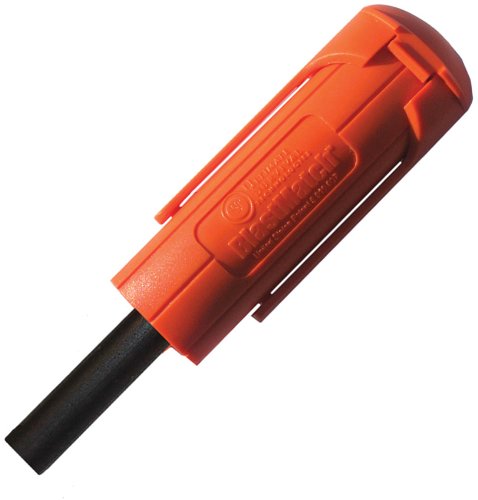
.Ordinary matches can prove to be difficult to deal with when you’re outdoors and the wind’s howling away. They can break, they often only last for a few seconds, and they can go out easily. This fire starter can be used with one hand and lasts for up to 4,000 strikes. It also generates 3x the heat of an average match, so hopefully your fires will be slightly more successful with this tool.

These carabiners are the definition of heavy duty. They can withstand all climates and hold up to 4457 lbs. Using a carabiner will make knots and tensions more secure. If you need a simple way to quickly fasten items together in a time of need, these will also come into play.
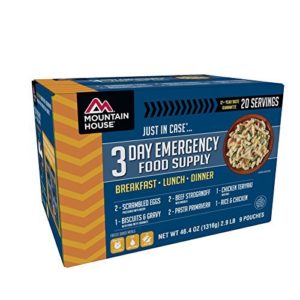
Whilst it might be possible to rely on nature’s resources if you’re stranded in the wild, this could likely lead to digestive discomfort.
These packets of food will last you 3 days in case of an emergency. The boxes are easy to store and will not take up too much room. It’s a good emergency stash to have with you on adventures, especially if you know you wouldn’t fare well surviving from what the wild has to offer.
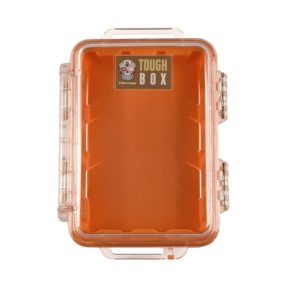
Keep your resources safe and you’ll keep yourself safe – that’s the logic behind this piece of survival gear. You can store all of your important items in this weather-proof casing.
It’s brightly coloured so you can easily keep your eye on it, and it’s easy to carry, so taking survival gear with you doesn’t have to be a nuisance. It even floats so it really is suited to any situation.
by Hannah Leigh
We’ve had the vote for Brexit, and the election of Trump, and now the French election is the new center of attention in European politics. It may not be as widely covered as the politics of 2016, but it’s had a lot of international interest as the looming results seem to get less and less predictable.
When is the French election?
The election will begin on April 23rd, and by May 7th France will have elected its new President.
Who are the candidates for the French election?
The elections are usually a fight for presidency between the conservative Les Republicans and the left-wing Socialist party.
Currently, the leading candidates fighting for office include Emmanuel Macron, Marine Le Pen, Francois Fillon, Benoit Hamon, and Jean-Luc Melenchon.
Marine Le Pen
Le Pen has drawn a lot of attention to the French election as one of the more popular candidates, and potentially France’s first female president. There’s also the fact that she’s on the far right of the political spectrum, as the leader of the Front National party. Her policies and personality have so far acted in accordance with the increasingly right wing and nationalist politics that we’ve seen across the world over the last year.
She’s openly and strongly against the European Union, as it seems the majority of the UK were when they voted for Brexit. And like Trump, her policies revolve around immigration – which seems to be the go-to at the moment, when looking for solutions to social discontent.
The way the polls are going, it’s likely that Le Pen could make it into the second stage of the election (more on that later in this article).
Francois Fillon
Fillon is another right wing candidate, only this time from the Les Republicains party, so slightly less extreme than Le Pen. Interestingly, he’s also a former president of France, so a familiar face in French politics.
He started out as the favourite presidential candidate, but was soon overtaken by Le Pen. He’s still a fairly popular candidate though, and has the potential to make it to stage 2 of the election.
Like every western politician at the moment, his policies have a strong focus on terrorism, with mention of Islam. He aims to increase security and defense with €100bn that will come from reducing unemployment benefits. He also aims to sack 500,000 people who work for the government.
Fillon is much like Le Pen in his belief that the European Union is useless, but is more focused on reform than ‘Frexit’ or whatever else we might term France’s version of Brexit. He also aims to maintain good relations with the UK and interestingly, with Putin.
Emmanuel Macron
Macron is a character who, like Donald Trump was, is mistrusted by many due to him having less political experience than the other candidates.
Rather than being affiliated with a political party, Macron has his own political movement, ‘En Marche!’ which has been especially popular with the French youth.
He’s a political figure that is recognized by many as a sincere personality, who doesn’t align with either the left or right of the political spectrum. He has instead been labelled a centrist.
His focus is more on the problems at home, with policies to reform education and more positive when it comes to foreign policy. Macron isn’t a believer of Brexit, and nor is he concerned with France following suit.
Despite his lack of a deeply routed political profile, he’s a pretty popular candidate, the second most popular in fact at the moment.
Jean-Luc Melenchon
Despite an increase in right wing attitudes, there are still some lefties out there, and Jean-Luc Melenchon is one of them.
His policies are based on the people of France and their quality of life, hoping to increase minimum wage and set a retirement age of 60 he’s focusing more on the smaller social details than on blaming foreigners for social discontent.
It’s unlikely that he’ll reach the second stage of the election, as he’s one of the least popular candidates.
Benoit Hamon
Another lefty, but more central than Jean-Luc Melenchon.
Unlike the right wing candidates, he’s all for Europe and believes in a universal wage. Albeit it’s an unlikely goal, but at least his heart is in the right place. However, that’s clearly not what the people of France are looking right now, as he is currently one of the least popular candidates.
Who’s the most likely to win at the moment?
The 2017 French election is looking like one of the most unpredictable elections that France has had in decades, so it’s hard to predict the outcome.
France could have its first female president, Marine Le Pen, but there’s no solid prediction on whether Marine Le Pen could take it all the way home.
The latest polls display Marine Le Pen ahead of her other four competitors. However, it’s no landslide – there’s still a tight battle between the leading candidates. In 2002, Marie Le Pen managed to get through the second round, but she lost to Jacques Chirac.
So, how does the election work?
For most elections, the system is conducted in 2 stages. The first stage, kor round, will take place on April 23rd. It consists of any candidate who meets the requirements. The requirements include enough funding for their campaign and the written support of five hundred elected representatives. In the second round, the competition lies between the top two leading candidates. The next president will be whoever gets the majority of votes in the second round.
Unlike countries such as the United States, the French election is decided by the people rather than representatives or elected officials. In fact, France is a representative democracy – so the popular vote will decide the next president. So any French citizen age 18 or older will be able to vote for their candidate.
In the first round, if a candidate ends up with the absolute majority, he or she will immediately be elected as the next president. This has actually never happened in French history, but in 1995 – candidate Charles de Gualle came close with 44%.
The elections are always held on Sundays, and the campaigns usually finish at Friday midnight. Voting stations open at 8am and close at 6pm. In a way, it’s a fairly simple system – and it’s worked for years. The only exception to this system can be referred to as the Alternative Vote or Instant-Runoff Voting. So, instead of voting for one single candidate – the citizens of France can rank the candidates in order of preference. If a candidate receives more than half of these votes, then he or she is declared the winner.
However, the Alternative Vote only occurs when neither candidate secures the majority vote in the second round. In the Instant-Runoff Voting (or Alternative), if none of the candidates receive 50% of the popular vote, then the worst-performing or least popular candidate will be eliminated. Therefore, supporters will have to switch to their second candidate choice.
So to sum up…
As mentioned before, Marine Le Pen seems to be stacking up approval ratings from France. Then there’s the runner-up to consider. Perhaps Emmanuel Macron or Benoit Hamon will face Le Pen in the second round.
Presently, it doesn’t look like Republican candidate Francois Fillon will receive many votes from the French. A corruption scandal involving his wife and children. Apparently, they earned 1 million euros for jobs they were never doing. For now, there hasn’t been any chargers but presidential candidate Fillon doesn’t look under the formal investigation.
But, who’s to deny a surprising outcome? Sometimes, an allegation or evidence of a past affair isn’t enough to throw away candidates’ campaigns. I mean, look at U.S. President Donald Trump. Throughout his campaign, he suffered claims from over a dozen women for rape or sexual assault. The comeback? Although, he didn’t win the popular vote – he still managed to defeat his political opponent and become president.
So, thankfully the French election isn’t that complicated. It’s a simple voting system that’s as democratic as you could hope for, unlike the American electoral college system. And what’s more, it’s worked for years.
by Hannah Leigh
The 2016 US election was one of the most controversial elections in modern American history. The two candidates, Trump and Clinton, were perhaps the most unpopular candidates that American politics has ever seen.
Trump’s win, despite Hillary winning the majority votes, didn’t exactly go down well with the millions of American’s who didn’t vote for him. It was the second time the Democrats have suffered at the hand of the electoral college system. The first time being Al Gore’s loss to George W. Bush, despite (like Hillary) him winning the majority vote.
The election between Al Gore and George W. Bush definitely brought some light to the flaws of America’s voting system, but the 2016 election had a much wilder reaction as emotions ran high.
Many people, Democrats and Republicans alike, are now questioning the purpose and legitimacy of the American voting system. The Electoral College may date back to the 18th century, but quite frankly, it’s not surprising that people are now questioning the whole system.
After all, isn’t it a government for the people, by the people? So, why aren’t the people in whole deciding? Why isn’t the popular vote rather than the Electoral College deciding our president? Well, for starters – it’s complicated.
How does the Electoral College work?
The process used in America to elect a President is called the electoral college. The idea behind it is that the President is decided by both the popular vote and a vote in Congress.
Everyone qualified to vote can do so, but ultimately, it’s the overall state vote that matters.
Each state has electors, who are decided before the general election by their parties. The number of electors each state gets is the same as the number of representatives (Congressmen and Senators) that they have in the House of Representatives. The number of representatives is determined by the size of the state’s population, and so the number of electors each state has is also dependent on the state’s population.
You’re now probably wondering why the number of electors matters so much. It matters because for a President to be elected, they need at least 271 of 538 electoral votes, otherwise the House of Representatives decide the winner.
So to put it simply, the biggest states have the most impact on the vote (which is why Trump focused his campaigns at the more populated states like Texas and Florida).
How it Started
Back in 1787, the Constitutional Convention – a group of delegates that met to discuss the flaws of the central government, considered several methods of choosing the next president.
Should the Congress select the next president? The state governors? Or should it be a direct popular election?
These were all options considered, but finally the matter was handled with a method called the ‘electoral college.’ It was widely approved by the delegates and political leaders. Therefore, after adding the system to the Constitution, each state was given a number of electors due to the combined membership of the Senate.
How it’s changed
The voting system has been modified a bit over the centuries. Originally, states chose electors equal in number to the representatives and the senators. The electors voted for two candidates, and the person with the majority of votes became President. The runner-up became Vice President.
So, essentially – there was no clear presidential or vice-presidential candidate.
Today, to become president – the candidate has to win an absolute majority of 270 electoral votes. Now, if neither candidate receives enough delegates, the House of Representatives will decide the winner from the top 3 candidates with the most electoral votes. Presently, the number of electors per state ranges from three to 54, giving a total of 538. But again, you can see how the bigger states have the most say.
Misinterpretation of Democracy
Protests and general uproar have accompanied an increased lack of faith in America’s voting system. People have begun questioning how a system that allows the most unpopular candidate to become President can be called a democracy.
So is it fair? Well, it depends. We have been attached to the idea that ‘we the people’ are deciding our own president, but it’s more of an indirect voting.
Many Americans believed they were voting directly for the candidate of their choice. But, technically – it’s the representatives of their local government that will actually decide for them. Voters in Broward County may cast the majority of ballots for Hillary Clinton, but the elector can decide to vote for Donald Trump instead.
When you think of democracy you probably think of the people electing parties and Presidents based on what the majority want. But the thing to remember is that we also misinterpret the country as a democracy. America isn’t a democracy, it’s a republic. The general public may refer to it as a democracy but even the constitution declares the nation a ‘republic for which we stand.’
It may not be exactly democratic, but the electoral college has its advantages
So, besides the fact that the U.S. is a Republic – why can’t they use the popular vote to decide the president? To put it simply – there would be chaos without the electoral college.
The system may cause controversy around democracy, but it actually plays an important part in the stability of the country. If the voting system worked in a way where Presidents were decided purely by popular vote, the chances are that a whole load of people would run for President.
For instance, in the recent election, Hillary Clinton won the popular vote by 48%. The other 52% belonged to Donald Trump and third party candidates. If we merely chose a president because of the popular vote, we would be swamped with candidates. The electoral college encourages a system of two parties, making it a simple choice, and a choice that will always please a large amount of people, whether they are the majority or not.
For those who are upset with the outcomes of the recent presidential election, or even the Al Gore vs George W. Bush, you have to understand the chaos that would erupt from getting rid of the electoral college. It may not be the best system, but it’s the system left to America by its Founding Fathers. Over the next century, perhaps the voting system will be modified but it’s going to be a long time before we get rid of the age-old system.
by Hannah Leigh
You need to go on holiday to Mecklenburg-West Pomerania.
Never heard of it?
Well don’t worry, you’re not alone. If you had to name a German Bundesland (Federal state), your first thought is probably Bavaria, rather than Mecklenburg-West Pomerania, or ‘Meck-Pom’ as the locals call it.
But Meck-Pom is a great location that’s largely untouched by tourists. So if you’re looking for a destination that not everyone has been to, this German state could be the one for you. With hidden gems and plenty to see and do, it’s a perfect holiday destination. So here’s why you should visit (and why you’ll fall in love with) Mecklenburg-West Pomerania.
Getting To Meck-Pom
Located in North Eastern Germany, the federal state spans across a large area and borders Poland to the east. Despite being one of the country’s largest federal states, it is the least populated. (About 1.6 million people… but who’s counting?) Yet with its long coastline, an incredible, albeit rocky, history, and of course, beautiful port cities, the region offers plenty to visitors.
Getting there, however, isn’t straight forward. The region has a couple of international airports including Rostock, but with limited flights across Germany and Europe, your best bet is to fly to Hamburg or Berlin, and then take the train or bus.
Schwerin Castle – The ‘Neuschwanstein of the North’
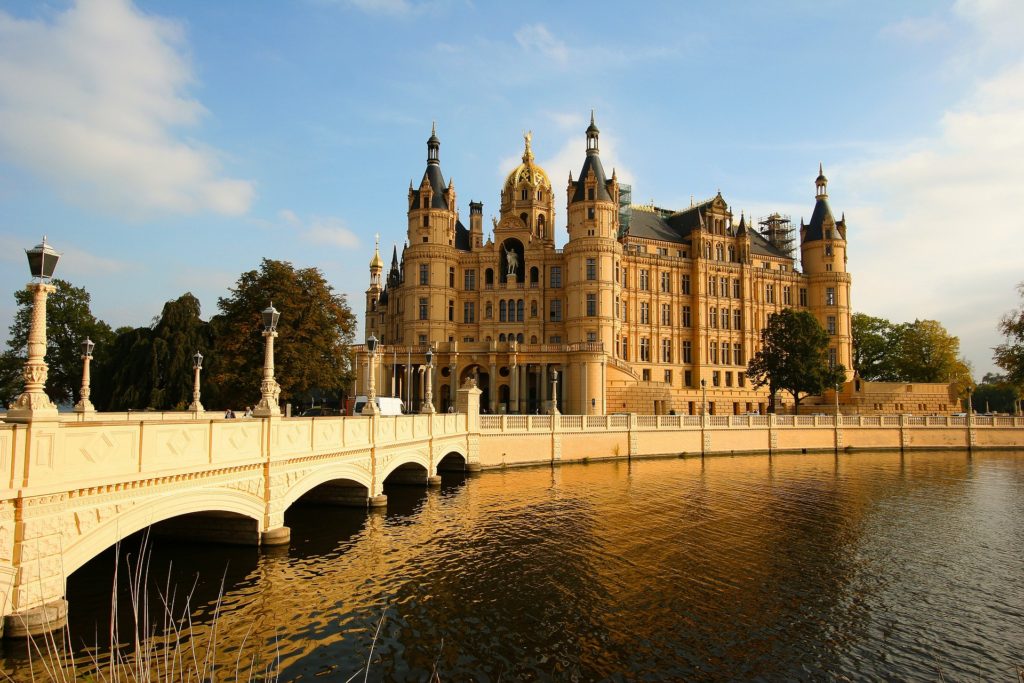
Schwerin is a city well worth a visit. Being the capital of Meck-Pom, it attracts many visitors who come to gaze in wonder at its beautiful old churches and cathedral, its narrow cobbled streets and most importantly the ‘Neuschwanstein of the North’.
The ‘Neuschwanstein of the North’ is the parliament building which is located in an idyllic castle, enveloped by a large lake in the heart of the city. This Schloss (castle), is often compared with Schloss Neuschwanstein in Bavaria, which many may recognise from the film Chitty Chitty Bang Bang and is seen as the inspiration for the Disney castle. Whilst the Schwerin castle may not have Neuschwanstein’s mountainous backdrop, it still has turrets a plenty, beautiful gardens and stunning lake views. It is free to visit the grounds, but it’ll set you back 8 € to venture inside.
Rostock – Meck-Pom’s second city
Rostock is, in many respects, Meck-Pom’s second city. With a population of over 200,000 people and lying directly on the Baltic coast, it is one of the region’s most historically fascinating cities.
The summer months unsurprisingly see Rostock welcoming tourists from all over Germany and also those by ferry from Scandinavia.
Its mixture of colourful Germanic buildings alongside its stark reminders of its communist past, create a distinctive feel. Free access to a former Stasi interrogation unit in the heart of the city alongside speedy connections to the nearest beach, mean that the city offers each visitor a unique experience and can cater for all types of holiday.
Moreover, the Rostock Christmas Market, has been voted as the best market in Northern Germany, and is perfect for a cheeky mulled wine!
Visit Wismar
Wismar, a world heritage site city located west of Rostock is not only another lovely location to visit, but also the region’s second most important port city. Once under Swedish rule, the city has a very Scandinavian feel to it with its many fisheries, colourful harbour buildings and Swedish restaurants.
Like Rostock, it also offers a mixture of GDR history with old abandoned factories alongside beautifully painted narrow streets which follow small rivers towards the Baltic Sea. Walking around the city for several hours and stopping to eat a Fischbrötchen (Fish sandwich), is the perfect way to spend an afternoon in Wismar.
Meck-Pom as the perfect beach holiday
Despite Meck-Pom being home to the stunning above mentioned cities, its best attribute is perhaps its landscape.
When you think about going on holiday to the seaside, your first thought might be sunny southern Spain or perhaps even a Greek island… however, in my opinion, you need look no further than the Baltic coast.
With long golden beaches and beautiful seaside towns such as Warnemünde, Rerik and Kühlungsborn, it is unsurprising that so many Germans decide to head to this part of the world for their beach holiday every year.
The piers, clear blue sea and not forgetting the surprisingly warm temperature in the summer time (30 degrees Celsius), mean that it’s not only in southern Europe where you can enjoy warm weather. The beaches are also accompanied by beautiful white cliffs on the island of Rügen, which is located off the coast of Meck-Pom to the North East. Its white cliffs and gorgeous natural parks offer tourists the opportunity to experience beautiful landscapes.
Meck-Pom as a gateway to the rest of Europe
Its geographical location means that Meck-Pom is also the gateway to other European cities and countries. For example, you can buy a return ferry ticket to Copenhagen from Rostock with a sightseeing trip included for about 40€.
If you were looking to head east to Poland, it only costs 23€ to travel to Stettin, (the closest Polish border city), and is well worth the trip. Moreover, with direct and cheap train and bus travel to Hamburg and Berlin, Meck-Pom is ideal.
So plan a visit to Meck-Pom!
Mecklenburg-West Pomerania is fast becoming my favourite region of Germany. There is something very unique to this region, which you will not encounter elsewhere.
It may not have the chocolate box charm of Bavaria or the international standing of Frankfurt, but the imprints communism has left on the region’s architecture and the allure of the Baltic coast make the region especially unique.
If you want to experience a holiday where you can combine history, nature and beautiful harbour cities, then Meck-Pom is the place for you.
by Hannah Leigh
Dublin, Ireland is one of the most beautiful and mystic cities in the world. Known as the “Emerald Isle”, Ireland is a country full of culture and history. Whether it’s your first visit or you have visited before, there is always something new to see.
Get yourself on one of Dublin’s tours
Scheduling tours are a great idea when visiting Dublin because it will give you a great opportunity to not only see everything but also learn from those who live the culture on an everyday basis.
The Guinness Storehouse – for those who like a drink
The Irish are stereotypically known for enjoying a drink or two, and if you’re fan of beer, Dublin has just the tour for you. The Guinness Storehouse, which is actually shaped like a Pint of Beer, is one of the most popular tourist attractions in Dublin. Guests have the opportunity to see how a pint of the traditional Guinness Beer is created and of course, sample a glass.
Delicious Dublin Tours – get the taste of Dublin
The Delicious Dublin Tours run every Saturday and really offer visitors the chance to experience even more Irish culture. The tours run every Saturday and while traveling through the city, visitors will try traditional Irish cuisine and beverages while touring some of the best restaurants in Dublin.
Dalkey Castle – explore Dublin’s history
To learn more about the deep routed history of Dublin, the Dalkey Castle and Heritage Centre is a must-see. The Dalkey Castle, which was a former port, presents tours that are led by a professional guide that will share tales of what life was like as far back as Medieval Times.
The Writers’ Gallery at the Castle gives visitors the chance to learn more about the history of Irish writers and some of the greatest works that have even been written. Another fascinating part of the Castle’s property is St. Begnet’s Church which is believed to have been a part of the culture since the 10th century.
Family days out
If you are traveling with family or even young children, there are a few places that are definitely worth checking out. The Dublin Zoo is a great place to visit, as one of the oldest Zoos in the entire world, millions of tourists have visited the Dublin Zoo for a one of a kind day of exploring hundreds of animals from around the world.
The AquaZone at the National Aquatic Centre is an indoor aquatic park that will bring visitors of all ages a day of fun. For those who are just looking to take a swim, there is a traditional swimming pool that is great for taking laps if that’s the goal. But, for visitors who want to accelerate their level of fun, there is a water roller coaster, a wave pool, a pool for wave surfing, water slides, a lazy river and much more.
The Imaginosity, Dublin Children’s Museum is definitely a top spot for kids while traveling through the city. The younger members of the family can use their imagination and pretend to take different career paths through various exhibits in the museum. There is also an outdoor section of the Children’s Museum that teaches about gardening and environmentally friendly ways of living.
Dublin’s pubs and cafes
Dublin is known for their pubs and cafes and there are a few that must be on the checklist when in town.
A couple of notable cafes
Butler’s Chocolates has been a staple in Ireland since the 1930’s with their delectable homemade chocolates. The Krust Bakery is a great spot to get a Cronut or other pastry and perhaps a cup of coffee while touring the city.
All over the world, there’s a lot of hype about traditional Irish pubs, and of course you’ll find quite a few in Ireland’s capital.
Traditional Irish Pubs
The Jennings Pub is a place where you can grab a pint and listen to live music too. Besides the Guinness Brewery, Brogan’s Bar gives patrons another opportunity to have a pint of Guinness in a pub fully decorated in Guinness memorabilia.
If you’re a fan of literature, you’ve probably heard of James Joyce. But what you might not have heard of is Joyce’s favourite drinking spot, and Dublin’s oldest pub, The Brazen Head. Joyce even mentioned it in his book Ulysses. The Brazen Head is definitely a spot worth visiting, even if you have no idea who James Joyce is. It’s small but very sweet. It’s full of character, history, and is usually bustling with a load of great people.
As you might expect, Dublin has way too many great pubs for me list them all in this article, but head to Temple Bar and you’ll find most of Ireland’s classic pubs. Temple Bar, believe it or not, isn’t just one bar, but an area, where you’ll find a whole load of places to drink the night away.

Dublin as an artistic experience
For visitors that are looking for to learn more about the arts in Dublin then the museums and galleries should definitely be on the list of stops while visiting.
The National Gallery of Ireland contains thousands of pieces of artwork which include work from Van Gogh and Picasso.
There’s also the Irish Museum of Modern Art which has mostly modern and contemporary styles. There are even studios located on the property.
The National Museum of Ireland-Archaeology is for visitors who appreciate the Viking Era of Dublin and will get to see Celtic pieces in the museum as well.
Farmleigh house and garden attractions
A great place to spend a relaxing afternoon would definitely be on the grounds of the Farmleigh House. Originally built in the 1700s, the Farmleigh House property has a beautiful Clock Tower and Fountain Lawn that are just picturesque. The Benjamin Iveagh Library features a lot of unique and one of a kind Irish literature and newspapers that visitors will find fascinating. There are also various traveling exhibits and Garden Shows that make their way through the Farmleigh House as well, so there is always something to see. Visitors can pick up a delicious coffee and pastry at the Boathouse Café while overlooking some of the best views in the city.
 For visitors who wish to see even more garden properties, the National Botanic Gardens in County Dublin is one of the most popular in all of Europe. The Gardens are a free attraction and visitors can stroll around and see thousands of beautiful rose gardens, ponds, rock gardens and plants that are known solely in Ireland while learning a lot along the way.
St. Patrick’s Cathedral – some history
You’ve heard of St. Patrick’s Day, I’m sure, but a trip to Dublin wouldn’t be complete without visiting St. Patrick’s Cathedral, a part of the country’s history and tradition dating back to the 1200’s. There is an exhibit at St. Patrick’s Cathedral entitled “Lives Remembered” which pays tribute to those lost during World War I. Visitors can take a tour with a guide or take a tour on their own with the use of a designated app that can be downloaded.
No matter what season or who you are there is never a bad time to visit the gorgeous, historical city of Dublin. There is always so much to see and visit that there will never be a dull moment and additional trips, or maybe even trips, might be necessary!