by Hannah Collerson
You want to explore London’s culture and history, but at the same time, it’s quite tempting to check out London’s pubs instead, am I right? But what if I told you can do both at the same time? Here are some of London’s greatest literary pubs, so you can grab a drink at what used to be some of your favourite author’s locals. Many of these pubs were frequented by Charles Dickens, as it turns out, he had a fair few locals!
If you want to see more literary attractions in London (other than just pubs I mean), check out our list of the top literary attractions in London.
1: The George Inn – Southwark
Coaching Inns used to be the norm, but now the George Inn is the last one that’s still in service. This pub dates back to the 16th century, and has been visited by some of the greatest names in literary history.
William Shakespeare often popped into this quaint little pub for a drink, and Charles Dickens even mentioned it in Little Dorrit.
As well as being a place of literary and historical interest, it’s also a really nice pub to stop at, with a friendly and warm atmosphere. There are plenty of tables in the historic building, or if you’d rather take your drink outside, there are plenty of benches where there once would have been horses and carriages.
2: Pillars Of Hercules – Soho
A literary pub with a literary name. Charles Dickens was a fan of this pub, and mentioned it in his novel A Tales Of Two Cities. In appreciation of the mention, one of the side streets by the pub was renamed Manette Street, in honour of the story’s Doctor Manette.
The modern writer Ian McEwan has also visited the pub, so it’s good spot to stop for a drink, if you want to drink at the same pub, perhaps even sit at the very same table as some of your favourite writers.
3: The Duke Of York – Fitzrovia
This is the pub that inspired Anthony Burgess’ popular dystopian novel, A Clockwork Orange. Burgess and his wife saw a razor gang’s invasion and violent outburst in the Duke Of York, and it was this horrific event that sparked the horrowshow story line of his most popular novel.
4: The Fitzroy Tavern – Fitzrovia
This pub is such a literary location that it even as a writers and artists bar downstairs. Plus, George Orwell and Dylan Thomas were both regulars at this pub. So you can imagine, this corner pub gets pretty busy, with creatives keen to grab a drink at the writers bar.
5: The Flask – Highgate
This pub is a must-visit for any fans of the Romantic. It was frequented by Romantic writers including Mary and Percy Shelley, Lord Byron, and John Keats. Even Karl Marx was known to stop off here every now and then for a drink.
6: The Grapes – Limehouse
A pub visited by many different authors, and mentioned in a handful of famous novels, including in the Sherlock Holmes books, and in Oscar Wilde’s The Picture Of Dorian Gray. Charles Dickens liked it here, but then it seems he liked it in many pubs across London.
7: The Dog And Duck – Soho
This is a great pub with a real local feel, and it was one of George Orwell’s favourite public houses (he, like Dickens, enjoyed drinking at a range of pubs).
The pub is now owned by a chain brand, but they’ve done their best to keep the Victorian décor as it would have been, so you can sip a not-too-badly priced drink whilst stepping back in time.
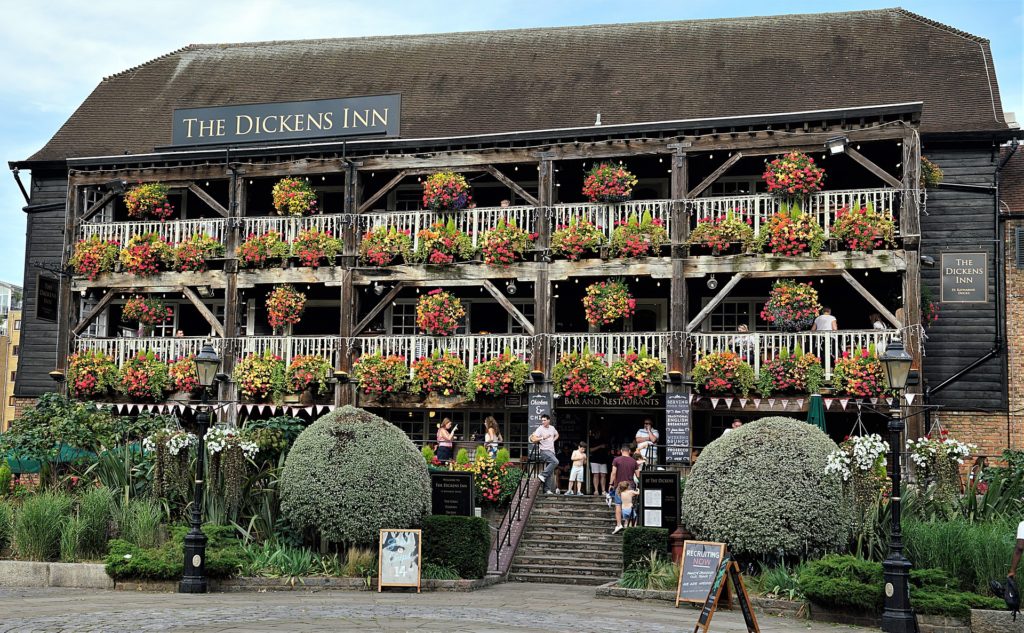
8: Dickens Inn
This literary pub may not have the same literary history as many of the other pubs on this list, but it was opened by Dickens’ grandson. When he formally opened the Inn he said that his grandfather would have loved it.
It’s a popular place to drink, and is even known as a tourist spot, thanks to its ideal location beside the River Thames and historical atmosphere.
by Hannah Collerson
London is a city that’s inspired so many novelists and poets over the years, and now it’s a city that’s packed full of literary attractions, making it the perfect destination for any book lovers.
Here are some must-see literary attractions in London. Walk in the footsteps of your favourite authors, stroll through the settings of your favourite books, even drink in the same bars as some of the biggest figures in literary history.
If you want to explore London’s literary history whilst grabbing a drink though, check out our article on London’s greatest literary pubs.
1: Shakespeare’s Globe
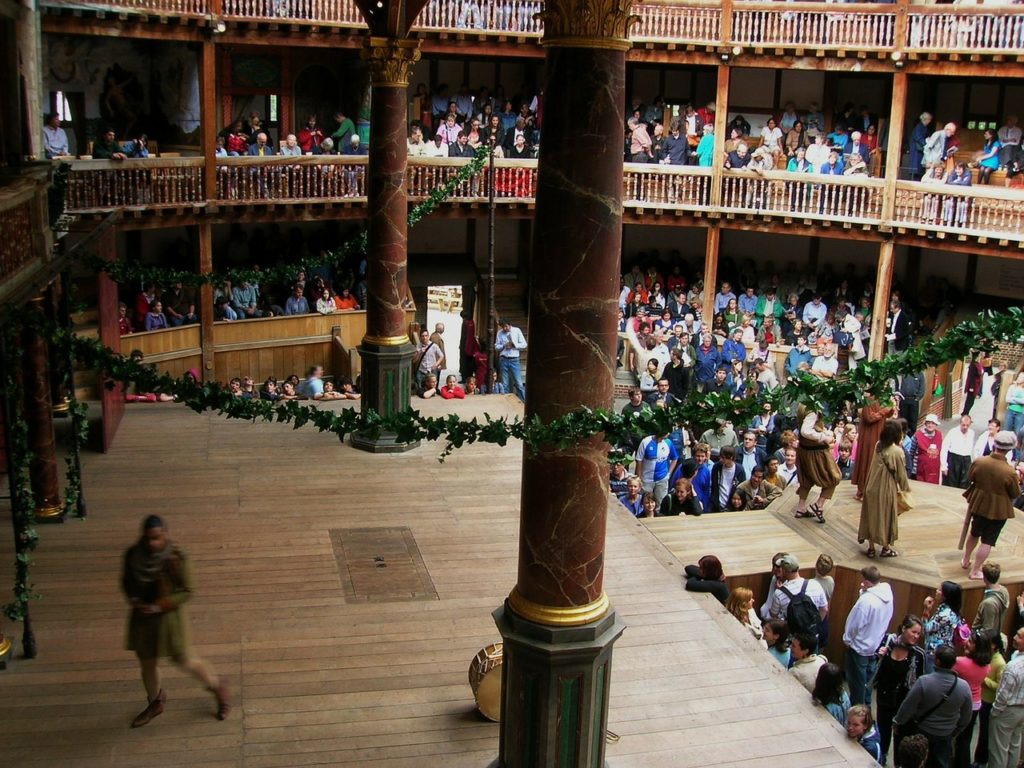
For any Shakespeare fans visiting London, this is a must-see. Whilst it’s the not the original globe theatre, as that was destroyed by a fire in 1613, the modern reconstruction is styled on the original, and is bound to throw you back in time.
Located on the South Bank of the Thames, the area surrounding the Globe has an amazing atmosphere. There are buskers and street artists all around, markets to browse and quaint little cafes and restaurants where you can grab a bite to eat.
As for the Globe itself, if you can, catch a performance of one of Shakespeare’s plays. It’s unlike any theatre you’ve been to before. In order to keep the Globe authentic, as it would have been in Shakespeare’s time, the general admission area has no seats, and is instead a large standing area. Standing to watch a play might sound a little tiresome, and it might not be the most luxurious of theatres, but it’s definitely an experience. Plus, you’ll be as close to the action as you can get, with actors taking the performance off the stage and into the crowd.
Don’t worry though, if you don’t fancy standing, you can always pay a little more the circle seats. This is where the more wealthy families would have sat to watch Shakespeare’s plays.
If you don’t have the time to fit in a play at the Globe, it’s still worth a visit. You can still see some of the globe, and explore the Shakespeare shop.
2: Sherlock Holmes Museum
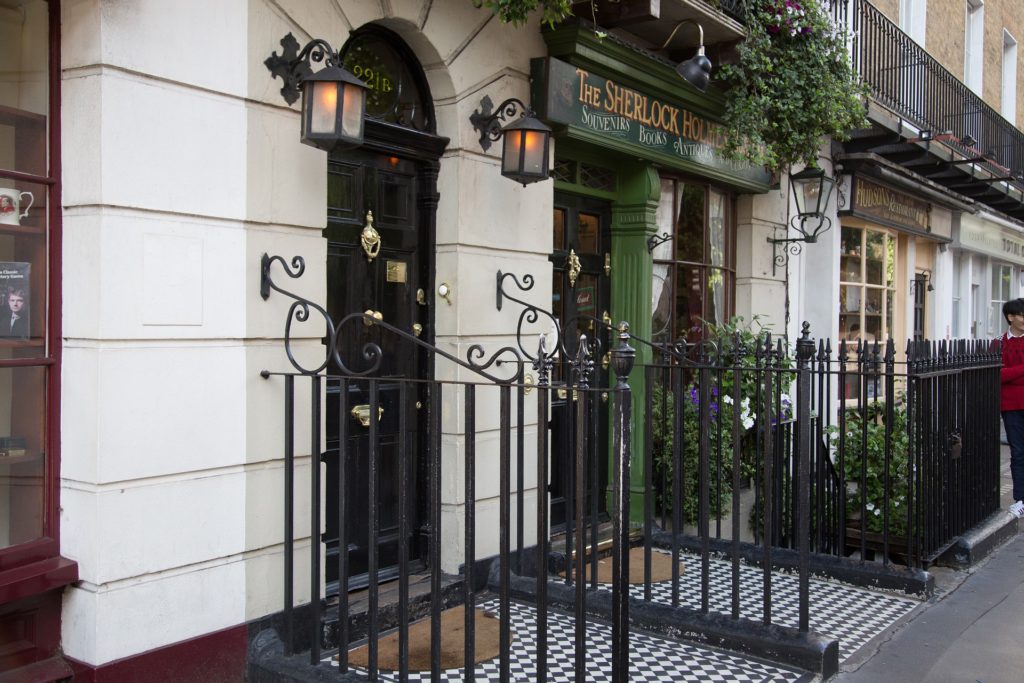
Whether you’ve read Conan Doyle’s Sherlock Holmes books, or you’ve just seen the film and television adaptions, the Sherlock Holmes Museum is the perfect place to visit.
The museum is located, of course, at 221B Baker Street (the world’s most famous address), so you can visit the actual home of the world-famous fictional detective.
There are life size wax works of Sherlock Holmes, and rooms showcasing some of the adventures of Holmes and Watson. You’ll have the chance to step into a recreation of Sir Arthur Conan Doyle’s world, and do some deduction of your own. And you won’t be disappointed with the souvenir shop either!
3: The British Library
Any book lover will want to visit the world’s largest library, The British Library. There are over 150 million items catalogued from all over the world, some as old as 4,000 years old. There are even original copies of Beowulf, The Canterbury Tales, Jane Eyre and so much more.
Whilst you can’t explore the entire library, as much of it is underground, it’s still an impressive sight to see. As soon as you walk in, you’ll spot the six-story glass column in the middle of the library, containing 65,000 of some of the library’s oldest and most important items.
4: Keats House
This house, where John Keats once lived and wrote Ode To A Nightingale, is just across from the Keats Museum.
You can attend one of the many literary events and exhibitions held here, or if there’s nothing on on the day of your visit, there’s an impressive collection of items that give a little insight into Keats’ life. From Keats’ letters, to the engagement ring he gave his fiancee, there’s plenty for you to see and discover.
5: The Garden Squares Of Bloomsbury
Open, green spaces offer a welcome break from London’s mostly urban environment. And the Garden Squares of Bloomsbury are one of the most idyllic green spaces London has to offer, especially for literary fanatics and aspiring writers.
The Gardens are famous for being the meeting place of many writers and artists in the 1920s and 30s, in fact it was the meeting place of the famous Bloomsbury Group. Several famous writers also had homes around the gardens. You can enjoy the beautiful gardens and the fountain plaza, and walk in the footsteps of famous writers, including Mary and Percy Shelley, Virginia Woolf, T.S Eliot, John Maynard Keynes and many more.
Because of its rich literary history, you’ll often find people relaxing in the park with a book. It’s the perfect place to sit and read, if you have a spare afternoon.
6: Platform 9 ¾, Kings Cross Station
Harry Potter fans from all over the world come to visit the real-life location of Platform 9 ¾, so if you’re in the area, it’s definitely worth a visit.
You can pose with a trolley, that’s half disappeared into the wall, and shop until you drop at the Harry Potter shop there.
7: Charles Dickens Museum
The Charles Dickens Museum is located at Dickens’ old house, and gives visitors the chance to step back into time to the Victorian era, to Dickens’ time. The rooms are reconstructed to how they would have looked when Dickens lived there, and you can explore his library, and discover the books that inspired him.
You can also listen to the audio guide, and learn more about Dickens, his stories, and the Victorian era.
8: Poet’s Corner, Westminster Abbey
Westminster Abbey is a sight to behold in itself, but if you want to satisfy your love of literature whilst visiting this beautiful landmark, head to the Poet’s Corner in the South Transcept of the Abbey.
Here you’ll find Chaucer’s tomb, and floor stones commemorating writers including Ted Hughes, C.S. Lewis and Philip Larkin. There are also carved stone monuments, and figurative busts in memorial of writers and poets. 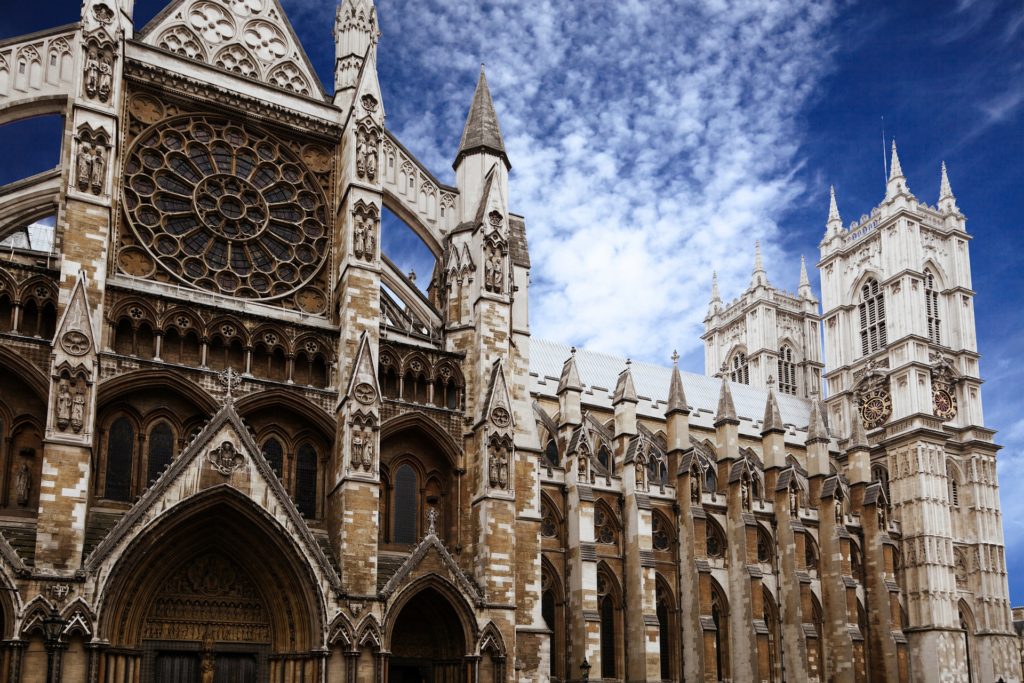
9: Highgate Cemetry
Cemeteries are obviously a fairly morbid place to visit, but this one is worth it if you want to pay your respects to some key figures in history. Some of the tombs and graves are fairly ornate as well.
You can see the graves of Karl Marx, Henry Gray, and George Elliot, and explore the graveyard that is so often mentioned in films, TV shows, and books.
by Hannah Collerson
You need to go on holiday to Mecklenburg-West Pomerania.
Never heard of it?
Well don’t worry, you’re not alone. If you had to name a German Bundesland (Federal state), your first thought is probably Bavaria, rather than Mecklenburg-West Pomerania, or ‘Meck-Pom’ as the locals call it.
But Meck-Pom is a great location that’s largely untouched by tourists. So if you’re looking for a destination that not everyone has been to, this German state could be the one for you. With hidden gems and plenty to see and do, it’s a perfect holiday destination. So here’s why you should visit (and why you’ll fall in love with) Mecklenburg-West Pomerania.
Getting To Meck-Pom
Located in North Eastern Germany, the federal state spans across a large area and borders Poland to the east. Despite being one of the country’s largest federal states, it is the least populated. (About 1.6 million people… but who’s counting?) Yet with its long coastline, an incredible, albeit rocky, history, and of course, beautiful port cities, the region offers plenty to visitors.
Getting there, however, isn’t straight forward. The region has a couple of international airports including Rostock, but with limited flights across Germany and Europe, your best bet is to fly to Hamburg or Berlin, and then take the train or bus.
Schwerin Castle – The ‘Neuschwanstein of the North’
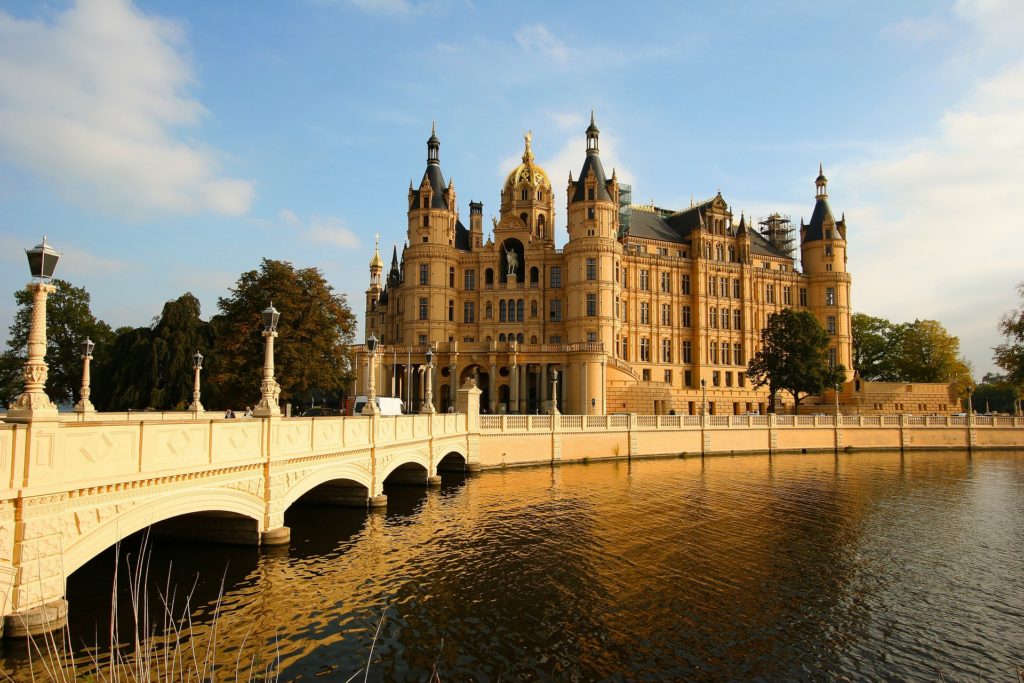
Schwerin is a city well worth a visit. Being the capital of Meck-Pom, it attracts many visitors who come to gaze in wonder at its beautiful old churches and cathedral, its narrow cobbled streets and most importantly the ‘Neuschwanstein of the North’.
The ‘Neuschwanstein of the North’ is the parliament building which is located in an idyllic castle, enveloped by a large lake in the heart of the city. This Schloss (castle), is often compared with Schloss Neuschwanstein in Bavaria, which many may recognise from the film Chitty Chitty Bang Bang and is seen as the inspiration for the Disney castle. Whilst the Schwerin castle may not have Neuschwanstein’s mountainous backdrop, it still has turrets a plenty, beautiful gardens and stunning lake views. It is free to visit the grounds, but it’ll set you back 8 € to venture inside.
Rostock – Meck-Pom’s second city
Rostock is, in many respects, Meck-Pom’s second city. With a population of over 200,000 people and lying directly on the Baltic coast, it is one of the region’s most historically fascinating cities.
The summer months unsurprisingly see Rostock welcoming tourists from all over Germany and also those by ferry from Scandinavia.
Its mixture of colourful Germanic buildings alongside its stark reminders of its communist past, create a distinctive feel. Free access to a former Stasi interrogation unit in the heart of the city alongside speedy connections to the nearest beach, mean that the city offers each visitor a unique experience and can cater for all types of holiday.
Moreover, the Rostock Christmas Market, has been voted as the best market in Northern Germany, and is perfect for a cheeky mulled wine!
Visit Wismar
Wismar, a world heritage site city located west of Rostock is not only another lovely location to visit, but also the region’s second most important port city. Once under Swedish rule, the city has a very Scandinavian feel to it with its many fisheries, colourful harbour buildings and Swedish restaurants.
Like Rostock, it also offers a mixture of GDR history with old abandoned factories alongside beautifully painted narrow streets which follow small rivers towards the Baltic Sea. Walking around the city for several hours and stopping to eat a Fischbrötchen (Fish sandwich), is the perfect way to spend an afternoon in Wismar.
Meck-Pom as the perfect beach holiday
Despite Meck-Pom being home to the stunning above mentioned cities, its best attribute is perhaps its landscape.
When you think about going on holiday to the seaside, your first thought might be sunny southern Spain or perhaps even a Greek island… however, in my opinion, you need look no further than the Baltic coast.
With long golden beaches and beautiful seaside towns such as Warnemünde, Rerik and Kühlungsborn, it is unsurprising that so many Germans decide to head to this part of the world for their beach holiday every year.
The piers, clear blue sea and not forgetting the surprisingly warm temperature in the summer time (30 degrees Celsius), mean that it’s not only in southern Europe where you can enjoy warm weather. The beaches are also accompanied by beautiful white cliffs on the island of Rügen, which is located off the coast of Meck-Pom to the North East. Its white cliffs and gorgeous natural parks offer tourists the opportunity to experience beautiful landscapes.
Meck-Pom as a gateway to the rest of Europe
Its geographical location means that Meck-Pom is also the gateway to other European cities and countries. For example, you can buy a return ferry ticket to Copenhagen from Rostock with a sightseeing trip included for about 40€.
If you were looking to head east to Poland, it only costs 23€ to travel to Stettin, (the closest Polish border city), and is well worth the trip. Moreover, with direct and cheap train and bus travel to Hamburg and Berlin, Meck-Pom is ideal.
So plan a visit to Meck-Pom!
Mecklenburg-West Pomerania is fast becoming my favourite region of Germany. There is something very unique to this region, which you will not encounter elsewhere.
It may not have the chocolate box charm of Bavaria or the international standing of Frankfurt, but the imprints communism has left on the region’s architecture and the allure of the Baltic coast make the region especially unique.
If you want to experience a holiday where you can combine history, nature and beautiful harbour cities, then Meck-Pom is the place for you.
by Hannah Collerson
Dublin, Ireland is one of the most beautiful and mystic cities in the world. Known as the “Emerald Isle”, Ireland is a country full of culture and history. Whether it’s your first visit or you have visited before, there is always something new to see.
Get yourself on one of Dublin’s tours
Scheduling tours are a great idea when visiting Dublin because it will give you a great opportunity to not only see everything but also learn from those who live the culture on an everyday basis.
The Guinness Storehouse – for those who like a drink
The Irish are stereotypically known for enjoying a drink or two, and if you’re fan of beer, Dublin has just the tour for you. The Guinness Storehouse, which is actually shaped like a Pint of Beer, is one of the most popular tourist attractions in Dublin. Guests have the opportunity to see how a pint of the traditional Guinness Beer is created and of course, sample a glass.
Delicious Dublin Tours – get the taste of Dublin
The Delicious Dublin Tours run every Saturday and really offer visitors the chance to experience even more Irish culture. The tours run every Saturday and while traveling through the city, visitors will try traditional Irish cuisine and beverages while touring some of the best restaurants in Dublin.
Dalkey Castle – explore Dublin’s history
To learn more about the deep routed history of Dublin, the Dalkey Castle and Heritage Centre is a must-see. The Dalkey Castle, which was a former port, presents tours that are led by a professional guide that will share tales of what life was like as far back as Medieval Times.
The Writers’ Gallery at the Castle gives visitors the chance to learn more about the history of Irish writers and some of the greatest works that have even been written. Another fascinating part of the Castle’s property is St. Begnet’s Church which is believed to have been a part of the culture since the 10th century.
Family days out
If you are traveling with family or even young children, there are a few places that are definitely worth checking out. The Dublin Zoo is a great place to visit, as one of the oldest Zoos in the entire world, millions of tourists have visited the Dublin Zoo for a one of a kind day of exploring hundreds of animals from around the world.
The AquaZone at the National Aquatic Centre is an indoor aquatic park that will bring visitors of all ages a day of fun. For those who are just looking to take a swim, there is a traditional swimming pool that is great for taking laps if that’s the goal. But, for visitors who want to accelerate their level of fun, there is a water roller coaster, a wave pool, a pool for wave surfing, water slides, a lazy river and much more.
The Imaginosity, Dublin Children’s Museum is definitely a top spot for kids while traveling through the city. The younger members of the family can use their imagination and pretend to take different career paths through various exhibits in the museum. There is also an outdoor section of the Children’s Museum that teaches about gardening and environmentally friendly ways of living.
Dublin’s pubs and cafes
Dublin is known for their pubs and cafes and there are a few that must be on the checklist when in town.
A couple of notable cafes
Butler’s Chocolates has been a staple in Ireland since the 1930’s with their delectable homemade chocolates. The Krust Bakery is a great spot to get a Cronut or other pastry and perhaps a cup of coffee while touring the city.
All over the world, there’s a lot of hype about traditional Irish pubs, and of course you’ll find quite a few in Ireland’s capital.
Traditional Irish Pubs
The Jennings Pub is a place where you can grab a pint and listen to live music too. Besides the Guinness Brewery, Brogan’s Bar gives patrons another opportunity to have a pint of Guinness in a pub fully decorated in Guinness memorabilia.
If you’re a fan of literature, you’ve probably heard of James Joyce. But what you might not have heard of is Joyce’s favourite drinking spot, and Dublin’s oldest pub, The Brazen Head. Joyce even mentioned it in his book Ulysses. The Brazen Head is definitely a spot worth visiting, even if you have no idea who James Joyce is. It’s small but very sweet. It’s full of character, history, and is usually bustling with a load of great people.
As you might expect, Dublin has way too many great pubs for me list them all in this article, but head to Temple Bar and you’ll find most of Ireland’s classic pubs. Temple Bar, believe it or not, isn’t just one bar, but an area, where you’ll find a whole load of places to drink the night away.

Dublin as an artistic experience
For visitors that are looking for to learn more about the arts in Dublin then the museums and galleries should definitely be on the list of stops while visiting.
The National Gallery of Ireland contains thousands of pieces of artwork which include work from Van Gogh and Picasso.
There’s also the Irish Museum of Modern Art which has mostly modern and contemporary styles. There are even studios located on the property.
The National Museum of Ireland-Archaeology is for visitors who appreciate the Viking Era of Dublin and will get to see Celtic pieces in the museum as well.
Farmleigh house and garden attractions
A great place to spend a relaxing afternoon would definitely be on the grounds of the Farmleigh House. Originally built in the 1700s, the Farmleigh House property has a beautiful Clock Tower and Fountain Lawn that are just picturesque. The Benjamin Iveagh Library features a lot of unique and one of a kind Irish literature and newspapers that visitors will find fascinating. There are also various traveling exhibits and Garden Shows that make their way through the Farmleigh House as well, so there is always something to see. Visitors can pick up a delicious coffee and pastry at the Boathouse Café while overlooking some of the best views in the city.
 For visitors who wish to see even more garden properties, the National Botanic Gardens in County Dublin is one of the most popular in all of Europe. The Gardens are a free attraction and visitors can stroll around and see thousands of beautiful rose gardens, ponds, rock gardens and plants that are known solely in Ireland while learning a lot along the way.
St. Patrick’s Cathedral – some history
You’ve heard of St. Patrick’s Day, I’m sure, but a trip to Dublin wouldn’t be complete without visiting St. Patrick’s Cathedral, a part of the country’s history and tradition dating back to the 1200’s. There is an exhibit at St. Patrick’s Cathedral entitled “Lives Remembered” which pays tribute to those lost during World War I. Visitors can take a tour with a guide or take a tour on their own with the use of a designated app that can be downloaded.
No matter what season or who you are there is never a bad time to visit the gorgeous, historical city of Dublin. There is always so much to see and visit that there will never be a dull moment and additional trips, or maybe even trips, might be necessary!
by Hannah Collerson
British Columbia, Canada’s western-most province, stretches from the coast of the Pacific Ocean east to the Rocky Mountains, from Vancouver Island’s southern tip, to the prairies of the north-eastern Peace River country. Settled amongst the breathtaking natural vistas, in the mountain valleys, and along the rugged coast, you will find a land ripe for exploration and teeming with culture.
With so much ground to cover, here’s a quick guide to making the most of British Columbia.
Adventure in British Columbia
If you’re looking for adventure, then British Columbia is the place for you.
Adventure in Winter
If you visit in the winter months, bring your snowshoes, skis, snowboard and, of course, a toque. The world-renowned Whistler-Blackcomb resort, home of the 2010 Winter Olympics, boasts an incredible array of winter activities. The Whistler-Blackcomb Ski Resort has weeks worth of terrain for skiers and snowboarders of all skill levels to enjoy. You can also find snowmobiling, snowshoeing, and dogsled tours through the breathtaking pristine mountain landscapes.
If you want to break your own trail, British Columbia is also home to one of the world’s largest heli-sking industries. Ride the fluffiest, deepest powder imaginable in various locations across the province, from the Mike Wiegele Helicopter Skiing’s Lodge in the Rocky Mountains, to Nelson’s Baldface Lodge in the heart of the Selkirk Mountains.

Adventure in Summer
If you visit during the warmer months, British Colombia still has plenty to offer.
How about some of the best angling in the world? Senora Island Resort, the Long Beach Lodge, and the Fraser River Fishing Lodge are just a few of the world-class destinations for both unbelievable salt and fresh water fishing.
Go kayaking with the whales in Blackfish Sound, amazing multi-day camping and kayaking tours make for an unforgettable experience. Want to go a little deeper? Book some world class scuba diving and snorkeling trips with Sea Dragon Charters in Vancouver, or Sundown Diving in Nanaimo on Vancouver Island.

British Columbia is also home to an extensive and intricate network of hiking trails and camping locations. With over 800 maintained trails and parks throughout the province, including the world-renowned West Coast Trail, a getaway to the great outdoors is never far away. From full-service RV campgrounds, to hike-in backcountry lodges, everyone and anyone can explore the natural beauty of British Columbia.
History & Culture
If kayaking and skiing all sounds like a bit much for you, British Columbia has plenty to offer in terms of history and culture. The Coast Mountain Range isn’t just breathtaking landscapes, it’s been home to unique and iconic cultures for thousands of years.
The City of Vancouver hosts a robust collection of indigenous cultural showcases, from Stanley Park’s totem pole display at picturesque Brockton Point, to the Bill Reid Gallery of Northwest Coast Art.
Vancouver Island’s Ahtsik Native Art Gallery houses the art and history of the islands unique First Nations communities, and entering the traditionally carved and constructed longhouse that is the Eagle Aerie Gallery in Tofino transports visitors back to a time long before European arrival.
Venturing into the province’s interior you can find the unique Nk’Mip (in-ka-meep) Desert Cultural Centre in Osoyoos, home to Canada’s only desert and the unique art and culture of its indigenous people. Further north, in a drastically different landscape and climate, the Museum of Northern British Columbia in Prince Rupert hosts unique indigenous glass artwork, carvings, and cultural artifacts.
Vancouver’s historic Gastown district is one of the oldest and most functional historical neighborhoods in the province, with buildings, streets and even a steam-clock preserved in their late 19th-century glory.
Victoria boasts the spectacular Parliament Buildings and historic harbour, featuring the splendour of the Parliament’s Romanesque/Baroque style and the Royal BC Museum is a stone’s throw away with its expansive galleries on natural history, indigenous culture, and modern history.
British Columbia was home to many boom-to-bust mining towns and mini-gold rushes, their legacies can be found in eerily vibrant ghost towns. Barkerville, in the central interior of the province, is the liveliest example, with historical re-enactments that will let you experience first-hand the life of a gold prospector in the 1860’s frontier.
Food & Drink
All this natural splendor and adventuring can work up quite an appetite, and you won’t be wanting for good eats in BC. Vancouver and Victoria are both culturally diverse metropolitan cities, bringing a world of culinary experiences right to your plate.
Oriental
Some of the freshest, finely crafted sushi in the world can be found here. While high profile restaurants like Vancouver’s Sushi Itoga, or Victoria’s Osaka Sushi provide a high-faluten atmosphere, don’t look past the mom-and-pop sushi bars that modestly boast some of the most delicious sashimi and innovative sushi rolls money can buy.
Vancouver has a huge array of culinary options, reflecting the diversity of the city’s population. Some of the best authentic Chinese dishes can be found at places like Peaceful Restaurant in Vancouver, or across the Fraser River at Shanghai Morning Restaurant in Richmond. Sula Indian Restaurant provides some of the best East Indian dishes in town, while the Banana Leaf serves up unique Malaysian masterpieces.
Local
But if you want a truly local taste, take a stroll down Vancouver’s historic Commercial Drive and south Main Street, where you will find a cacophony of restaurants, cafes, and tapas bars. Vegetarian comfort food, sushi burritos, gluten-free bakeries, micro-brewed craft beers, local wines, and much more can all be found just by taking a stroll down the streets of these culinary hubs.
In the Okanogan Valley, you can find the heart of BC’s booming wine industry. With almost 350 licensed wineries, you can find something for even the pickiest Oenophile. Beautiful vistas will accentuate a wine tasting and touring experience like no other.
If you find yourself in Victoria, head to the Fairmont Empress. The Empress is famous for its traditional afternoon tea, and is great for a lazy afternoon, drinking tea beside the harbour. It might be a welcomed chance to relax after all the sightseeing and adventuring!

Shopping in British Columbia
Vancouver is probably the one-stop-shop destination of British Columbia. It boasts major retailers, such as Holt-Renfrew and the newly opened Nordstroms, in the city’s downtown core on the entertainment and shopping thoroughfare Granville Street. Historic Gastown and Granville Island boast high-end fashion, local and international art, and unique boutiques for the savvy shopper.

Victoria has a humbler shopping experience. Market Square showcases local goods and wares in its open-air plaza, while the Esquimalt Farmers Market provides food, music and local handicrafts unique to Vancouver Island’s culture. Munro’s Books is one of Canada’s finest independent bookstores. Voted the third-best bookstore in the world by National Geographic in 2016! The collection of knowledge, art, and imagination kept in this historic bank-turned-Bibliotheque is absolutely world class.
No matter where you find yourself in the province, unique indigenous art can be found for sale, often directly from the artists. Soapstone and timber carvings, fine glass work, traditional jewelry fashioned with BC Jade, unique artwork and cultural icons are unique souvenirs and a great way to support the local communities and cultures.
British Columbia has all this to offer, and more.
by Hannah Collerson
The American Southwest offers a plethora of unique travel opportunities from desert escapes to mountain hikes. One of the most incredible destinations that is still relatively undiscovered is Antelope Canyon near Page, Arizona. Nestled into Navajo Land near the Arizona-Utah border, this must see slot canyon is a geographical feature that welcomes exploration.
Antelope Canyon was formed by floodwater wearing away at the sandstone over time. The canyon walls are incredibly smooth, with a wave like or spiral structure. Slot canyons were made famous by the 2010 film “127 Hours,” which tells the story of Aron Ralston’s treacherous self-rescue while canyoning alone in Utah.

It’s easy to visit Antelope Canyon as part of a tour, but there a few things to consider when planning your visit.
Planning Your Visit
Upper vs. Lower Antelope
Antelope Canyon is divided into two parts- Upper and Lower Antelope. They are nicknamed the Crack (Upper) and the Corkscrew (Lower). The two parts require separate admission fees, and they are not accessible from the same location or tour. It’s worthwhile to visit both parts of Antelope Canyon to maximize your experience, but if you don’t have time then there are a few factors to consider before deciding on one.
One of the biggest differences between the canyons is accessibility. Lower Antelope Canyon is within walking distance from the parking area, but it does have multiple flights of stairs and ladders to get into and out of the canyon. Lower Antelope is also much more narrow than Upper Antelope, so you should be comfortable with tight spaces and some mild climbing. Upper Antelope, by contrast, is a short drive (usually on an open bed truck or in an SUV) from the parking area, but there are no stairs to access the canyon. The upper canyon is much wider and easier to navigate, so it might be a better choice for you if you have trouble walking for long distances or climbing on uneven surfaces.

Depending on the purpose of your visit, one canyon might better suit your needs. Photography tours are available on both sections of Antelope Canyon, but Upper Antelope is better known for its dramatic light beams that create stunning photographs. And because the canyon is wider, Upper Antelope offers more space to set up a tripod, making photography easier.
If you are seeking a more unique experience, Lower Antelope tends to be less crowded, and the tour feels a little more like an exploration with the narrow passageways and steep staircases. It is also significantly longer than the Upper Antelope tour.
Getting a tour guide
It’s not possible to visit either canyon without a Navajo tour guide. You wouldn’t want to find yourself living your own version of ‘127 Hours!’
Many companies offer advance bookings, but they are not always necessary. If you are visiting in peak season (June, July, and August) then definitely plan ahead and reserve your tour. For tours during the shoulder or low seasons, you will usually be able to show up on the day and join the next available tour. Weekends are always more crowded, so aim to go mid-week if possible.
In addition to the cost of your tour ticket, there is also a Navajo Park Permit Fee. Parking is free on site.
If you plan on using a tripod or monopod for your pictures, you must book a photography tour. These tours allow for more time in the canyon to get your shots, and you are allowed to bring extra equipment. No tripods or monopods are allowed on the standard tours.
Lastly, confirm the time of your appointment if you make an advance booking, because parts of Arizona and Navajo lands do not observe Daylight Savings Time.
Getting to Antelope Canyon
Antelope Canyon is located near Page, Arizona. You can access both Upper and Lower Antelope by traveling 2 miles East of Page on Highway 98. On the north side of the highway is Antelope Point Rd, and access to Lower Antelope Canyon. Upper Antelope Canyon is accessed from the south side of the highway, directly across. It takes approximately 10-20 minutes to travel between the two canyon sites.
Expert Tips
- The best time for capturing light beams is 11 a.m. to 1 p.m. when the sun is at a nice angle in the sky.
- Lower Antelope is usually less crowded, and the tour is significantly longer than Upper Antelope.
- Ask your guide for tips on how to capture great photos (even with your iPhone). Many guides can point out unique silhouettes that are only visible from certain angles.
- Check the weather before your visit as flash floods make slot canyons incredibly dangerous during storms. Lower Antelope is often closed when there is rain in the area.
- *Ken’s Tours for Lower Antelope and Navajo Tours for Upper Antelope. The tours for Upper Antelope tend to meet in downtown Page first, but you can also just drive to the site and wait for the next tour to arrive.
- Be sure to wear appropriate footwear to navigate the canyon, and bring sunscreen and water if you are visiting during the summer months. Most guides wear bandanas in the event of blowing sand within the canyon, so it can be useful to bring one along.

Great Things Nearby
The Southwest is home to many cool geographical features, and many are in driving distance of Antelope Canyon. Make the most of your trip by taking the time to visit some other iconic spots the area has to offer.
Horseshoe Bend
With stunning views of the Colorado River as it winds through the canyon, Horseshoe Bend is an incredible lookout point in Page Arizona. It’s one of the most photographed areas that is easily accessible (just under 10 miles from Antelope Canyon).

Lake Powell
Lake Powell is a scenic reservoir and vacation destination on the Arizona-Utah border. It’s a great spot for boating and water activities, but it’s also convenient for an afternoon hike or short picnic. It’s a little farther from Antelope Canyon at 80 miles, but it’s a great stopover on your way to or from Page.